
- Acting Director’s Message
- Feature Focus: Tea–A Specialty Crop for Western Washington
- Lunch & Learn Seminars
- Program Highlights
- Employee and Graduate Student Highlights
- Give to NWREC
- WSU-Everett Employer Survey
- Publications
Acting Director’s Message
As we round the end of 2025, I am reflecting on what a truly momentous year it has been for me personally and for the Northwestern Washington Research and Extension Center. On April 1, 2025, I had the privilege of stepping into the role of Acting Director. It has been an honor to serve in this capacity alongside such a talented and dedicated team of faculty, staff, students, and passionate stakeholders and community partners who work tirelessly to advance the land-grant mission here in northwest Washington. I also want to take a moment to thank Dr. Carol Miles for her 4.5 years of outstanding leadership as Director of NWREC. Her vision, dedication, and guidance helped lay a strong foundation for the exciting work we continue today.
This fall also brought an important milestone for CAHNRS as we welcomed Raj Khosla as our new Cashup Davis Family Endowed Dean on September 1, 2025. Dean Khosla’s vision and leadership are already bringing fresh energy and ideas to our college. We look forward to hosting him at NWREC in the months ahead and showcasing the breadth and impact of our programs.
Our Center had several highlights this year, including a successful NARF Field Day on July 10, 2025, which brought together growers and industry partners to engage directly with the cutting-edge research taking place here. In June, we also secured a $750,000 award from the Skagit County Economic Development Board, with $250,000 in match funds already in-hand, to advance the construction of our new plant growth facility. Located adjacent to the Wylie Headhouse, this project includes Phase 2A (foundation and utilities) and Phase 2B (greenhouse kit erection) and has gone out for bid, with ground-breaking anticipated in the new year and completion on track for June 2026. This is an incredible step forward in expanding our research capacity for the future.
Looking ahead to 2026, I am especially thrilled to share news of two outstanding faculty who will soon join NWREC following national searches by the Departments of Crop and Soil Sciences and Horticulture.
- Deniz Inci will begin his role as Horticultural Weed Scientist on January 1, 2026, bringing expertise in weed management and agronomy. This position was made possible through the generous support of the Washington Blueberry Commission, Washington State Potato Commission, Puget Sound Seed Growers Association, Northwest Agricultural Research Foundation, and Vegetable Seed Industry via private donation, as well as matching funds from NWREC.
- We are also anticipating the addition of a new Endowed Chair in Raspberry Breeding in Spring 2026. The candidate has accepted the offer; however, the appointment is pending final tenure approval within the next 45 days. Once official, we’ll be able to share more details externally. This position is supported by a $1.5 million endowment from the Washington Red Raspberry Commission and will strengthen WSU’s long-standing leadership in small fruit research.
These new appointments mark an exciting new chapter for NWREC and the industries we serve. We are deeply grateful for these partnerships, which have ensured that we can recruit and retain world-class talent to meet the evolving needs of Washington agriculture.
I am deeply grateful for the continued partnership and support of our growers, stakeholders, and community. Together, we are building an even stronger future for agriculture in northwest Washington. I look forward to 2026 as a year of growth, collaboration, and innovation. As you read through this newsletter, think about how WSU NWREC exemplifies the land-grant mission, and let us know if you have ideas for additional ways we can engage the Northwest Washington community. We are one WAZZU!
GO COUGS!!!
Tatum
Feature Focus
Tea – A New Specialty Crop for Western Washington
Carol Miles, Horticultural Crops Extension Specialist; Shrijana Shrestha, PhD Student; McKenzie Shelton, MS Student; Madeline Zwergel, Research Assistant.
Tea made from the leaves of the tea plant Camellia sinensis is the second most consumed beverage in the world after water. Tea consumption is steadily increasing in the U.S. such that it is the third largest importer after Russia and Pakistan. Western Washington presents a promising frontier for tea production due to its climate. Tea was first planted in the area in 1997 at Sakuma Brothers Farm, and also at a private residence in Burlington where it is growing well after almost 30 years. The primary needs for expansion of tea planting in western Washington include: a successful vegetative propagation method, access to suitable cultivars, and knowledge and information regarding growing tea in our region.
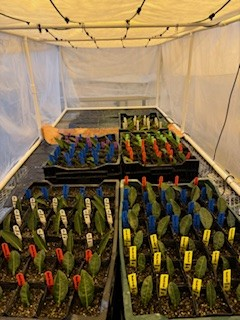
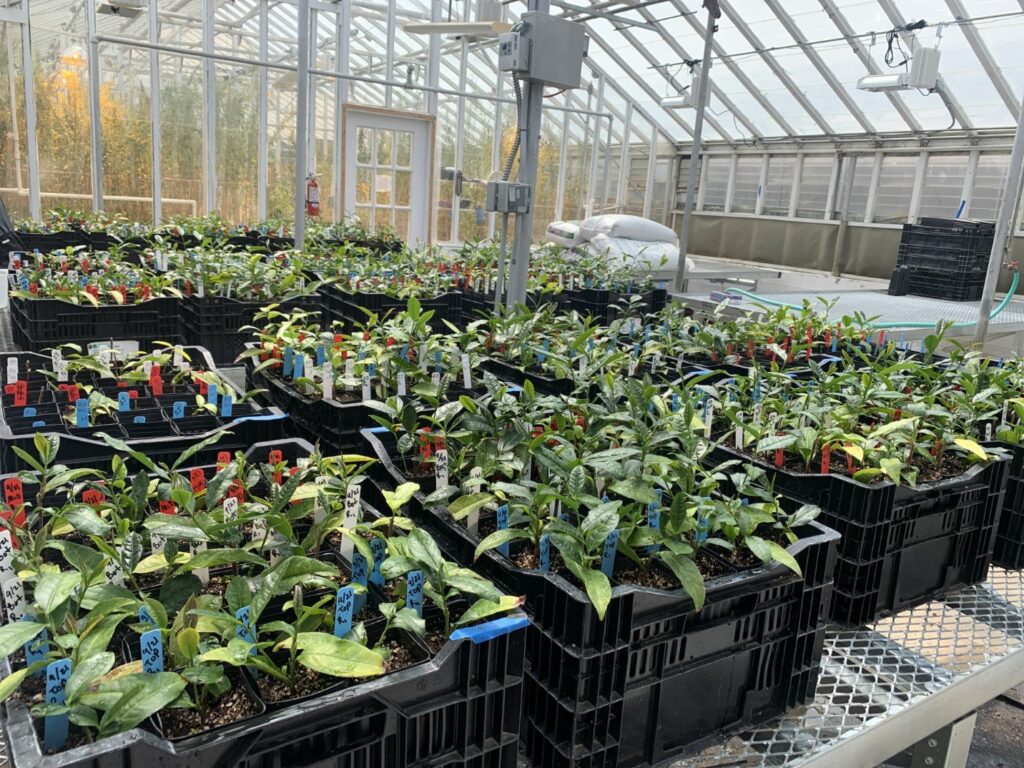
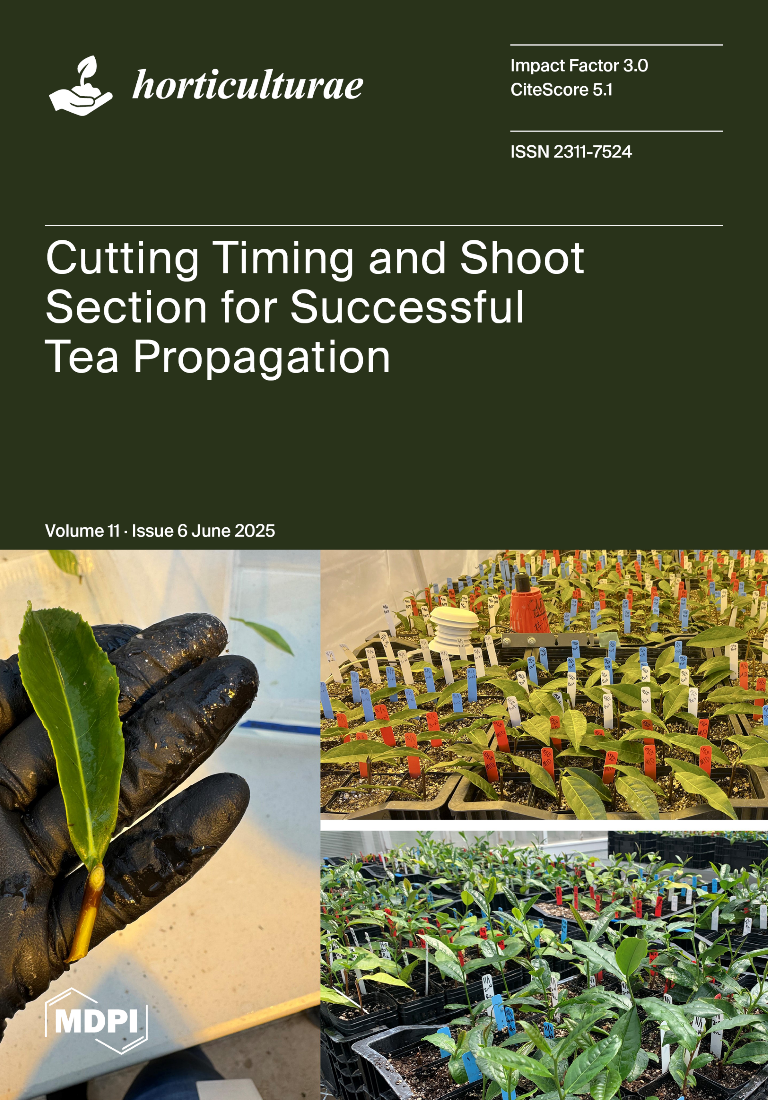
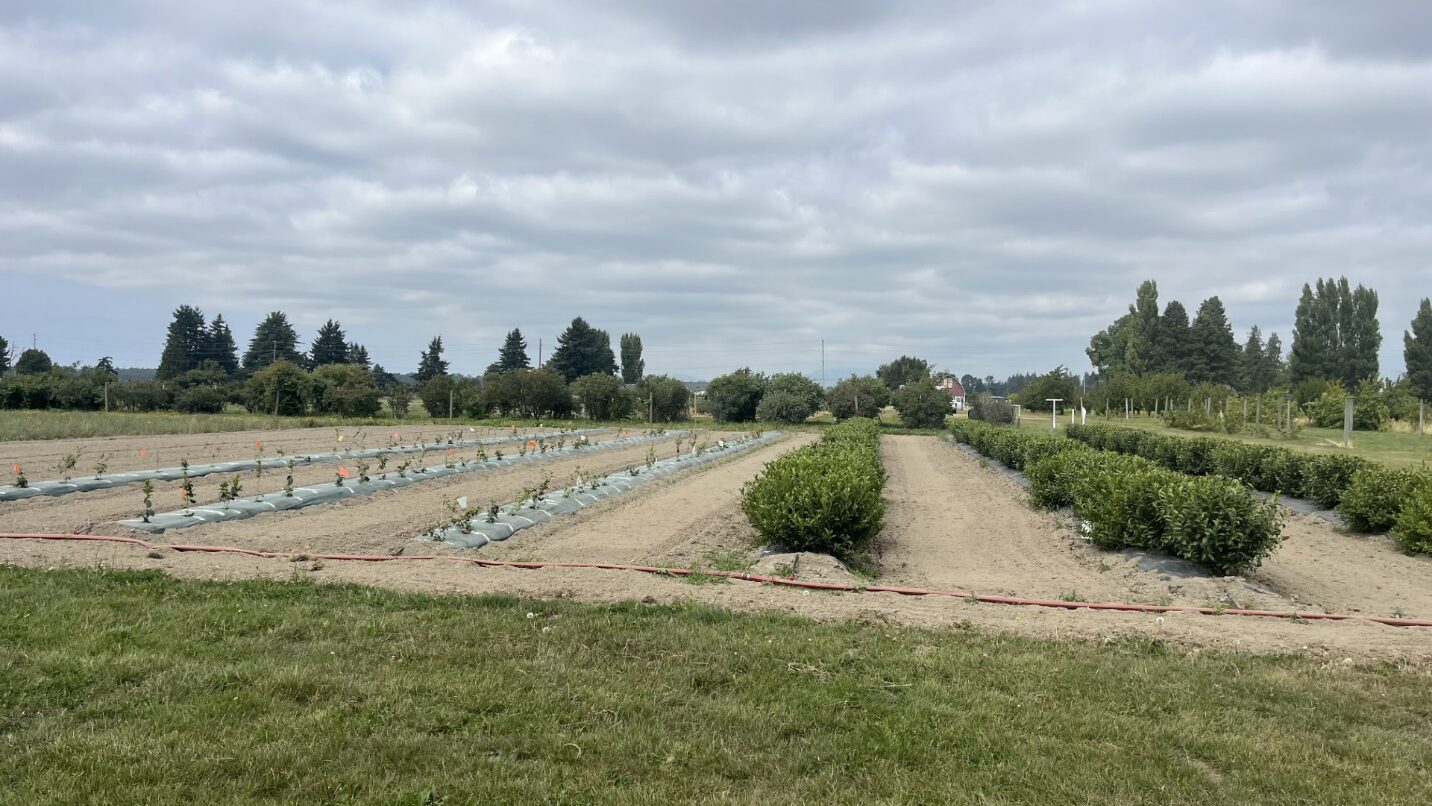
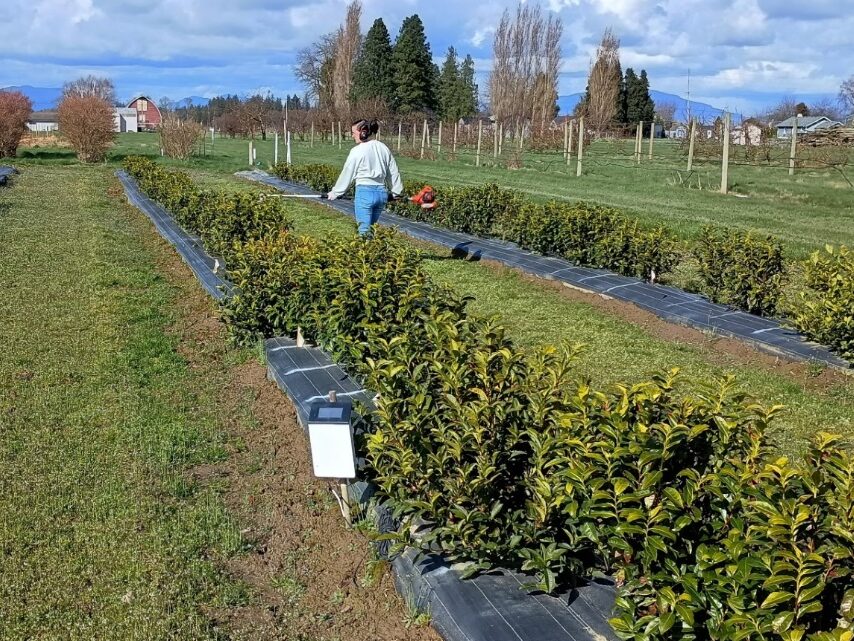
To address these needs, we started our tea research project at WSU Mount Vernon NWREC in 2019 and first developed a cutting greenhouse propagation protocol. Our rooting success with tea cultivar Minto Pacific is >90% (above) while commercial nurseries report success of 40% for tea plants. We have now propagated 14 tea cultivars and established them in the field at WSU Mount Vernon NWREC (below). We also distributed 220 tea plants to 18 nurseries and growers. We are now propagating an additional 10 cultivars, and our goal is to screen all cultivars for cold hardiness, a major factor determining successful field production in our region. To establish a clean source of tea plant material, in 2024 we began testing tissue culture media, additives, and plant material preparation for tea shoot regeneration and propagation. There is no published protocol for tea tissue culture that has been used successfully in the U.S. Our trials have shown that tea is a recalcitrant plant and does not respond to common methods. We are now collaborating with North Carolina State University Plant Transformation Laboratory to test alternative tissue culture methods.
In 2024 and 2025 we are carrying out a community science project with Master Gardener volunteers. We have distributed several hundred tea plants to 80 Master Gardeners in the Portland, OR region and in northwestern Washington. At each garden site, volunteers are recording plant health and growth. This study enables us to assess plant survival over a wide geographic range and demonstrates the potential for home tea production. Using home-processing methods, we made five types of tea (white, red, green, oolong, black) with cv. Minto Pacific and taste tests at NWREC showed quality was good. All types of tea can be made from the same tea plant, it is the post-harvest processing that determines the type of tea. We have written a guide to home tea processing as well as growing guidelines for tea in western Washington. We will continue to update our guides as we gain more experience and knowledge through our field trials and from feedback received from nurseries, growers and Master Gardeners.
Our current tea research is funded by a Washington State Department of Agriculture Nursery grant, a WSARE graduate student grant, and a grant from WSU CAHNRS Emerging Research Issues. We welcome questions and visitors.
Lunch & Learn Seminars
Program Highlights
Berry and Potato Pathology
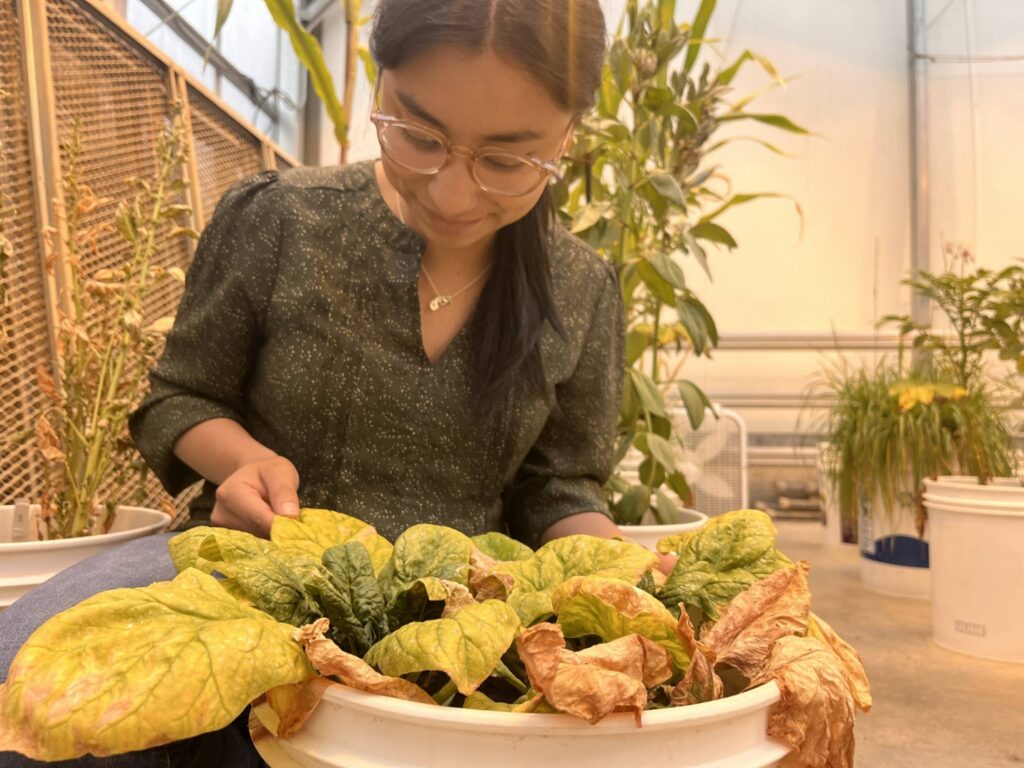
The Berry and Potato Pathology (BPP) program published four full-length research articles and three plant disease management reports in 2025. Kudos to all the past and present BPP team members as well as the collaborators who made this possible!
The team welcomed Francely Flores, a new PhD student in the Department of Plant Pathology, in January 2025. She earned her BS in Agricultural Engineering from EARTH University (Costa Rica) and her MS in Sustainable Tropical Agriculture from Zamorano University (Honduras). Francely’s PhD research focuses on managing Verticillium wilt in potatoes and developing high-throughput methods for detecting potato pathogens, with an emphasis on Verticillium dahliae. She conducted greenhouse experiments this summer to evaluate the impact of different rotational and cover crops on soil inoculum of V. dahliae. She also completed another greenhouse experiment to develop high-throughput methods for detecting V. dahliae from potato stems and tubers.
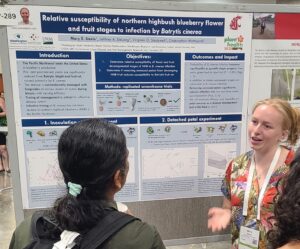
Mary Steele completed the second and final year of a screenhouse trial to determine relative susceptibility of highbush blueberry growth stages to Botrytis cinerea infection. She attended the Plant Health 2025 meeting from August 2-5 in Honolulu, HI and presented a poster on this project. She passed her prelims exam on August 19, an important step towards the PhD degree, and is now focusing her time on improvement of efficient methods for detection of key mutations conferring fungicide resistance in B. cinerea.
Adam Elcan is taking the lead on a potato field trial that evaluates two in-furrow fungicide treatments for managing black dot of potato. Aidan Hostetler gained new technical skills and is using molecular methods to detect viruses such as blueberry shock virus and blueberry scorch virus and performing multi-year monitoring of blueberry fields to study temporal and spatial patterns of virus spread in blueberry fields. The team also welcomed Maggie Norton, a recent graduate from Western Washington University, with a bachelor’s degree in biology. She is excited to bring her knowledge, enthusiasm, and skills to the BPP program helping all team members with their research projects!
Entomology
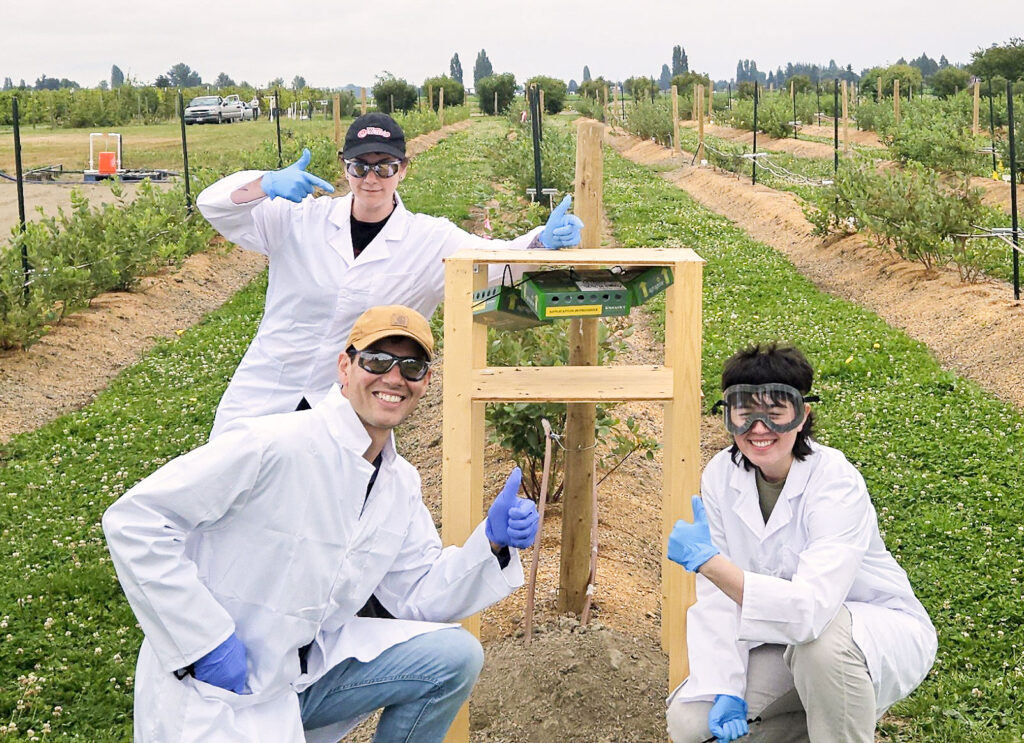
The Entomology program at the NWREC is led by Louis Nottingham, who joined NWREC in October 2022. Louie was previously at the Wenatchee TFREC since 2017, where he served as a research assistant professor and the pear entomologist. The current entomology team consists of technical staff: Chris Sater (manager), Charles Coslor (postdoc), Emma Waiss (tech) and Julia Gray (tech); students: Molly Sayles (PhD), Adriana Barsan (MS), Claire Winslow (PhD), and Gusta Beard (incoming PhD).
Ongoing projects in the Entomology lab include:
- Novel Integrated Pest Management (IPM) tools for blueberry and raspberry pests including ovipositional baits (Decoy) and repellents (kaolin clay).
- Effects of rotational crops and soil health on arthropod communities.
- Efficacy of at-plant insecticides for control of seedcorn maggot in spinach planted for seed.
- Reflective and biodegradable mulches for management of strawberry pests including aphids, mites, and thrips.
- Surveys for parasitoids of spotted wing drosophila
- Insecticide resistance monitoring for spotted wings drosophila
- Evaluating sterile insect releases for management of spotted wing drosophila.
Small Fruit Horticulture
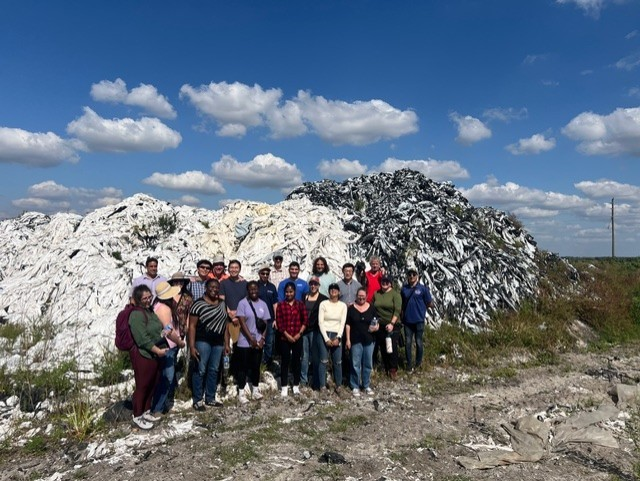
The Small Fruit Horticulture Program, led by Lisa Wasko DeVetter since 2014, supports blueberry, raspberry, blackberry, and strawberry growers across Washington. The program focuses on enhancing productivity, fruit quality, and on-farm efficiencies while conserving natural resources vital to small fruit systems in the Pacific Northwest.
Key research areas include pollination optimization, sustainable mulch management, environmental stress mitigation, machine harvesting, and nutrient management.
Team Highlights
- Pedro Rojas-Barros (Postdoctoral Researcher) completed blackberry cold hardiness experiments, led a raspberry calcium study, and explored growth regulators in blueberry.
- Givemore Munashe Makonya (Postdoctoral Researcher) published a paper focused on biostimulants for heat stress and wrapped up a second year of raspberry heat stress mitigation trials.
- Nataliya Shcherbatyuk (Postdoctoral Researcher) supports outreach for a federally funded strawberry plastics project with Carol Miles and Lisa DeVetter.
- Nayab Gull (PhD student co-advised with Deirdre Griffin-LaHue) continues to investigate soil-biodegradable mulch effects on strawberry yield, quality, and soil health.
- Salena Helmreich (PhD student co-advised with David Crowder) studies wild pollinators in blueberry and published a grower guide on Blueberry Pollination Project.
- Ben Weiss (PhD student) completed his MS degree program focused on hydromulch in organic small fruit systems and began his PhD with DeVetter.
- Micah Evalt (MS student) launched research on heat stress mitigation during the blueberry pollination period.
- Aidan Williams (MS in Ag) completed trials on lignocellulose mulch films and a consumer survey.
- Emma Rogers co-developed a honey bee stocking density tool for blueberry growers and continues to provide technical support in the field, lab, and across the many data spreadsheets generated by the program.
- Brian Maupin maintains the NWREC blueberry cultivar trial and provides leadership in field operations.
- Wendy Britton provides essential project management support for our large, strawberry plastic mulch project.
- Ashley Fincham was our summer undergraduate intern who supported various projects and wrote a guide on heat stress mitigation in raspberry, which should be out in early 2026!
Together, the team advances resilient, grower-informed solutions for small fruit production across Washington and beyond.
Soil Health
It has been another busy summer for the Soil Health Program, with field projects, student milestones, and new tools to share with Washington growers.
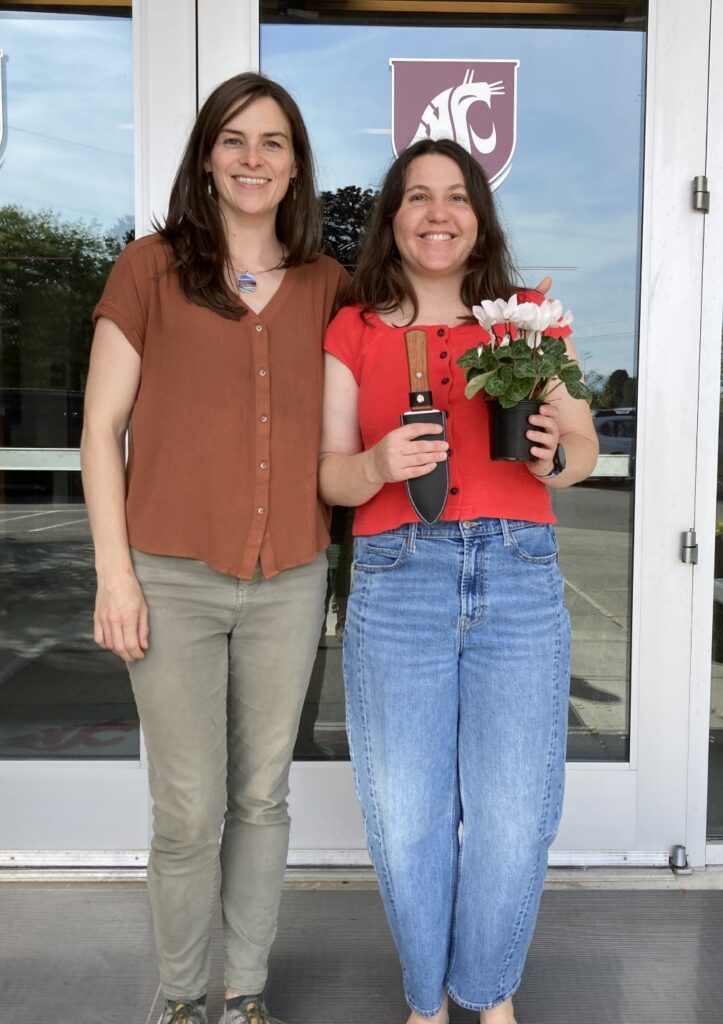
In August, graduate student Madeline Desjardins successfully finished her PhD and published an open-access paper that examines a comprehensive dataset of soil health indicators from long-term biosolids sites in Washington and Colorado. Her upcoming papers will dive deeper into how biosolids applications influence soil health, soil carbon, and the integration of cover crops and livestock in semi-arid systems—work with important implications for sustainable nutrient management.
Graduate students Evan Domsic, Annah Young, and Nayab Gull all advanced to PhD candidacy in the last few months and are moving forward on projects relevant to Washington agriculture, including quinoa agronomic management, the role of cover crops and perennials in building soil organic matter, and the impacts of biodegradable mulches on soil health.
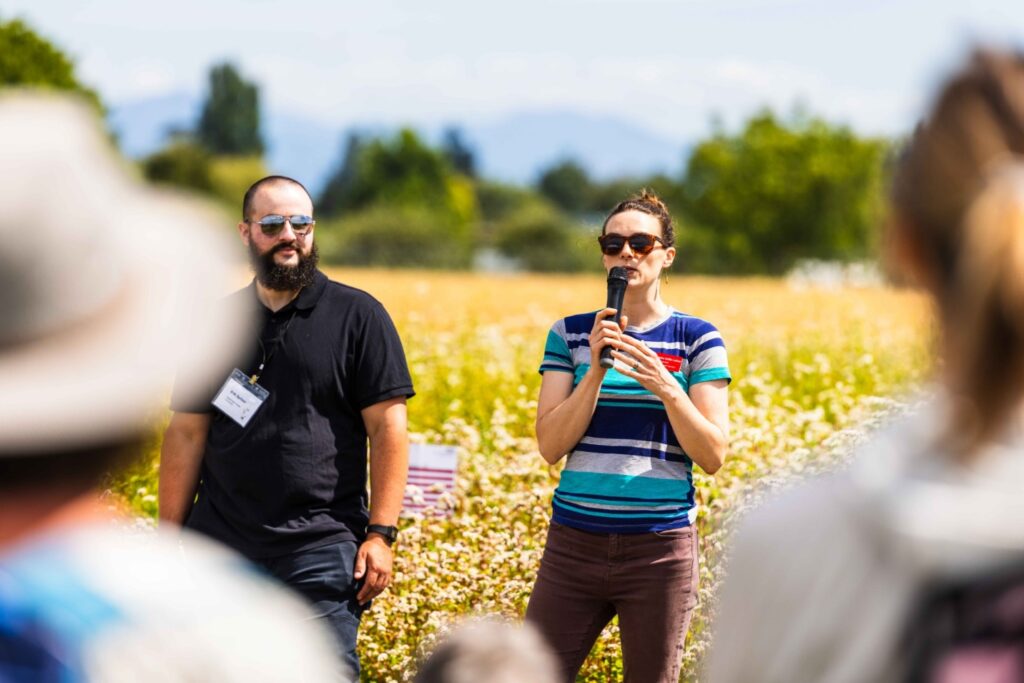
August also brought the third annual Buckwheat Fest, which we co-organized with the WSU Breadlab. This event featured field tours of our trials investigating how agronomic practices and buckwheat variety choice affect both yield and ecosystem services such as weed suppression and pollinator habitat. PhD student Erik Spitzer is leading this work and related research on breeding buckwheat for even greater ecosystem benefits, in partnership with Kevin Murphy.
We also bid farewell to postdoctoral scholar Luis Reyes Rojas, who contributed significantly to the State of the Soils project, including work on defining soil health comparison zones in Washington. As part of this project, in collaboration with WSDA, we are excited to announce the launch of a new online soil health reporting tool—Dirt Data Reports. This user-friendly resource generates reports from uploaded data, complete with explanations and comparisons at county and state levels.
Soils & Water
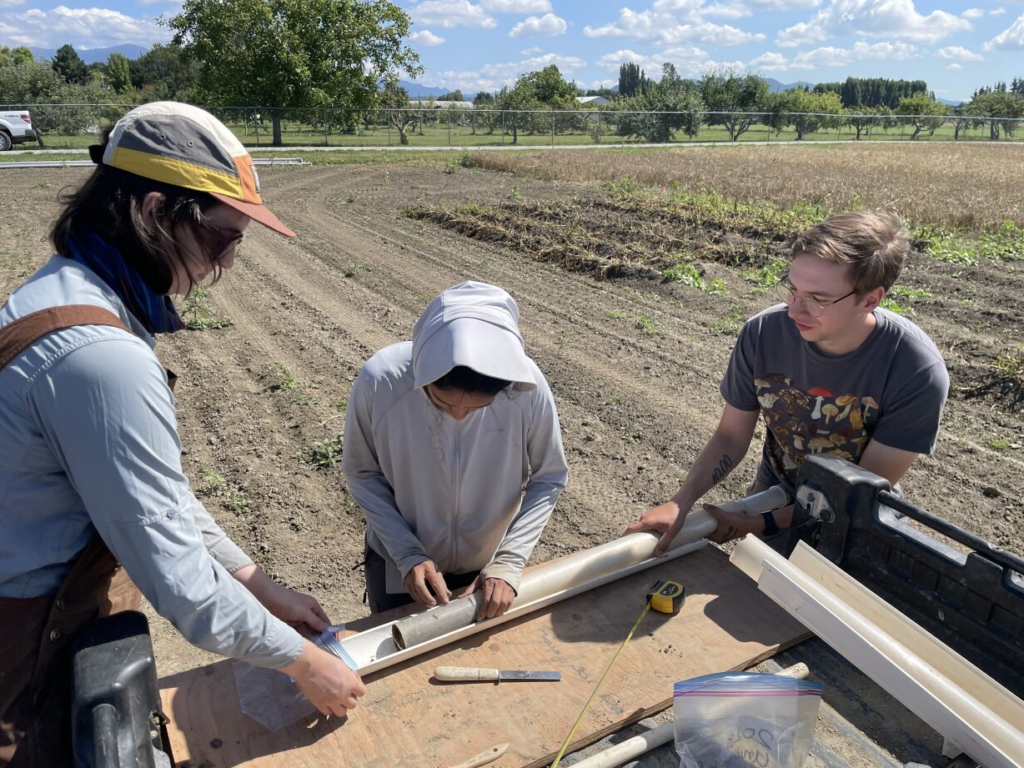
We just finished digging roughly 35,000 pounds of potatoes from two of our research trials this week, and while that may seem like a drop in the bucket to any commercial potato farmers, it’s quite substantial for a research program and reflects our commitment to conducting relevant and reliable field research. With many of the crops harvested, some of our research trials coming to an end, and my having been granted tenure and promoted this past spring, it’s a natural opportunity to reflect on my program priorities and the direction I’d like my program to take in the next five to ten years. While that direction will ultimately depend on the needs of producers and other agricultural stakeholders in our region, one goal I’d like to prioritize is better integration between research areas and between teaching, research, and extension efforts. For that reason, I’m quite excited about our continuing WSDA Specialty Crop Block Grant (pdf) that is exploring how soil compaction and tillage impact irrigation requirements, in addition to identifying soil moisture thresholds to maximize potato yield and quality. Results from our second year of work will be presented at the Lynden Ag Show and the Western Washington Potato Conference. On the teaching side, those of us involved with the WSU Everett Agricultural and Food Systems degree program plan to invite agricultural stakeholders in northwestern Washington for a tour and a listening session so that we can improve alignment between the learning objectives of the program and the technical knowledge, skills, and abilities that agricultural employers need.
Some other highlights from this past year:
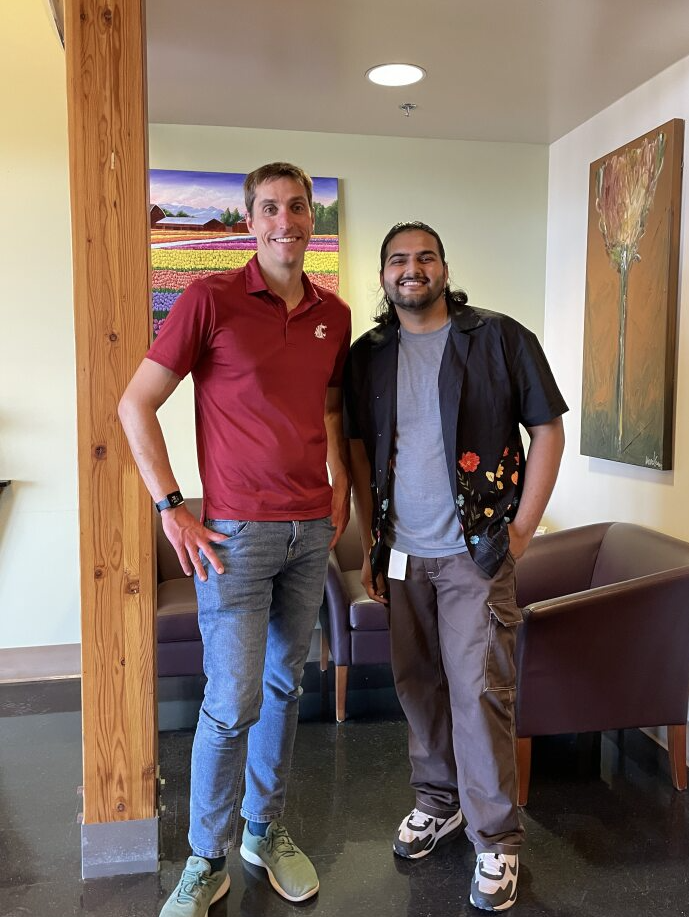
- Sahil Thapa completed his MS degree, focusing on how irrigation and nitrogen management can impact bacterial bulb rots in onion production. Key highlights from this work, including very effective ways to manage irrigation to reduce the risk of bacterial rot, can be found in these Frequently Asked Questions
- Molly Monahan joined the program and will be working on farmer participatory research on soil health as well as a project to understand how the structure of incentive programs for compost application influence which producers participate.
- Former postdoctoral research associate, Navdeep Singh, now an Assistant Professor at Western Kentucky University, published our work together on how soil organic matter and soil compaction influence plant available water in the journal Soil and Tillage Research, Compaction of a sandy loam soil not impacted by long-term biosolids applications.
Vegetable Horticulture
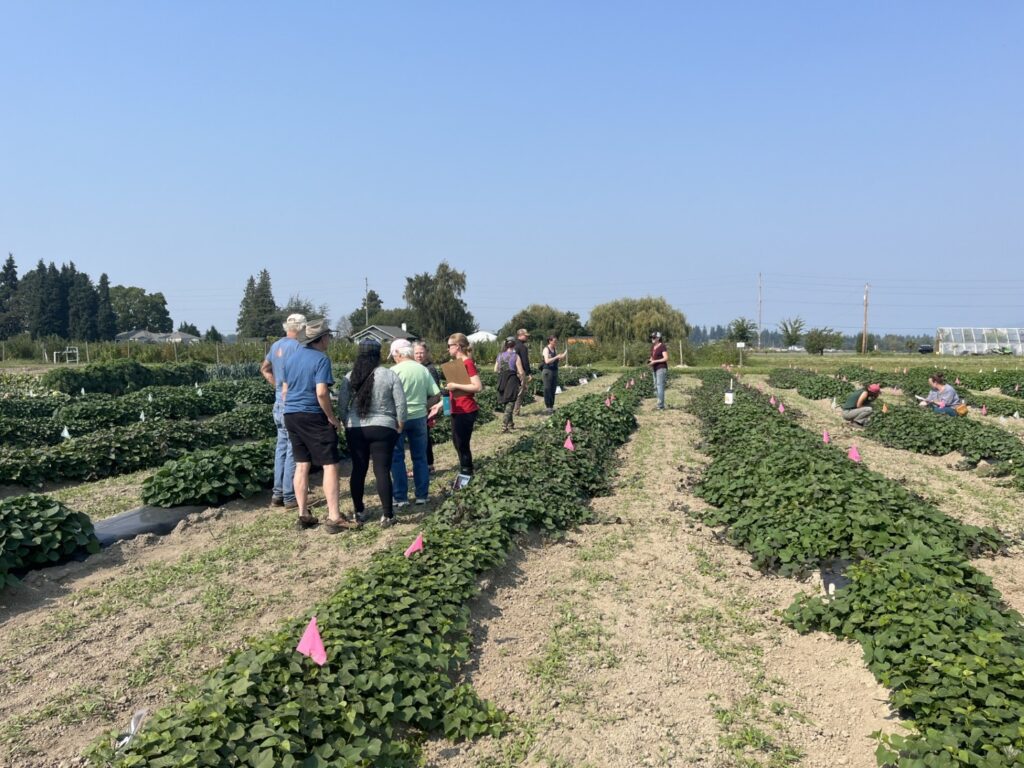
Our research program this year continues to focus on sweetpotatoes and tea plants. Our sweetpotato field trials at NWREC are carried out by PhD student Laura Schulz and MS student Jordan White. We are evaluating cultivars and breeding lines for wireworm resistance, assessing growing degree days for storage root maturity, and testing purple sweetpotato cultivars and breeding lines for suitability in our region. In collaboration with Laurel Moulton and Sammi Grieger, WSU Clallam County Extension, we distributed sweetpotato slips to 70 growers and gardeners for planting and crop evaluation, mostly in western Washington with a few in eastern Washington and western Oregon. We learned that about 30% of trial hosts have issues with wireworm, and spotted cucumber beetle adults feed on top growth, and the larval stage may feed on roots. Wireworm resistant cv. Cascade (pale yellow, dry flesh), developed by USDA sweetpotato breeder Phil Wadl and selected in our trials at NWREC, provides growers with a new, unique cultivar to market in our region. PhD student Steven Young-Uhk is establishing sweetpotato trials in the Yap Islands using semi-decomposed seagrass as a soil amendment. Soils in the region are heavily weathered with low nutrient and organic matter content, and sweetpotato is a staple food crop throughout that region.
PhD student Srijana Shrestha is carrying out a community science project by providing tea plants to Master Gardeners and asking them to record plant health and growth data, with the goal of gaining a better understanding of the plant’s suitability for a diversity of locations and care in our region. MS student McKenzie Shelton has propagated 14 tea varieties, provided by USDA National Plant Germplasm System (NPGS) and the tea research program in Mississippi, and planted an on-farm trial with cv. Minto Pacific, to test establishment in our region. We published our tea cutting propagation protocol and distributed plants to nurseries so they can begin marketing tea in our region.
In our cider apple research orchard, MS student Dickson Avowlanu is assessing the economics of mechanized pruning and harvest. Mechanization significantly reduces labor needs associated with growing cider apples in Washington, while fruit yield and juice quality are maintained. Mechanical pruning is in the summer by hedging to create a tall spindle fruiting wall, and harvest is in the autumn with an over-the-row harvester that was custom-made by Oxbow (formerly Korvan) in Lynden, WA.
See my webpages for more information on our vegetable research and cider apple research programs.
Vegetable Seed Pathology
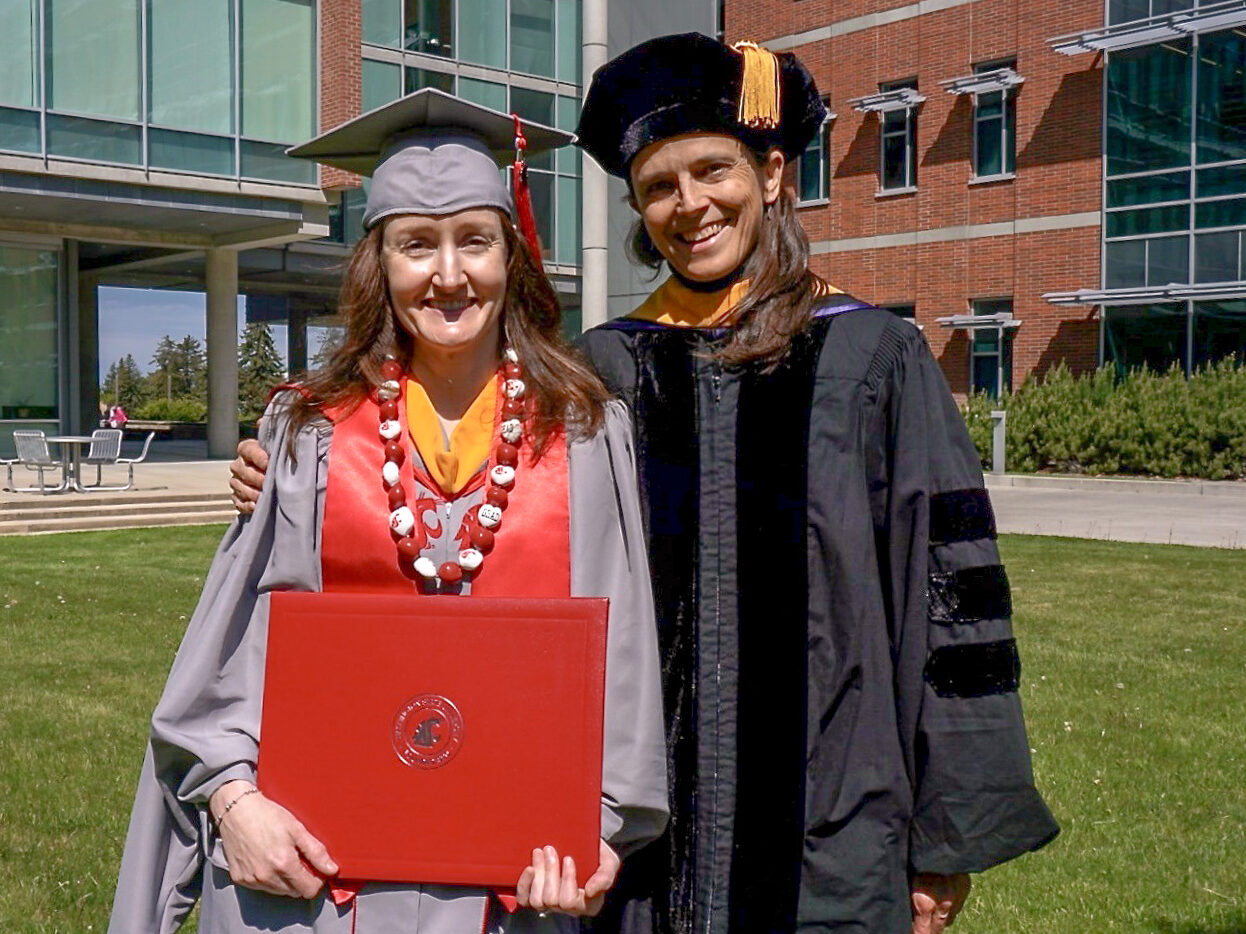
The Vegetable Seed Pathology Program has gone through a lot of personnel changes over the past year. Besides two new hires in September 2024, Michael Gordon and Sintayehu Daba, who were mentioned in the previous NWREC newsletter, two long-term employees retired at the end of 2024 – Mike Derie and Babette Gundersen, following 38 and 30 years, respectively, of amazing service to WSU and the agricultural community! Congratulations to Mike and Babette on their inspiring careers and service. Marilen Nampijja completed her PhD degree in May 2025 after successfully defending her dissertation titled “Management of seedborne Pseudomonas syringae pv. aptata in table beet and Swiss chard seed production in the Pacific Northwest” and Zephyr Papin-Tillery completed her MS in Ag degree while working full-time at Lallemand Plant Care in Auburn, CA, with her excellent final project titled “A history and overview of agricultural pesticide regulation in the US”.
The VSP team has been busy with a diversity of research projects this season. Projects in the Columbia Basin of central Washington have included sweet corn cold tolerance breeding trials, a sweet corn virus project, onion pink root and Fusarium basal rot trials, a bean bacterial wilt project, and wrapping up a six-year onion bacterial rot project that Lindsey has led with collaborators from 12 states and another country. In western Washington, the VSP program continued a longer-term carrot cavity spot breeding trial, Marilen’s beet and chard bacterial leaf spot project, a number of spinach Fusarium wilt projects, and a new Verticillium wilt project focused on spinach seed crops and potato (with Chakradhar Mattupalli, Deirdre Griffin LaHue, and Gabriel LaHue).
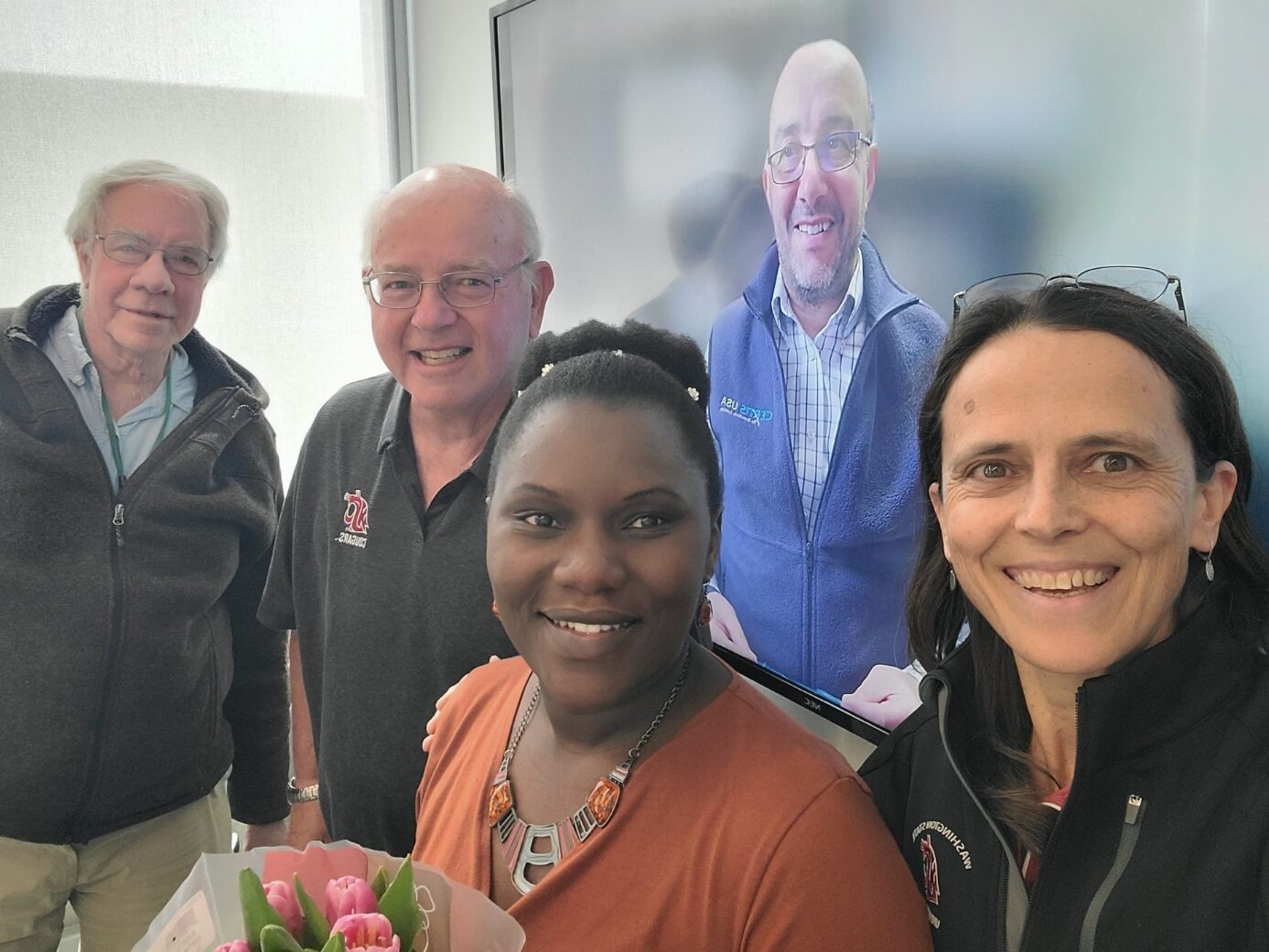
In August, the VSP Program celebrated 25 years of leadership by Lindsey du Toit, who came to NWREC in 2000 after serving as the Plant Diagnostician at the Puyallup Research and Extension Center. Tomy Villarroel created an onion piñata for the celebration, filled with chocolates and seeds—the onion even had symptoms of the disease pink root!
WSU Breadlab
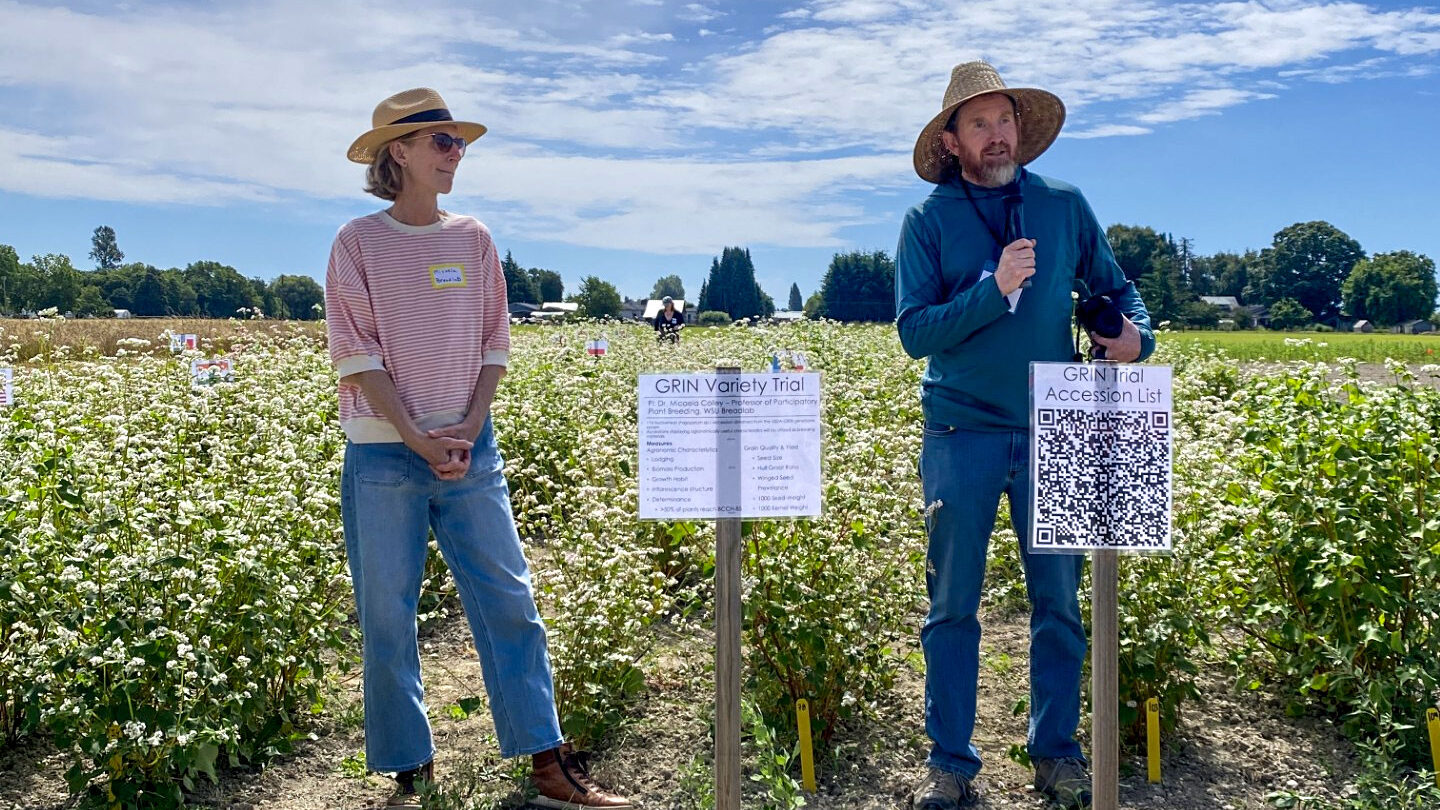
This August the Breadlab held Buckwheat Fest 2025 at the NWREC and Breadlab facilities, gathering over 120 buckwheat enthusiasts for a day of learning and exploration. The event combined field tours, processing and cooking demonstrations, and a tasting with participating chefs and bakers from across the Pacific Northwest. Guest presenters included soba cook and author Sonoko Sakai of Los Angeles, buckwheat farmers and ployes (crepe-like flatbread) entrepreneurs Jan and Joe Bouchard of Bouchard Family Farms in northernmost Maine, and Mark Benoit of Red’s Breads in Northern CA. Researchers from the OREI More Bang for Your Buckwheat grant from NY, NH and WA gave field-side presentations and were on hand for the duration of the festival to answer questions. It was a resounding success, and we are so thankful for the collaboration!
The Breadlab was recently awarded a grant from a private foundation to create “Community School at the Breadlab.” This all-ages outreach and education program will include a hands-on “Soil to Society” whole grain baking series, classroom visits to local middle schools, high-school field trips to the Breadlab, and the development of home-baking kits for local libraries. This program will help us in our mission to provide more access to healthy whole grains to more people in our community.
Washington Mesonet and AgWeatherNet
The first half of the year for the state weather network was rough with budget cuts and a lot of staff turnover. This led to a slowdown in the progress of network development and maintenance, as well as software repairs. The good news in all this is that we have still managed to complete a lot of minor work.
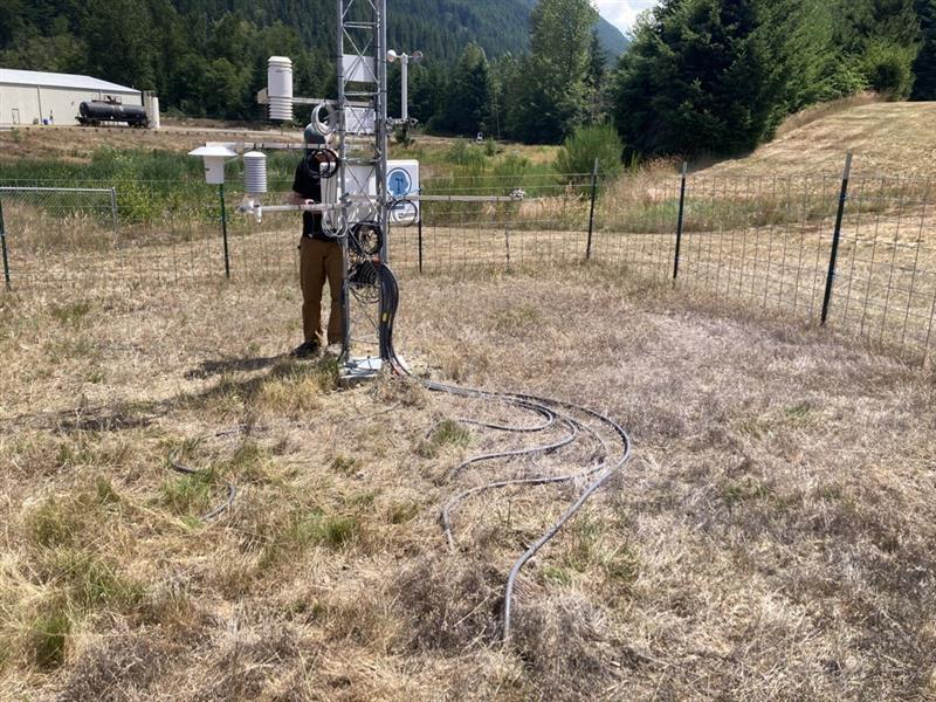
Rather than building new stations, the team has focused on improving the functionality of existing Mesonet sites. We began by retrofitting a dozen of them with additional power capacity. The new power set up allowed us to equip those stations with air quality (NO, NO2, CO, O3, PM1, PM2.5, PM10) and two additional soil sensors. These sites now measure soil temperature and water potential at 5cm, 10cm, 20cm, and 50cm.
We’re also migrating our “pay as you go” cellular plan to an unlimited service. The plan is that by the end of the year, all stations will be reporting 5-minute data. We’re also working on a new website to display the 5-minute data, as the current website is unfit for this deployment.
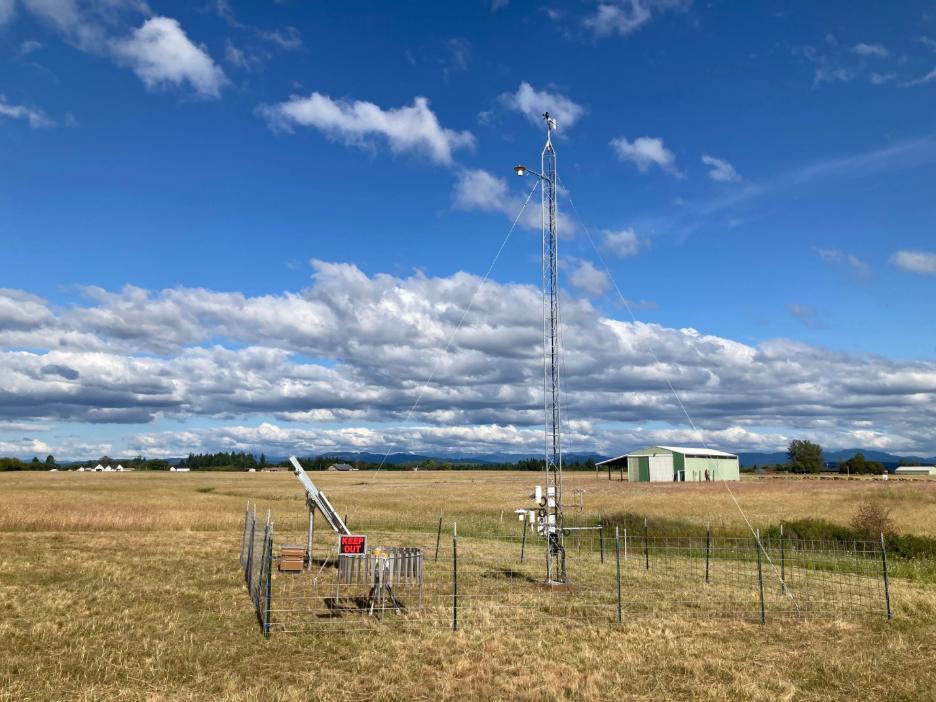
One new station was completed earlier this summer. The Toledo station was built in the last days of June in southern Lewis County. And we are working on another new station in Dryden, WA, but the recent heatwave has slowed progress. We’re hopeful that it will be completed by the end of September.
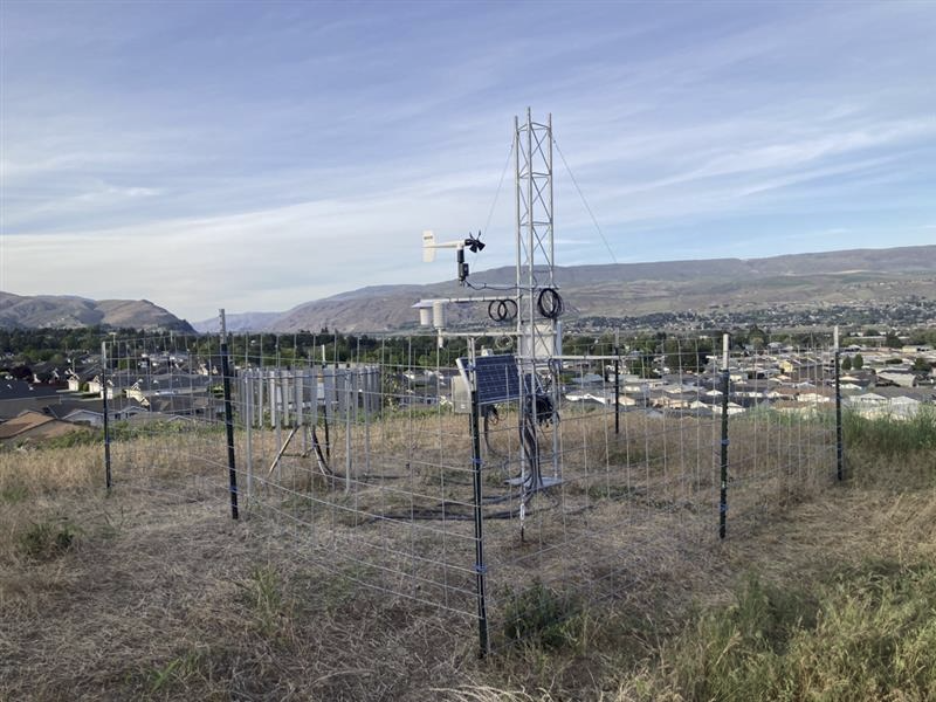
Finally, we have completed the redesign of our older stations and deployed the first of these at the WSU Wenatchee Extension. We’re hoping to begin work on replacing these aging sites once the Washington Mesonet is completed.
USDA-ARS Small Fruit Pathology Program
The USDA-ARS Small Fruit Pathology Program (USDA-ARS SFP) located at the WSU-NWREC in Mt. Vernon, WA, conducts research on diseases of small fruits in northern Washington, with a focus on diseases of red raspberry and blueberry. This research program is managed by USDA-ARS supporting scientist Jeff DeLong and directed by USDA-ARS research plant pathologist Virginia Stockwell. Additionally, the program provides enhanced technical support and services to multiple USDA-ARS scientists in the Horticultural Crops Disease & Pest Management Unit and the Genetics & Plant Improvement Unit co-located in Corvallis, Oregon as part of the Plant Health National Program. The benefits of this research are greatly strengthened and only possible through collaborations with faculty and the supporting partners of WSU.
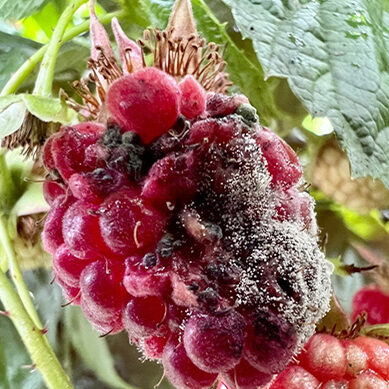
A few highlights as we complete the 2025 growing season. Our work on berry diseases continues with the support from the Washington State Red Raspberry and Blueberry commissions, the Northwest Center for Small Fruits Research and regional growers. Throughout this season we continue to test samples from our curated Botrytis cinerea collection, (the fungus that causes gray mold of red raspberry and blueberry) for resistance to specific fungicide chemistries*. Currently we are evaluating a high-throughput assay approach, that has the potential to provide rapid, in-season, fungicide resistance profile results for Botrytis cinerea in red raspberry. This information benefits growers as they design their disease management programs. Looking forward to sharing some our findings at the upcoming 2025 Small Fruits AG show in Lynden, WA!
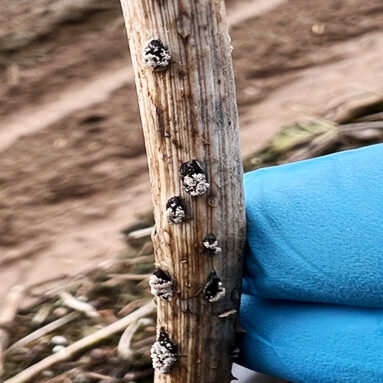
This season we completed our last year of sampling in Northwestern Washington for a Northwest Center for Small Fruits Research project, studying the role of overwintering Cane Botrytis lesions as a primary inoculum source for Botrytis in red raspberry fields. This collaborative work involving USDA-ARS Corvallis, OR (V. Stockwell), Pacific Berries Inc. (L. Jones) and WSU-Mount Vernon (C. Mattupalli), uses DNA markers as tools to track and compare Botrytis lineages found in spores produced from sclerotia on Cane Botrytis lesions in the winter to early spring months to the fungus found in flowers and seen as gray mold of red raspberries later in the season. Understanding the early-season sources of Botrytis in fields and rates of disease incidence from differing plant developmental stages may lead to new intervention methods to improve control of gray mold. Updates on this research will be provided at the Northwest Small Fruits Annual Conference in the fall!
Employee and Graduate Student Highlights
Graduate Student Updates
- Adriana Barsan, MS student (Entomology), won the graduate student talk competition at the Pacific Northwest Insect Management Conference in Portland, OR. Adriana’s talk was on the effects of rotational crops in potato systems on arthropod communities and pest management. This was Adriana’s first official talk on their masters research, so we’re super proud! Co-authors were Louis Nottingham, Deirdre Griffin LaHue, and Gabriel LaHue.
- Maddy Desjardins completed her PhD program in Spring 2025. Maddy’s thesis was on Evaluating the Short- and Long-Term Effects of Biosolids on Soil Functions, Carbon Sequestration, and System Diversification in Semi Arid Dryland Cropping Systems.
- Marilen Nampijja completed her PhD degree in May 2025, after successfully defending her dissertation, titled “Management of seedborne Pseudomonas syringae pv. aptata in table beet and Swiss chard seed production in the Pacific Northwest”
- Zephyr Papin-Tillery completed her MS in Ag degree in May 2025 with her advisor, Lindsey du Toit.
- PhD Student Molly Sayles (Entomology) was selected as a 2025 recipient for WSU Graduate School’s Karen P. DePauw Leadership Award!
- Sahil Thapa completed his MS degree in Spring 2025. Sahil’s thesis was titled “Combating Onion Bacterial Diseases through Nitrogen and Irrigation Management”. Sahil has moved into a Graduate Research Assistantship, and is starting his PhD program at Purdue University in Indiana.
- Ben Weiss completed his MS degree with a research focus on hydromulching in berry crops, and is remaining at NWREC to begin working towards his PhD.
- Claire Winslow (Entomology) was accepted by the WSU Entomology Department to transition from MS to PhD. Claire also received runner up in the student competition at the 2025 Pacific Branch Meeting for the Entomological Society of America, for her talk on testing insect growth regulators to manage spotted wing drosophila.
New Arrivals
Graduate Students
- Dickson Avowlanu, MS student (advised by Carol Miles)
- Autumn Coker, MS in Ag student (advised by Carol Miles)
- Molly Monahan, MS student (advised by Gabe LaHue)
Staff
- Gusta Beard, Undergraduate Intern
- Micaela Bogart, Service Worker
- Micaela Colley, Assistant Professor of Participatory Plant Breeding – Career
- Austin Kerr, Agricultural Research Technologist 1
- Maggie Norton, Agricultural Research Technologist 1
- Dylan Svihus, Service Worker
- Noah Reznik, Agricultural Research Technologist 1
- Emma Waiss, Agricultural Research Technologist 1
- Jess Weaver, Agricultural Research Technologist 1
Recognition and Awards
WSU Faculty Mid-Career Award
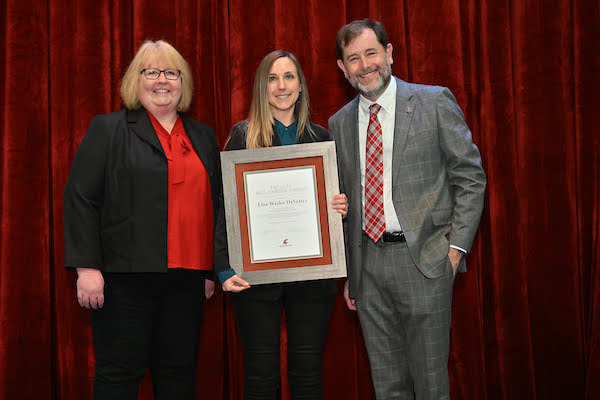
In March, Lisa Wasko DeVetter was selected to receive the Faculty Mid-Career Award—a systemwide faculty distinction for commitment to the University’s land-grant mission. Recipients of this award have demonstrated outstanding performance and the potential to build on their achievements, thereby enhancing the University’s ability to create positive outcomes for all and meet the future needs of the state of Washington, the Pacific Northwest, our nation, and beyond.
Faculty and Staff Achievements
Lindsey du Toit, Chair, Department of Plant Pathology, Professor & Extension Plant Pathologist, celebrated 25 years leading her program at WSU Mount Vernon NWREC!
Ed Scheenstra, Senior Scientific Assistant, was inducted into the Quarter Century Club to celebrate 25 years at WSU!
Give to WSU Mount Vernon NWREC
We are grateful for your generosity towards the students, faculty, and staff at Washington State University’s Mount Vernon Northwestern Washington Research and Extension Center. Your contribution will help us in advancing our research and educational activities in agriculture, horticulture, and natural resource science. You may make a donation through the NWREC fund at the WSU Foundation. We thank you again for investing in our mission.
Help Shape the Future Workforce – WSU Everett Employer Survey
Washington State University Everett is conducting its first Employer Needs Survey, and your input would be greatly appreciated.
This short survey (about 10 minutes) is designed to help us understand which skills, knowledge, and experiences are most valuable to employers in our region. Your insights will help us shape academic programs and better prepare the future workforce.
As a thank you, we’ll share an exclusive report of regional workforce trends that may support your own hiring and planning efforts.
Please feel free to share the survey with others at your organization who bring a different perspective. We welcome multiple responses from each organization, but ask that each individual only submit once.
Thank you for partnering with us to support workforce development in the North Puget Sound region.
Publications
- Baral, R., DeLong, J. A., McGhee, G. C., Stockwell, V., & Mattupalli, C. (2025). Molecular Characterization of Botrytis Isolates from Blueberry and Red Raspberry in the Pacific Northwest with Resistance to SDHI Fungicides. Plant Disease. https://doi.org/10.1094/PDIS-12-24-2576-SC
- Borghi, M., L.W. DeVetter, P. Edger, M. Gutensohn, E. Grotewold, R. Sagili, K.K. Graham, M.A. Body, C. Li, S.P. Galinato, A. Melathopoulos, J.H. Cane, P. Sandefur, A. Dela Luz, R.N. Schaeffer, C.C. Rering, S. Jadhav, Y. Chu, and D.H. Chitwood. 2025. Enhancing entomophilous pollination for sustainable crop production. The Plant Journal. 122(4):e70234. https://doi.org/10.1111/tpj.70234.
- Brawner S., Kendall A., Kalcsits L., and Miles C. 2025. Cider apple (Malus domestica Borkh.) cultivars respond differently to summer mechanical hedging. HortTechnology 35(5):824-830. https://doi.org/10.21273/HORTTECH05714-25.
- Brawner S., Kendall A., Kalcsits L., and Miles C. 2025. Over-the-row mechanical harvest of cider apples (Malus Domestica Borkh.). Horticulturae 11(9): 1123. https://doi.org/10.3390/horticulturae11091123.
- Cladis, D. P., Hill Gallant, K. M., Kisch, A. R., & Murphy, K. M. (2025). Elemental analysis of 346 varieties of quinoa: Development and validation of microwave plasma optical emission spectrometry (MP-OES) method. Journal of Food Composition and Analysis, 141, 107270. https://doi.org/10.1016/j.jfca.2025.107270
- Colley, M. R., Dawson, J. C., Zystro, J., Hoagland, L., Liou, M., Myers, J. R., Silva, E. M., & Simon, P. W. (2025). Influence of organic and conventional management systems on carrot performance and implications for organic plant breeding. J. Amer. Soc. Hort. Sci., 150(2), 65–85. https://doi.org/10.21273/JASHS05459-24
- Connolly, D., Minj, J., Arbizu, S., Kirkendall, A., Nalbandian, E., Ganjyal, G. M., Murphy, K. M., Solverson, P., & Carbonero, F. (2025). In vitro fecal fermentation demonstrates the prebiotic-like properties of quinoa modulated by different preparation methods. Current Research in Food Science, 11, 101198. https://doi.org/10.1016/j.crfs.2025.101198
- Czokajlo, R., C. Looney, L. B. Nottingham, B. Diehl, P. Abram, T. D. Northfield, P. Smytheman, E. Beers. In Press. Distribution of Three Figitid Parasitoids of Drosophilidae in Washington State. J. Econ. Entomol.
- Czokajlo, R., T. D. Northfield, L. B. Nottingham, B. Diehl, D. Beal, P. Smytheman, E. Beers. 2025. Comparison of Sampling Methods for Figitid Parasitoids of Drosophila suzukii (Diptera: Drosophilidae). J. Econ. Entomol. https://doi.org/10.1093/jee/toaf207
- Dada, O.I., T.U.H. Liyanagea, T. Chi, L. Yu, L.W. DeVetter, and S. Chen. 2025. Plastic and soil-biodegradable mulch films in agroecosystems: A comparative life cycle assessment perspective to environmental impact. Environmental Science and Ecotechnology. 100541 https://doi.org/10.1016/j.ese.2025.100541.
- Darr, M. N., L. B. Nottingham, J. W. Steele, T. L. Evans, D. R. Coyle. 2025. A Comparison of Different Chemical Control Application Methods for Managing Elaeagnus pungens in South Carolina. Invas. Plant Sci. Mana. 2025:1-23. https://doi.org/10.1017/inp.2024.41
- Desjardins, M., J. Ippolito, A.I. Bary, S.B. Cappellazzi, D. Liptzin, D. Griffin-LaHue*. 2025. Long-term biosolids applications improve key soil health functions for semi-arid dryland systems. Science of the Total Environment 997, 180130. https://doi.org/10.1016/j.scitotenv.2025.180130
- Divyanth, L. G., Khanal, S. R., Paudel, A., Mattupalli, C., and Karkee, M. 2024. Efficient detection of eyes on potato tubers using deep-learning for robotic high-throughput sampling. Frontiers in Plant Science. 15:1512632. doi: 10.3389/fpls.2024.1512632
- Durado, A.D., I. Ara, D.S. Bajwa, G. Gramig, L.W. DeVetter, S. Weyers, A. Formiga, S. Galinato, W. Ahmad, B.D. Weiss, and R.A. Bajwa. 2025. Rain-fastness and puncture resistance of biodegradable horticultural hydromulches. Industrial Crops and Products Journal. 234: 121472. https://doi.org/10.1016/j.indcrop.2025.121472.
- Eeraerts, M., C. Kogan, R. Isaacs, P. Batáry, B.R. Blaauw, K. Bobiwash, J.W. Campbell, P. Cavigliasso, J.C. Daniels, J.D. Ellis, J. Gibbs, L. Goldstein, R.E. Mallinger, A. Melathopoulos, S.Z. Miller, A. Montero-Castanõ, S.M. Naranjo, C.C. Nicholson, J.A. Perkins, N.E. Raine, T.H. Ricketts, E. Rogers, J.J. Ternest, K. Verheyen, and L.W. DeVetter. 2025. Wild bees mediate fruit quality via seed set in highbush blueberry: A quantitative synthesis. Agriculture, Ecosystems and Environment. 394: 109872 https://doi.org/10.1016/j.agee.2025.109872.
- Gyawali, S., Bhattarai, G., Correll, J.C., Shi, A., and du Toit, L.J. 2025. Genome wide association study of Fusarium wilt resistance in Spinacia turkestanica. Scientific Reports 15:15486.
- Hanel, A., L. B. Nottingham, R. J. Orpet, R. Hilton, T. D. Northfield, and R. Schmidt-Jeffris. 2025. Evaluating Trapping Methods to Increase Earwig Capture in Temperate Tree Fruit Crops. J. Econ. Entomol. 118: 551-560. https://doi.org/10.1093/jee/toaf018
- Hanel, A., L. B. Nottingham, T. D. Northfield, and R. Schmidt-Jeffris. 2025. Non-target Effects of Insecticides and Herbicides on Earwigs. J. Econ. Entomol. 118: 541-550. https://doi.org/10.1093/jee/toaf012
- Ilyas, U., du Toit, L.J., and McDonald, M.R. 2025. Optical density assay to determine the sensitivity of Pythium and Globisporangium isolates to mefenoxam. PhytoFrontiers 5:154-164.
- Ingram, J. T., Mudrak, E. L., Tran, L., Curtis, M., Mattupalli, C., Gudmestad, N. C., Charkowski, A. O., Groves, R. L., Babler, B. N., Whitworth, J. L., Frost, K. E., Brown, C. R., Karasev, A. V., Gray, S. M., and Filiatrault, M. J. 2025. A robust potato tuber tissue collection method to investigate potato virus Y, potato mop-top virus, and tobacco rattle virus localization patterns. Plant Disease. https://doi.org/10.1094/PDIS-11-24-2453-RE
- Ingram, J. T., Mattupalli, C., Mudrak, E. L., Curtis, M., O’Neill, P., Davenport, B., Gudmestad, N. C., Charkowski, A. O., Groves, R. L., Babler, B. N., Whitworth, J. L., Frost, K. E., Karasev, A. V., Gray, S. M., and Filiatrault, M. J. 2025. Multi-year evaluations of an FTA card-based detection protocol for four vector borne viruses affecting potato. Plant Disease. https://doi.org/10.1094/PDIS-11-24-2454-RE
- Kellogg, J. A., Monsivais, P., Murphy, K. M., & Perrigue, M. M. (2025). High β-glucan whole grain barley reduces postprandial glycemic response in healthy adults—Part one of a randomized controlled trial. Nutrients, 17(3), 430. https://doi.org/10.3390/nu17030430
- Kowenstrot, A.M., Cornwall, A., Warburton, M.L., Uhdre, R., and Miles, C. 2025. Assessment of rhubarb varieties grown in Alaska for commercial suitability and conservation. HortScience 60(8):1333-1240. https://doi.org/10.21273/HORTSCI18674-25.
- Liakos, C., Ibanez, V., Lebre, P.H., Derie, M.L., van der Waals, J., du Toit, L.J., Dutta, B., Kvitko, B., Cowan, D.A., and Coutinho, T.A. 2025. The bacterial and viral communities associated with onion bacterial bulb rot. Phytobiomes Journal 9:109-122.
- Makonya, G.M., D.R. Bryla, M.A. Hardigan, W. Hoashi-Erhardt, and L.W, DeVetter. 2025. Biostimulants with glycine betaine or kelp extract alleviate heat stress in red raspberry (Rubus idaeus). Scientific Reports. 15:2251 https://doi.org/10.1038/s41598-024-83955-7.
- Malefaki, A.X., N. Valanides, G. Manganaris, L.W. DeVetter, S. Papadaki, M. Krokida, Vyrkou, A. Angelis-Dimakis. 2025. A comprehensive assessment of life cycle environmental impact and economic feasibility of different red raspberry (Rubus idaeus L.) cultivation systems. Cleaner and Circular Bioeconomy. 100150 https://doi.org/10.1016/j.clcb.2025.100150.
- Marshall, A., K. A. Catron, R. J. Orpet, R. T. Curtiss, T. D. Northfield, and L. B. Nottingham. In Press. Insecticide and repellent tests on Washington leafhopper vectors of cherry X-disease. J. Econ. Entomol.
- Mnguni, F.C., Shin, G.Y., du Toit, L.J., Derie, M.L., and Coutinho, T.A. 2025. Ewingella allii sp. nov. isolated from a diseased onion plant in the Columbia Basin of Washington State, USA. Antonie van Leeuwenhoek 118:115
- Munkvold, G., du Toit, L., and Dunkle, R. 2025. Seed pathology: Challenges and advances in ensuring a safe, global seed supply. Annual Review of Phytopathology 63:43-62.
- Oeller, L., Lee, B. W., Basu, S., Murphy, K. M., & Crowder, D. W. (2025). Effects of organic and synthetic fertiliser on insect herbivore populations in quinoa. Journal of Applied Entomology, 149(4), 515–523. https://doi.org/10.1111/jen.13398
- Orpet, R. J., R. T. Curtiss, K. A. Catron, S. T. DuPont, E. H. Beers, L. B. Nottingham. 2025. Inoculation and Conservation of the Biocontrol Agent European Earwig in Washington Pear Orchards. Entomol. Exp. Appl. 00: 1–14 https://doi.org/10.1111/eea.13536
- Phipps, S. N., Bassil, N. V., DeLong, J. A., Hoashi-Erhardt, W., Lee, J., Vining, K. J., … & Hardigan, M. A. (2025). Breeding for Resistance to Significant Disease and Insect Pests of Red and Black Raspberry (Rubus idaeus and R. occidentalis) in the Pacific Northwest. HortScience, 60(7), 1180-1199.
- Potter, T.S., Lankau, RA, Silva, EM, Ruark, MD. (2025) Soil microbial community composition matters for crop growth, but only when mobilizing recalcitrant nutrient sources. Accepted at Plant and Soil.
- Puri, P., A. Elcan, L.W. DeVetter, and C. Mattupalli. 2025. Screening blueberry genotypes for susceptibility to mummy berry in Mount Vernon, WA, 2024. Plant Health Progress. https://doi.org/10.1094/PHP-11-24-0113-PDMR.
- Puri, P., Frost, K. E., and Mattupalli, C. 2025. Sensitivity of Helminthosporium solani isolates from northwestern Washington to azoxystrobin, difenoconazole, and fludioxonil. Plant Health Progress. https://doi.org/10.1094/PHP-04-25-0108-RS
- Rojas-Barros, P., D. Bryla, S. Orr, B. Maupin, M. Hardigan, and L.W. DeVetter. 2025. Fruit calcium is influenced by soil and physiological factors but not by fertilizer applications in floricane-fruiting red raspberry. HortScience. In press.
- Santosa, Daniel.; Potter T.S.; Pierobon F.; Goreke D.; Meyer P.A.; Kruger C.E.; Norberg S.; Collins C.; Male J. (2025) Unlocking the Biofuel Power of Cover Crops in Washington State: Enhancing Potential Through Hydrothermal Liquefaction. Biomass and Bioenergy. https://doi.org/10.1016/j.biombioe.2025.108311
- Sayles, M. W., R. J. Orpet, S. Bossert, R. Schmidt-Jeffris, and L. B. Nottingham. 2025. Biology and management of pear psylla (Hemiptera: Psyllidae) in the Pacific Northwest. J. Integr. Pest Manag. 16. https://doi.org/10.1093/jipm/pmaf036
- Shcherbatyuk, N., B. Weiss, Y. Yu, N. Gull, A. Williams, L.W. DeVetter, and C. Miles. 2025. Frequently asked questions about soil-biodegradable plastic mulches. HortTechnology. 35(4): 470-480. https://doi.org/10.21273/horttech05652-25.
- Shin, G. Y., Asselin, J. A., Smith, A., Aegerter, B., Coutinho, T., Zhao, M., Dutta, B., Mazzone, J., Neupane, R., Gugino, B., Hoepting, C., Khanal, M., Mala, S., Nischwitz, C., Sidhu, J., Machado Burke, A., Davey, J., Uchanski, M., Derie, M. L., du Toit, L. J., Stresow, J., Bonasera, J. M., Stodghill, P., and Kvitko, B. 2025. Plasmids encode and can confer pathogenicity to onion in Pantoea agglomerans. The International Sociey for Microbial Ecology Journal 19:wraf019
- Shrestha, S., & Miles, C. (2025). Timing and Shoot Section Influence Success of Tea- Cutting Propagation in a Temperate Climate. Horticulturae, 11(6), 645. https://doi.org/10.3390/horticulturae11060645
- Singh N., Flury M., Neely H., Akin I., Bary A., and G.T. LaHue. 2025. Compaction of a sandy loam soil not impacted by long-term biosolids applications. Soil Tillage Res. 253:106648. https://doi.org/10.1016/j.still.2025.106648
- Singh, S., S. Singh, W. F. Schillinger, D. Griffin-LaHue, H. Neely. 2024. Biosolids’ legacy benefits persist even seven years after the application in a dryland wheat-fallow cropping system. Soil Use and Management. 40, e13163. https://doi.org/10.1111/sum.13163
- Suri, S., Kamboj, A., Guo, X., Murphy, K. M., & Ganjyal, G. M. (2025). Buckwheat starch isolated from varieties grown in washington state: A qualitative characterization. Journal of Food Science, 90(5), e70219. https://doi.org/10.1111/1750-3841.70219
- Wadl, P. A., Rutter, W. B., Jackson, D. M., Schulz, L., Shrestha, S., & Miles, C. (2025). USDA ‘Cascade’: A Multiple Pest–Resistant, Rose-skinned, Creamy Yellow-fleshed Sweetpotato. HortScience, 60(10):1772–1774. https://doi.org/10.21273/HORTSCI18853-25
- Weiss, B., Maupin, B., Bajwa, D. S., Durado, A., Weyers, S., Ahmad, W., Gramig, G., & Wasko DeVetter, L. (2025). Hydromulch Suppresses Dicot but Not Monocot Weeds and Maintains Yield and Fruit Quality in Established Blueberry. HortScience, 60(10), 1674–1683. https://doi.org/10.21273/HORTSCI18739-25
Abstracts (Professional Conferences)
- Makonya, G.M., N. Gull, B. Weiss, A. Williams, W. Ahmad, N. Shcherbatyuk, C. Miles, D.G. LaHue, G. Gramig, D. Bajwa, A. Durado, S. Galinato, H. Du, X. Pan, and L.W. DeVetter. 2025. Mulch technologies to reduce agriculture plastic waste generation in strawberry cultivation. HortScience 60(7S): S382-S383. https://doi.org/10.21273/HORTSCI.60.7S.S1
- Moulton, L., C. Miles, S. Grieger, and L. Schulz. 2025. Connecting researchers to small-scale farmers: A case study with on-farm sweetpotato trials in western Washington. HortScience 60(7S): S303. https://doi.org/10.21273/HORTSCI.60.7S.S1
- Schulz, L., J. White, and C. Miles. 2025. Finding the Sweet Spot: Evaluating 21 sweetpotato entries with a public taste test. HortScience 60(7S): in press. https://doi.org/10.21273/HORTSCI.60.7S.S1
- Schulz, L., S. Grieger, L. Moulton, J. White, and C. Miles. 2025. Role of on-station and on-farm trials to test and introduce new crops. HortScience 60(7S): in press. https://doi.org/10.21273/HORTSCI.60.7S.S1
- Shelton, M., C. Mattupalli, C. Miles, and S. Shrestha. 2025. Greenhouse propagation for tea varieties in Western Washington. HortScience 60(7S):S472. https://doi.org/10.21273/HORTSCI.60.7S.S1
- Shelton, M., C. Mattupalli, and C. Miles. 2025. Tissue culture propagation of tea in the United States. HortScience 60(7S):S329. https://doi.org/10.21273/HORTSCI.60.7S.S1
- White, J., L. Schulz, P. Wadl, and C. Miles. 2025. Evaluating diverse sweetpotato breeding lines in western Washington. HortScience 60(7S): in press. https://doi.org/10.21273/HORTSCI.60.7S.S1
- White, J., L. Schulz, and C. Miles. 2025. Assessing sweetpotato growth response to growing degree days in western Washington. HortScience 60(7S): in press. https://doi.org/10.21273/HORTSCI.60.7S.S1
- Young-Uhk, S. and C. Miles. 2025. Using washed-up semi-decomposed seagrass in sweetpotato cultivation. HortScience 60(7S):S48-S49. https://doi.org/10.21273/HORTSCI.60.7S.S1
Extension Publications
- Flandermeyer, L. E., L. B. Nottingham, S. Harper, C. G. Adams, C. R. André, K. A. Catron, A. E. Clarke, S. T. DuPont, A. T. Marshall, and T. D. Melton. 2025. Methods for sampling X-disease Colladonus spp.(Hemiptera: Cicadellidae) leafhopper vectors in orchards. Washington State University Extension Publications. Pullman, WA. 400E. https://doi.org/10.7273/000007491.
- DuPont, S.T., C. Strohm, L. B. Nottingham. 2025. Field Guide to Common Insect Pests and Predators of Pears. Washington State University. 2024-2788 (Print Only).
Extension Newsletter Articles
- Wohleb, C.H., Waters, T.W., and du Toit, L.J. 2025. Washington State University Extension Onion Alerts. Timely articles and photos on onion diseases, pests, and other problems in the Columbia Basin. Published on 6 & 14 Aug., & 8 Sep 2025. WSU Onion Alert – August 14, 2025
Popular Periodicals
- Singh, S., S. Singh, W. F. Schillinger, D. Griffin-LaHue, H. Neely. Tracking biosolids: Long-term agronomic impacts in dryland wheat systems. Wheat Life Magazine. January 2025.
- Singh, S., S. Singh, W. F. Schillinger, D. Griffin-LaHue, H. Neely. Biosolids in the dryland Pacific Northwest seven years after application. Crop & Soils Magazine. October 27, 2024. https://doi.org/10.1002/crso.20407
Technical Reports
- Gundersen, B., Elcan, A., Blauer, J. M., LaHue, G. T., and Mattupalli, C. 2025. Assessment of management practices at vine kill on silver scurf and black dot of potato in Washington, 2023. Plant Health Progress. https://doi.org/10.1094/PHP-05-25-0150-PDMR
- Puri, P., Tanaka, K., Sathuvalli, V., and Mattupalli, C. 2025. Screening advanced russet potato breeding clones for resistance to silver scurf. Plant Health Progress. https://doi.org/10.1094/PHP-03-25-0087-PDMR
- Puri, P., Elcan, A., DeVetter, L. W., and Mattupalli, C. 2025. Screening blueberry genotypes for susceptibility to mummy berry in Mount Vernon, WA, 2024. Plant Health Progress. https://doi.org/10.1094/PHP-11-24-0113-PDMR