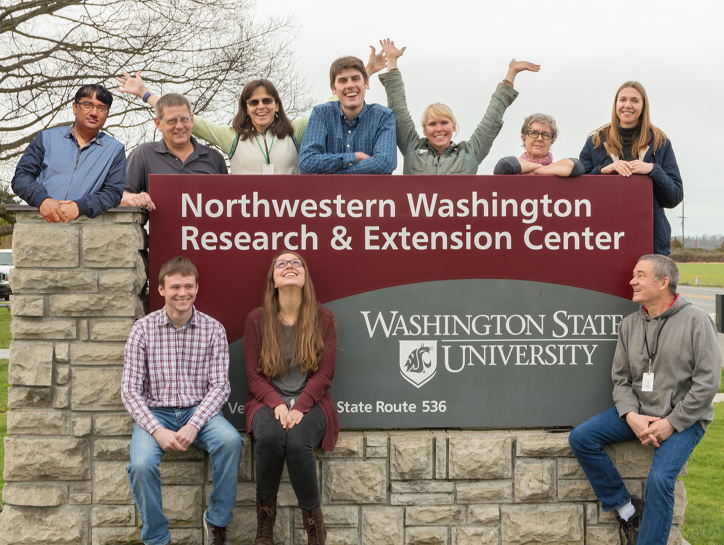
Vegetable Seed Pathology Team
Vegetable Seed Pathology team members in January 2019 (left to right): Standing = Sanjaya Gyawali (Postdoctoral Research Associate), Mike Derie (Scientific Assistant Sr.), Lindsey du Toit (Program Director), Alex Batson (MS student), Eliza Mae Andrews (time-slip assistant), Barbara Holmes (Agricultural Research Technologist I), and Louisa Brouwer (Postdoctoral Research Associate). Seated = Ryan Solemslie (MS student), Kayla Spawton (PhD student), and Paul Morgan (Agricultural Research Technologist I).
Program Director
Lindsey’s first position after graduate school was as the diagnostician for the Plant & Insect Diagnostic Lab at the Puyallup Research & Extension Center of Washington State University (WSU), from 1998 to 2000. Lindsey was then hired as an Assistant Professor & Extension Specialist E2 in vegetable seed pathology for WSU in August 2000, based at the WSU Mount Vernon NWREC. Lindsey was promoted to Associate Professor & Extension Specialist E3 in 2006, and to Professor & Extension Specialist E4 in 2013. The focus of Lindsey’s vegetable seed pathology research and extension program is on the etiology, biology and management of diseases that affect vegetable seed crops grown in the Pacific Northwest USA. Small-seeded vegetable seed crops such as spinach, brassicas, carrot, onion, radish, and table beet are the focus of Lindsey’s program. In 2012, Lindsey started teaching a summer graduate course, Field Plant Pathology (Pl P 525), in the WSU Department of Plant Pathology. Lindsey received the Early Career Award of the Pacific Division of the American Phytopathological Society (APS) in 2006, the WSU Kenneth J. Morrison Extension Award in 2009 for outstanding contributions to the improvement of Washington State’s crop production, the WSU CAHNRS Interdisciplinary Team Award in 2012 for co-leading the Pacific Northwest Vegetable Extension Group (PNW VEG), and the APS Syngenta Award in 2013 for outstanding contribution to research and extension in plant pathology. In 2014, Lindsey was elected to serve as APS Councilor-at-Large (2014-2017), and in 2017 she was elected as Vice President of APS (2017-2021 APS presidential team). In 2018, Lindsey received the Alfred Christianson Distinguished Professorship in Vegetable Seed Science. Lindsey was elected as a Fellow of APS in 2022.
- YouTube video on Lindsey du Toit’s program, courtesy of WSU Communications.
- View profile
Technical Staff
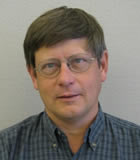
Mike Derie
Scientific Assistant Sr., 2001-Dec. 2024
Mike Derie, a native of Idaho, received his MS degree in plant science from the University of Idaho in 1989. He worked for 11 years at the WSU-Puyallup Research and Extension Center as a research technician in the vegetable seed pathology program under Dr. Gabrielson, where he focused on detection and control of black rot in crucifer seed. Mike joined the vegetable pathology program at Mount Vernon in 1997, with responsibility for carrying out laboratory-based research, making disease diagnoses, and helping prepare manuscripts. In March 2001, Mike joined the vegetable seed pathology program at the WSU Mount Vernon NWREC. Mike is responsible for carrying out lab, field, and greenhouse trials on diseases of vegetable seed crops in Washington. Mike also isolates, and helps identify and maintain many vegetable pathogens. In 2007, he was promoted to Scientific Assistant in the vegetable seed pathology program, and in 2017 he was promoted to Scientific Assistant Senior. In 2009, Mike Derie received the Administrative Professional Staff Excellence Award for the WSU College of Agricultural, Human, & Natural Resource Sciences. In 2016, Mike celebrated his 30th year with WSU!
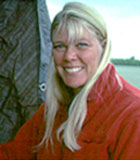
Babette Gundersen
Scientific Assistant Sr.
Raised in the Skagit Valley, Babette Gundersen received her MS degree in experimental psychology from Central Washington University in 1990. She worked for 27 years at the WSU Mount Vernon NWREC as a research technician in the vegetable pathology program under Dr. Debra Inglis, where she focused on water molds and fungal diseases on potato and green pea. In 2000, Babette received the President’s Employee Excellence award. She was promoted to Scientific Assistant Senior in 2018. In October 2020, Babette joined the vegetable seed pathology program to assist with the USDA NIFA SCRI ‘Stop the Rot’ project on onion bacterial diseases. Babette assists with diverse lab, field, and greenhouse trials on diseases of vegetable seed crops in Washington.
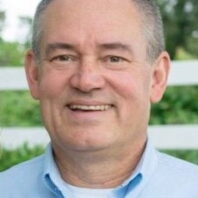
Paul Morgan
Agricultural Research Technologist 2, 2018-2021
Paul Morgan is a Mount Vernon, WA native and a graduate of Mount Vernon High School. He has bachelor’s degrees in accounting (Central Washington University) and biology (University of Washington – Bothell). While at the UW he worked on research related to fungal endophytes and their effects on drought resistance in vegetable crops. He has been at the WSU Mount Vernon NWREC since September 2016. Paul started in the Vegetable Pathology program with Dr. Debra Inglis, and then he split his time in 2018 between the Vegetable Horticulture program of Dr. Carol Miles, the Vegetable Seed Pathology program of Dr. Lindsey du Toit, and the Vegetable Pathology program of Dr. Debbie Inglis. Projects included studying a new bacterial infection of pumpkins, the use of fungal endophytes for control of Verticillium wilt, colonization of onion roots by arbuscular mycorrhizal fungi, management of cider apple trees and analysis of the fruit, and grafting of vegetable crops to increase resistance to Verticillium wilt. In April 2019, Paul was hired as the full-time Agricultural Research Technologist 2 for the Vegetable Seed Pathology program, assisting with the full diversity of lab, greenhouse, and field trials in vegetable and vegetable seed crop pathology. Paul resides in Snohomish Co. When he is not working, he enjoys a variety of outdoor activities. He has previously worked as a CPA and in construction management, and is retired from the National Guard. In 2021, Paul left WSU to start working for a family business restoring antique rifles.
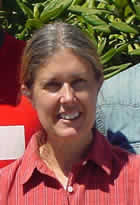
Barbara Holmes
Agricultural Research Technologist I, 2008-2019
Barbara Holmes was born and raised in Ontario, Canada, but has lived in Mount Vernon, WA since 1974, where she raised her family and worked in many of the local nurseries and greenhouses. Barbara started working for the Vegetable Seed Pathology program as a temporary employee. In August 2008, Barbara was hired on as a permanent employee in the VSP program as Agricultural Research Technician I. Barbara provided invaluable assistance with a wide diversity of field, greenhouse, and lab trials on diseases of vegetable and vegetable seed crops. Barbara retired from WSU at the end of February 2019. Congratulations, Barbara, on a well-earned retirement!
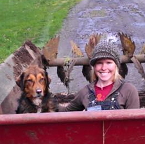
Eliza Mae Andrews
Service Worker 3, winters of 2017-18 to 2019-20
Eliza Mae Andrews came to the Vegetable Seed Pathology program from Whatcom Co., where she worked on an organic CSA (Community Supported Agriculture) farm for six seasons. During the spring and summer months, Eliza Mae worked for the Bellingham Food Bank, where she managed two agriculture programs: the Small Potatoes Gleaning Project and Seed Money. Eliza Mae worked in the Vegetable Seed Pathology program each winter from 2017-18 to 2019-20 to help with the annual Spinach Fusarium Wilt Soil Bioassay and Spinach Parent Line Fusarium Wilt Resistance Screening Trial. Eliza Mae enjoys riding bikes, running, climbing, skiing, cooking and sewing. Her previous research experience includes a preliminary survey involving XRF analyses of urban soils for lead and other heavy metal contamination, completed at Georgia State University in Atlanta, GA in 2008; and using quenched magmatic inclusions in dacite to understand magma mixing on the Glacier Peak volcano in the North Cascades, a project completed at Western Washington University in Bellingham in 2012. Eliza Mae ran her own CSA (Community Supported Ag) farm, Rain Shadow Farm, for several years, based at the farm incubator operation, Viva Farms. Eliza Mae and her husband, Woody, are now blessed with two beautiful children.
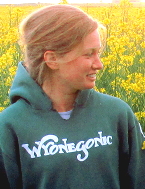
Erin Miller
Research Intern, 2017
Erin Miller grew up in Glen Gardner, NJ. As a child, she spent lots of time on her grandparents’ farm and always enjoyed helping out in the garden. In high school, Erin worked at a flower shop with a small nursery and was responsible for watering the greenhouse. In 2016, Erin graduated from Hobart and William Smith Colleges in Geneva, NY, with a major in Biochemistry and a minor in Latin American Studies. As an undergraduate, Erin worked at the New York State Agricultural Experiment Station for Cornell University in Dr. Kerik Cox’s Fruit Pathology lab, first as a National Science Foundation REU (Research Experience for Undergaduates) intern, and the following summer as a temporary service technician. Both summers, Erin assisted a PhD candidate studying antibiotic use to protect against fire blight (a disease caused by the bacterium Erwinia amylovora) in apple orchards. Also, during her undergraduate studies, Erin spent a semester on exchange in Perth, Australia, to study agribusiness. After graduating, Erin moved to Wenatchee, WA to work in Dr. Vince Jones’ Entomology lab at the WSU Wenatchee Tree Fruit Research & Extension Center, where she studied the use of volatile lures to attract green lacewings in apple orchards. Erin spent the winter of 2016-17 in Utah working at Alta Ski Area, and was excited to be back in Washington by late spring 2017 to work in Dr. Lindsey du Toit’s Vegetable Seed Pathology program. Erin helped with an onion mycorrhizae project funded by the Washington State Department of Agriculture Specialty Crop Block Grant (No. K1769), in addition to contributing technically to many other projects in the Vegetable Seed Pathology program through October 2017.
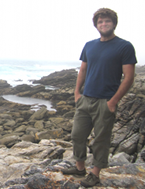
Brian Henrichs
Associate in Research, 2016-2017
Brian grew up in Medford, OR and learned the importance of agriculture from an early age by weeding the garden and raising dairy goats. His formal education started at Portland State University but finding that city life did not agree with him, he moved to Corvallis, OR to attend Oregon State University. Brian earned a Bachelor’s of Science degree in Zoology in 2010 studying symbiosis as well as disease ecology with Dr. Anna Jolles. He continued on with Dr. Jolles to earn a Master’s of Science degree from Oregon State University in disease ecology. Brian’s Master’s thesis focused on the community ecology of blood parasites, and how interactions within a host determine which parasites are able to persist and eventually cause disease. After graduating in 2014, he held various temporary jobs, ranging from farming to aquatic insect surveys. In 2015, Brian moved to Mount Vernon. In 2016, he joined the Vegetable Seed Pathology group at the WSU Mount Vernon NWREC. Regardless of the subject matter, Brian is interested in how microbes enhance (or detract) from our everyday lives. His day-to-day work includes being helpful generally and, specifically, providing technical support for a project investigating the role of mycorrhizae in growth and disease suppression in onion and carrot crops in the Columbia Basin. The 2-year project is funded by the Washington State Department of Agriculture Specialty Crop Block Grant (No. K1769).
Publications from the 2016-17 WSDA SCBG mycorrhizae project:
- Henrichs, B., Derie, M.L., Waters, T.D., and du Toit, L.J. 2017. The effects of arbuscular mycorrhizal inoculants on onion root colonization and growth in field trials near Connell, WA (pdf), 2016. Plant Disease Management Reports 11:V137. (1,2,3,4,5,6)
- Henrichs, B., Waters, T.D., and du Toit, L.J. 2017. The effect of soil phosphorus levels on colonization of onion roots by arbuscular mycorrhizal fungi (pdf), 2016-2017. Plant Disease Management Reports 11:V125.
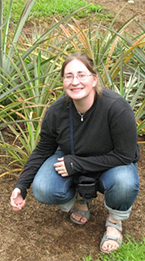
Jenny (Anne) Knerr
Associate in Research, 2014 – 2016
Jenny is a Moscow, Idaho native. She obtained three Bachelor’s degrees (Microbiology, Biology, and Horticulture) and two minors (Chemistry and Plant protection) at the University of Idaho in 2008. Her early growth as a scientist was supplemented by summer employment with the U of I Weed Science lab where she assisted with large-scale field studies on primarily wheat, barley, and peas and discovered her love for agriculture. After completing her undergraduate education, she worked as a laboratory technician at a local water and soil quality testing laboratory, Anatek Labs. Jenny returned to the U of I in 2009 to obtain a Master’s degree in Plant Science with Dr. Robert Tripepi. Her research focused on using PCR-DGGE and 454 pyrosequencing to identify the changing microbial communities in composting dairy manure, and determine if the compost itself was harmful to Oceanspray (Holodiscus discolor) and a tomato variety. After completion of her Master’s degree, Jenny joined the WSU Department of Plant Pathology in 2012, working in the laboratory of Dr. Brenda Schroeder for two years designing a DNA macroarray for identification of bacterial bulb rot pathogens of onion. In the summer of 2014, Jenny joined the Vegetable Seed Pathology program of Dr. Lindsey du Toit, to work on a project examining the role of arbuscular mycorrhizal fungi in onion production.
In 2015, Jenny transferred to a position as Research Specialist in Dr. Robert Tripepi’s plant propagation lab in the Department of Plant, Soil and Entomological Science at the University of Idaho. Jenny continued to work part-time for the VSP program through May 2016 to finish up several projects.
Publications from the 2014-15 onion mycorrhizae project:
- Knerr, A.J., Wheeler, D., Schlatter, D., Sharma-Poudyal, D., du Toit, L.J., and Paulitz, T.C. 2019. Arbuscular mycorrhizal fungal communities in organic and conventional onion crops in the Columbia Basin of the Pacific Northwest USA. Phytobiomes 2:194-207.
- Knerr, A.J., Wheeler, D., Schlatter, D., Paulitz, T., and du Toit, L.J. 2016. Arbuscular mycorrhizal fungal communities associated with organic and conventional onion crops in the Columbia Basin of Washington (pdf). 2016 APS Annual Meeting, 30 Jul.–3 Aug. 2016, Tampa, FL. Abstract for a poster presentation.
- Knerr, J.A., Paulitz, T.C., and du Toit, L.J. 2016. Effects of commercial arbuscular mycorrhizae fungi (AMF) products on onion in a growth chamber study, 2015 (pdf). Plant Disease Management Reports 10:V098.
- Knerr, J., Sharma-Poudyal, D., Paulitz, T., and du Toit, L.J. 2014. Evaluation of arbuscular mycorrhizal fungi (AMF) in conventional and organic onion production in the Columbia Basin, and the potential use of AMF to reduce the impact of soilborne pathogens of onion (pdf). WSU Center for Sustaining Agriculture & Natural Resources (CSANR) BIOAg Symposium “Saving Nature and Improving Agriculture: Where does Nature’s Wisdom Lie?”, 28 Oct. 2014, Pullman, WA.
VSP Project Managers
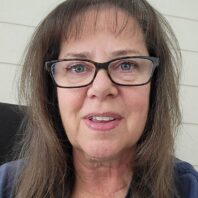
Wendy Britton
Project Manager, 2024-2025: USDA NIFA SCRI onion bacterial project, ‘Stop the Rot’
Wendy Britton is originally from northwest New Jersey and has always had a passion for science and biology. While originally studying marine biology at the College of Charleston, Wendy discovered botany and embraced her love of plants. Wendy obtained a BS degree in biology at East Stroudsburg University and worked in various environmental testing laboratories before pursuing a MS degree in Horticulture. She graduated from Pennsylvania State University in 1996 and worked briefly as a plug production grower, among other occupations. In 2008, Wendy began working as the project coordinator for the Cucurbit Downy Mildew Project at North Carolina State University in Raleigh, NC. In 2017, she transitioned to Project Manager for the USDA SCRI Vegetable Grafting grant at NCSU. After 15.5 years at NCSU, Wendy joined the WSU Small Fruit Horticulture Team in 2024, led by Dr. Lisa Wasko DeVetter, as started working part-time for the WSU Vegetable Seed Pathology program as Project Manager for the USDA NIFA Specialty Crops Research Initiative project ‘Stop the rot: Combating onion bacterial diseases with pathogenomic tools and enhanced management strategies’. During her free time, Wendy enjoys gardening, reading, and spending time with Ziggy, her Bernese Mountain Dog, and Decker the cat.

Heather MacKay
Project Manager, 2019-2023 USDA NIFA SCRI onion bacterial project, ‘Stop the Rot’
Heather MacKay has lived in Lynden, WA with her family since 2005. She grew up on a farm in Zimbabwe before moving to South Africa to complete her college education. Heather has a BSc in Physics and Applied Mathematics from Rhodes University, South Africa, and a PhD in Physical Oceanography from the University of Port Elizabeth, South Africa. Heather’s career has been mostly in the public sector, working as a water and environmental policy specialist. She served for several years as Senior Specialist Scientist in the South African Department of Water Affairs and Forestry focusing on development of water quality standards, national water policy and water law. Heather was then appointed to the Water Research Commission of South Africa where she managed national portfolios related to water policy, water law and governance, institutional development and environmental water requirements. She chaired the Scientific and Technical Review Panel of the Ramsar Convention on Wetlands from 2005 to 2012, and concurrently was a member of the Panel’s international working group on water resources and river basin management. Heather’s local work in Washington State has focused on water management and agriculture in Whatcom County, helping farmers and planners find ways to protect and enhance both working farmlands and water resources. Heather joined the WSU Mount Vernon NWREC in November 2019, and currently serves as the Project Manager for two grants from the USDA NIFA Specialty Crops Research Initiative: ‘Stop the rot: Combating onion bacterial diseases with pathogenomic tools and enhanced management strategies’, and ‘Improving end-of-life management of plastic mulch in strawberry systems’. In her spare time, Heather enjoys hiking, sailing the coastal waters with her family, and exploring local trails with her horse.
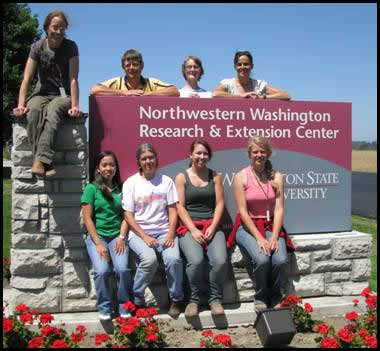
FRONT (L-R): Avi Alcala (PhD student), Barbara Holmes (Ag. Research Tech. I), Katie Reed (WSU undergraduate intern),
Amy Christianson (summer assistant).
BACK (L-R): Emily Gatch (PhD student), Mike Derie (Scientific Assistant), Louise Brissey (Ag. Research Tech. II), and
Lindsey du Toit (Professor and Extension Plant Pathologist).
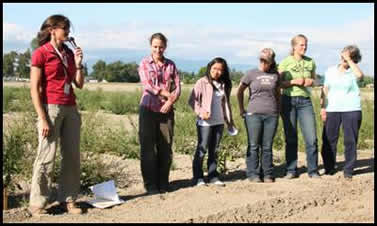
WSU Mount Vernon NWREC Field Day.
L to R: Lindsey du Toit, Emily Gatch and Avi Alcala (PhD students), Katie Reed (undergraduate intern), Amy Christianson, summer assistant, and Louise Brissey (Ag. Research Tech. II).
If you need the content provided on this site in an alternate format or for further information on the Vegetable Seed Pathology program, please contact Lindsey du Toit (dutoit@wsu.edu or 360-848-6140).