Graduate Interns
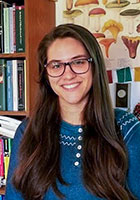
Jenny Martin
(November 2021 – August 2022 Internship)
Jenny Martin is an enrolled citizen of the Cherokee Nation, located in Tahlequah, Oklahoma, and a descendent of the Choctaw Nation. She graduated with a BS in Native Environmental Science (emphasis in ethnobotany and classical botany) from Northwest Indian College (NWIC). NWIC is a Tribal College hosted by the Lummi Nation. Upon graduation in 2019, Jenny moved to Galway, Ireland to pursue an MA in Culture and Colonialism, with a thesis focus on Indigenous intellectualism and the importance of Tribal Colleges. Jenny spent 5 years as a Writing and Science tutor at NWIC where she worked with a wide range of students and community members. Throughout the last year, Jenny has balanced her time between several part-time jobs. She currently works part-time at Whatcom Community College in Bellingham, WA as an Internship Navigator, helping students find and complete academic internships for various degree programs. Jenny has also planted, maintained, and expanded a community teaching garden at the Lummi Tribal Health Clinic. Within the garden, she grows and cares for a variety of heirloom and traditional Native American crops, native food and medicinal plants. These foods are harvested and made accessible to the Lummi Community through the Diabetes Prevention Program, which sponsors her position. Jenny leads garden tours, provides community education, and consults with various departments in the clinic on aspects of Indigenous health relating to land use and traditional foods. She is deeply passionate about plants, plant health, and the role of plants in Indigenous societies. In her spare time, Jenny can be found tottering around the library or old bookstores, cooking, drinking tea and spending as much time outside as possible. While at the WSU Mount Vernon NWREC, Jenny will be investigating the effects of Xanthomonas campestris pathogens on ornamental and vegetable brassica cultivars, and creating extension materials on management of these X. campestris pathogens for the ornamental brassica industry. Her project is funded by the Fred. C. Gloeckner Foundation. Jenny is grateful for the chance to learn more about plant pathology and explore whether a PhD is a good path for her in the future.
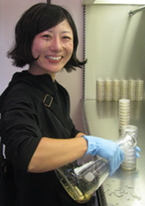
Haruka Fukada
(August 2017 – January 2018 Internship)
Haruka Fukada grew up in Kanagawa, Japan. She received a B.S. degree in Agriculture at Meiji University in 2011, where she majored in plant pathology in 2010-2011. Haruka assisted in developing a loop-mediated isothermal amplification (LAMP) marker to detect the DNA of turfgrass pathogens. She has worked at Sakata Seed Company in Japan since 2011, where she supports the vegetable breeding programs as a plant pathologist. Haruka completed an internship in the WSU Vegetable Seed Pathology Program at the WSU Mount Vernon NWREC from August 2017 to January 2018 to learn seed pathology techniques. In her spare time, Haruka enjoys snowboarding, rock climbing, and relaxing with cats and dogs.
Publications from this internship:
- Fukada, H., Derie, M.L., Shishido, M, and du Toit, L.J. 2018. Black root rot of cucumber in Washington State caused by Diaporthe sclerotioides. Plant Disease 102:1657.
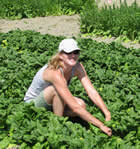
Megan Twomey
(Summer 2008 intern)
Megan Twomey completed an internship with the WSU Vegetable Seed Pathology program in summer 2008, while working on her MS degree in biology from Western Washington University (WWU) with a focus on molecular biology. Megan’s MS thesis work involved isolating and characterizing a cDNA encoding a proline-rich protein involved in pollen tube growth and self-incompatibility. Megan was interested in working in the VSP program to gain experience in an applied research program. As a result of her work with the VSP program, Megan developed an interest in plant pathology. After her MS degree at WWU, Megan worked at Hopsteiner, SS Steiner Inc. in Yakima, WA from 2009 to 2011 where she was involved in research on screening hop populations for disease resistance for crop improvement, as well as development of new medicinal products from hops using a systems biology approach. In 2011, Megan took a position as Faculty Research Assistant with Dr. David Gent, Plant Pathologist with the USDA ARS in Corvallis, OR and Associate Professor with the Dept. of Botany and Plant Pathology at Oregon State University.
Publications from this internship:
- du Toit, L.J., Derie, M.L., Brissey, L.M., Holmes, B., Twomey, M., and Gatch, E. 2009. Evaluation of seed treatments for soilborne damping-off pathogens and seedborne fungi of onion, 2008. Plant Disease Management Reports 3:ST021.
Undergraduate Interns
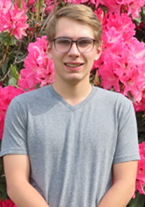
Thomas Synoground
(Summer 2019 intern)
Thomas Synoground grew up in Portland, Oregon and Friday Harbor, Washington. Friday Harbor is a small tourist town in the San Juan Islands. Thomas had no background in agriculture growing up. It wasn’t until the end of his sophomore year of college that he developed a passion for plants and decided to switch from engineering to pursue a degree in agricultural biotechnology in the College of Agricultural, Human, and Natural Resource Sciences at WSU. He joined the Horticulture club at WSU as a way to become more familiar with working in a greenhouse. During his Hort/Crop Sciences 102 course in fall 2018, Dr. Lindsey du Toit gave a lecture on seed production and seed pathology in the Skagit Valley and surrounding areas of the Pacific Northwest. This triggered Thomas’ interest in pathology and sparked his curiosity to understand the dynamics between plants and pathogens. He applied for, and received, funding for a WSU CAHNRS Undergraduate Summer Internship in Dr. du Toit’s Vegetable Seed Pathology program at the WSU Mount Vernon NWREC in summer 2019 to gain hands-on experience in agriculture and plant pathology skills.
Publications from this internship:
- Synoground, T., Batson, A., Derie, M., Koenick, L.B., Pethybridge, S.J., and du Toit, L.J. 2020.
First report of Cercospora leaf spot caused by Cercospora chenopodii on Spinacia oleracea in the USA (pdf). Plant Disease 104:976.
Na’ta’ne Morning-Son Miles, Northwest Indian College, Bellingham, WA
(Summer 2017 intern)
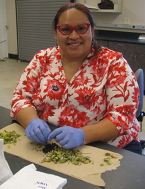
Na’ta’ne (Tawnie) Morning-Song Miles is a Native American student (Pima-Maricopa, Salinan, and Oglala Lakota Native American tribes) in the BS Native Environmental Science program at Northwest Indian College in Bellingham, WA. Na’ta’ne has been involved in several projects on the ethnobotany of Native American traditional food systems, environmental conservation and activism, and traditional ecological knowledge of indigenous peoples. While working with the U.S. Environmental Protection Agency as a tribal ecoAmbassador, Na’ta’ne developed the first award-winning food forest garden at a tribal college, consisting of significant native plants and traditional foods to Coast Salish and Pacific Northwest tribes. In the summer of 2015, Na’ta’ne participated in a National Science Foundation Research Experience for Undergraduates (REU) at the Richard Gilder Graduate School in Evolutionary Biology within the American Museum of Natural History, where she worked in the Department of Invertebrates investigating a leech infestation with the use of molecular techniques and bioinformatics through DNA barcoding. In the summer of 2016, Na’ta’ne worked with the Washington State University Graduate School in the Department of Horticulture and Plant Biotechnology on a genetic diversity analysis of extant apple trees of historical importance among the Lummi Nation Indian Reservation in northwestern Washington. With continued funding and support from the WSU Graduate School, Tawnie is currently conducting exploratory research at the WSU-Mount Vernon Northwestern Washington Research and Extension Center in Dr. Lindsey du Toit’s Vegetable Seed Pathology Program. The objective of Tawnies project is to assess the presence of fungi associated with camas (Camassia) seeds. Camas is an important traditional food among Coast Salish and Pacific Northwest tribes and horticulture.
Publications from this internship:
- Miles, N., du Toit, L.J., and Compton, B. 2017. Necrotrophic fungi associated with seed of a traditional food plant, great camas (Camassia leichtlinii), at a tribal college. Poster presented at the 2017 Pacific Northwest COSMOS Summit: Collaborations Across Our Communities (National Science Foundation Alliances for Graduate Education and the Professoriate project no. 1432932), 12-14 Oct. 2017, Bozeman, MT.
Ed Thomas, Washington State University
(Summer 2013 intern)
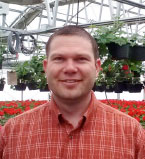
Ed Thomas grew up in Las Vegas, NV in the Mojave Desert. Living in the Mojave Desert was difficult for his love of plants. For a number of years, Ed worked in landscaping and received multiple certifications in arboriculture and irrigation, but had a strong desire to learn more about plants. He transferred from the College of Southern Nevada to Washington State University in 2012, where he enrolled in the College of Agricultural, Human, and Natural Resource Sciences (CAHNRS) in the Integrated Plant Sciences program. After the first time damping-off killed some of Ed’s seedlings, he developed a desire to learn more about plant pathogens. During a crop sciences class in fall 2012, Ed heard Dr. Lindsey du Toit give a guest lecture on seed production and plant pathology. Dr. du Toit’s knowledge of and enthusiasm for plant pathology inspired Ed to inquire about an internship in plant pathology. This led to Ed working part-time with Dr. Dipak Sharma Poudyal as an undergraduate student during spring semester of 2013. Ed assisted with research on onion and pea stunting caused by Rhizoctonia species. He gained experience with Rhizoctonia isolate maintenance, inoculum production, and plant inoculations. Thanks to a summer 2013 internship funded in part by WSU CAHNRS, Ed continued working on this project in fall–winter 2013–14, which presented an excellent opportunity to acquire further knowledge and skill in applied plant pathology.
Publications from this internship:
- Thomas, E. Final Internship Report, August 2013. Research on Rhizoctonia infection in onion and pea crops in the Pacific Northwest USA (pdf).
- Thomas, E. , Sharma-Poudyal, D., Porter, L., Paulitz, T., and du Toit, L.J. 2014. Root rot of pea caused by Rhizoctonia solaniAG-8: Yield loss and screening for resistance (pdf). Research poster presented at the 2014 WSU Showcase for Undergraduate Research & Creative Activities, 28 March 2014, Pullman, WA.
John Kuhn, Washington State University
(Summer 2012 intern)
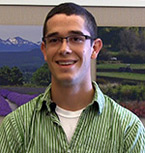
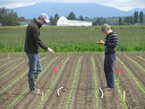
John Kuhn grew up in Rosalia, WA working on local farms and participating in his high school FFA (Future Farmers of America) organization. For an FFA project, he learned about plant breeding and basic plant science. This sparked a new interest, and John enrolled at Washington State University to study Biotechnology in the Department of Crops and Soil Sciences. John has worked in the Winter Wheat Genetics Lab of Dr. Arron Carter for several years, helping with marker-assisted selection and tissue culturing. John was taking an Agricultural Food Systems class (AFS 101) in fall 2011, in which a guest lecture from Dr. Lindsey du Toit introduced him to the world of plant pathology. John applied for a WSU Translational Internship with Dr. du Toit in her Vegetable Seed Pathology program through the WSU College of Agricultural, Human, and Natural Resource Sciences. This internship enabled John to take on a research project for his internship, in collaboration with other public and private scientists.
Martha Sudermann, Washington State University
(Summer 2012 intern)
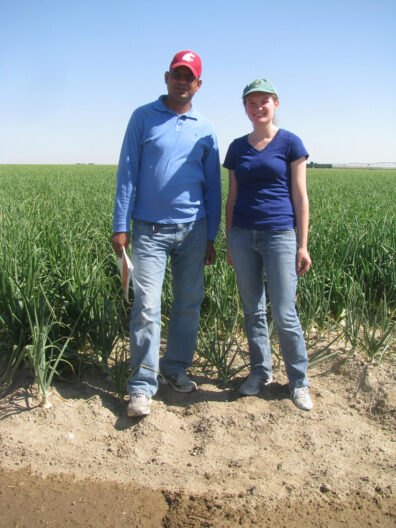
Martha Sudermann grew up in Northfield, MN, where she now attends St. Olaf College. Prior to college, Martha took a ‘gap year’ as a Rotary Youth Exchange student in Sweden in 2010-2011. She attended a Swedish high school, assisted a group of small scouts each week, and travelled up to the far reaches of northern Sweden and around Europe. Her third host family in Sweden lived on a small farm, where Martha enjoyed exploring the rolling farmland and meadows. During her free moments, Martha helped around the farm, assisting her host sister lift hay bales on a trailer and feed cattle, and she had a tractor-driving lesson from her host father. During high school, Martha worked at a small fruit farm, mainly picking strawberries, raspberries, weeding, and watering small apple trees. Martha is interested in biology, math, and anthropology. The WSU internship provides an intersection between Martha’s interests in biology and food production, and the chance to gain experience at a university research center to complement her classroom education.
Anita Da Costa, University of the Free State, South Africa
(Summer 2012 intern)
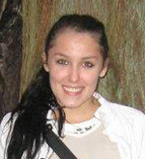
Anita da Costa was born and raised in a small town in Gauteng Province, South Africa, on her father’s carrot farm, Greenway Farm. She was exposed to many aspects of agriculture by living on a farm, including plant diseases. Anita decided to pursue a B.Sc. degree in agriculture, and enrolled in the Department of Natural and Agricultural Sciences at the University of the Free State, South Africa, in a three-year degree with a major in plant health. In addition, Anita worked part-time for the Department of Natural and Agricultural Sciences at the University of the Free State as a lab assistant, where she learned about plant pathology. Anita was inspired to study plant pathology after meeting Dr. Lindsey du Toit at the 35th International Carrot Conference, held in South Africa on 30 November – 2 December 2011, where Lindsey was a guest speaker. Anita enquired about completing an internship in Lindsey’s Vegetable Seed Pathology program at the WSU Mount Vernon NWREC, to learn about applied plant pathology. She completed a 4 week internship in Lindsey’s program in June–July 2012. Anita completed her B.Sc. degree in 2013, and enrolled in a B.S. Honours course in plant pathology at the University of the Free State in 2014.

Katie Reed, Washington State University
(2009–10 intern)
Katie Reed began working in the Vegetable Seed Pathology program at the WSU Mount Vernon NWREC in the summer of 2009. Katie grew up in Burlington Edison where she has been an active member in the community. Katie worked as an intern for Skagit Wholesale Nursery and helped out in the fall at Merrits Apple Orchard. Her interest in plants first sprouted as she became involved in FFA through the Horticulture Team at Burlington Edison High School, where in her final year their team won the state award. During her senior year of high school, Katie did a one-day Job Shadow in Dr. Lindsey du Toit’s Vegetable Seed Pathology program, where she was introduced to the field of plant pathology. Katie then followed her interest for plants to Washington State University where she obtained a B.S. in Crop Science. During her freshman year at WSU, Katie worked alongside Dr. Pat Okubara, USDA ARS, extracting DNA from soil samples, and Dr. Lori Carris, WSU mycologist, identifying fungi she had isolated from spinach plants. Katie’s opportunity to work in these labs as well as Dr. du Toit’s lab in summer 2009 was part of a WSU Translational Internship she received from WSU Associate Dean, Dr. Kim Kidwell, to expose undergraduate students to research labs. Katie has always had an interest in a wide variety of fields in agriculture, and was pleased to continue her education and training in agriculture in the Vegetable Seed Pathology program in 2010 to gain more knowledge of agriculture. In 2010, Katie received a scholarship from the Skagit Men’s Garden Club. Katie graduated from WSU in December 2012 with a BS degree in Integrated Plant Sciences, with an emphasis in Field Crop Management Systems. In 2013, Katie enrolled in an MS program at the University of Idaho Plant Sciences program, working with Prof. Jack Brown on canola production in northern Idaho. Katie defended her MS thesis, titled “Optimal agronomic conditions for spring and winter canola production in northern Idaho”, in May 2015. She then took on a sales internship with Winfield Solutions, Inc. in Boise, ID, which resulted in her being hired for an Associate Sales role for Winfield, and relocated to Pomeroy, WA.
Publications from this internship:
- du Toit, L.J., Derie, M.L., Gatch, E.W., Alcala, A.C., Reed, K., and Holmes, B.J. 2011. Effect of agricultural limestone amendment on Fusarium wilt in a radish seed crop, 2010. Plant Disease Management Reports 5:ST001.

Cynthia Hansen, Western Washington University
(Summer 2007 intern)
Cynthia Hansen grew up in Bozeman, Montana and Fort Collins, Colorado. Having left the hot, dry summers of the Rocky Mountain west for the more temperate climate of Bellingham, Cynthia graduated ‘magna cum laude’ from Western Washington University in June 2008, with a BS in Cellular and Molecular Biology/ Biochemistry. Cynthia completed an internship with the WSU Vegetable Seed Pathology program in the summer of 2007, and expressed interest in continuing her studies with a graduate degree in plant sciences. Cynthia’s 2007 internship report can be viewed here (pdf). Cynthia completed a year as an Americorps Research & Monitoring Assistant with the Padilla Bay National Estuarine Research Reserve in Mount Vernon, WA in 2008-09. In 2010, Cynthia enrolled in a graduate program in the Dept. of Plant Pathology & Plant-Microbe Biology at Cornell University.
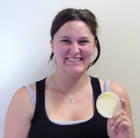
Alyse Douglas, Western Washington University
(summer 2007 intern)
Alyse was born in 1986 and raised in North Bend, Washington, where she attended Mount Si High School. Alyse also lived in California and Hawaii. Alyse graduated in 2007 at Western Washington University (WWU) where she earned a BS in Cellular and Molecular Biology, with a minor in Chemistry. Alyse spent two years doing organic chemistry research with Dr. Kriz at WWU, and completed a year as a Fellow Scientist for the GK-12 Catalysts for Reform project, where she helped create and implement an enquiry-based 6th grade science curriculum at Nooksack Valley Middle School. Alyse completed an internship at WWU in conjunction with the WSU Mount Vernon NWREC, under the co-supervision of Dr. Marion Brodhagon (WWU molecular biologist), Dr. Lindsey du Toit (WSU vegetable seed pathologist), and Mike Derie (WSU agricultural research technologist). The internship project was on developing a quantitative molecular detection assay for Xanthomonas campestris pv. carotae, causal agent of bacterial blight of carrot, that differentiates DNA from viable (live) vs. nonviable (dead) cells of the pathogen. The internship was funded by the California Fresh Carrot Advisory Board. Alyse went into a graduate education in infectious disease.
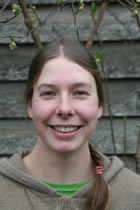
Jules Riske, Evergreen State College
(Spring 2007 intern)
Jules Riske grew up in rural northern California, and then moved to Rockport, Washington in eastern Skagit Co. At home with rough mountains and river canyons, she never thought about farming until she discovered the luscious, fertile Skagit River Valley. Having grown up in her father’s multi-acre garden and orchard, farming was as comfortable as an old pair of Carhartts. Jules studied at the Evergreen State College, and graduated with a degree in Ecological Agriculture in 2007. She interned and then worked for Anne Schwartz, owner of Blue Heron Farm and Nursery in Rockport, WA. Jules serves on the board of the Tilth Producers of Washington and served as secretary for the Sedro-Woolley Farmers Market board. Jules completed an 8-week internship in the Vegetable Seed Pathology program at the WSU Mount Vernon NWREC during April and May 2007, assisting with field, greenhouse, and lab research on vegetable seed crop diseases. Jules then worked for Osborne International Seed Co. in Mount Vernon, WA and, in her spare time, helped out at Hedlin Farms in La Conner, WA. In December 2013, Jules was hired as Organic Inspector with the Washington State Department of Agriculture.
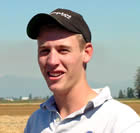
Coen de Jong, Van Hall Institute in Leeuwaarden,
The Netherlands (Fall 2006 intern)
Nicolaas Coen de Jong was born in Zuidbroek, the Netherlands, where his parents raise spinach stock seed in a greenhouse. Coen graduated from high school in 2005, and started college that year at the Van Hall Larenstein Institute, an agricultural college in the city of Leeuwaarden, the Netherlands. At the end of his first year of college, Coen completed a 10 week internship at Pop Vriend Seeds B.V. in Andijk, the Netherlands, where he worked primarily on parental lines in spinach seed production. Coen likes to work in his spare time, and has spent 5 years working part-time at Aardse Orchids B.V., a company that produces orchids in greenhouses. Coen completed a 9 week internship in the Vegetable Seed Pathology program at the WSU Mount Vernon NWREC in the fall of 2006, assisting with field, greenhouse, and lab research on vegetable seed crop diseases.
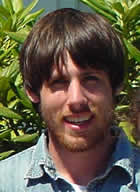
Blair Baber, Western Washington University
(Summer 2005 intern)
Blair Baber graduated from Western Washington University in December of 2006. At Western, he earned a B.S. degree in cellular biology with a minor in chemistry. As part of Blair’s degree, he completed an internship in the WSU vegetable seed pathology (VSP) program from June to November 2005. His main contribution in the VSP program was providing lab assistance for the onion Iris Yellow Spot Virus and carrot seed bacterial blight studies. Currently, Blair is working for US Biotek Laboratories in North Seattle as a lab technician. US BioTek uses ELISA (Enzyme-Linked-Immunosorbent-Assay) methods to identify and quantify IgG and IgE antibodies in human responses to foods, inhalants, herbs and spices.
Michael Picha
WSU (Summer 2001 intern)
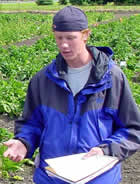
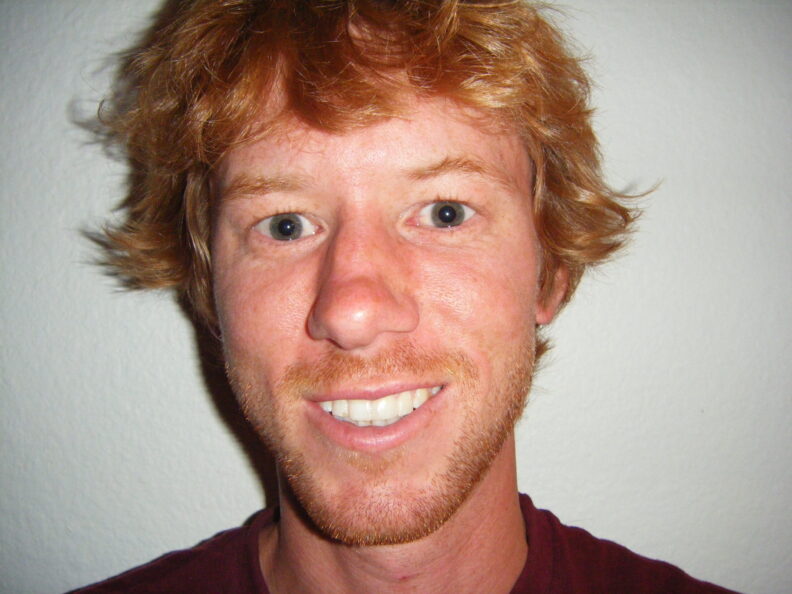
Michael Picha grew-up in Burlington, WA, and graduated from Washington State University in 2004 with a B.S. degree in Crop Science (specialty in turf management). Michael completed an internship in the WSU vegetable seed pathology program in the summer of 2001, during which time he took responsibility for a fungicide trial for control of Stemphylium and Cladosporium leaf spots in spinach seed crops. After graduation from WSU, Michael worked as Assistant Superintendent at the Glacier Club Golf Course in Durango, Colorado. Michael held various golf course construction jobs before serving as a volunteer in Ecuador where he participated in an ecological project to clean up an old dump site. He then returned to western Washington to work in the vineyard at Mt. Baker Winery in Everson, WA. In 2009, Michael was hired by Vikima USA as a vegetable seed production assistant for northwestern Washington.
If you need the content provided on this site in an alternate format or for further information on the Vegetable Seed Pathology program, please contact: Lindsey du Toit at dutoit@wsu.edu or at 360-848-6140.