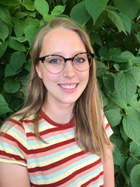
Tessa Belo
2020-2022 MS thesis: Combatting bacterial rot in onions in the Columbia Basin through fertilizer and irrigation management
Tessa was born and raised in Minneapolis, Minnesota. She attended the University of Minnesota where she graduated in 2017 with a B.S. in Environmental Science and a minor in Soil Science. During her time as an undergraduate, Tessa participated in soil judging competitions around the Midwest and contributed to research on sources of sediment bound phosphorus in the Minnesota River Valley. After graduating, she was hired as a researcher in a freshwater ecology lab at the University of Minnesota. Tessa conducted a study quantifying nutrient removal from street sweeping. In addition, she worked on research aimed at better understanding wetlands and stormwater ponds as tools to improve water quality. Tessa joined the Soils & Water program at the WSU Mount Vernon NWREC as a MS student in the summer of 2020. She was advised by Dr. Gabe LaHue and co-advised by Dr. Lindsey du Toit. Tessa’s project focused on combatting bacterial rots in onion bulb crops through fertilizer and irrigation management. Tessa’s hobbies include amateur woodworking, cross-country skiing, and gardening. After completing her MS degree in summer of 2022, Tessa took a position as Water Quality Nonpoint Specialist for the Department of Ecology at the Bellingham Field Office.
Publications and technical reports from MS program:
- Belo, T.R., du Toit, L.J., Waters, T.D., Derie, M.L., Schacht, M., and LaHue, G.T. 2023. Reducing the risk of onion bacterial diseases through managing irrigation frequency and final irrigation timing. Agricultural Water Management 288:108476.
- Belo, T., LaHue, G., and du Toit, L.J. 2023. Reducing the risk of onion bacterial diseases through irrigation, fertility, and other cultural management strategies. Agronomy Journal 115:459-473.
- Belo, T., LaHue, G., du Toit, L., & Waters, T. 2021. When to water? How do irrigation frequency and final irrigation timing influence onion bacterial diseases? Onion World December 2021:6-8.
- Belo, T., du Toit, L., Waters, T., Derie, M., Schacht, B., & LaHue, G. 2021. Combating onion bacterial diseases through nitrogen fertility management (Abstract). ASA, CSSA, SSSA International Annual Meeting, Salt Lake City, UT.
- Belo, T., du Toit, L., Waters, T., Derie, M., and LaHue, G. 2021. Effects of irrigation frequency and final irrigation timing on onion bacterial diseases in the Columbia Basin of Washington, 2020 (pdf). Plant Disease Management Reports 15:V109.

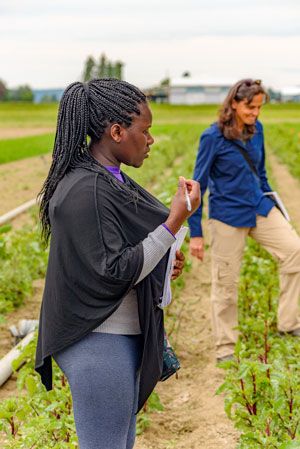
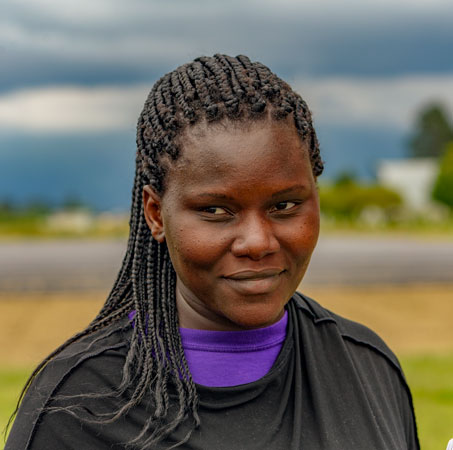
Marilen Nampijja
2020-2023 PhD dissertation: Management of Pseudomonas syringae pv. aptata in table beet and Swiss chard production
Marilen was born and raised in Masaka, Uganda in East Africa where she received her primary and secondary education. She was admitted to Makerere University in Uganda’s capital, Kampala, in 2010 to pursue a Bachelor of Science degree in Conservation Forestry and Production Technology. In 2015, after completing her BS degree, Marilen worked with Hall Hunter Partnership, the leading soft fruit grower in the United Kingdom, after which she returned to Uganda to start passion fruit farming. Having worked in the UK and on her passion fruit farm, Marilen realized that plant diseases are among the most challenging aspects to manage in crops, and recognized the need for a better understanding of plant diseases so that she could help other farmers when she returns to her home country.
In 2017, Marilen enrolled in an MS degree in Plant Science at South Dakota State University, with an emphasis in Plant Pathology. Her MS research project evaluated the efficacy of synthetic and biopesticides on bacterial leaf streak of wheat, and examined the influence of cultivar and environment on epiphytic bacterial diversity on wheat seeds. After completing her MS degree in 2019, Marilen was offered a job at North Dakota State University at the Williston Research & Extension Center as laboratory technician. Her major area of research was on soilborne pathogens:
Aphanomyces euteiches and Fusarium species affecting field peas, evaluating the impacts of seed treatments on commercial rhizobia inoculants, and evaluation of the relative nodulation of chickpea using different rhizobial isolates that are native to western North Dakota. Marilen has started a PhD degree at Washington State University in spring 2020, based at the WSU Mount Vernon Northwestern Washington Research & Extension Center under the supervision of Dr. Lindsey du Toit. Her dissertation project is on management of bacterial leaf spot in table beet and Swiss chard, caused by Pseudomonas syringae pv. aptata. This project is part of a larger USDA NIFA Specialty Crops Research Initiative project on Pseudomonas syringae pathogens of Cucurbitaceae and Chenopodiaceae (Award No. 2019-51181-30019).
Publications and technical reports from PhD program:
- Nampijja, M., Derie, M.L., and du Toit, L.J. 2021. First report of bacterial leaf spot caused by Pseudomonas syringae pv. aptata on Swiss chard, Beta vulgaris subsp. vulgaris, in Arizona. Plant Dis.105:3738.
- Nampijja, M., Crane, S., and du Toit, L. 2021. Beet – Bacterial leaf spot. Swiss chard – bacterial leaf spot. In: 2021 Pacific Northwest Pacific Northwest Disease Management Handbook, J.W. Pscheidt, and C.M. Ocamb, editors. Oregon State University, Washington State University and University of Idaho.
- Nampijja, M., Boyd, L.N., Crane, S., Dundore-Arias, J.P., Gaulke, E., Herschlag, R., Huerta, A.I., Kulesza, E., Kan, Y., Newberry, E.A., and Potnis, N. 2020. Integrated management of emerging seedborne Pseudomonas syringae pathogens of Cucurbitaceae and Chenopodiaceae. Phytopathology 110:S2.78 (Abstract).

Kayla Spawton
2018-2022 PhD dissertation: The ecology and management of Stemphylium leaf spot of spinach
Kayla graduated from the University of California, Davis in 2014 with a B.S. in Evolution, Ecology, and Biodiversity and a minor in Fungal Biology and Ecology. As an undergraduate, Kayla contributed to research on sudden oak death in California’s coastal forests, soft rot of table grapes, and pitch canker of Monterey pine in various faculty programs at UC-Davis. She also completed her honors thesis on the insect-gall diversity of sagebrush in the Eastern Sierras, which was published in a peer-reviewed academic journal (Environmental Entomology 44:1095-1100). After graduating, Kayla worked as a microbiologist at an agricultural biotechnology company, researching beneficial plant-associated bacteria and fungi. She then returned to UC-Davis to manage the California stream monitoring project for sudden oak death.
Kayla joined Dr. Lindsey du Toit’s program at the WSU Mount Vernon NWREC in fall 2018 as a plant pathology PhD student, and is co-advised by Dr. Tobin Peever. Kayla received a fellowship from the Seattle Chapter of the ARCS Foundation, Inc. (Achievement Rewards for College Scientists). Her dissertation project is on the ecology and management of Stemphylium leaf spot of spinach. In 2019, Kayla received the Joseph Kuc Student Travel Award from the American Phytopathological Society Foundation to help cover expenses for presenting a poster on her research at the APS annual meeting in Cleveland, OH in August 2019.
Publications and technical reports from PhD program:
- Spawton, K.A., and du Toit, L.J. 2024. Characterization of Stemphylium species associated with Stemphylium leaf spot of spinach (Spinacia oleracea). Plant Disease: in press. https://apsjournals.apsnet.org/doi/epdf/10.1094/PDIS-10-23-2223-RE
- Spawton, K.A., and du Toit, L.J. 2024. Prevalence of FRAC group 11 fungicide resistance in Stemphylium vesicarium isolates, but not S. beticola isolates, causing Stemphylium leaf spot of spinach (Spinacia oleracea). Plant Disease 108:2122-2135.
- Spawton, K. A., Stein, L. A., and du Toit, L. J. 2024. Evaluation of spinach cultivars for resistance to Stemphylium leaf spot (Stemphylium vesicarium) and white rust (Albugo occidentalis). HortScience 59:51-63.
- Varner, H., Myhre, L., Schacht, B., Spawton, K., du Toit, L. J., Derie, M. L., and LaHue, G. 2024. Irrigation scheduling impacts vegetative growth, seed yield, and diseases of spinach seed crops in a maritime Mediterranean climate. HortScience 59(6):820-830.
- Spawton, K.A., Peever, T.L., and du Toit, L.J. 2023. Genome resource for Stemphylium beticola, one of the causal agents of Stemphylium leaf spot of spinach (Spinacia oleracea). PhytoFrontiers 3:870-873.
- Spawton, K., Peever, T., and du Toit, L.J. 2022. Ascospore dispersal by Stemphylium beticola and S. vesicarium from spinach seed crop residues in the Pacific Northwest USA. Abstract for Plant Health 2022, Annual Meeting of the American Phytopathological Society, 6-10 Aug. 2022, Pittsburgh, PA.
- Batson, A.M., Spawton, K.A., Katz, R., and du Toit, L.J. 2022. Cladosporium leaf spot, caused by Cladosporium variabile, in winter high tunnel production of spinach (Spinacia oleracea) in Maine, United States. Plant Disease. First Look online. PDIS-11-21-2424-PDN.R1.
- Spawton, K.A., Stein, L.A., and du Toit, L.J. 2021. Susceptibility of spinach cultivars to Stemphylium leaf spot (Stemphylium vesicarium) and white rust (Albugo occidentalis) in Texas. Poster presented at Plant Health 2021 Online, Annual Meeting of the American Phytopathological Society, 2-6 Aug. 2021. Phytopathology 111:S2.50 (Abstract).
- Spawton, K.A., McGrath, M., and du Toit, L.J. 2020. First report of Stemphylium leaf spot of spinach (Spinacia oleracea) caused by Stemphylium beticola in New York State. Plant Disease 104:3068.
- Spawton, K., Derie, M.L., Correll, J.C., Stein, L., Olaya, G., Raid, R.N., Sandoya G.V., Peever, T.L., and du Toit, L.J. 2019. Characterization of Stemphylium spp. from spinach based on molecular data, host response, and azoxystrobin sensitivity. Abstract for a poster presented at Plant Health 2019, the Annual Meeting of the American Phytopathological Society, 3-7 Aug. 2019, Cleveland, OH.

Ryan Solemslie
2018-20 MS thesis: Cold season emergence, vigor, and seedling blight resistance screening in sweet corn
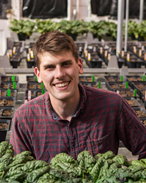
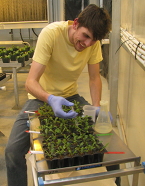
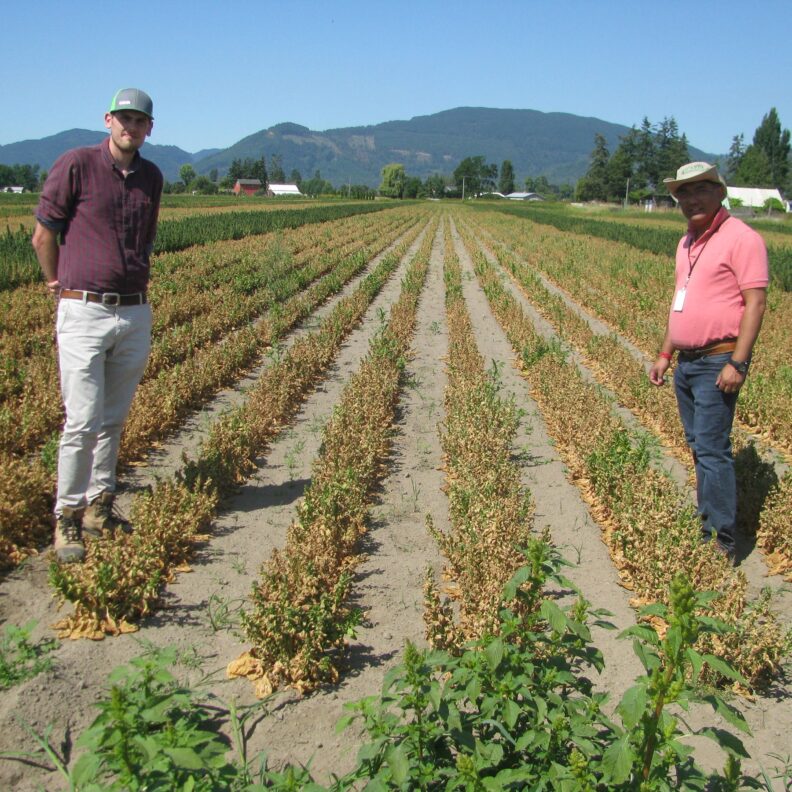
Ryan Solemslie grew up in Mount Vernon, Washington. Living in the Skagit Valley, he developed a love for agriculture starting with the work he did in his parents’ gardens and greenhouse throughout his childhood. In high school, Ryan spent time throughout the spring and summer working at a local nursery and garden center. During the summers of his college years at Washington State University, Ryan worked as a technician for Sakata Seed America, Inc., where he assisted with evaluating spinach trials, squash pollination, and packaging seed for various trials. In the spring of 2017, Ryan graduated from Washington State University with a B.S., majoring in Nursery and Greenhouse Management and minoring in Horticulture. Ryan enrolled as an MS student in the WSU Department of Plant Pathology in spring of 2018, and defended his thesis in fall of 2020. Ryan was hired in January 2021 as the Senior Stockseed Coordinator for Sakata Seed America, based in Mount Vernon, WA.
Publications and technical reports from MS program:
- Solemslie, R. 2020. Cold season tolerance and prevalence of seedling blights in sweet corn in the Columbia Basin of Washington (PDF). MS thesis, Washington State University, Pullman, WA. 186 pp.
- Solemslie, R., and du Toit, L. 2019. Sweet corn production in the Columbia Basin of Washington: Screening for cold tolerance and resistance to seedling blights. Page 8, Abstracts of 2019 Annual Meeting of International Sweet Corn Development Association, 9-10 Dec. 2019, Chicago, IL.
- Solemslie, R., Derie, M.L., Morgan, P., Gyawali, S., and du Toit, L.J. 2019. Sweet corn production in the Columbia Basin of Washington: Causal agents of seedling blights and prevalence of mefenoxam resistance. Abstract for a Poster (PDF) presented at Plant Health 2019, the Annual Meeting of the American Phytopathological Society, 3-7 Aug. 2019, Cleveland, OH.
Alex Batson
2019-2022 Ph.D. dissertation: The genetic basis of pathogenicity to spinach of Fusarium oxysporum f. sp. spinaciae. 2017-19 M.S. thesis: Identification of effector genes for the spinach Fusarium wilt pathogen, Fusarium oxysporum f. sp. spinaciae.
Alex graduated from Western Washington University with a major in cellular and molecular biology. His research during that undergraduate degree focused on the Arabadopsis-Aspergillus pathosystem. Specifically, he investigated several flavonoid biosynthesis genes in Arabadopsis that influence resistance against Aspergillus. After graduation, Alex worked at Adaptive Symbiotic Technologies in Seattle, WA where he studied fungal endophytes that confer multiple stress tolerances to crop plants. He is grateful to have had hands-on experience researching fungal pathogens and mutualists. As an MS student at WSU, Alex identified putative effector genes in Fusarium oxysporum f. sp. spinaciae, the causal agent of Fusarium wilt of spinach. Alex started as a time-slip employee in spring 2017 in Lindsey du Toit’s program at the WSU Mount Vernon NWREC, and enrolled as an MS student in fall semester of 2017. Alex successfully defended his thesis in June 2019, and enrolled as a PhD student in the WSU Department of Plant Pathology, starting in fall 2019. His PhD dissertation project continued from his MS thesis project on spinach Fusarium wilt. Alex’ MS program was funded by the Robert MacDonald Vegetable Seed Memorial Fellowship, the Puget Sound Seed Growers’ Association (via the Northwest Agricultural Research Foundation), and the Washington State Commission for Pesticide Registration. During his MS program, Alex also received an Alaska Airlines Travel Grant (awarded in 2017 to support travel expenses to the International Congress of Plant Pathology in Boston, MA in 2018), a Washington State Crop Improvement Association (WSCIA) Travel Grant (awarded in 2017 to support travel expenses to the ICPP in Boston, MA in 2018), the Richard and Marcia Morrison Seed Production Pathology and Seed Health Fellowship (awarded in 2018), and a WSU Graduate and Professional Student Association Travel Grant (awarded in 2019 to support travel expenses to the University of Amsterdam, Netherlands to work with Drs. Martijn Rep and Like Fokkens on sequencing the genomes of isolates of the spinach Fusarium wilt project). Alex’s PhD program is supported financially by a Foundation for Food and Agricultural Research (FFAR) Fellowship which includes co-funding from three vegetable seed companies (Pop Vriend, Rijk Zwaan, and Sakata America) as well as the Robert MacDonald Graduate student fellowship. Additionally, Alex was awarded an Achievement Rewards for College Scientists (ARCS) scholarship for his PhD program. In his free time, Alex enjoys cycling, rock climbing, hiking, and photography.
Publications and technical reports from MS & PhD programs:
- Batson, A.M, Woodhall, J., and du Toit, L.J. 2023. Real-time PCR assays for races of the spinach Fusarium wilt pathogen, Fusarium oxysporum f. sp. spinaciae. Plant Disease 107:2633-2642.
- Batson, A.M., Gyawali, S., and du Toit, L.J. 2022. Shedding light on races of the spinach Fusarium wilt pathogen, Fusarium oxysporum f. sp. spinaciae. Phytopathology 112:2138-2150.
- Batson, A., Spawton, K, Katz, R., and du Toit, L.J. 2022. Cladosporium leaf spot, caused by Cladosporium variabile, in winter high tunnel production of spinach (Spinacia oleracea) in Maine, United States. Plant Disease 106:2260.
- Batson, A.M., Woodhall, J.W., and du Toit, L.J. 2022. Real-time PCR assays that distinguish isolates of two pathogenicity groups of the spinach Fusarium wilt pathogen. Abstract for Plant Health 2022, Annual Meeting of the American Phytopathological Society, 6-10 Aug. 2022, Pittsburgh, PA.
- Batson, A.M., Fokkens, L., Rep, M., and du Toit, L.J. 2021. Putative effector genes distinguish two pathogenicity groups of Fusarium oxysporum f. sp. spinaciae. Molecular Plant-Microbe Interactions 34:141-156.
- Synoground, T., Batson, A., Derie, M., Koenick, L.B., Pethybridge, S.J., and du Toit, L.J. 2020. First report of Cercospora leaf spot caused by Cercospora chenopodii on Spinacia oleracea in the USA (PDF). Plant Disease 104:976.
- Batson, A. M. 2019. Identification of effector genes for the spinach Fusarium wilt pathogen, Fusarium oxysporum f. sp. spinaciae (pdf). MS thesis, Washington State University, Pullman, WA. 195 pp.
- Batson, A., Fokkens, L., de Sain, M., Peever, T.L., Rep, M., and du Toit, L.J. 2019. Identification of putative effector genes in the causal agent of spinach Fusarium wilt, Fusarium oxysporum f. sp. spinaciae. Plant Health 2019, Annual Meeting of the American Phytopathological Society, 3-7 Aug. 2019, Cleveland, OH.
- Batson, A.M., Peever, T.L., and du Toit, L.J. 2018. Determining the genetic basis of pathogenicity of Fusarium oxysporum f. sp. spinaciae on spinach. Abstract for a paper presented at the International Spinach Conference, 14-16 Feb. 2018, Murcia, Spain.
- Batson, A.M., Peever, T.L., and du Toit, L.J. 2018. The Secreted in Xylem gene profile of the spinach Fusarium wilt pathogen (PDF). Abstract for a poster presented at the International Congress of Plant Pathology, 29 Jul.-5 Aug. 2018, Boston, MA.
John Weber
2015-17 M.S. thesis: Management of white mold in sunflower seed crops in the semi-arid Columbia Basin of central Washington.
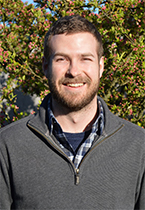
John Weber began his graduate studies at WSU in the Department of Plant Pathology in April 2015. John achieved a strong analytical background from Trinity University in San Antonio, TX, with a B.A. in Mathematics in 2009. He then worked for the Federal Reserve Board of Governors in Washington, DC from September 2010 until June 2013. However, John has always had a love for agriculture and commitment to the agricultural community. In middle school, John, who grew up in Madras, OR, helped his father, who runs a seed company in central Oregon, put up signs to identify crops growing along Highways 97 and 26. On weekends, his father would take him on trips to hybrid carrot seed fields to scout or rogue off-type carrots. During the summers of John’s college years, he worked for Central Oregon Seeds, Inc., as a field technician, scouting peppermint fields for two-spotted spider mites and assisting in preparation for hybrid carrot seed planting. In the summer of 2010, John worked as a research assistant at the Oregon State University Central Oregon Agricultural Research Center in Madras, where he assisted with research projects on insect management in grass seed fields. Ultimately, John decided to combine his love for agriculture with his analytical predisposition by pursuing further education at Oregon State University in Corvallis, OR. He especially enjoyed Dr. Ken Johnson’s plant pathology course and Dr. Hiro Nonogaki’s course on seed biology. John continued to pursue his interest in plant pathology by working in Dr. Ken Johnson’s plant pathology lab during the winter 2015 term of OSU, before starting as an MS student in April 2015 in Dr. Lindsey du Toit’s vegetable seed pathology program at the WSU Mount Vernon NWREC. John completed his MS degree in May 2017, after which he was hired as a Potato Agronomist at Walker Brother Farms in Klamath Falls, OR. In 2018, John was hired by Central Oregon Seeds, Inc., a third-party seed production company based in Madras, OR.
Publications and technical reports from MS program:
- Weber, J. M. 2017. Management of white mold in hybrid sunflower seed crops in the Columbia Basin of central Washington (pdf). MS thesis, Pullman, WA. 215 pp.
- Weber, J.M., and du Toit, L.J. 2017. Efficacy of fungicides for control of white mold in hybrid sunflower seed crop in the Columbia Basin of central Washington (pdf), 2016. Plant Disease Management Reports 11:FC122.
- Weber, J.M., and du Toit, L.J. 2017. Effect of Contans WG application and burial of sclerotia on survival of sclerotia of Sclerotinia sclerotiorum in the Columbia Basin of central Washington (pdf). Poster presented at 2017 APS Annual Meeting, 5-9 Aug. 2017, San Antonio, TX. Phytopathology 107 (Abstr.)
- Weber, J.M., Chen, T., Chen, W., and du Toit, L.J. 2016. Clonality within disease foci and field populations of Sclerotinia sclerotiorum causing basal stalk rot in sunflower seed crops in central Washington. Poster presented at APS Pacific Division Meeting, 28-30 Jun. 2016, La Conner, WA. Phytopathology 106:S4.207.
Shannon Carmody
2015-17. M.S. thesis: Management of the seedborne phase of light leaf spot (Cylindrosporium concentricum) and white leaf spot (Pseudocercosporella capsellae) in brassica crops.
Shannon Carmody enrolled as a graduate student at WSU after working in organic seed and agriculture for the previous six years. Most recently, Shannon worked as the Operations Director for Viva Farms, a land-based farm business incubator in the Skagit Valley of northwestern Washington that helps beginning farmers and farm workers transition to farm ownership. Before that, Shannon worked for 5 years as the Public Programs Director at Seed Savers Exchange in Iowa, one of the largest non-governmental seed banks in North America. At Seed Savers, she was surrounded by an abundant diversity of vegetable seed, nearly 70 crop types in all, representing the cumulative work of many agriculturalists. It is at the intersection of seed and the people who grow them that Shannon is pursuing the study of vegetable seed pathology at Washington State University. Shannon grew up in Rock Island, Illinois, and graduated with a double major in Environmental Studies and International Relations from Beloit College in Beloit, Wisconsin. In 2015, Shannon received the Alexander A. Smick Scholarship in Rural Community Service and Development. The scholarship awarded Shannon $2,000 to develop a “Plant Pathology 101” workshop in Mount Vernon, WA with a local non-profit, Viva Farms, to provide outreach to Spanish-speaking farmers in the Skagit Valley. Shannon also received a Fellowship from the Seed Matters/Clif Bar Family Foundation ($50,000 over 2 years), and was awarded a Fellowship from the USDA Western Sustainable Agriculture Research and Education (SARE) Program ($15,675) for a proposal she submitted titled “Seed Transmission and Management of White Leaf Spot and Light Leaf Spot Pathogens in Brassicas in the Pacific Northwest”. Shannon successfully defended her MS thesis on June 14th. She continued working in the Vegetable Seed Pathology program to finish up some aspects of her thesis project for publication. In 2018, Shannon was hired as a Plant Pathologist by Ball Horticulture in Arroyo Grande, CA to provide pathology support to 15 ornamental breeders.
Publications and technical reports from MS program:
- Carmody, S.M., King, K.M., Ocamb, C.M., Fraaije, B.A., West, J.S., and du Toit, L.J. 2020. A phylogenetically distinct lineage of Pyrenopeziza brassicae associated with chlorotic leaf spot of Brassicaceae in North America (pdf). Plant Pathology 69:518-537.
- Carmody, S.M. 2017. Light leaf spot and white leaf spot of Brassicaceae in Washington State (pdf). MS thesis, Washington State University, Pullman, WA. 217 pp.
- Carmody, S.M., and du Toit, L.J. 2017. Seed treatments to eradicate Pyrenopeziza brassicae from infected mustard (Brassica juncea) seed (pdf). Poster presented at the 2017 APS Annual Meeting, 5-9 Aug. 2017, San Antonio, TX. Phytopathology 107. (Abstr.)
- Carmody, S.M., King, K.M., Claassen, B.J., Fraaije, B.A., West, J.S., Ocamb, C.M., and du Toit, L.J. 2017. Genetic analysis of Pyrenopeziza brassicae, cause of light leaf spot of brassicas, in the European Union, Oceania, and North America (pdf). Poster presented at the 2017 APS Annual Meeting, 5-9 Aug. 2017, San Antonio, TX. Phytopathology 107. (Abstr.)
- Paulitz, T.C., Knerr, A.J., Carmody, S.M., Schlatter, D., Sowers, K., Derie, M.L., and du Toit, L.J. 2017. First report of Leptosphaeria maculans and Leptosphaeria biglobosa, causal agents of blackleg, on canola in Washington State. Plant Disease 101:504.
- Carmody, S.M., Ocamb, C.M., and du Toit, L.J. 2016. Potential seed transmission of Pyrenopeziza brassicae and Mycosphaerella capsellae in brassicas in the Pacific Northwest USA. Paper presented at American Phytopathological Society (APS) Pacific Division Meeting, 28-30 Jun. 2016, La Conner, WA. Phytopathology 106:S4.196 (Abstr.)
- Carmody, S., and du Toit, L.J. 2016. Light leaf spot and white leaf spot – two new fungal diseases of brassicas in the PNW. Tilth Producers’ Quarterly 26 (4):5,18,20.
- du Toit, L.J., and Carmody, S.M. 2016. Seed Transmission and Management of White Leaf Spot and Light Leaf Spot Pathogens of Brassicas in the Pacific Northwest: WSARE Mid-Year Report, January 2016. Western Sustainable Agriculture Research and Education Program. 5 pp.
- du Toit, L.J., and Carmody, S.M. 2015. Seed Transmission and Management of White Leaf Spot and Light Leaf Spot Pathogens of Brassicas in the Pacific Northwest: Clif Bar Annual Report, November 2015. Clif Bar Foundation. 5 pp.
Sean Mullahy
2014. M.S. thesis: Management of white mold in sunflower seed crops in the semi-arid Columbia Basin of central Washington
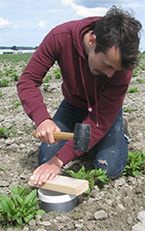
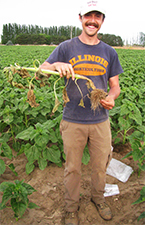
Sean Mullahy was raised in Illinois. He started his college career studying documentary film in the city of Chicago, and ended up completing a B.S. degree in Horticultural Science in the corn fields at the University of Illinois at Urbana-Champaign (UIUC) in May 2013. During his first summer at the UIUC, Sean was research assistant and liaison for a pollination study at community gardens in urban Chicago-land. It was during this time that he became interested in scientific research, especially projects with community involvement. Following this, Sean took his first course in plant pathology at the UIUC, which sparked an interest in diagnostics and led him to pursue a part-time position at the University of Illinois Plant Clinic while finishing his B.S. degree. In the Plant Clinic, he worked with the Director, Dr. Suzanne Bissonnette, and the diagnostician, Stephanie Porter. Sean spent his time at the clinic developing diagnostic and educational skills. He also served as a Teaching Assistant for the Introductory Plant Pathology course at the UIUC, developed a tomato fact sheet set (published in spring 2014), and worked on an undergraduate thesis project with mycologist, Dr. Andrew Miller, at the Illinois Natural History Survey, on endophyte systematics in horticultural tree leaves. It was Sean’s enjoyment of working at the clinic and his research experience with Dr. Miller that inspired him to pursue a graduate education in plant pathology. Sean joined Lindsey du Toit’s vegetable seed pathology program in January 2014 as an M.S. student. His thesis project was on investigating the management of white mold in sunflower seed crops in the semi-arid Columbia Basin of central Washington. Sean decided to leave WSU in August 2014 to pursue a career as a high school science teacher.
Eric Christianson
2012–2014: Screening carrot germplasm for resistance to Xanthomonas hortorum pv. carotae.
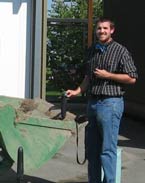
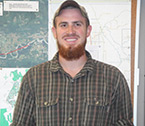
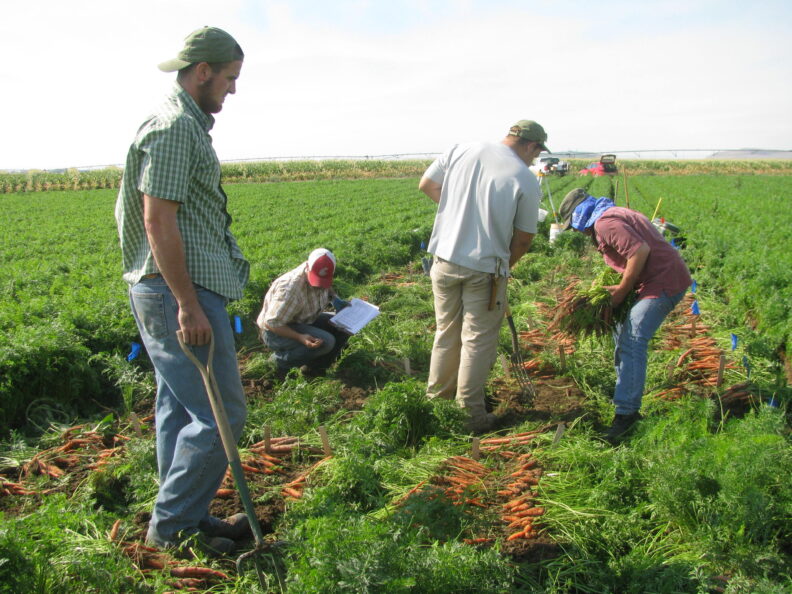
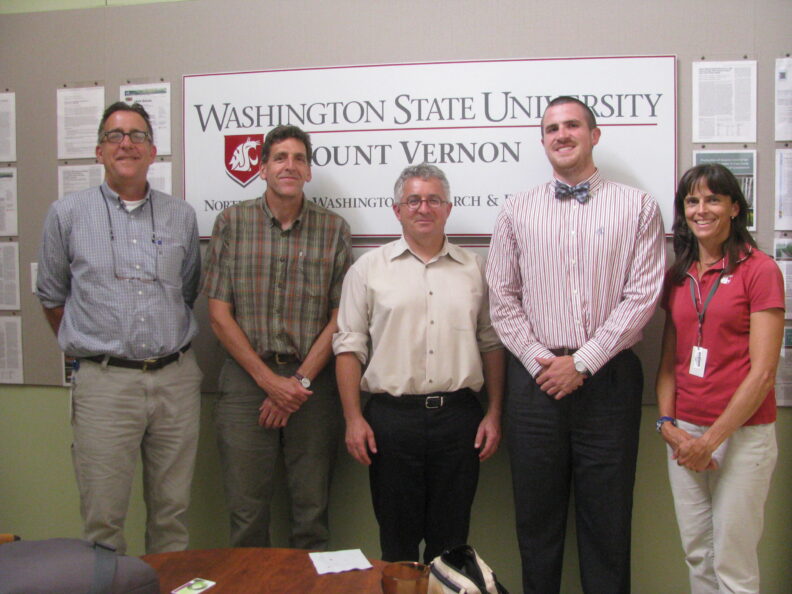
Eric Christianson is from Burlington, WA where he grew up on an ornamental tree farm. His interest in vegetable seed production, pathology, and breeding came from his family’s long-time involvement in the vegetable seed industry. He earned his Bachelor’s degree in Field Crop Management at Washington State University in May 2012. In the summers of 2010 and 2011, Eric worked on onion research trials for Rich Pollard and Brandon Kania at Bejo Seeds, Inc. in the Columbia Basin of central Washington and Oregon. It was during this time with Bejo that Eric developed a strong interest in plant genetics, breeding, and pathology. From spring 2011 to spring 2012 at WSU, Eric worked in Dr. Laura Lavine’s entomology lab on insecticide cross resistance in the western flower thrips. His work in Dr. Lavine’s lab led to his interest in continuing his education beyond a Bachelor’s degree. During the summer of 2012, after graduating from WSU, Eric had the unique experience of traveling to Rwanda. Along with four other WSU students and leaders, Dr. Kim Kidwell and Colleen Taugher, he helped bring agricultural innovations like food dehydration, mushroom production, composting, and eco-latrines to the small rural town of Gashora. Seeing crop production in a developing country further stimulated Eric’s fascination with plant breeding, pathology, and production. Eric’s MS thesis project with Dr. Lindsey du Toit at the WSU Mount Vernon NWREC, co-advised by Dr. Steve Jones, plant breeder in the Dept. of Crop and Soil Sciences, was on screening carrot (Daucus carota) germplasm for resistance to Xanthomonas hortorum pv. carotae, causal agent of bacterial blight. His thesis committee also included Scot Hulbert, Chair of the WSU Department of Plant Pathology, and Irwin Goldman, Chair of the Department of Horticulture at the University of Wisconsin-Madison (and a carrot breeder). Eric defended his thesis on 7 July 2014. Eric is a Spinach, Table Beet, and Swiss Chard Specialist for the international seed company Rijk Zwaan. He is based in Salinas, CA.
Publications from MS program:
- Christianson, C.E. 2014. Screening carrot germplasm for resistance to Xanthomonas hortorum pv. carotae (pdf). MS thesis, Pullman, WA. 137 pp.
- Christianson, C.E., Jones, S.S., and du Toit, L.J. 2015. Screening carrot germplasm for resistance to Xanthomonas hortorum pv. carotae (pdf). HortScience 50:341-350.
- Christianson, C.E., Jones, S.S., and du Toit, L.J. 2014. Pathogenic Alternaria spp. associated with seed of Daucus carota Plant Introduction lines of the United States Department of Agriculture National Plant Germplasm System (pdf). Allium and Umbelliferae Improvement Newsletter 24:34-38.
- Christianson, C.E., Jones, S.J., and du Toit, L.J. 2013. Screening for resistance to Xanthomonas hortorum pv. carotae in Daucus carota (pdf). Poster presented at the 36th International Carrot Conference, 15–16 August 2013, Madison, WI.
Ana Vida Alcala
2009–2013 PhD dissertation: Management of seedling blights in organic vegetable production in the Pacific Northwest
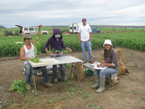
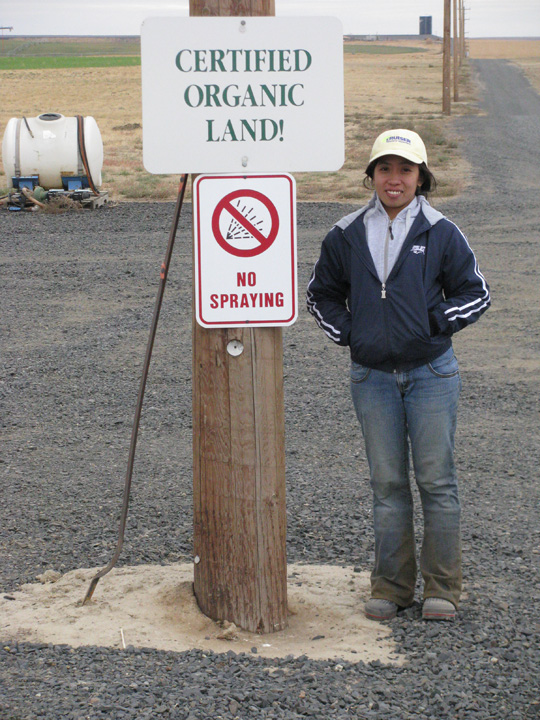
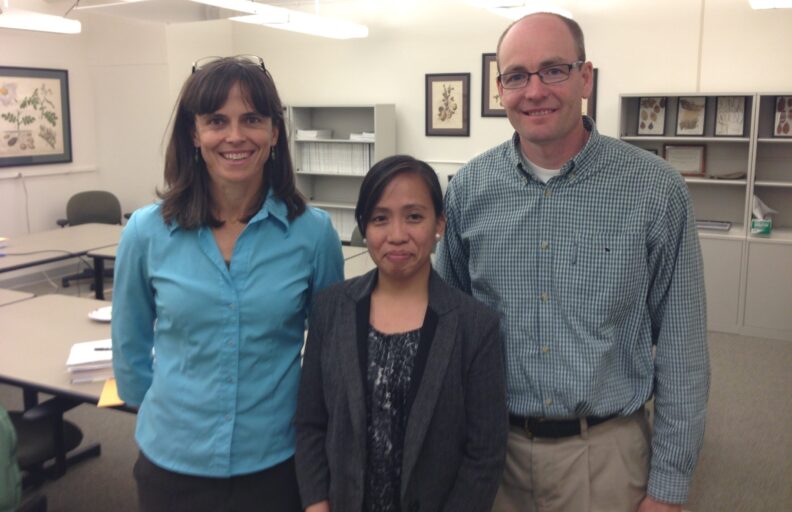
Ana Vida was born and raised in a small town in the Philippines. Being in an agricultural country, she decided to pursue a BS degree in agriculture followed by an MS in Plant Pathology from the University of the Philippines at Los Baños. Avi worked particularly on the control of a postharvest disease caused by Colletotricum gloeosporioides on mango (Mangifera indica) for her Master’s thesis. Afterwards, Avi pursued a career in research working on biological control of soilborne diseases of vegetables in the tropics, and management of postharvest diseases of paddy rice at the Philippine Rice Research Institute. Avi’s desire to further equip herself in her chosen field of study led her to go back to university for a PhD degree. Ana Vida started her PhD program in the WSU Dept. of Plant Pathology in January 2009, with her research project based out of the WSU Mount Vernon NWREC where she worked with Dr. Lindsey du Toit on evaluation of seed and drench treatments for organic vegetable production in the Pacific Northwest. Avi defended her dissertation in the Vegetable Seed Pathology program in 2013, and has been working since then as a Research Scientist with Valent USA on seed treatments.
Publications from PhD program:
- Alcala, A.C., Paulitz, T.C., Schroeder, K.L., Porter, L.D., Derie, M.L., and du Toit, L.J. 2016. Pythium species associated with damping-off of pea in certified organic fields in the Columbia Basin of central Washington (pdf). Plant Disease 100:916-925.
- Alcala, A.C. 2013. Management of damping-off caused by Pythium spp. in organic vegetable production in the Pacific Northwest (pdf). PhD Dissertation, Washington State University Department of Plant Pathology, Pullman, WA.
- Alcala et al. 2013. Evaluation of seed treatments and priming for controlling damping-off in organic pea crops in the semiarid Columbia Basin and maritime Skagit Valley of Washington, 2012 (pdf). Plant Disease Management Reports 7:ST001.
- Alcala et al. 2013. Evaluation of priming and Nordox seed treatment for controlling damping-off in organic pea crops in central Washington, 2012 (pdf). Plant Disease Management Reports 7:ST002.
- Alcala, A.C., Derie, M.L., Holmes, B., Gatch, E.W., Porter, L.D., Coffman, G., and du Toit, L.J. 2012. Evaluation of organic seed and drench treatments for controlling damping-off in pea and sweet corn in Mount Vernon, WA, 2011 (pdf). Plant Disease Management Reports 6:ST011 (pdf).
- Alcala, A.C., Derie, M.L., Holmes, B., Gatch, E.W., Porter, L.D., Coffman, G., and du Toit, L.J. 2012. Evaluation of organic seed and drench treatments for controlling damping-off in organic pea crops in the semi-arid Columbia Basin of Oregon and Washington, 2011 (pdf). Plant Disease Management Reports 6:ST012 (pdf).
- A. C. Alcala, T. C. Paulitz, L. D. Porter, and L. J. du Toit. 2011. Profile of Pythium spp. in certified organic fields for vegetable production in central Washington. Phytopathology 101:S4 (abstract of poster presented at the 2011 APS meeting in Honolulu, Hawaii).
- du Toit, L.J., Derie, M.L., Gatch, E.W., Alcala, A.C., Reed, K., and Holmes, B.J. 2011. Effect of agricultural limestone amendment on Fusarium wilt in a radish seed crop, 2010 (pdf). Plant Disease Management Reports 5:ST001 (pdf).
- Alcala, A., and du Toit, L.J. 2009. Management of damping-off in organic vegetable crops in the Pacific Northwest (pdf). Sustaining the Pacific Northwest 7(4):5-7.
Emily Gatch
2008–2013 PhD dissertation: Management of Fusarium wilt and Verticillium wilt in spinach seed crops in the maritime Pacific Northwest USA
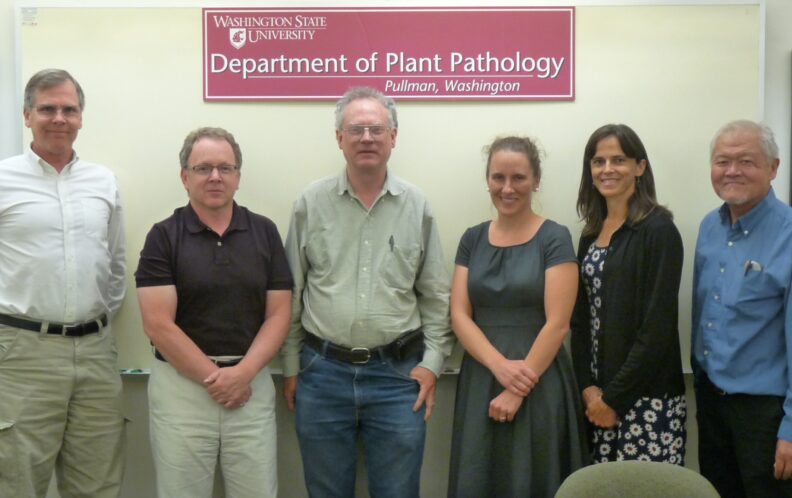
Emily Gatch grew up on a farm in eastern Iowa, and had an early introduction to the world of seed through summer jobs detassling corn and working for a prairie seed company. Emily obtained a B.S. in biology from Harvard University, followed by an M.S. in plant pathology at Iowa State University in the lab of Dr. Gary Munkvold. Emily’s thesis project examined the interaction of Bt corn hybrids and stalk rot, caused by a complex of fungal pathogens that includes several species of Fusarium. After finishing her degree in 2001, Emily worked for three years as a research associate at the West Tennessee Research and Education Center, reporting to both the horticulturalist and plant pathologist in the vegetable crops division. This exposure to crops such as tomatoes, snap beans, summer squash and pumpkins, sweet potatoes, and southern peas was a revelation for Emily, who became a specialty-crops devotee and pursued this interest to the far reaches of New Mexico, where she accepted a position as greenhouse and pathology coordinator at the research farm of Seeds of Change, an organic vegetable, herb, and flower seed company. In her efforts to assess and manage seedborne disease challenges for the company, Emily became aware of the research program of Dr. Lindsey du Toit, and joined Lindsey’s her lab at the WSU Mount Vernon NWREC as a Ph.D student in August 2008, investigating management strategies for control of Fusarium wilt in spinach seed crops. Emily successfully defended her dissertation on 17 July 2013. Since 2014, Emily has been teaching courses in sustainable agriculture and food production at Edmonds Community College in Seattle, WA. Emily also teaches an online introductory course in plant pathology for Washington State University students enrolled in the MS in Agriculture distance degree program.
Publications from PhD program:
- Gatch, E.W. 2013. Management of Fusarium wilt in spinach seed crops in the maritime Pacific Northwest USA (pdf). PhD Dissertation, Washington State University Department of Plant Pathology, Pullman, WA. 305 pp.
- Gatch, E.W., and du Toit, L.J. 2017. Limestone-mediated suppression of Fusarium wilt in spinach seed crops (pdf). Plant Disease 101:81-94.
- Gatch, E.W., Derie, M.L., Holmes, B.J., and du Toit, L.J. 2016. Effect of Proline on Fusarium wilt in a spinach seed crop in western Washington, 2012 (pdf). Plant Disease Management Reports 10:V103.
- Gatch, E.W., and du Toit, L.J. 2015. A soil bioassay for predicting the risk of spinach usarium wilt (pdf). Plant Disease 99:512-526.
- Okubara, P. A., Harrison, L. A., Gatch, E. W., Vandemark, G., Schroeder, K. L., and du Toit, L. J. 2013. Development and evaluation of a TaqMan real-time PCR assay for Fusarium oxysporum f. sp. spinaciae (pdf). Plant Disease 97:927-937.
- Gatch, E.W., and du Toit, L.J. 2012. Effects of micronutrients on Fusarium oxysporum f. sp. spinaciae and limestone-mediated suppression of spinach Fusarium wilt (pdf). Phytopathology 102:S4.43. Poster presentation, 2012 APS Annual Meeting, 4–8 Aug. 2012, Providence, RI.
- du Toit, L.J., Derie, M.L., Gatch, E.W., Alcala, A.C., Reed, K., and Holmes, B.J. 2011. Effect of agricultural limestone amendment on Fusarium wilt in a radish seed crop, 2010 (pdf). Plant Disease Management Reports 5:ST001.
- du Toit, L.J., Derie, M.L., Gatch, E.W., Brissey, L.M., and Holmes, B. 2011. Effect of agricultural limestone amendments on Fusarium and Verticillium wilts in a spinach seed crop, 2008 (pdf). Plant Disease Management Reports 5:V117.
- Gatch, E.W., Derie, M.L., Brissey, L.M., Holmes, B.J., and du Toit, L.J. 2011. Effect of agricultural limestone amendments and nitrogen source on Fusarium wilt in a spinach seed crop, 2009 (pdf). Plant Disease Management Reports 5:V118.
- Gatch, E.W., and du Toit, L.J. 2011. Managing Fusarium wilt in spinach seed crops using limestone and a soil bioassay. Abstract of presentation at the 2010 APS Pacific Division/CPS annual meeting, Vancouver, BC. Phytopathology 101:S248. 2010 APS Pacific Division/CPS annual meeting, Vancouver, BC.
- Dung, J.K., du Toit, L.J., Gatch, E.W., and Johnson, D.A. 2011. Cross-pathogenicity of Verticillium dahliae isolates from skullcap and peppermint. Abstract of presentation at the 2010 APS Pacific Division/Canadian Phytopathological Society annual meeting, Vancouver, BC. Phytopathology 101:S247. 2010 APS Pacific Division/Canadian Phytopathological (CPS) annual meeting, Vancouver, BC.
- du Toit, L.J., and Gatch, E.W. 2009. Increasing the capacity for spinach seed production in the United States by promoting soil suppression of Fusarium wilt (pdf). The Western Front, October 2009: Page 7 (Western Integrated Pest Management Center).
- du Toit, L.J., Derie, M.L., Brissey, L.M., Holmes, B., and Gatch, E. 2009. Evaluation of seed treatments for management of seedborne Verticillium in spinach, 2008 (pdf). Plant Disease Management Reports 3:ST020 (pdf).
- du Toit, L.J., Derie, M.L., Brissey, L.M., Holmes, B., Twomey, M., and Gatch, E. 2009. Evaluation of seed treatments for soilborne damping-off pathogens and seedborne fungi of onion, 2008 (pdf). Plant Disease Management Reports 3:ST021.
Video on Gatch’s PhD program:
“Keeping the Fields Green: Researching Diseases of Spinach Seed Plants”
In this video produced by Washington State University, Emily Gatch and Kirby Johnson (President of the Puget Sound Seed Growers’ Association) describe the importance to the spinach seed industry in Washington State of Emily Gatch’s PhD research project on management of Fusarium wilt in spinach seed crops.
Maxwell Handiseni
2010-2011 PhD dissertation: Management of Rhizoctonia in onion and pea crops in the Columbia Basin of Washington
Maxwell Handiseni was born in Murewa, Zimbabwe and grew up in Harare, Zimbabwe. He received his primary and high school education in Harare before starting a BS degree in Agriculture and Natural Resources at Africa University in eastern Zimbabwe in 1996. After graduating with a BS degree in 2000, Maxwell returned to Harare where he was awarded a Rockefeller Studentship to study for a Masters of Philosophy (MPhil) degree in crop protection. His research focus was on identifying alternatives to methyl bromide fumigation in Capsicum annuum cropping systems. After graduating with his MPhil degree in 2003, Maxwell was hired as a Plant Pathology Research Associate at the Tobacco Research Station in Harare for a year. In 2004, Maxwell joined the Midlands State University in the Zimbabwe Department of Horticulture as a lecturer. In August 2007, Maxwell enrolled as an MS student in Plant Sciences at the University of Idaho in the Canola, Rapeseed and Mustard Breeding program of Dr. Jack Brown. Maxwell’s MS research project focused on evaluation of Brassica seed meals as biofumigants to manage weeds, Rhizoctonia solani AG-8 and Pythium ultimum. He completed his MS degree in December 2009. Maxwell continued to work for Dr. Brown until mid-April 2010, when he joined the WSU Vegetable Seed Pathology program of Dr. Lindsey du Toit to work that season on a research project on Rhizoctonia in onion bulb crops in the Columbia Basin of Washington State. This project was a collaborative effort with Dr. Tim Paulitz in the USDA-ARS Root Disease and Biological Control Research Unit in Pullman, WA . In 2010, Lindsey received funding from the WA State Dept. of Agriculture Specialty Crop Block Grant that enabled Maxwell to enroll in a PhD program in the WSU Dept. of Plant Pathology, to continue with the onion Rhizoctonia project for his disseration. Maxwell was also looking at the effects of this pathogen on pea crops in central Washington. Lindsey and Tim co-advised Maxwell. Maxwell continued to work for Dr. Brown until April 2010, when he joined the WSU Vegetable Seed Pathology program of Dr. Lindsey du Toit to work on a research project on Rhizoctonia in onion bulb crops in the Columbia Basin of Washington State, in collaboration with Dr. Tim Paulitz, USDA-ARS Root Disease and Biological Control Research Unit in Pullman, WA. In 2010, Lindsey received funding from the WA State Dept. of Agriculture Specialty Crop Block Grant that enabled Maxwell to enroll in a PhD program with the onion Rhizoctonia project for his dissertation. Maxwell left WSU in June 2011.

Leigh Ann Harrison
2007 PhD dissertation: Management of Fusarium wilt in spinach seed production
Leigh Ann was born in Odessa, TX, and lived in TX for 10 years, in France for two years, and in South Carolina for 12 years. In May 2004, Leigh Ann received a B.S. degree in Biological Sciences at Clemson University in Clemson, SC, where she earned four varsity letters as a member of the Lady Tiger soccer team. As an undergraduate in 2002, Leigh Ann was a member of the Cornell University Food Science Scholar Program under the supervision of Dr. Dennis Miller, in which she worked on a project assessing bioavailability of iron powders intended for bread fortification. Leigh Ann’s undergraduate senior research project at Clemson, with Drs. Steve Jeffers and Melissa Riley, dealt with analyzing and developing fatty acid methyl ester profiles for Phytophthora cactorum. From July 2004 to October 2006, Leigh Ann did an MS degree in the WSU Department of Plant Pathology under the supervision of Dr. Tim Murray. Leigh Ann’s MS project was on the epidemiology of Wheat streak mosaic virus in perennial wheat, and screening for potential resistance to the virus in perennial wheat lines. Leigh Ann started a PhD degree in the same department in spring 2007 with Dr. Lindsey du Toit’s program. Leigh Ann’s PhD dissertation research was on management of Fusarium wilt in spinach seed production. In September 2007, Leigh Ann transferred to a PhD program at Virginia Tech. After Leigh Ann completed her PhD, she was hired in the Monsanto soybean pathology program at St. Louis, MO.
Jaime Cummings
2005 – 2007 MS thesis: Evaluation of organic seed treatments for control of seedling blight/damping-off pathogens of spinach.
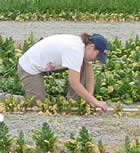
Jaime was born in Binghamton, NY, and lived in NY for 20 years. Jaime attended Broome Community College to earn an A.S. degree in December 2002, with a focus on biology/chemistry. Jaime then attended the State University of West Georgia, where she completed courses towards her A.S., and focused on Spanish language studies. Jaime attended school in Cuernavaca, Morelos, Mexico for the summer of 2000-2001 – Jaime has completed six years of Spanish in high school, and 12 credits of Spanish at university level! She then earned a BS degree in wildlife biology/environmental forest biology in May 2004 from State University of New York College of Environmental Science and Forestry in Syracuse, NY. In 2004, Jaime ventured to the Amazon rainforest of Brasil to work on a tropical wildlife research project, followed by a position as research assistant on a small mammal research project at Virginia Tech, WV. Jaime worked as an outdoor environmental educator/naturalist, teaching biology and ecology courses to adults and children in 2004-2005. This was followed by a position in VA as a research assistant on a ground-nesting waterfowl research project for the College of William and Mary in 2005. Jaime completed her MS degree in the WSU Department of Plant Pathology from July 2005 to December 2007, working in Lindsey du Toit’s vegetable seed pathology program for her thesis project. Jaime worked for Dr. Carol Miles in the vegetable horticulture program at the WSU Mount Vernon NWREC in the spring and summer of 2008. In fall 2008, Jaime accepted a position as a soybean pathologist at the St. Louis, MO headquarters for Monsanto.
Publications from MS program:
- Cummings, J.A., Miles, C.A., and du Toit, L.J. 2009. Greenhouse evaluation of seed and drench treatments for organic management of damping-off and seedling blight pathogens of spinach (pdf). Plant Disease 93:1281-1292.
- Cummings, J.A., du Toit, L.J., and Miles, C.A. 2008. Evaluation of seed and drench treatments for organic management of soilborne diseases of spinach in western WA. Plant Disease Management Reports 2:V134.
- Cummings, J.A., du Toit, L.J., and Miles, C.A. 2008. Evaluation of seed and drench treatments for organic management of soilborne diseases of spinach in Sequim, WA (pdf). Plant Disease Management Reports 2:V133.
- Cummings, J.A. 2007. Evaluation of seed and drench treatments for management of damping-off and seedling blight pathogens of spinach for organic production (pdf). MS thesis, Washington State University, Department of Plant Pathology.
- du Toit, L.J., Derie, M.L., Brissey, L.M., & Cummings, J.A. 2007. Evaluation of limestone amendments for control of Fusarium wilt in a spinach seed crop, 2006 (pdf). Plant Disease Management Reports 1:V091.
Pablo Hernández-Pérez
2002 – 2005 MS thesis: Management of seedborne Stemphylium botryosum and Cladosporium variabile causing leaf spot of spinach seed crops in western Washington.
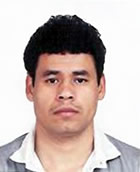
Pablo H. Palmández (previously Pablo Hernández Pérez) was born in Nayarit, Mexico. In 1990, he graduated from Universidad Autónoma Chapingo (Mexico), where he studied the equivalent of a B.S. in agronomy with an emphasis in agricultural parasitology. His undergraduate thesis was titled: Exploración competitiva entre la maleza y el cultivo del rabanito (Raphanus sativus minor L.) en Chapingo, Mexico (Study of competition between weeds and radishes (Raphanus sativus minor L.) in Chapingo, Mexico). Pablo studied English as a second language in Los Angeles, CA and in Yakima, Washington. In 1994, Pablo received a contract from the Plant Health Headquarters of the National Health, Food Safety and Quality Service of Mexico. He was sent to Washington State in 1995 by the Plant Health Headquarters to oversee adherence to the Work Plan for Apple Exportation from the United State to Mexico. In 1998, Pablo was contracted to work with the Washington State Horticultural Association as Scouting Coordinator for the Washington Pear IPM Project. Pablo received an M.S. degree in plant pathology from Washington State University in 2005 under the supervision of Dr. Lindsey du Toit. His M.S. thesis was entitled: Management of seedborne Stemphylium botryosum and Cladosporium variabile causing leaf spot of spinach seed crops in Western Washington. Pablo is a certified Spanish/English interpreter in Washington. He participated in the Spanish translation of the Orchard Monitoring Manual for Pests, Natural Enemies, and Diseases of Apple, Pear and Cherry, an illustrated guide for Washington State, compiled by Naná Simone. Pablo worked in insect genetics at the USDA ARS Yakima Agricultural Research Laboratory in Wapato, WA, and then accepted a position with the USDA APHIS at the Port of Seattle, WA in 2007.
Publications from MS program:
- Hernandez-Perez, P. 2005. Management of seedborne Stemphylium botryosum and Cladosporium variabile causing leaf spot of spinach seed crops in western Washington (pdf). MS thesis, Washington State University Department of Plant Pathology, Pullman, WA. 101 pp. Pablo Hernandez-Perez – MS thesis.
- Hernandez-Perez, P., and du Toit, L.J. 2006. Seedborne Cladosporium variabile and Stemphylium botryosum in spinach (pdf). Plant Disease 90:137-145.
- du Toit, L.J., Derie, M.L., and Hernandez-Perez, P. 2005. Verticillium wilt in spinach seed production (pdf). Plant Disease 89:4-11.
- du Toit, L.J., and Hernandez-Perez, P. 2005. Efficacy of hot water and chlorine for eradication of Cladosporium variabile, Stemphylium botryosum, and Verticillium dahliae from spinach seed (pdf). Plant Disease 89:1305-1312.
- du Toit, L.J., Derie, M.L., and Hernandez-Perez, P. 2005. Evaluation of fungicides for control of leaf spot in spinach seed crops, 2004 (pdf). Fungicide & Nematicide Tests 60:V044.
- du Toit, L.J., Derie, M.L., and Hernandez-Perez, P. 2005. Evaluation of yield loss caused by leaf spot fungi in spinach seed crops, 2004. Fungicide & Nematicide Tests 60:V047.
- du Toit, L.J., Derie, M.L., and Hernandez-Perez, P. 2004. Evaluation of fungicides for control of leaf spot in spinach seed crops, 2003 (pdf). Fungicide & Nematicide Tests 59:V115.
If you need the content provided on this site in an alternate format or for further information on the Vegetable Seed Pathology program, please contact: Lindsey du Toit at dutoit@wsu.edu or at 360-848-6140.