Diseases
Insect/Mite Pests
Abiotic Problems Common to Tomato
(Click on photo to enlarge)
General Tomato Disease and Pest Management
- Bacterial canker ravages processing tomatoes, Learn how to recognize bacterial canker now to manage this disease in the future.
- How to spot and stop diseases on greenhouse tomato seedlings: Stop diseases now on tomato seedlings and produce healthy transplants for the field, Mary Hausbeck, Michigan State University Extension.
- Managing Perennial Weeds in Tomatoes, This Focus on Tomato webcast by Steve Weller at Purdue University summarizes different perennial weed types, shows examples of problem perennial weeds, and discusses techniques available for managing these weeds.
- MSU’s Research results for bacterial canker in tomatoes, Research indicates it is best to manage canker before field planting tomatoes. Mary Hausbeck, Michigan State University Extension.
- Protect tomato transplants in the greenhouse from bacterial diseases. Mary Hausbeck, Michigan State University Extension. Although some details are specific to Michigan, the general principles in this post apply to all tomato transplant production operations.
- Protect tomato transplants in the greenhouse from fungal diseases. Mary Hausbeck, Michigan State University Extension. Although some details are specific to Michigan, the general principles in this post apply to all tomato transplant production operations.
- Tomato Disease Guide (pdf) – A Practical Guide for Seedsmen, Growers and Agricultural Advisors. Published by Seminis Vegetable Seeds, Inc.’s Plant Health Department.
- Tomato Diseases Favored by High Tunnel Greenhouses (recorded webscast, Dec. 2013)
By Judson Reid, Extension Vegetable Specialist, Cornell University.
Diseases
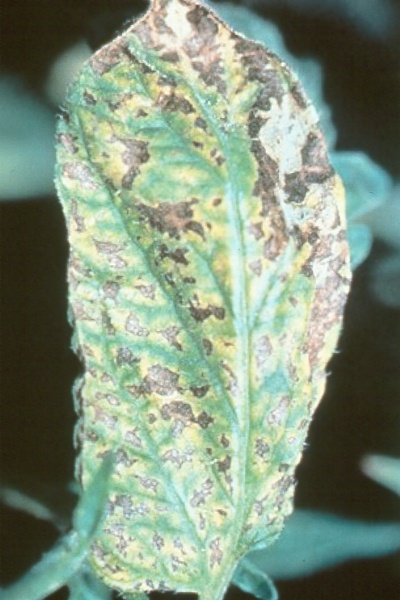
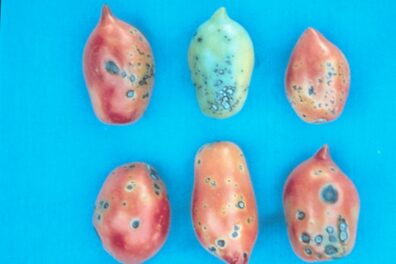
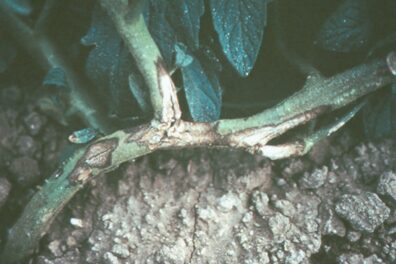
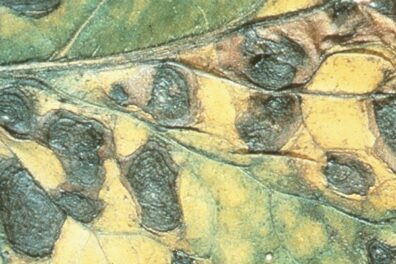
Alternaria
Disease: Alternaria
Pathogen: Alternaria solani
On-Line Resources:
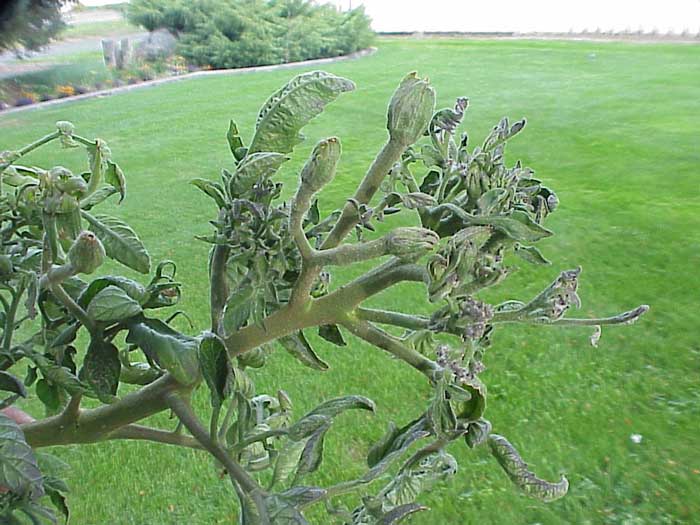
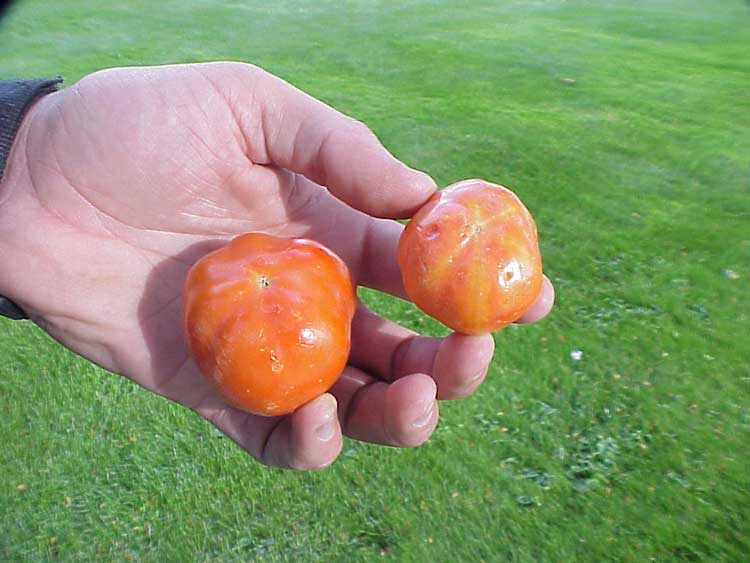
Big bud
Disease: Big bud
Pathogen: Beet leafhopper transmitted viresence agent (BLTVA), a phytoplasma, transmitted by the beet leafhopper, Circulifer tenellus
Host crops: Tomato and several other plant species, including potato.
On-Line Resources:
- Tomato: Tomato Big Bud, How to Manage Pests: UC Pest Management Guidelines, UC IPM Online, University of California.
- Virus Diseases and Disorders of Tomato: Big Bud, Vegetable MD Online, Cornell University.
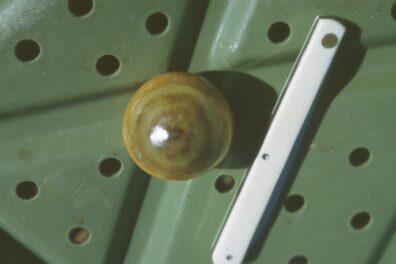
Buckeye rot
Disease: Buckeye rot
Pathogen: Non pathogenic disorder
Curly top
Disease: Curly top
Pathogen: Beet curly top virus (BCTV), vectored by the beet leafhopper Circulifer tenellus
Host crops: Numerous plant species including many vegetables such as bean, beet, carrot, eggplant,
coriander, pepper, potato, tomato, and various cucurbits such as squash, cucumber, pumpkin, and watermelon, etc.
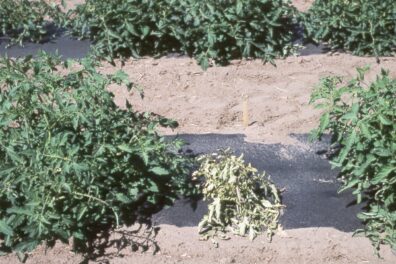
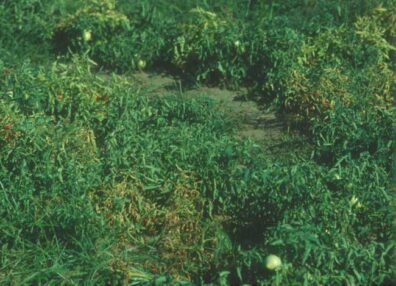
Photo Source: Phil Hamm, Oregon State University
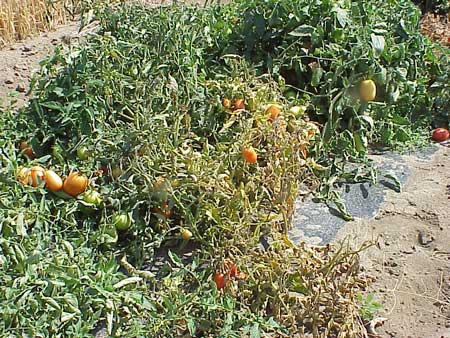
Photo Source: Phil Hamm, Oregon State University
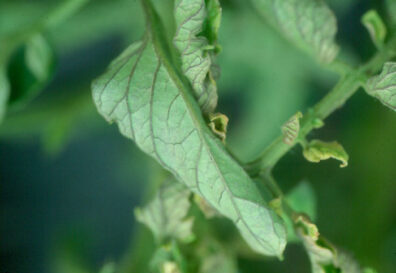
Photo Source: Phil Hamm, Oregon State University
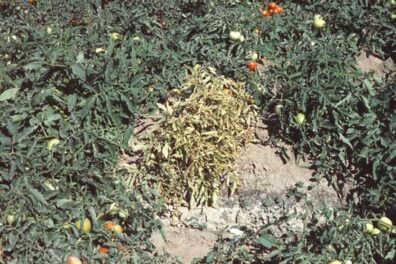
Photo Source: Krishna Mohan, University of Idaho
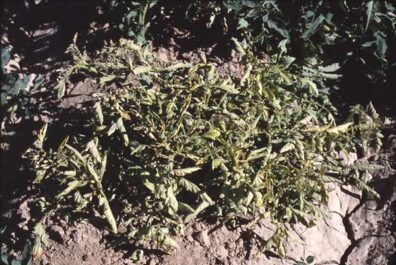
Photo Source: Krishna Mohan, University of Idaho
On-Line Resources:
- Pacific Northwest Plant Disease Management Handbook: Tomato (Lycopersicon esculentum) – Curly Top.
- Tomato: Curly top (Beet curly top virus), Washington State University Hortsense.
- Curly Top Disease of Tomato, Plant Management Network International.
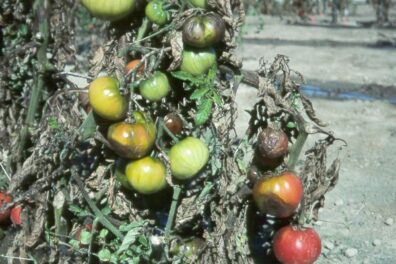
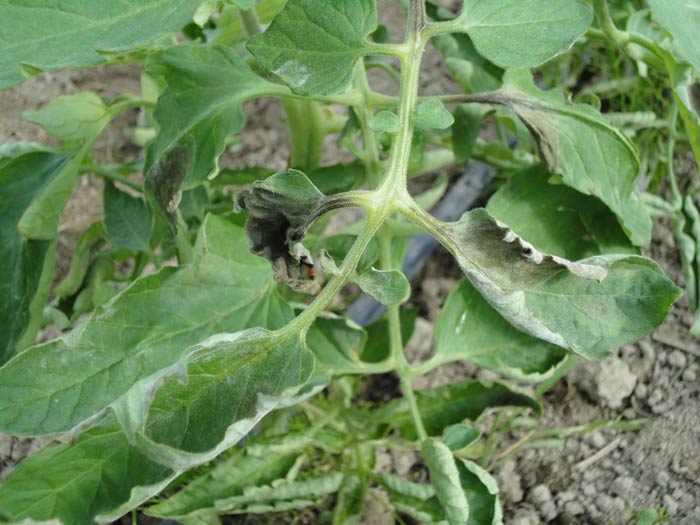
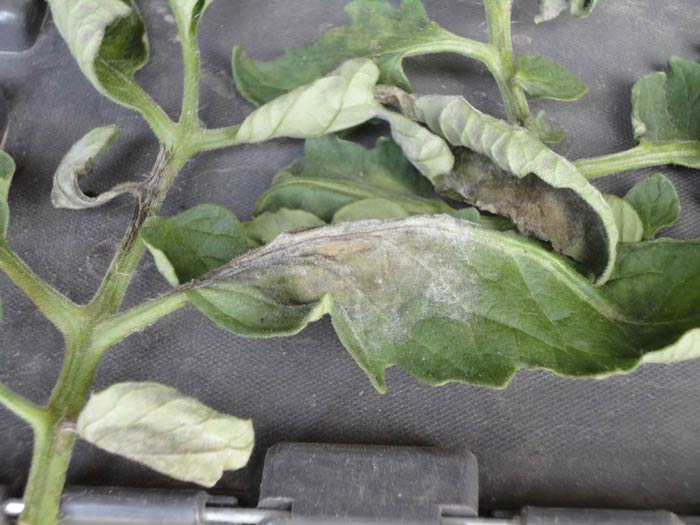
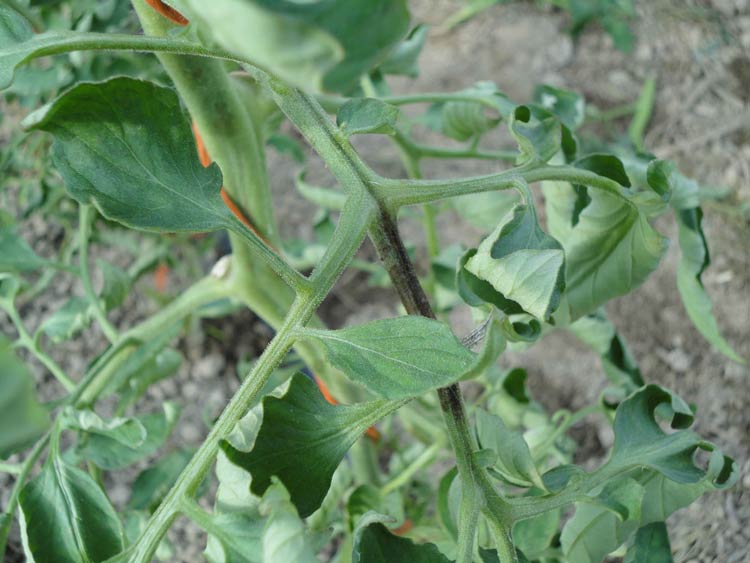
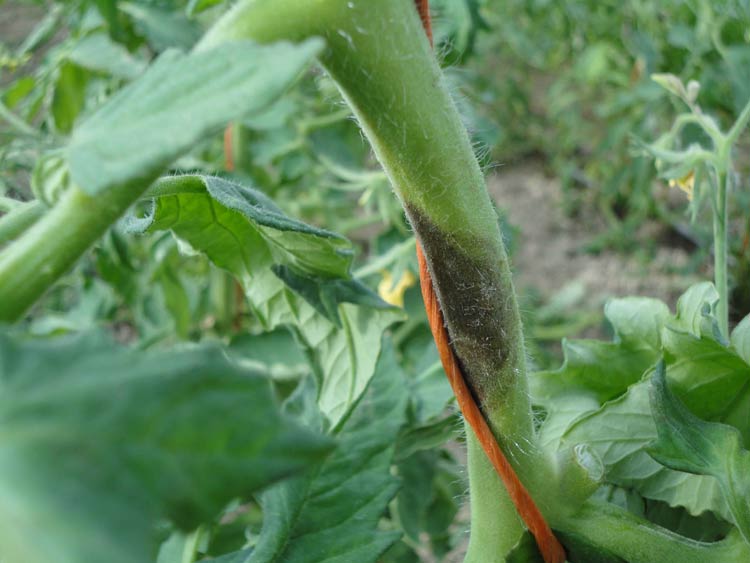
Late blight
Disease: Late blight
Pathogen: Phytophthora infestans
On-Line Resources:
- Pacific Northwest Plant Disease Management Handbook: Tomato (Lycopersicon esculentum) – Late Blight.
- Organic Management of Late Blight of Potato and Tomato (Phytophthora infestans), eXtension.
- Protect tomatoes in the greenhouse from late blight, Michigan State University.
- Tomato: Late blight, Washington State University Hortsense.
Leaf mold
Problem: Leaf mold
Pathogen: Fulvia fulva (formerly Cladosporium fulvum)

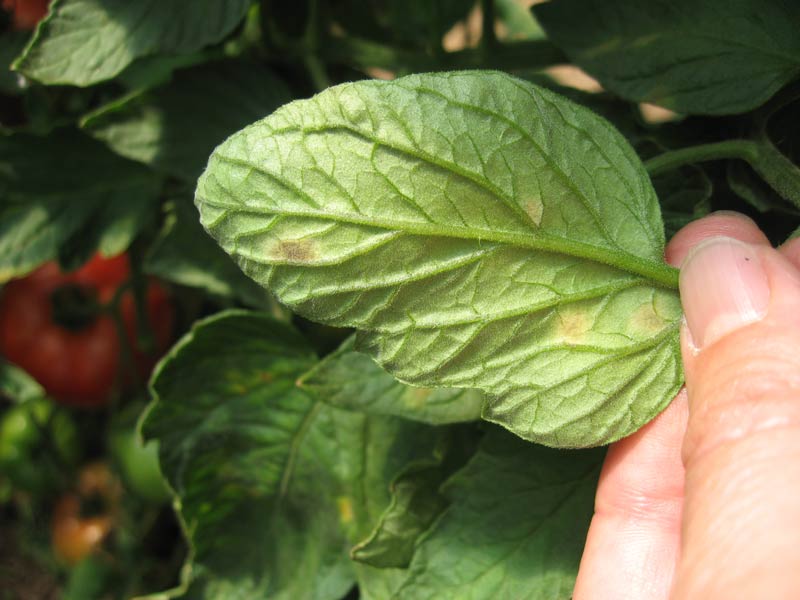
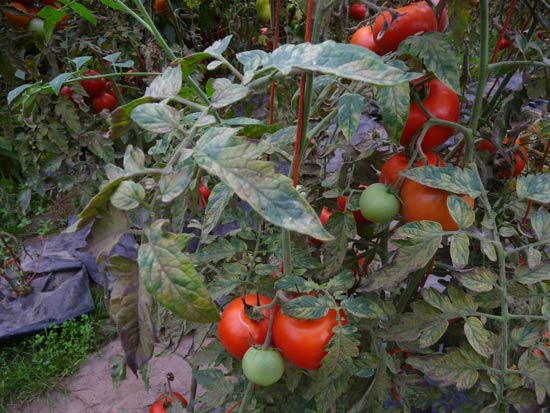
Photo Source: Sacha Buller, Washington State University Skagit Co. Extension Master Gardener Coordinator
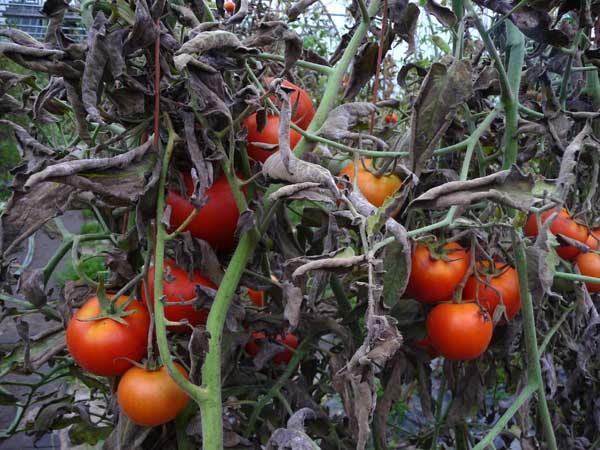
Photo Source: Sacha Buller, Washington State University Skagit Co. Extension Master Gardener Coordinator
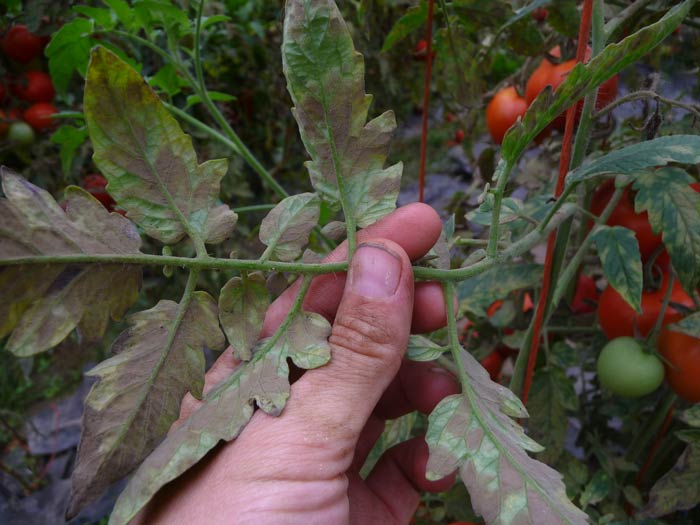
Photo Source: Sacha Buller, Washington State University Skagit Co. Extension Master Gardener Coordinator
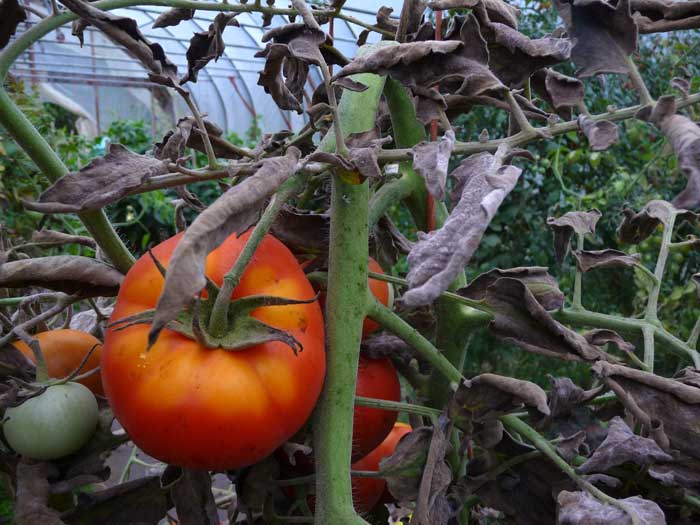
Photo Source: Sacha Buller, Washington State University Skagit Co. Extension Master Gardener Coordinator
On-Line Resources:
- Greenhouse Plants, Tomato-Leaf Mold, PNW Plant Disease Management Handbook.
- Tomato leaf mold in hoophouse tomatoes. Authors: Marissa Schuh and Benjamin Phillips. Michigan State University Extension, 2019.
- Tomato (Lycopersicon esculentum)-Leaf Mold, PNW Plant Disease Management Handbook.
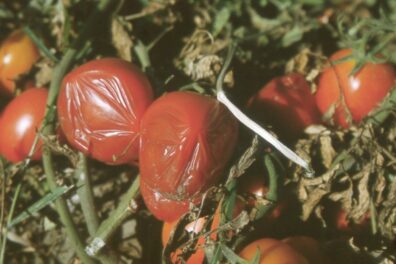
Pythium rot
Disease: Pythium rot
Pathogen: Pythium species
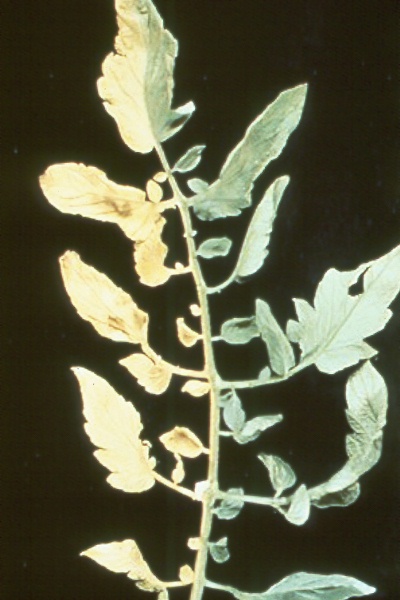
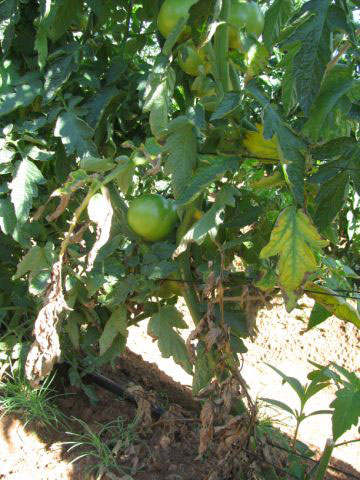
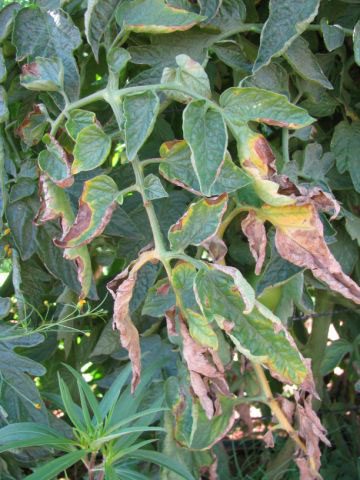
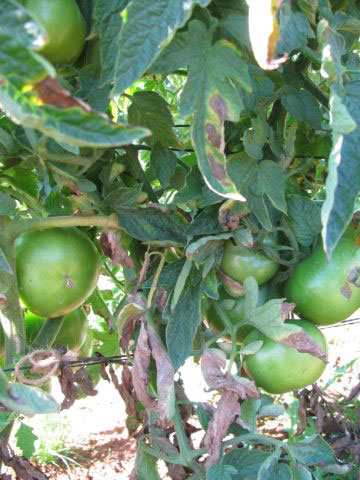
Verticillium wilt
Disease: Verticillium wilt
Pathogen: Verticillium species
Host crops: Numerous vegetables including many brassica vegetables (but not broccoli), cucumber,
eggplant, pepper, potato, pumpkin, radish, spinach, tomato, watermelon, etc.
On-Line Resources:
- Pacific Northwest Plant Disease Management Handbook: Tomato (Lycopersicon esculentum) – Wilts {Fusarium wilt, Verticillium wilt}.
- Tomato: Verticillium wilt, Washington State University Hortsense.
- See Diseases, pests, and other problems common to many vegetables: Verticillium wilt.
White mold
Disease: White mold
Pathogen: Sclerotinia species
Host crops: Bean, various brassica vegetables, carrot, eggplant, lettuce, potato, tomato, etc.
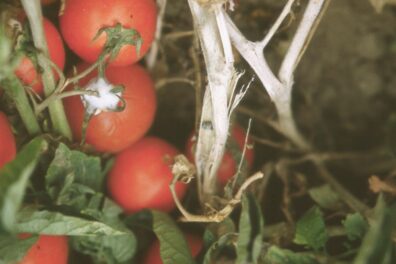
Photo Source: E. J. Sorensen
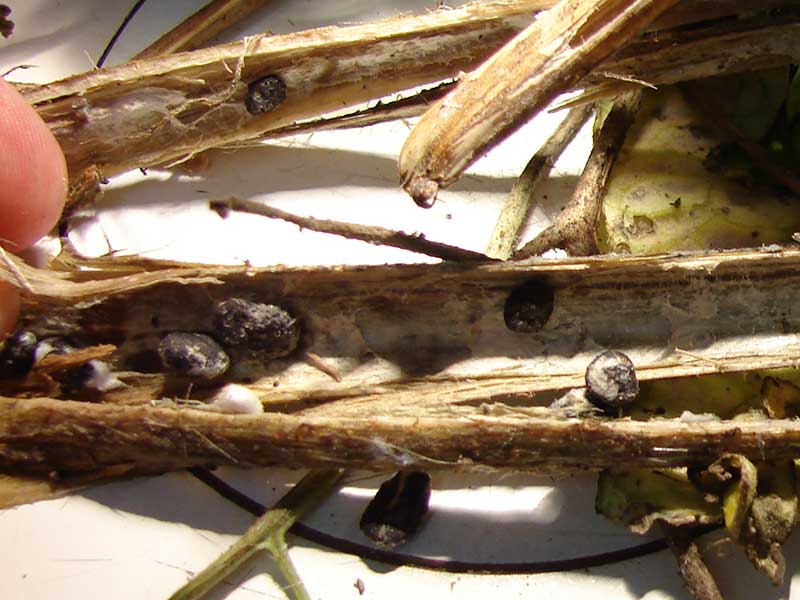
Photo Source: Jenny Glass, WSU Puyallup PIDL
On-Line Resources:
- Pacific Northwest Plant Disease Management Handbook: Tomato (Lycopersicon esculentum) – White Mold.
- Tomato: White mold, Washington State University Hortsense.
- See Diseases, pests, and other problems common to many vegetables: White mold.
Insect/Mite Pests
Flea beetle
Common name: Flea beetle
Latin binomial: Pictured is the western potato flea beetle, Epitrix subcrinita, but the tuber flea beetle, Epitrix tuberis, may also damage foliage.
Host crops: Eggplant, pepper, potato, and tomato.
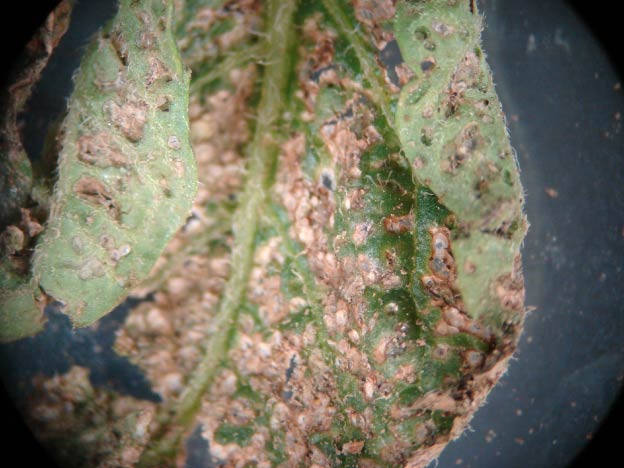
Photo Source: Michael Bush, WSU Extension, Yakima, WA
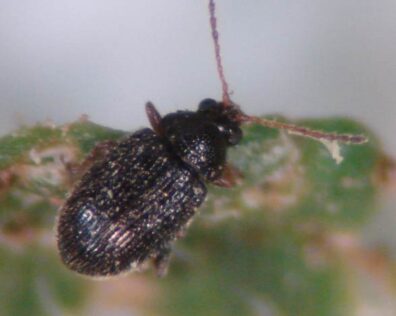
Photo Source: Michael Bush, WSU Extension, Yakima, WA
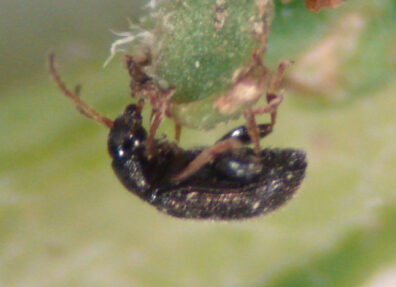
Photo Source: Michael Bush, WSU Extension, Yakima, WA
On-Line Resources:
- Potato Flea Beetles: Biology and Control (pdf), Washington State University Extension Bulletin 1198E.
- Potato Flea Beetles. Coleoptera: Chrysomelidae Western Potato Flea Beetle Epitrix subcrinita, Tuber Flea Beetle Epitrix tuberis (pdf).
- Pacific Northwest Insect Management Handbook. Chapter: Irish Potatoes, Section: Flea Beetle to Grasshopper.
- Vegetables: Tomato: Flea beetles. Washington State University Hortsense.
- See Diseases, pests, and other problems common to many vegetables: Flea beetle.
Tomato hornworm
Common name (of damaging stage): Tomato hornworm
Latin binomial: Manduca quinquemaculata
Host crops: Pepper, eggplant, potato, and tomato.
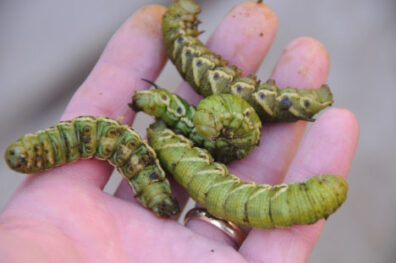
Photo Source: Michael Bush, WSU Extension, Yakima, WA
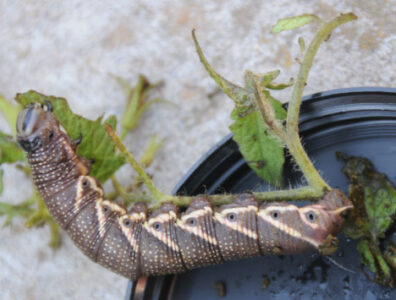
Photo Source: Michael Bush, WSU Extension, Yakima, WA
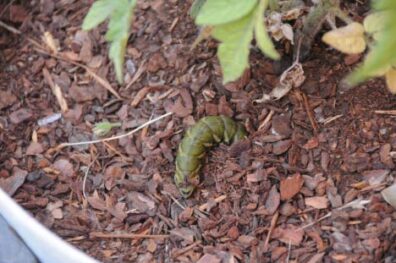
Photo Source: Michael Bush, WSU Extension, Yakima, WA
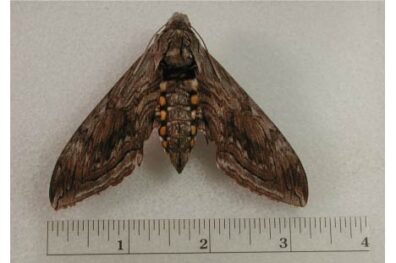
Photo Source: Michael Bush, WSU Extension, Yakima, WA
On-Line Resources:
- Pacific Northwest Insect Management Handbook. Washington State Chapter: Vegetables, Section: Tomato Part2: Fleabeetle to Wireworm.
- Vegetables: Tomato: Tomato hornworm. Washington State University Hortsense.
- UC Pest Management Guidelines: Tomato Hornworms. UC IPM Online, University of California.
Western flower thrips
Common name (of damaging stage): Western flower thrips
Latin binomial: Frankliniella occidentalis
Host crops: Basil, Broccoli, Cabbage, Cauliflower, Cucumber, Onion, Potato, Pumpkin, Squash, Tomato, and Watermelon.
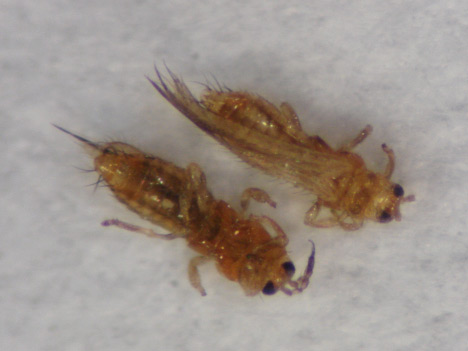
Photo Source: Michael Bush, WSU Extension, Yakima, WA
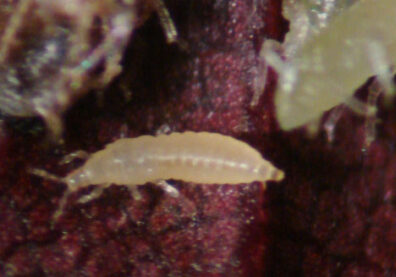
Photo Source: Michael Bush, WSU Extension, Yakima, WA
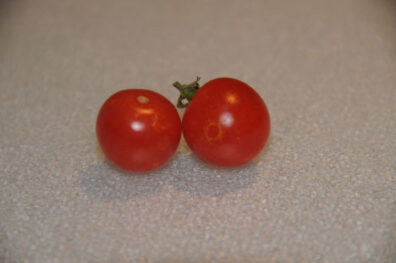
Photo Source: Michael Bush, WSU Extension, Yakima, WA
On-Line Resources:
- Western Flower Thrips Thysanoptera: Thripidae Frankiniella occidentalis.
- Pacific Northwest Insect Management Handbook. Chapter: Vegetables, Section: Broccoli, Cabbage, Other Crucifers.
- Pacific Northwest Insect Management Handbook. Chapter: Vegetables, Section: Cucumber (garden symphylan to wireworm).
- Vegetables: Bean: Thrips. Washington State University Hortsense.
- Vegetables: Broccoli, Cole crops: Thrips. Washington State University Hortsense.
- See Diseases, pests, and other problems common to many vegetables: Western flower thrips.
Abiotic Problems Common to Tomato
2,4-D herbicide injury
Problem: 2,4-D herbicide injury
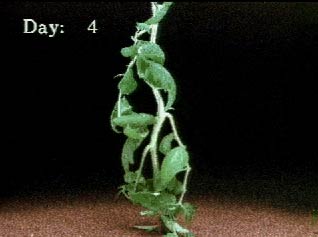
On-Line Resources:
- 2,4-D on Tomato: Postemergence. Video of injury to a tomato plant from a postemergence application of the herbicide 2,4-D. Jerry L. Hill, Ed Peachey, Larry C. Burrill, and Craig Anderson, Oregon State University.
Blossom end rot
Problem: Blossom end rot
Cause: Calcium deficiency resulting from various environmental conditions and management practices, e.g., inadequate Ca in the soil, inconsistent water as a result of alternating wet and dry periods that decrease Ca uptake by plants, and even excellent growing conditions such as a period of very bright sunshine and warm temperatures mid-season.
Crops affected: Tomato, pepper, eggplant, and various cucurbits.
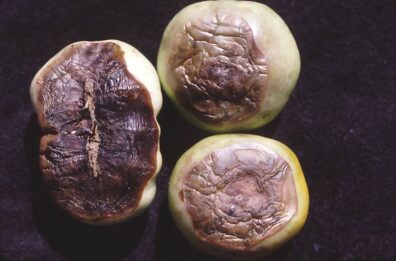
Photo Source: Krishna Mohan, University of Idaho
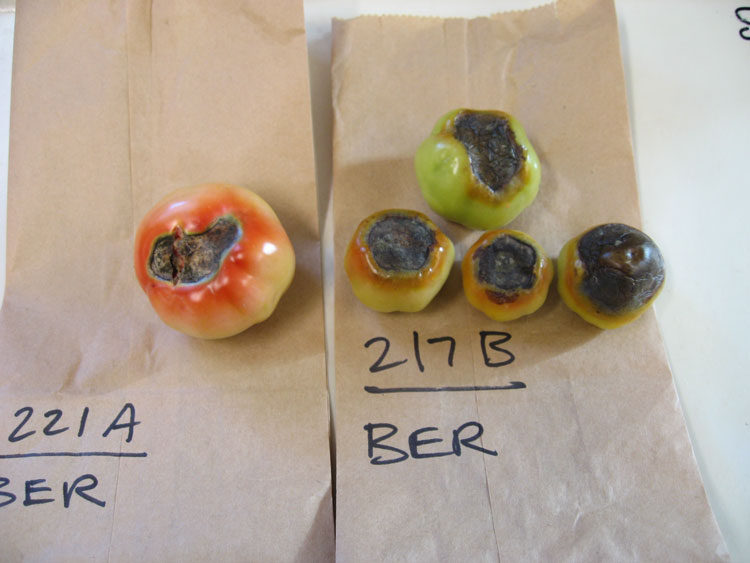
Photo Source: Carol Miles, Washington State University
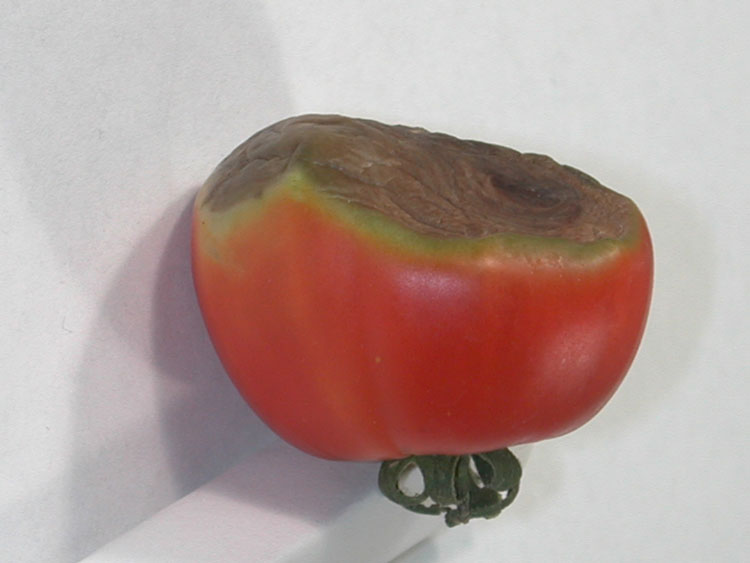
Photo Source: Mike Bush, WSU Yakima Co. Extension Educator
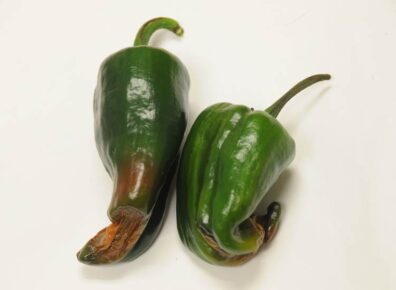
Photo Source: Mike Bush, WSU Yakima Co. Extension Educator
On-Line Resources:
- Blossom-end-rot on Tomatoes. By M. Ophardt, 2013. WSU Extension Garden Tips.
- Blossom end rot: Understanding a perennial problem. Michigan State University Extension.
- Blossom-End Rot of Tomato, Pepper, and Eggplant. By Miller, S.A., R. C. Rowe, and R. M. Riedel, The Ohio State University Extension Fact Sheet HYG-3117-96.
- Blossom-end Rot of Tomatoes (pdf). Oregon State University Extension Service Bulletin FS 139. By I.C. MacSwan, 2000. Oregon State University Extension Service Bulletin.
- Vegetables: Tomato: Blossom-end Rot. Washington State University Hortsense.
- See Diseases, pests, and other problems common to many vegetables: Blossom end rot of vegetables.
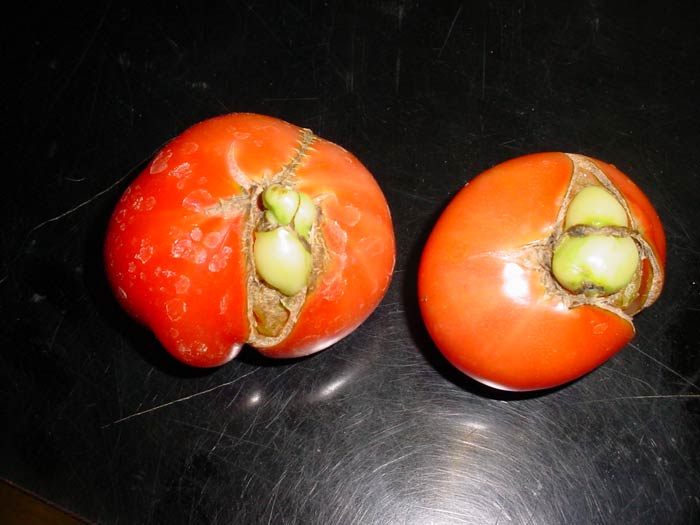
Parthenocarpy in tomato fruit
Problem: Parthenocarpy (secondary ovary formation) in tomato fruit
Cause: Various environmentally stressful conditions
Crops affected: Tomato and many other vegetables.
On-Line Resources:
- Parthenocarpy, Wikipedia.
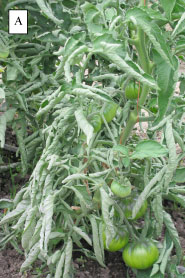
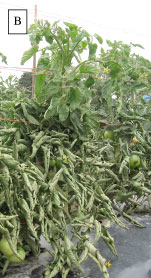
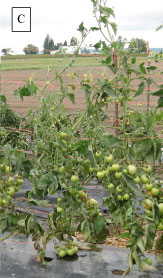
Physiological leaf roll
Problem: Physiological leaf roll
Cause: Various environmental conditions and management practices
Crops affected: Tomato and Potato.
On-Line Resources:
- Physiological Leaf Roll of Tomato/Potato (pdf), Identification & Management of Emerging Vegetable Problems in the Pacific Northwest. Pacific Northwest Vegetable Extension Group.
- Physiological Leaf Roll of Tomato (pdf), A Fact Sheet prepared by The Pacific Northwest Vegetable Extension Group.
Vivipary
Problem: Vivipary (germination of seeds while still attached to the mother plant)
Crops affected: Solanaceaous vegetables like tomato and pepper.
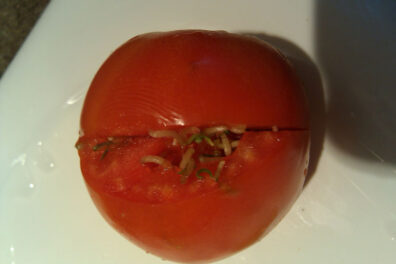
Photo Source: Michael Bush, Washington State University Extension, Yakima, WA
On-Line Resources:
- Effect of potassium nutrition during bell pepper seed development on vivipary and endogenous levels of abscisic acid (ABA). (pdf). By Marrush, M., M. Yamaguchi and M. E. Saltveit. 1998. J. Amer. Soc. Hort. Sci. 123(5):925–930.
- Physiological and Nutrient Disorders (pdf). University of Kentucky Vegetable Integrated Pest Management Program. Vegetable Manuals.
- See Diseases, pests, and other problems common to many vegetables: Vivipary.
If you need the content provided on this site in an alternate format or for further information on the Vegetable Seed Pathology program,
please contact: Lindsey du Toit at dutoit@wsu.edu or at 360-848-6140.
Our pages provide links to external sites for the convenience of users. WSU Extension does not manage these external sites, nor does Extension review, control, or take responsibility for the content of these sites. These external sites do not implicitly or explicitly represent official positions and policies of WSU Extension.