Diseases
Insect/Mite Pests
Abiotic Problems Common to Sweet Corn
(Click on photo to enlarge)
Diseases
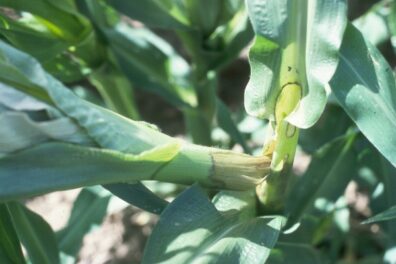
Bacterial stalk rot
Disease: Bacterial stalk rot
Pathogen: Erwinia species
On-Line Resources:
- Pacific Northwest Plant Disease Management Handbook: Corn (Zea mays) – Bacterial Stalk Rot.
- Corn: Root, stalk, and ear rots, Washington State University.
Common rust
Common name: Common rust
Pathogen: Puccinia sorghi
On-Line Resources:
- Common Rust of Corn, (Video Presentation), Plant Management Network International.
- Differentiating Common Rust and Southern Rust of Corn, (Video Presentation), Plant Management Network International.
Common smut
Common name: Common smut
Latin binomial: Ustilago maydis (= Ustilago zeae)
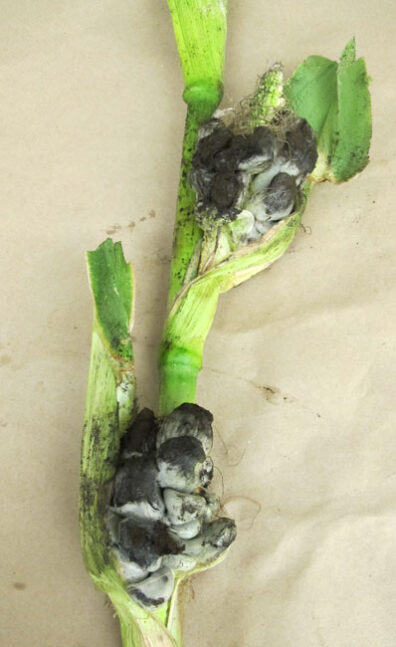
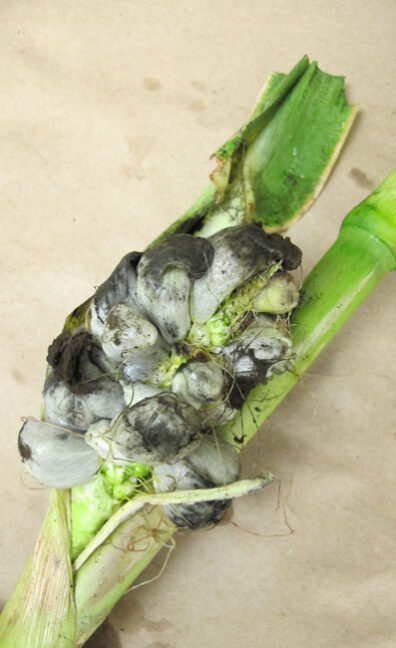
Photo Source: Karen Ward, Washington State University Plant Diagnostician
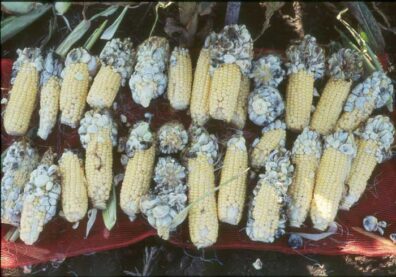
Photo Source: Lindsey du Toit, Washington State University
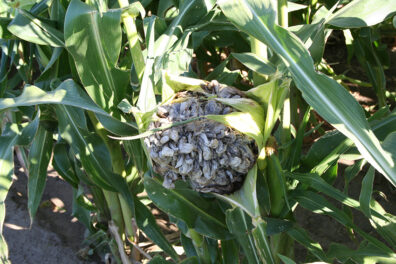
Photo Source: Silvia Rondon, Oregon State University
On-Line Resources:
- Corn Smuts (pdf). Oregon State University, University of Idaho, Washington State University.
- Common smut of corn (Syn. boil smut, blister smut). APSnet.
- Pacific Northwest Plant Disease Management Handbook: Corn (Zea mays) – Common Smut.
- Common Smut (Boil Smut), UC IPM Online, University of California.
Head smut
Common name: Head smut
Latin binomial: Sphacelotheca reiliana (Sorosporium reilianum = Ustilago reiliana)
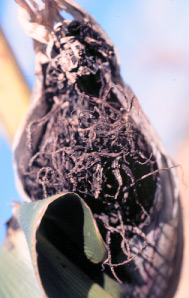
Photo Source: Jerald Pataky, Professor Emeritus, University of Illinois at Urbana-Champaign
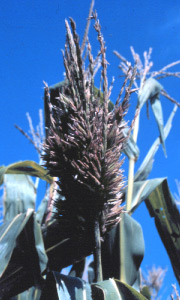
Photo Source: Jerald Pataky, Professor Emeritus, University of Illinois at Urbana-Champaign
On-Line Resources:
- Corn Smuts (pdf). Oregon State University, University of Idaho, Washington State University.
- Pacific Northwest Plant Disease Management Handbook: Corn (Zea mays) – Head Smut.
High plains disease
Common name: High plains disease
Latin binomial: High plains virus (HPV)
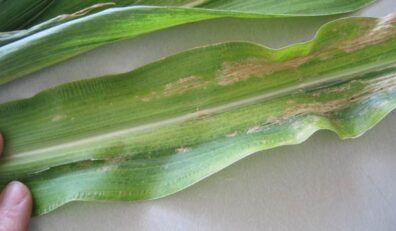
Photo Source: Carrie H. Wohleb
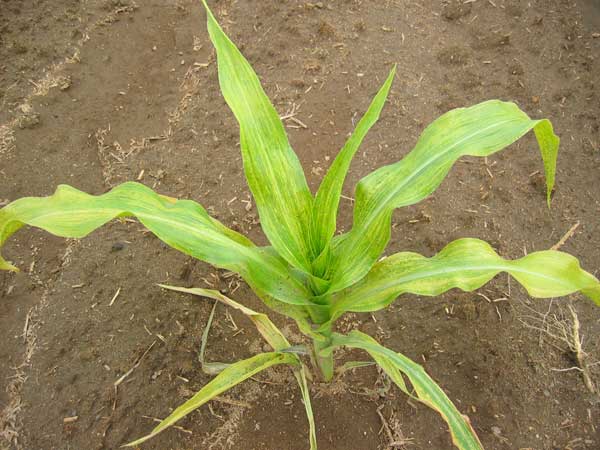
Photo Source: Gary Q. Pelter
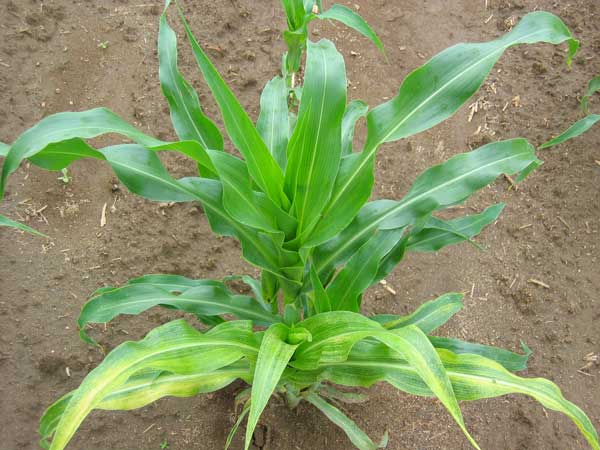
Photo Source: Gary Q. Pelter
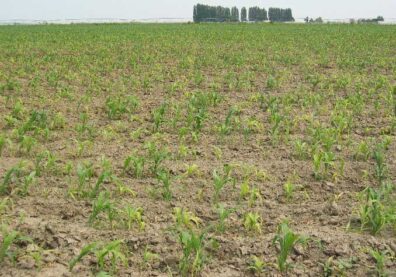
Photo Source: Lindsey du Toit
On-Line Resources:
- High Plains Disease Caused by the High Plains Virus. Pacific Northwest Vegetable Extension Group August 2003 Newsletter.
- Pacific Northwest Plant Disease Management Handbook: High Plains Disease.
Southern rust
Common name: Southern rust
Pathogen: Puccinia polysora
On-Line Resources:
- Southern Rust of Corn, (Video Presentation), Plant Management Network International.
- Differentiating Common Rust and Southern Rust of Corn, (Video Presentation), Plant Management Network International.
Insect/Mite Pests
Bird cherry-oat aphid
Common name: Bird cherry-oat aphid
Latin binomial: Rhopalosiphum padi (L.)
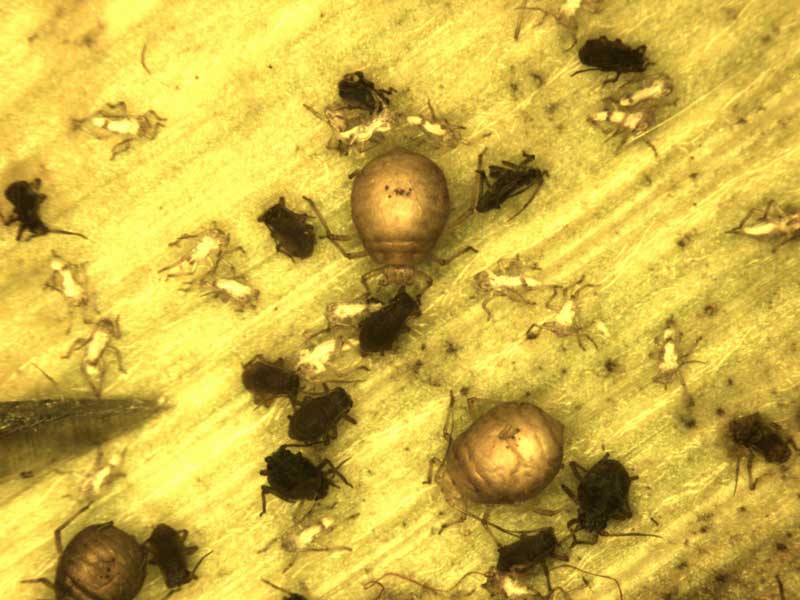
Photo Source: Photographer – Johnny Stark Submitted by Jenny Glass
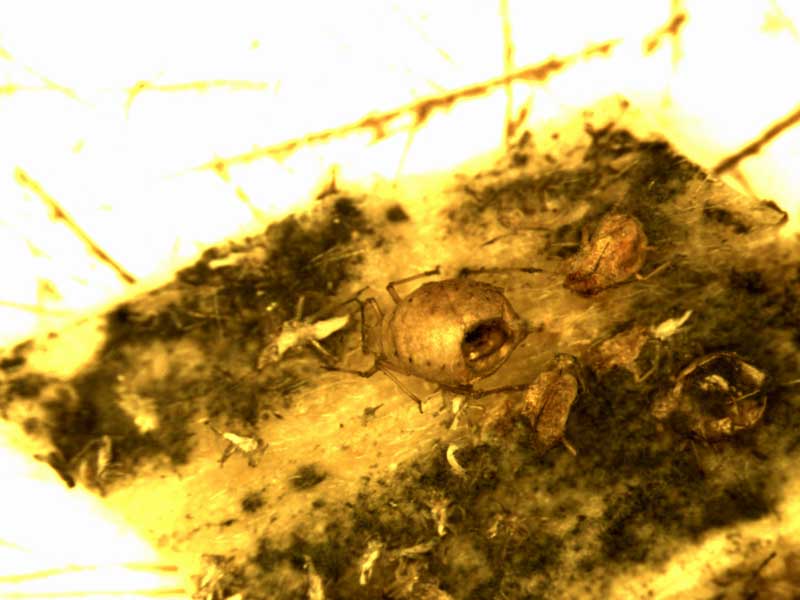
Photo Source: Photographer – Johnny Stark Submitted by Jenny Glass
On-Line Resources:
- Pacific Northwest Insect Management Handbook. Chapter: Vegetables, Section: Corn, Sweet (aphids to armyworm).
Corn earworm
Common name: Corn earworm
Latin binomial: Helicoverpa zea
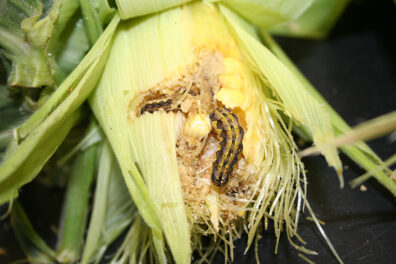
Photo Source: Oregon State University HAREC-IAEP (Silvia Rondon’s lab)
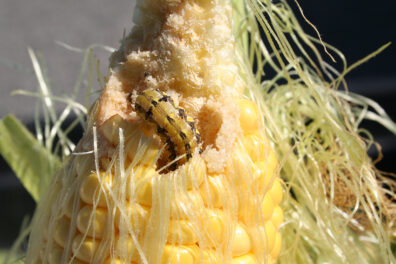
Photo Source: Oregon State University HAREC-IAEP (Silvia Rondon’s lab)
Online Resources:
- Corn earworm. Pacific Northwest Insect Management Handbook.
- Corn earworm. Integrated Peat Management, University of Illinois Extension.
- Corn earworm. UC Pest Management Guidelines, Statewide Integrated Pest Management Program, University of California.
- Corn Earworm Pest of Sweet Corn FS221E, Pacific Northwest Vegetable Extension Group.
Western corn rootworm
Common name: Western corn rootworm
Latin binomial: Diabrotica virgifera virgifera
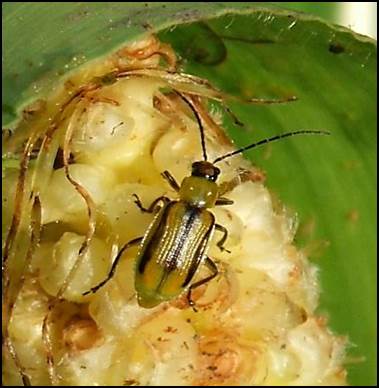
Photo Source: Oregon State University HAREC-IAEP (Silvia Rondon’s lab)
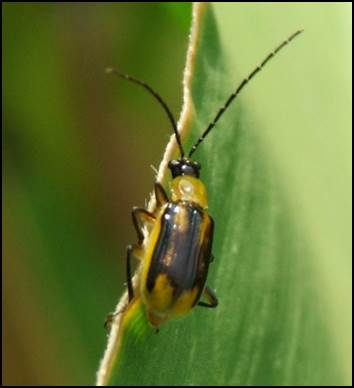
Photo Source: Oregon State University HAREC-IAEP (Silvia Rondon’s lab)
Online Resources:
- Corn rootworm (larvae). Pacific Northwest Insect Management Handbook.
- Plant Management Network “Focus on Corn” Webinars:
- Adult Corn Rootworm Suppression – Lance J. Meinke, University of Nebraska-Lincoln.
- Decision Tree for Grower Management Options: Re-Learning Corn Rootworm Management in the Transgenic Era – Ken Ostlie, University of Minnesota
- Larval Corn Rootworm Management – Robert Wright, University of Nebraska-Lincoln
- Resistance Evolution and IRM for Rootworm – Aaron Gassmann, Iowa State University
- Rootworm Biology and Behavior – Joseph L. Spencer, University of Illinois at Urbana-Champaign
- Western corn rootworm in eastern Oregon, Idaho, and eastern Washington (pdf). In the Pacific Northwest, western corn rootworm has been found in corn crops in eastern Oregon, Idaho, and eastern Washington. Though it is not as abundant in the PNW as it is in the Midwest, WCR still has the potential to damage corn in the region.
Wireworm
Common name (of damaging stage): Wireworm (adults are called click beetles or snapping beetles)
Latin binomial: Ctenicera spp. and Limonius spp. Several kinds of wireworms are in the Pacific Northwest. Wireworms causing the most damage in irrigated areas are the Pacific Coast wireworm (Limonius canus), the sugar beet wireworm (L. californicus), the western field wireworm (L. infuscatus), and the Columbia Basin wireworm (L. subauratus). The Pacific Coast and sugar beet wireworms are the most common. Where annual rainfall is <15 inches, the Great Basin wireworm (Ctenicera pruinina) may be a problem, especially when irrigated crops are grown on sagebrush or dry wheat land. This species usually disappears after a few years of irrigation, but may be replaced by Limonius spp. which are favored by moist conditions. West of the Cascades, other wireworm species are pests, including Agriotes spp.
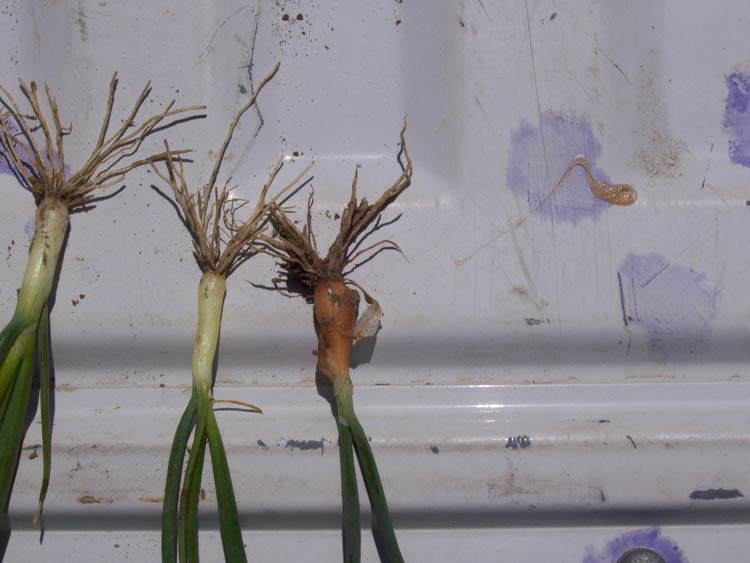
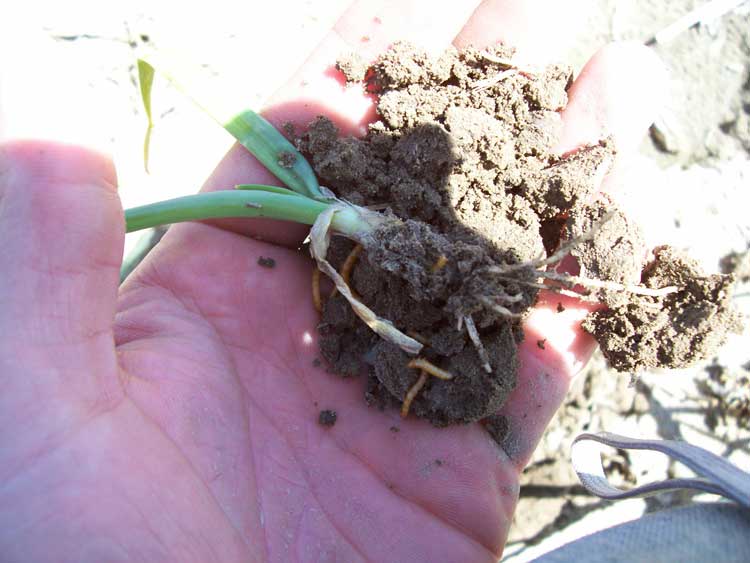
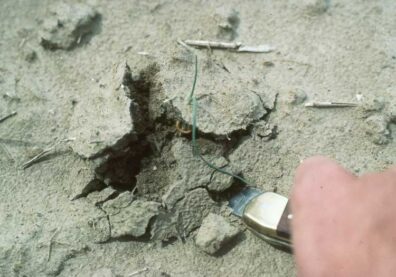
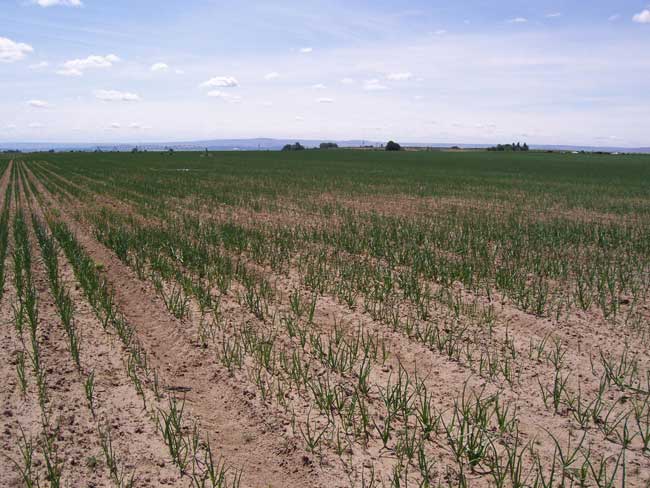
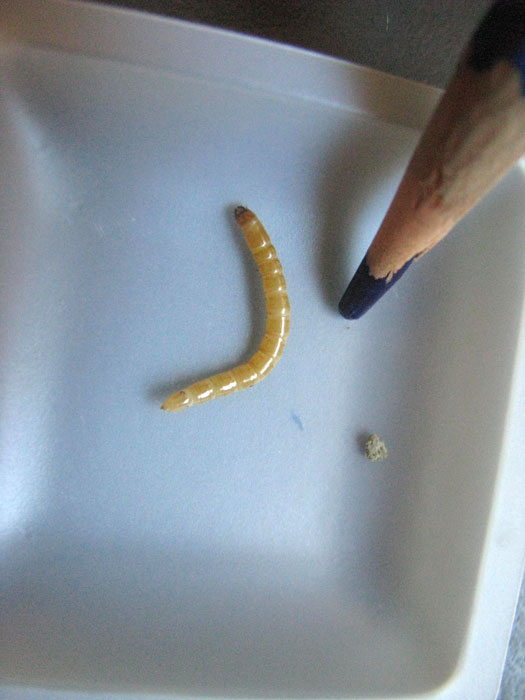
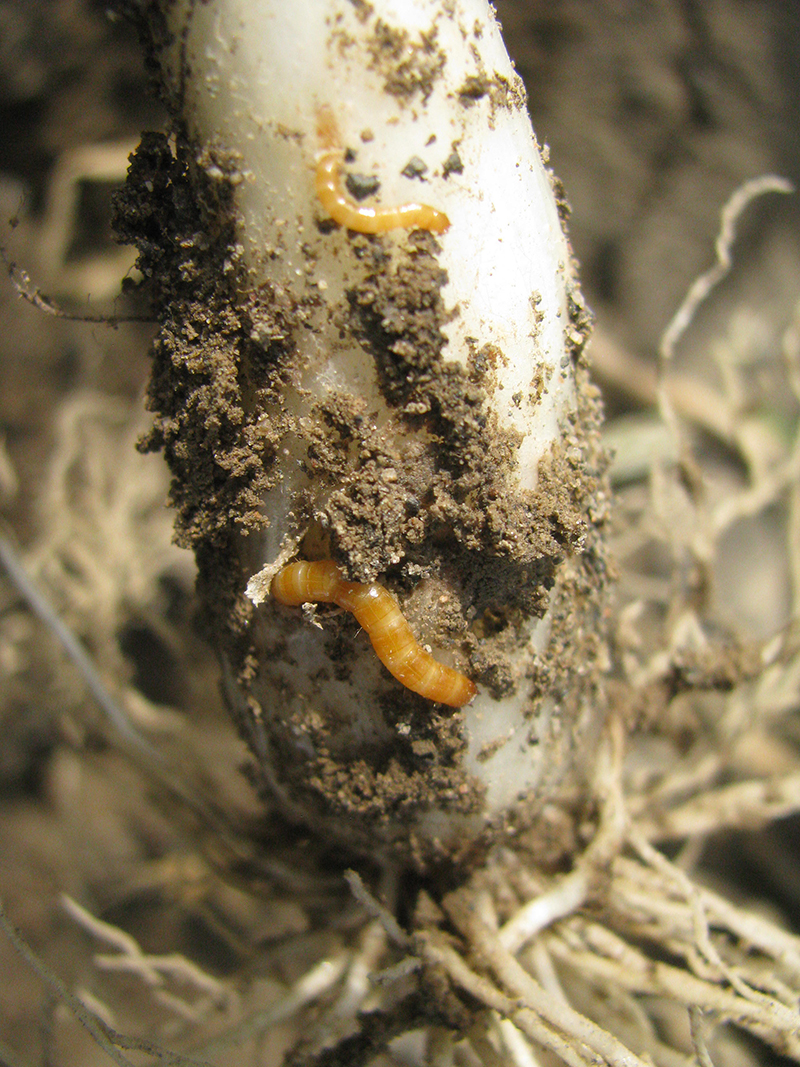
Photo Source: Lindsey du Toit, Washington State University

Photo Source: Doug Young, Professor Emeritus of Washington State University
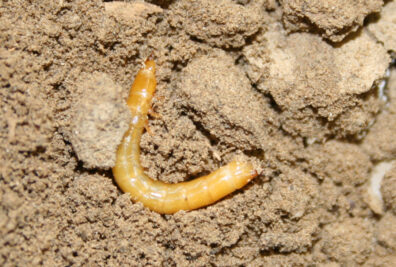
Photo Source: Oregon State University-Irrigated Agricultural Entomology Program (Silvia Rondon’s lab).
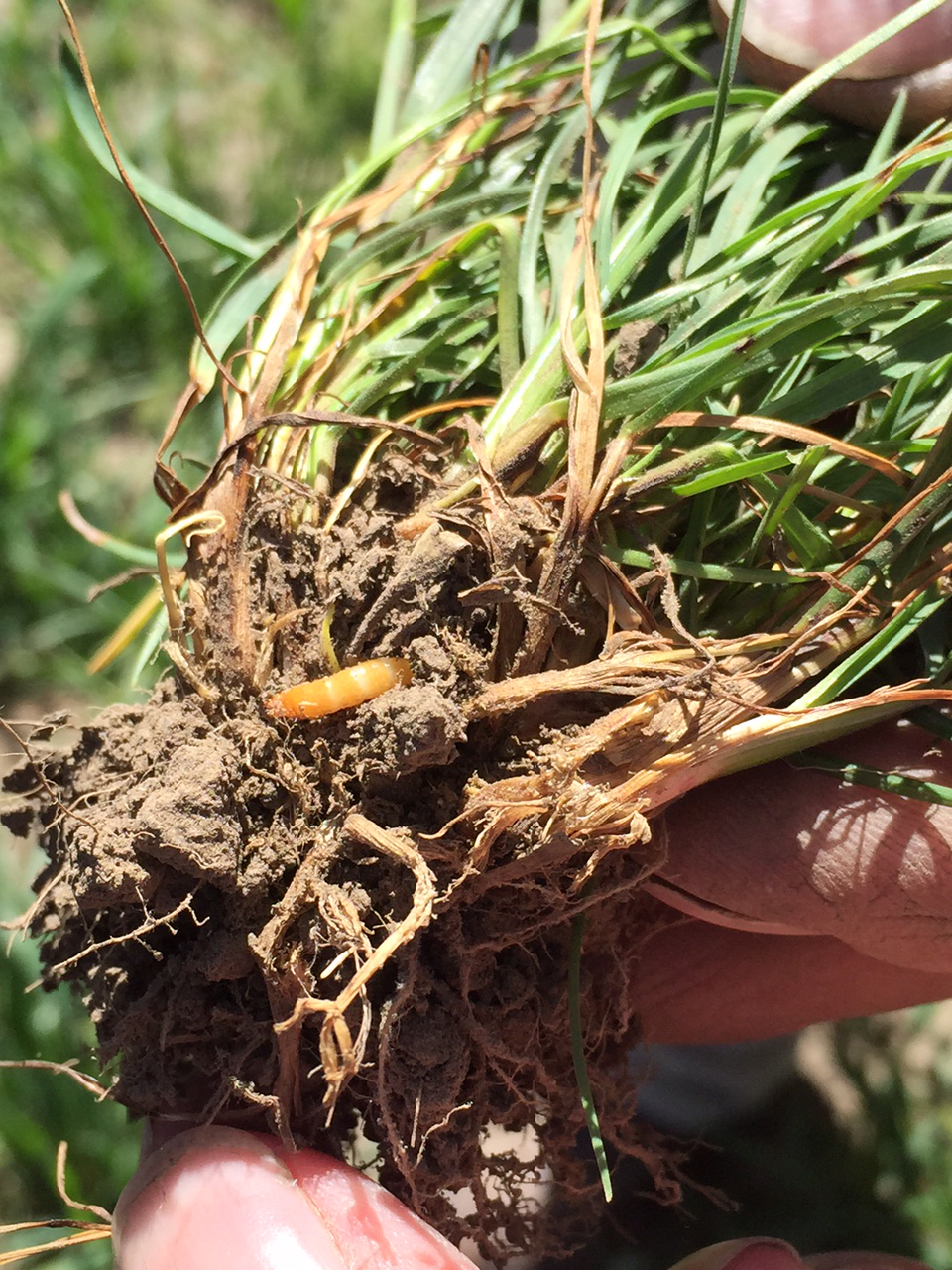
Photo Source: Oregon State University-Irrigated Agricultural Entomology Program (Silvia Rondon’s lab).
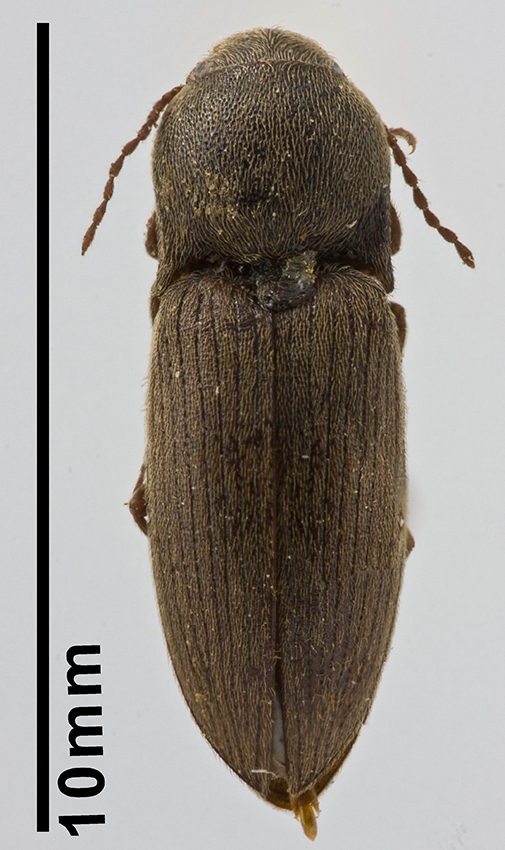
Photo Source: Oregon State University –Oregon State Arthropod Collection.
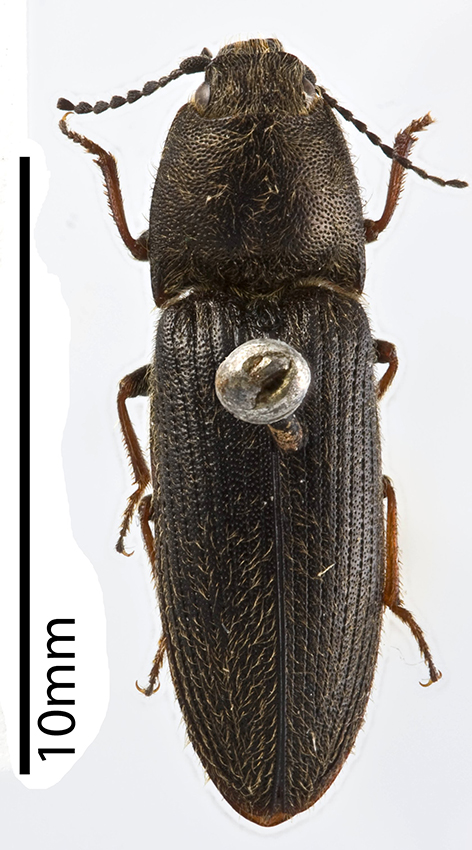
Photo Source: Oregon State University – Oregon State Arthropod Collection.
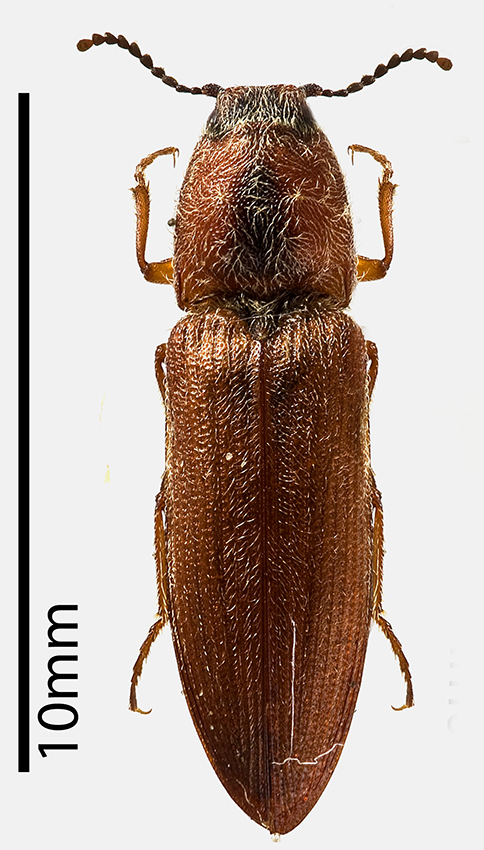
Photo Source: Oregon State University – Oregon State Arthropod Collection.
On-Line Resources:
- Pacific NorthwestInsect Management Handbook: Vegetable crop pests – Wireworm.
- Managing Wireworms in Vegetable Crops. Ontario Ministry of Agriculture and Food.
- Wireworms. VegEdge, University of Minnesota.
- Wireworm Field Guide (pdf) – A guide to the identification and control of wireworms, Syngenta Crop Protection Canada, Inc.
- Wireworm Biology and Nonchemical Management in Potatoes in the Pacific Northwest, N. Andrews, M. Ambrosino, G. Fisher, and S.I. Rondon, Pacific Northwest Extension Publication no. PNW607.
Abiotic Problems Common to Sweet Corn
Air pollution or ozone injury
Common name: Air pollution or ozone injury
Cause: During very hot conditions in summer, combined with the presence of excessive air particulate matter, e.g., from wildfires, symptoms of air pollution and/or ozone injury have been observed in center-pivot irrigated sweet corn crops east of the Cascade Mountains in the Pacific Northwest USA.
Host Crops: Various vegetables such as bean, potato, and sweet corn.
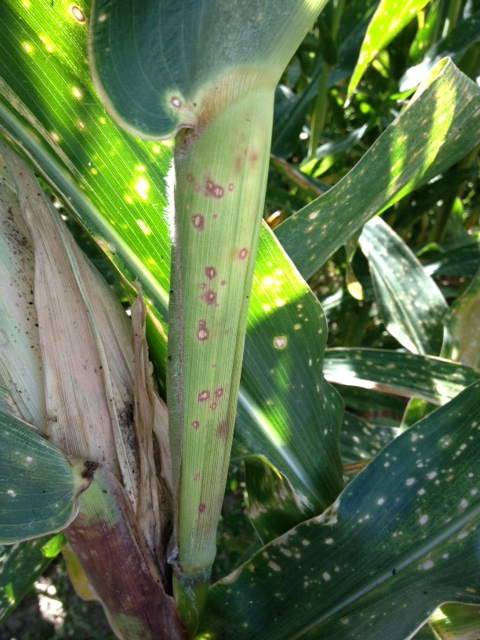
Photo Source: Carrie H. Wohleb, Washington State University Extension
Injury to corn plants from the herbicide Prowl
Common name: Injury to corn plants from the herbicide Prowl
Cause: The herbicide Prowl (active ingredient pendimethalin) is in the dinitroaniline (DNA) group of herbicides. Herbicides in this group inhibit root formation in susceptible plants. The herbicide blocks mitosis (cell division) in the root tip, causing short, club-like roots in corn. Plants that emerge may be stunted, and may have a red or purple margin to the leaves. Severely affected plants may die of drought stress, even if there is available water in the soil, as the plants cannot develop enough root system to support the water needs of the developing leaves/shoots. Roots that grow beyond the treated zone of the soil will start to grow normally again. DNA herbicides like pendimethalin can injure emerging corn plants if soil conditions are cool and wet after planting, or when corn seed is planted too shallow and/or comes into direct contact with the herbicide.
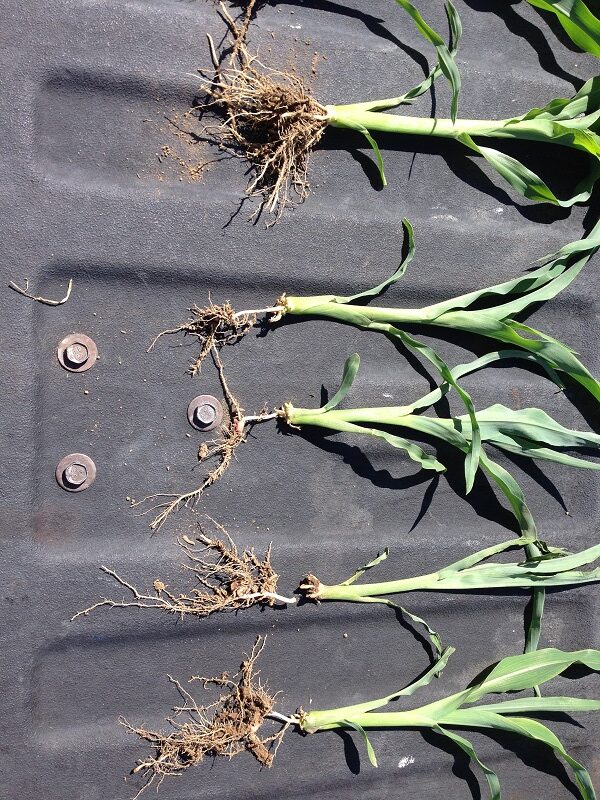
Photo Source: Tim Waters, Washington State University
Online Resources:
- Herbicide Injury: Dinitroaniline Herbicides (Treflan, Rival, Bonanza, Prowl) injury to Corn, Excerpt from Agronomy Guide for Field Crops, Greg Stewart – Corn Industry Program Lead/Ontario Ministry of Agriculture, Food and Rural Affairs (OMAFRA); Mike Cowbrough – Weed Management Field Crops Program Lead/OMAFRA.
- Diagnosing Herbicide Injury in Corn, SS-AGR-365, Agronomy Department, Florida Cooperative Extension Service, Institute of Food and Agricultural Sciences, University of Florida (scroll to Section 5 on ‘Seedling Growth Inhibitors’ and the subheading ‘Dinitroanilines’).
- Herbicide Mode of Action and Injury Symptoms, North Central Regional Extension Publication No. 377, University of Minnesota Extension Service (scroll to Section IV. ‘Seedling Growth Inhibitors’).
- Cool, Wet Soils Can result in More Corn Injury from Preemergence Residual Herbicides, Integrated Pest Management, Division of Plant Sciences, University of Missouri.
If you need the content provided on this site in an alternate format or for further information on the Vegetable Seed Pathology program,
please contact: Lindsey du Toit at dutoit@wsu.edu or at 360-848-6140.
Our pages provide links to external sites for the convenience of users. WSU Extension does not manage these external sites, nor does Extension review, control, or take responsibility for the content of these sites. These external sites do not implicitly or explicitly represent official positions and policies of WSU Extension.