Diseases
Nematodes
Insect/Mite Pests
Abiotic Problems Common to Potato
(Click on photo to enlarge)
General Potato Disease and Pest Management
- Integrated Management of Storage Diseases, (Video Presentation), Focus on Potato, Plant Management Network International.
Diseases
Aster yellows
Disease: Aster yellows
Pathogen: Aster yellows phytoplasma
Vector: Aster leafhopper (Macrosteles fascifrons) and other leafhoppers, and the phytoplasma can be carried in infected tubers
Host crops: Over 300 kinds of plants, including a wide variety of vegetables. Broccoli, cabbage, carrot, onion, potato, pumpkin, radish, shallot, spinach, squash, tomato, and more.
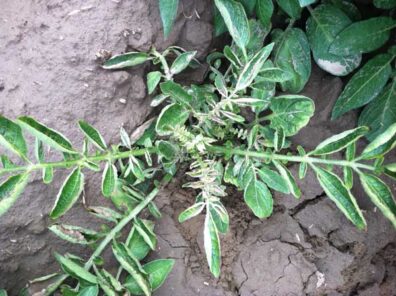
Photo Source: Carrie Wohleb, WSU Extension Educator, Grant/Adams Counties
On-Line Resources:
- Pacific Northwest Plant Disease Management Handbook: Potato (Solanum tuberosum) – Aster Yellows {Late-breaking Virus}.
- Pacific Northwest Plant Disease Management Handbook: Aster – Yellows.
Bacterial soft rot
Disease: Bacterial soft rot
Pathogen: Pectobacterium
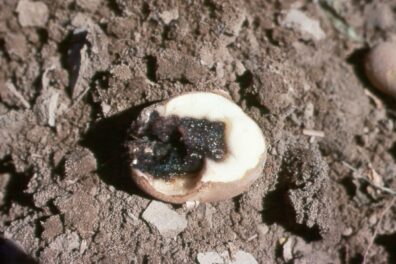
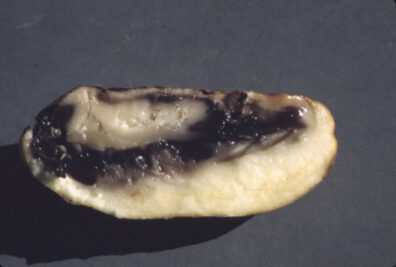
Photo Source: D. Johnson
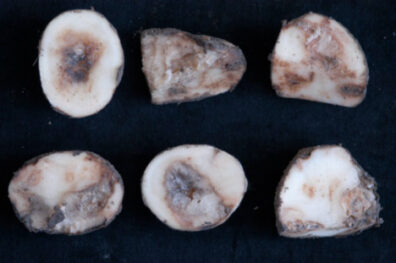
Photo Source: D. Johnson
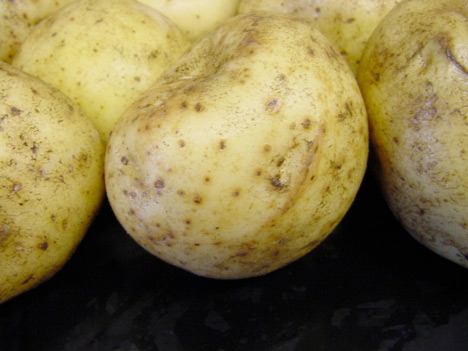
Photo Source: B. Gundersen
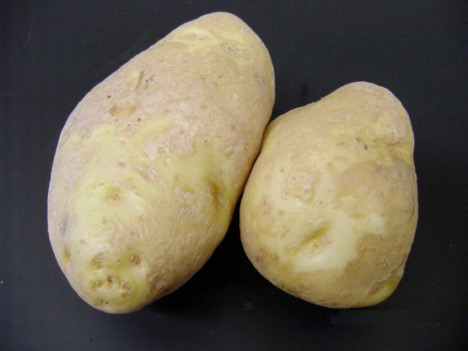
Photo Source: B. Gundersen
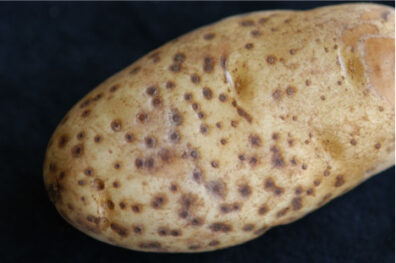
Photo Source: B. Gundersen
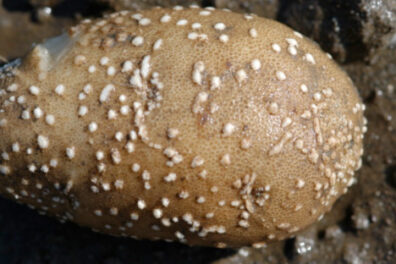
Photo Source: D. Johnson
On-Line Resources:
- Pacific Northwest Plant Disease Management Handbook: Potato (Solanum tuberosum) – Bacterial Soft Rot and Blackleg and Lenticel Rot.
- Bacterial Soft Rot and Lenticel Spot on Potato Tubers, Washington State University Extension Fact Sheet.
- Potato: Bacterial soft rot and blackleg, Washington State University Hortsense.
- Potato Progress, Volume 15, Number 12, dated September 8, 2015 (pdf). Research & Extension for the Potato Industry of Idaho, Oregon, and Washington. This issue covers the many details of bacterial soft rot diseases of potato and how they should be managed late season and in storage.
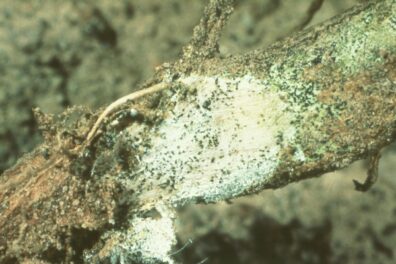
Black dot
Disease: Black dot
Pathogen: Colletotrichum coccodes
On-Line Resources:
Black leg
Disease: Black leg
Pathogen: Erwinia species
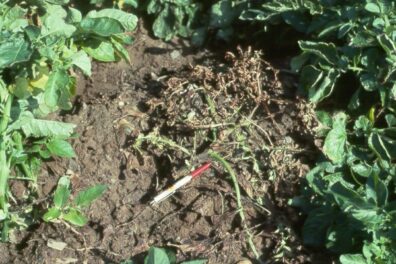
Photo Source: G.Q. Pelter
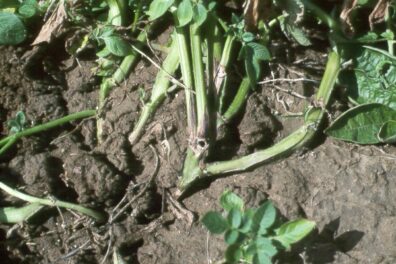
Photo Source: G.Q. Pelter
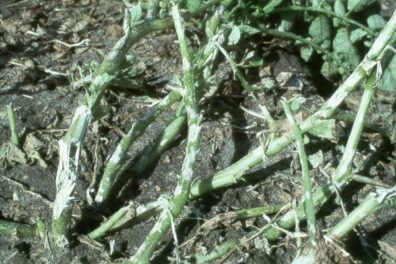
Photo Source: G.Q. Pelter
On-Line Resources:
- ‘Focus on Potato’ Webcast Helps Users Minimize Spread of Blackleg.
- Blackleg, caused by strains of soft rot bacteria known as Dickeya, has traditionally had little impact on North American potato production, but it now appears to be on the move throughout Europe and could threaten growers in the United States.
- The Plant Management Network (PMN) has released a presentation entitled “Dickeya: A Scottish, UK and European Perspective” to provide growers and consultants an overview of the history of the disease in Europe, and an introduction to Dickeya solani, a new aggressive pathogen strain contributing to an increase in the incidence and spread of blackleg. The webcast was developed by Gerry Saddler, Deputy Head of Science & Advice Scottish Agriculture with the Scottish Government, and details that country’s potato production practices and explains why they have adopted a national zero-tolerance approach to the presence of Dickeya strains. The presentation discusses:
- Causes of blackleg and symptoms exhibited by different strains.
- Conditions that encourage infection and common transmission methods.
- Inspection and testing practices employed in Scotland.
- Effective control measures to limit spread.
- The 40-minute presentation will remain open access through July 31 in the Focus on Potato webcast resource. The Plant Management Network is a nonprofit publisher of applied, science-based resources that help enhance the health, management, and production of agricultural and horticultural crops. Partnering with over 80 universities, nonprofits, and agribusinesses, PMN provides materials covering a wide range of crops and contemporary issues through the online PMN Education Center.
- Pacific Northwest Plant Disease Management Handbook: Potato (Solanum tuberosum) – Bacterial Soft Rot and Blackleg and Lenticel Rot.
- Potato: Bacterial soft rot and blackleg, Washington State University Hortsense.
- Potato Progress, Volume 15, Number 12, dated September 8, 2015 (pdf). Research & Extension for the Potato Industry of Idaho, Oregon, and Washington. This issue covers the many details of bacterial soft rot diseases of potato and how they should be managed late season and in storage.
- Soft Rot and Blackleg Diseases of Potato, Plant Management Network International.
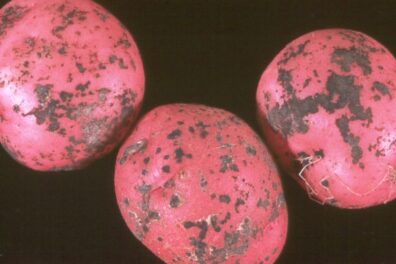
Black scurf
Disease: Black scurf
Pathogen: Rhizoctonia solani
On-Line Resources:
- Pacific Northwest Plant Disease Management Handbook: Potato (Solanum tuberosum) – Rhizoctonia Canker {Black Scurf}.
- Potato: Rhizoctonia canker (Black scurf), Washington State University.
Corky ring spot
Disease: Corky ring spot
Pathogen: Tobacco rattle virus, transmitted by soilborne nematodes, Trichodorus spp. and Paratrichodorus spp.
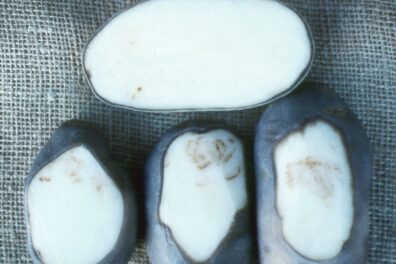
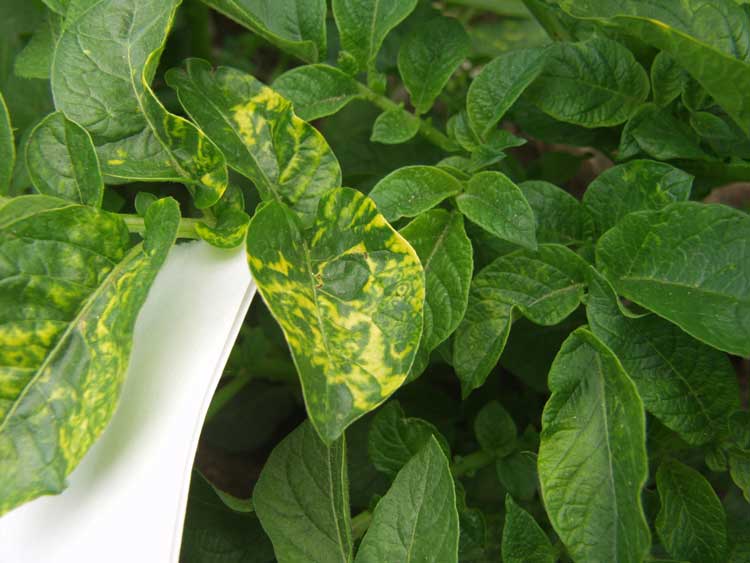
Photo Source: Phil Hamm, OSU Hermiston IAREC
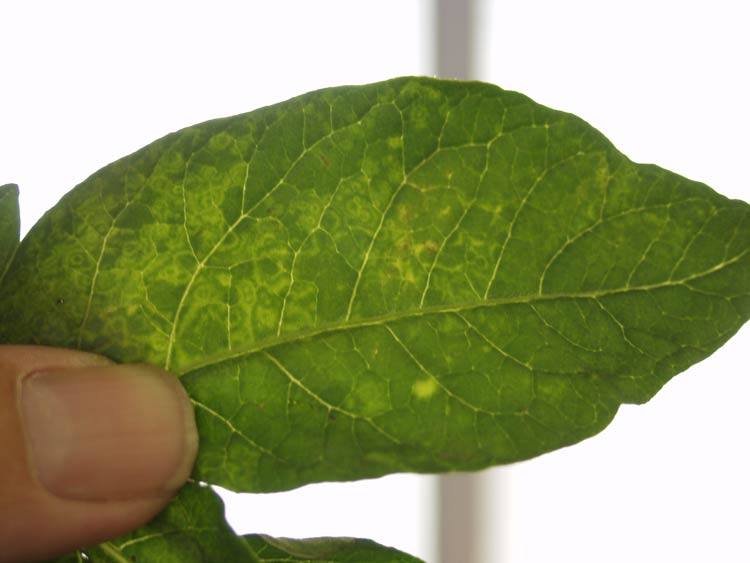
Photo Source: Phil Hamm, OSU Hermiston IAREC
Photo Source: Phil Hamm, OSU Hermiston IAREC
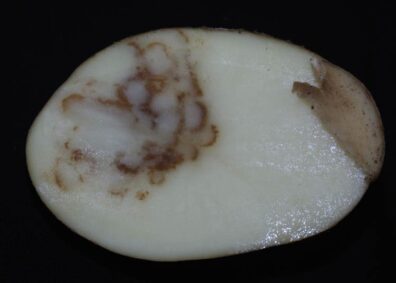
Photo Source: Jordan Eggers, Oregon State University
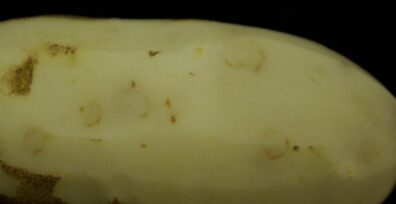
Photo Source: Jordan Eggers, Oregon State University
On-Line Resources:
Curly top
Disease: Curly top
Pathogen: Beet curly top virus (BCTV), vectored by the beet leafhopper Circulifer tenellus.
Host crops: Numerous plant species including many vegetables such as bean, beet, carrot,
eggplant, coriander, pepper, tomato, various cucurbits such as squash, cucumber, pumpkin, and
watermelon, etc.
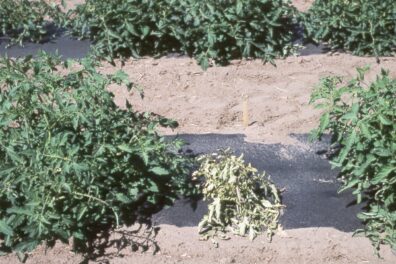
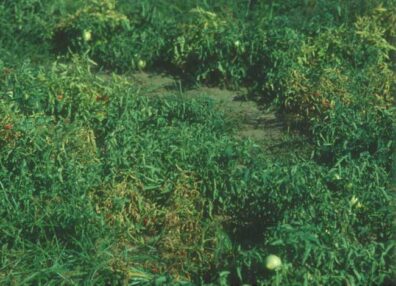
Photo Source: Phil Hamm, Oregon State University
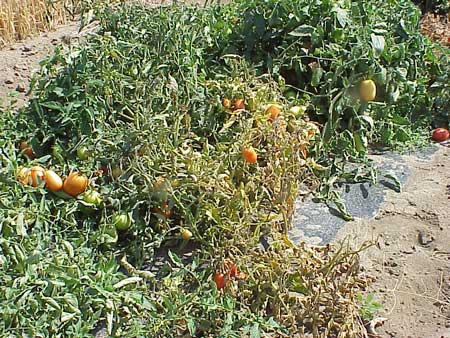
Photo Source: Phil Hamm, Oregon State University
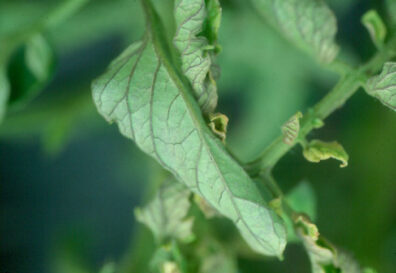
Photo Source: Phil Hamm, Oregon State University
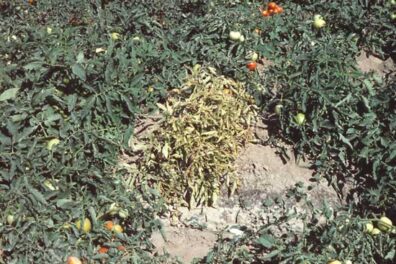
Photo Source: Krishna Mohan, University of Idaho
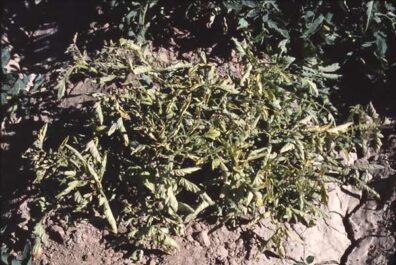
Photo Source: Krishna Mohan, University of Idaho
On-Line Resources:
Early blight
Disease: Early blight
Pathogen: Alternaria solani
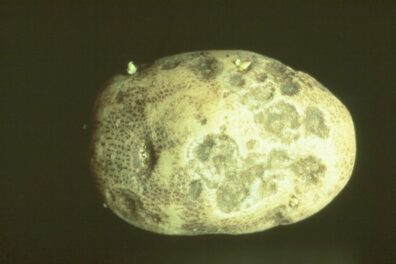
Photo Source: G.Q. Pelter
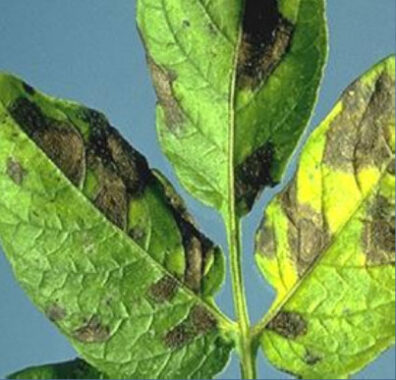
Photo Source: The American Phytopathological Society
On-Line Resources:
- Pacific Northwest Plant Disease Management Handbook: Potato (Solanum tuberosum) – Early Blight.
- Early Blight: A Global Management Issue on Potatoes (Video Presentation), Focus on Potato, Plant Management Network International.
- Focus on Potato webcast: “Best Management Tactics and Fungicide Resistance in Early Blight and Brown Spot” by Dr. Lydia Tymon, plant pathologist at Washington State University.
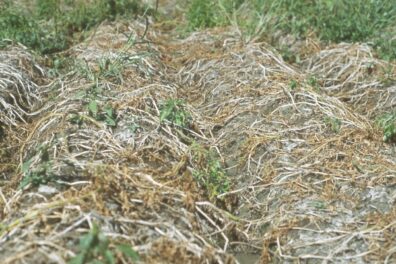
Early dying
Disease: Early dying
Pathogen: Meloidogyne and Verticillium
On-Line Resources:
- Pacific Northwest Plant Disease Management Handbook: Potato (Solanum tuberosum) – Verticillium Wilt {Potato Early Dying}.
- Potato: Verticillium Wilt (Potato early dying), Washington State University Hortsense.
Erwinia
Disease: Erwinia
Pathogen: Erwinia
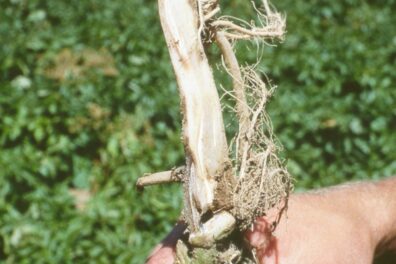
Photo Source: G.Q. Pelter
Fusarium dry rot
Disease: Fusarium Dry Rot
Pathogen: Fusarium spp.
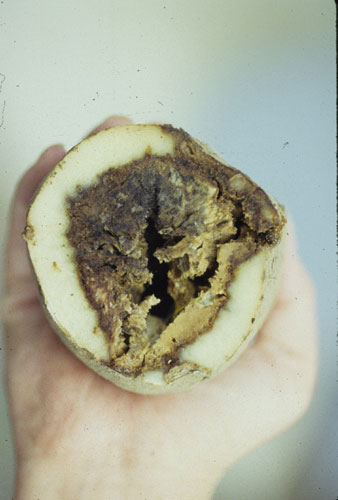
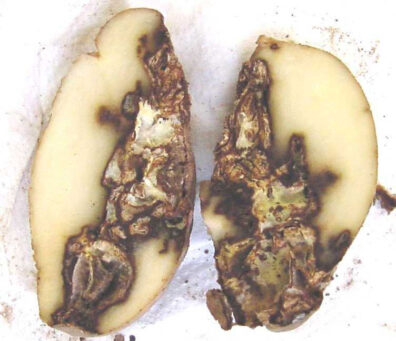
On-Line Resources:
- Pacific Northwest Plant Disease Management Handbook: Potato (Solanum tuberosum) – Fusarium Dry Rot.
- Fusarium Dry Rot of Potatoes, Plant Management Network International.
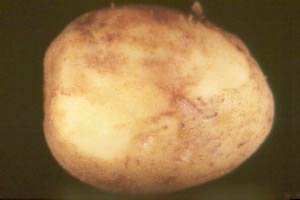
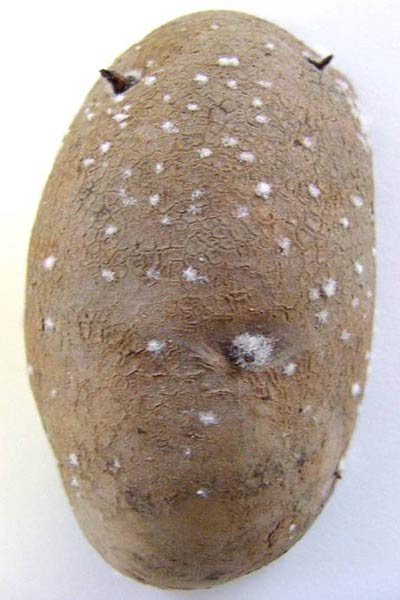
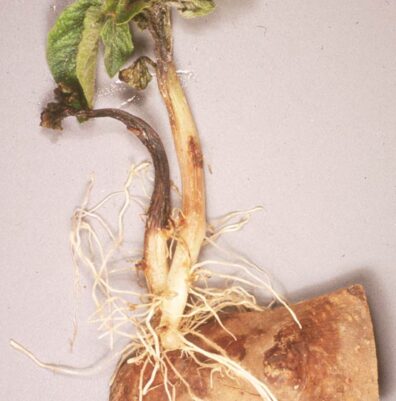
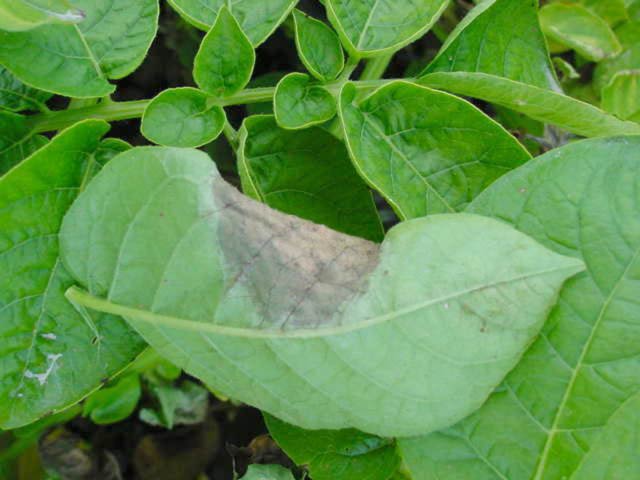
Late blight
Disease: Late Blight
Pathogen: Phytophthora infestans
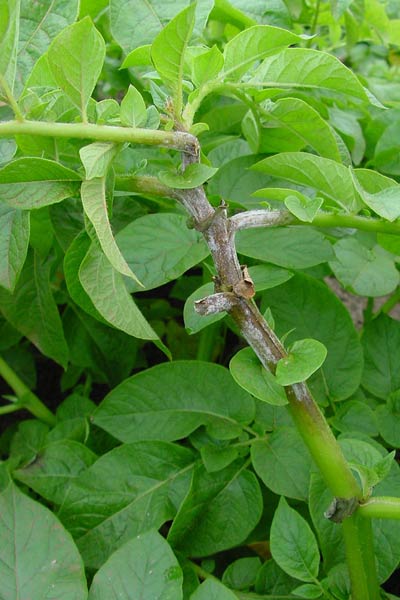
On-Line Resources:
- Pacific Northwest Plant Disease Management Handbook: Potato (Solanum tuberosum) – Late Blight.
- Organic Management of Late Blight of Potato and Tomato (Phytophthora infestans), eXtension.
- Potato Late Blight, Plant Management Network International. (video).
- A potato late blight forecasting model for the Columbia Basin can be accessed via the WSU AgWeatherNet website. Subscription to AgWeatherNet is free of charge.
- ARS Scientists Seek Blight-Resistant Spuds, USDA Agricultural Research Service.
- Potato Diseases: Late Blight (pdf), Extension Bulletin E-2945, Michigan State University.
Leaf roll
Disease: Leaf roll (net necrosis symptoms on potato tubers)
Pathogen: Potato leaf roll virus
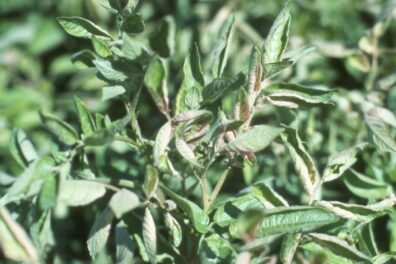
Photo Source: G.Q. Pelter
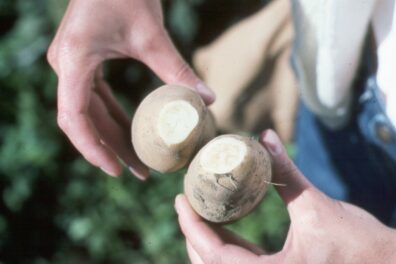
Photo Source: G.Q. Pelter
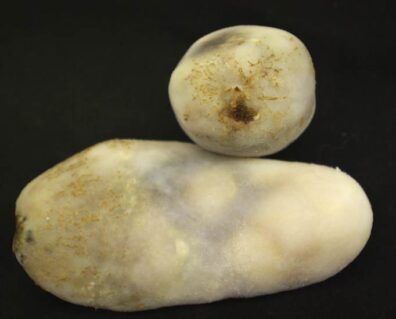
Photo Source: Jordan Eggers, Oregon State University
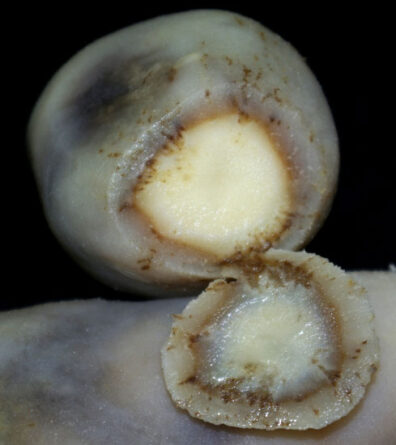
Photo Source: Jordan Eggers, Oregon State University
On-Line Resources:
- Pacific Northwest Plant Disease Management Handbook: Potato (Solanum tuberosum) – Potato Leafroll Virus {Leaf Roll}.
- Potato: Potato leafroll mosaic (Leafroll), Washington State University Hortsense.
Mop top
Disease: Mop Top
Pathogen: Potato mop-top virus (PMTV), a pomovirus vectored by the soilborne organism, Spongospora subterrenea. The latter also causes powdery scab (see Powdery scab below).
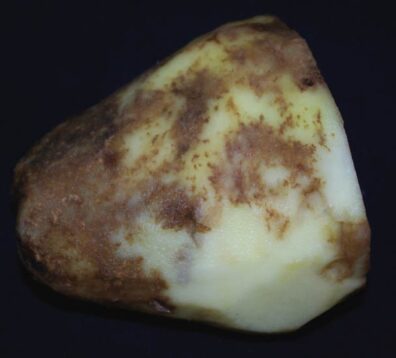
Photo Source: Jordan Eggers
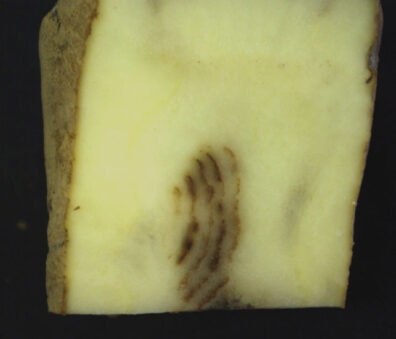
Photo Source: Jordan Eggers
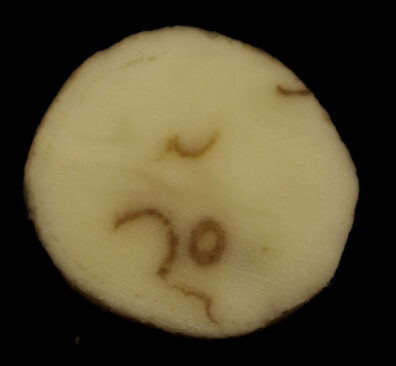
Photo Source: Jordan Eggers
On-Line Resources:
Pink eye of potato
Common Name: Pink eye of potato
Latin binomial: Unknown causal agent, occasionally observed in white- and russet-skinned cultivars, but not red-skinned cultivars. The disease has been associated with some bacteria, and is reported to be more severe in cultivars susceptible to Verticillium wilt.
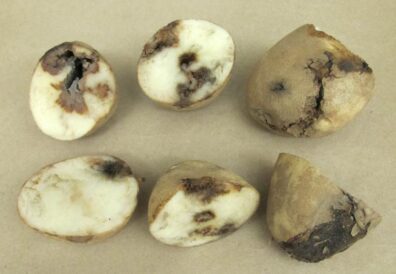
Photo Source: Karen Ward, Washington State University Plant Diagnostician
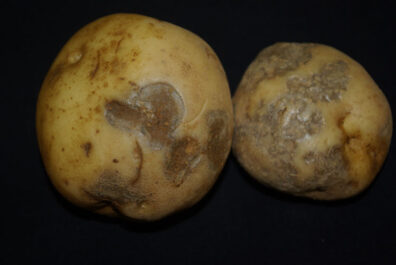
Photo Source: Jordan Egger, Oregon State University
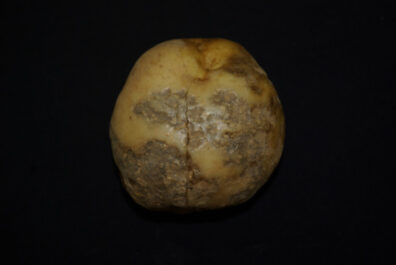
Photo Source: Jordan Egger, Oregon State University
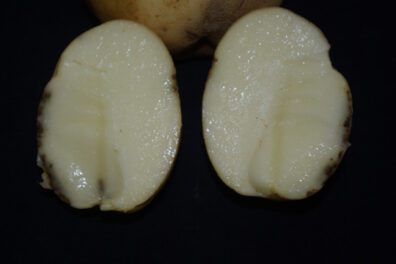
Photo Source: Jordan Egger, Oregon State University
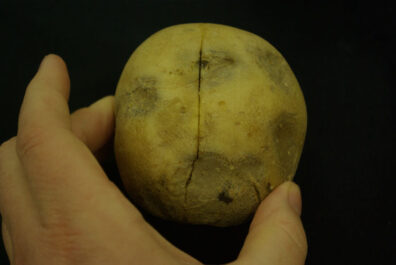
Photo Source: Jordan Egger, Oregon State University
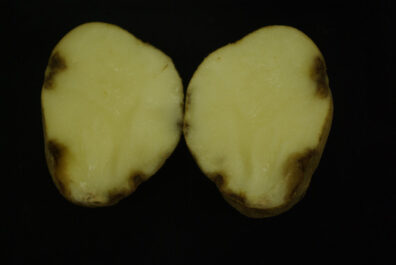
Photo Source: Jordan Egger, Oregon State University
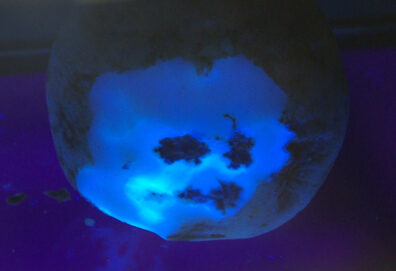
Photo Source: Jordan Egger, Oregon State University
On-Line Resources:
- Potato – Pink Eye or Brown Eye (pdf), Vegetable MD Online, Cornell University.
- Pink Eye of Potato, Prince Edward Island Department of Agriculture and Forestry, Canada.
- Relationship of Verticillium Wilt with Pink-Eye of Potato in Maine, USDA National Agricultural Library’s Digital Collections.
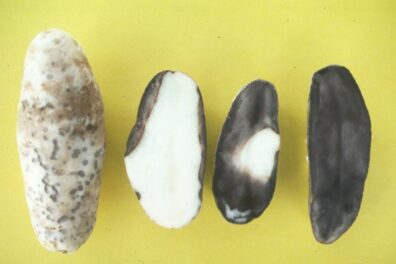
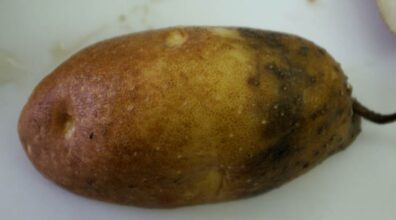
Pink rot
Disease: Pink rot
Pathogen: Phytophthora erythroseptica
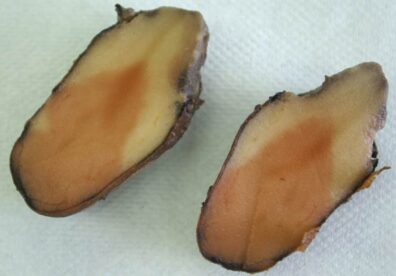
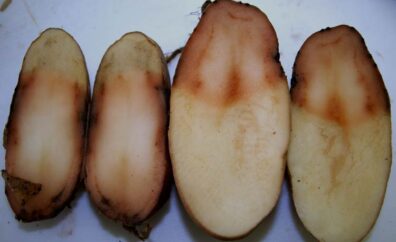
On-Line Resources:
Powdery scab
Disease: Powdery scab
Pathogen: Spongospora subterranea
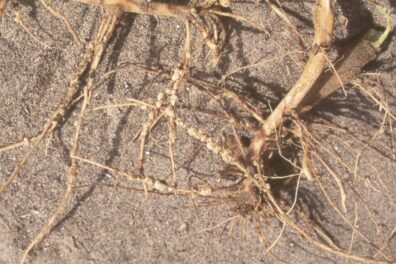
Photo Source: G.Q. Pelter
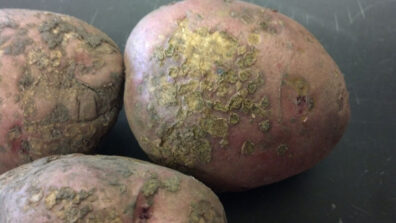
Photo Source: Babette Gundersen
On-Line Resources:
- Pacific Northwest Plant Disease Management Handbook: Potato (Solanum tuberosum) – Powdery Scab.
- Potato: Powdery scab, Washington State University Hortsense.
Purple top
Disease: Purple Top
Pathogen: Beet leafhopper transmitted virescence agent (BLTVA), a phytoplasma.
Vector: Beet leafhopper (Circulifer tenellus), and the phytoplasma can be carried in infected tubers.
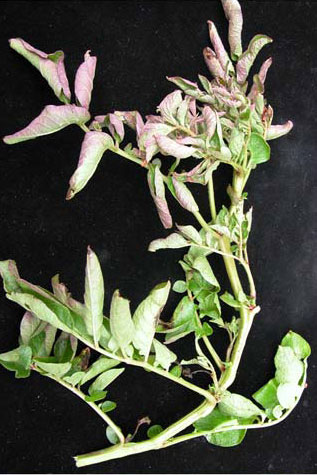
Photo Source: Pete Thomas, USDA-ARS Prosser
On-Line Resources:
PVY
Disease: PVY
Pathogen: Potato virus Y (PVY), a virus transmitted mechanically and by insects (aphids).
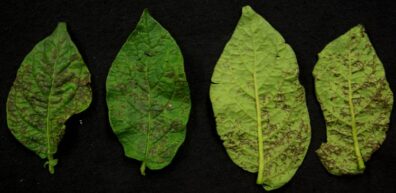
Photo Source: Jordan Eggers, Oregon State University
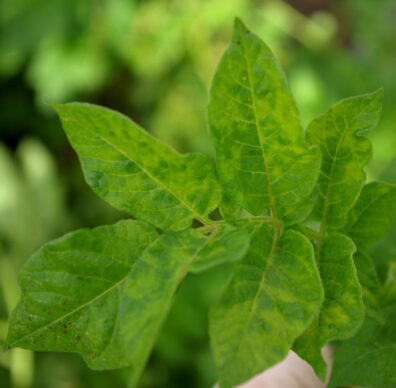
Photo Source: Jordan Eggers, Oregon State University
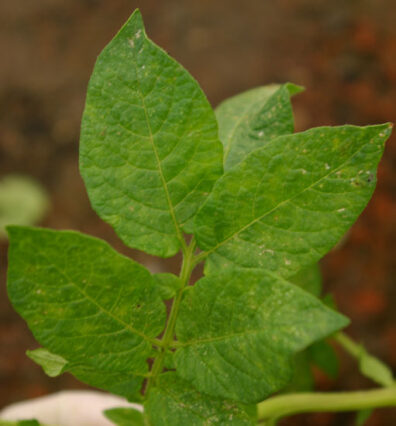
Photo Source: Jordan Eggers, Oregon State University
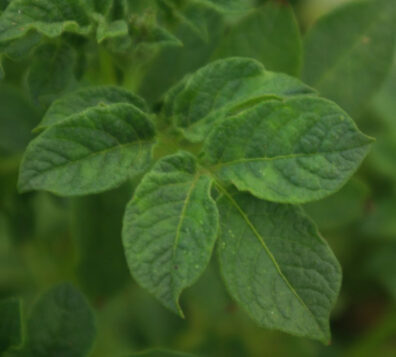
Photo Source: Jordan Eggers, Oregon State University
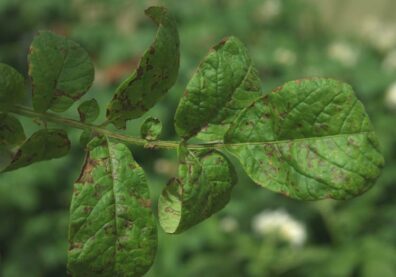
Photo Source: Jordan Eggers, Oregon State University
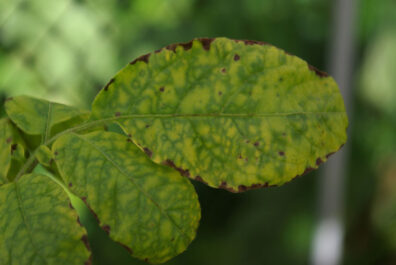
Photo Source: Jordan Eggers, Oregon State University
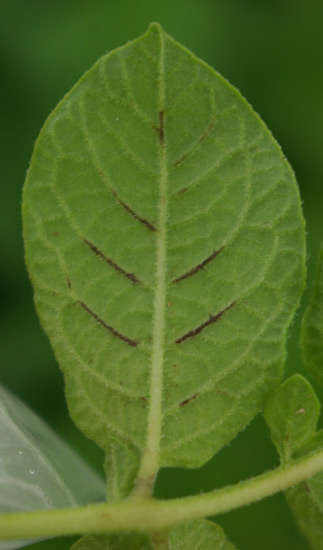
Photo Source: Jordan Eggers, Oregon State University
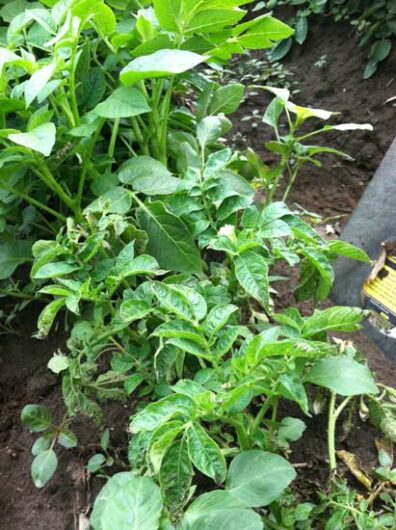
Photo Source: Carrie Wohleb, WSU Extension Educator for Grant/Adams Counties
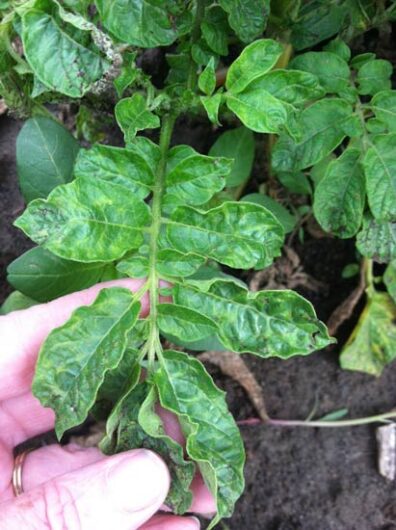
Photo Source: Carrie Wohleb, WSU Extension Educator for Grant/Adams Counties
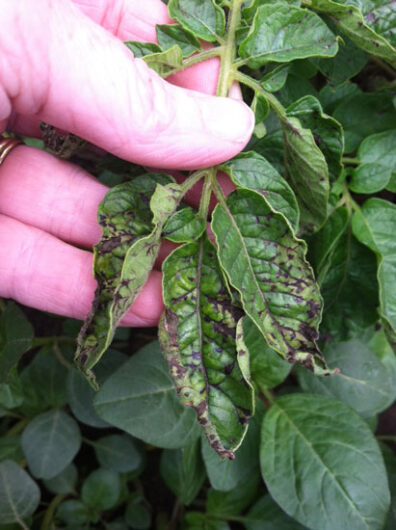
Photo Source: Carrie Wohleb, WSU Extension Educator for Grant/Adams Counties
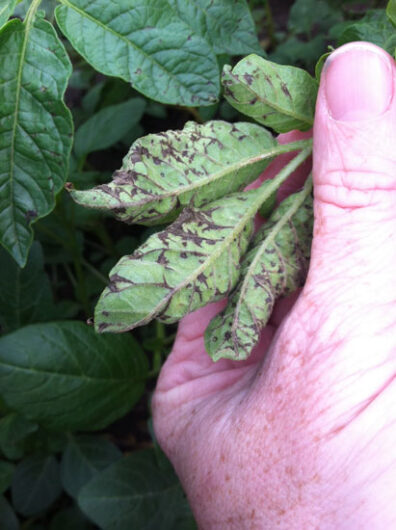
Photo Source: Carrie Wohleb, WSU Extension Educator for Grant/Adams Counties
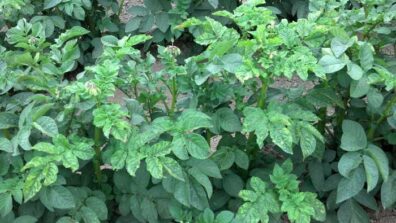
Photo Source: Babette Gunderson, Washington State University
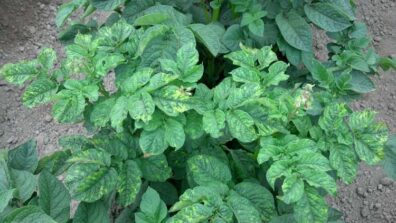
Photo Source: Babette Gunderson, Washington State University
On-Line Resources:
- Seedborne Potato Virus Y (PVY) (pdf), Identification & Management of Emerging Vegetable Problems in the Pacific Northwest. Pacific Northwest Vegetable Extension Group.
- Pacific Northwest Plant Disease Management Handbook: Potato (Solanum tuberosum) – Latent Viruses.
Pythium
Disease: Pythium
Pathogen: Pythium species
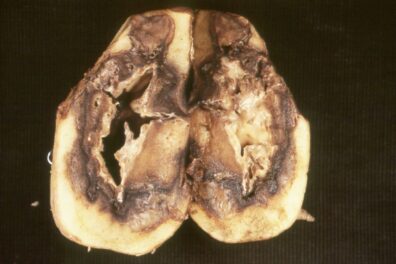
Pythium leak
Disease: Pythium leak
Pathogen: Pythium species
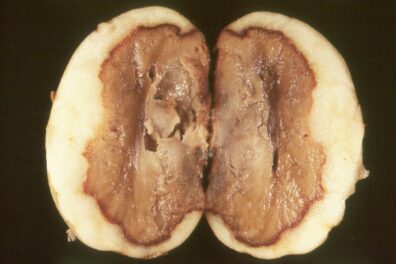
On-Line Resources:
Rhizoctonia stem lesion
Disease: Rhizoctonia stem lesion
Pathogen: Rhizoctonia solani
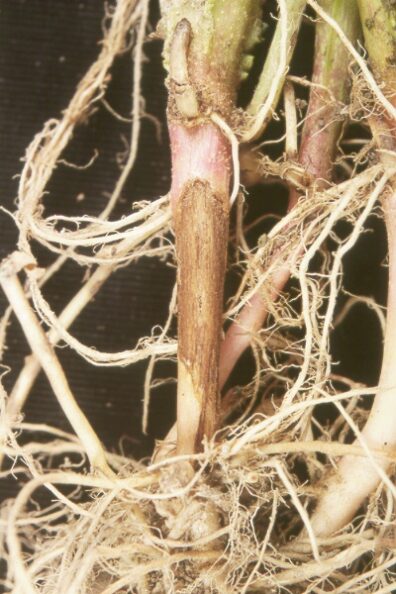
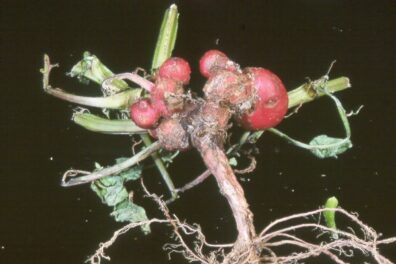
Photo Source: D.A. Inglis
On-Line Resources:
Ring rot
Disease: Ring rot
Pathogen: Clavibacter michiganensis subsp. sepedonicus
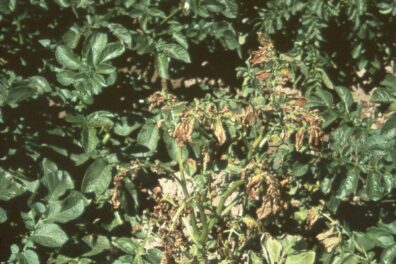
Photo Source: G.Q. Pelter
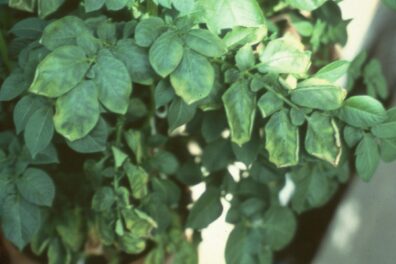
Photo Source: G.Q. Pelter
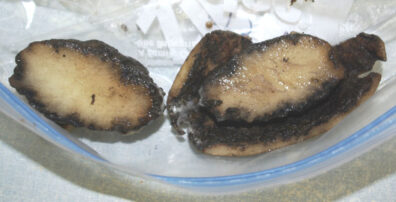
Photo Source: Babette Gundersen
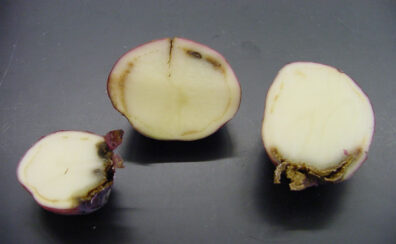
Photo Source: Babette Gundersen
On-Line Resources:
- Bacterial Ring Rot on Potatoes, Washington State University Extension Fact Sheet FS102E.
- Pacific Northwest Plant Disease Management Handbook: Potato (Solanum tuberosum) – Ring Rot.
- Potato: Bacterial Ring Rot, UC IPM Online, University of California.
- Bacterial Ring Rot of Potatoes, Ohio State University Extension Fact Sheet.
- AgDia Testing Services.
Ring rot and soft rot
Disease: Ring rot and soft rot
Pathogen: Bacterial species
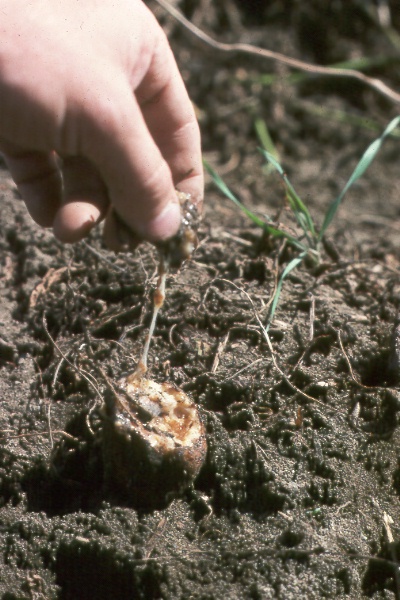
On-Line Resources:
- Bacterial Soft Rot and Lenticel Spot on Potato Tubers, Washington State University Extension Fact Sheet.
- Potato: Bacterial Soft Rot and Blackleg, UC IPM Online.
- Soft Rot and Blackleg Diseases of Potato, Plant Management Network International.
- Video series: Disease management of soft rot bacteria in potatoes. Authors: Noah Rosenzweig and Saltanat Mambetova, Michigan State University Department of Plant, Soil and Microbial Sciences; James DeDecker, Monica Jean and Frederick Springborn, Michigan State University Extension. Michigan State University Extension, 2019.
Silver scurf
Disease: Silver scurf
Pathogen: Helminthosporium solani
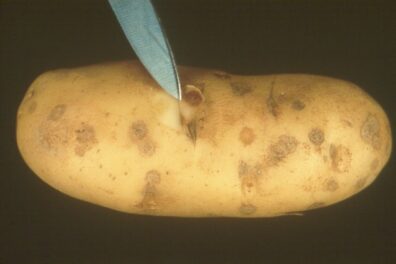
On-Line Resources:
- Silver Scurf Management in Potatoes (pdf), Oregon State University, University of Idaho, Washington State University.
- Pacific Northwest Plant Disease Management Handbook: Potato (Solanum tuberosum) – Silver Scurf.
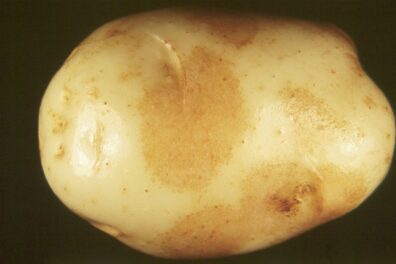
Skin stain symptoms
Disease: Skin stain symptoms
Pathogen: Fusarium species
Tomato spotted wilt
Disease: Tomato spotted wilt
Pathogen: Tomato spotted wilt virus (TSWV)
This disease is more commonly associated with tomato and other crops than with potato.
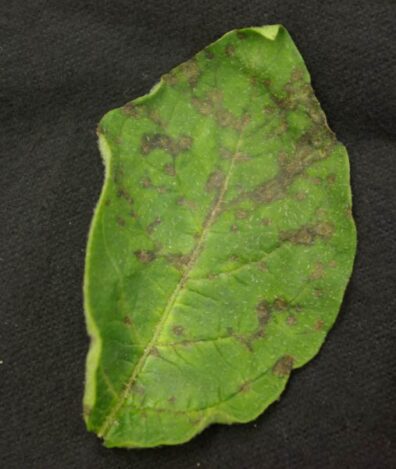
Photo Source: Jordan Eggers and Phil Hamm
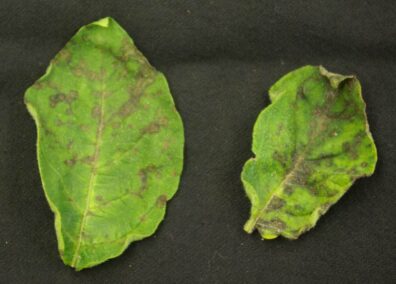
Photo Source: Jordan Eggers and Phil Hamm
On-Line Resources:
- Pacific Northwest Plant Disease Management Handbook: Tomato (Lycopersicon esculentum) – Tomato Spotted Wilt, See Also: Greenhouse Plants, Ornamental Impatiens Necrotic Spot.
- Tomato Spotted Wilt Virus, Vegetable MD Online, Cornell University.
- First Report of Tomato spotted wilt virus Causing Potato Tuber Necrosis in Texas. APS Journals, The American Phytopathological Socitey.
Verticillium wilt
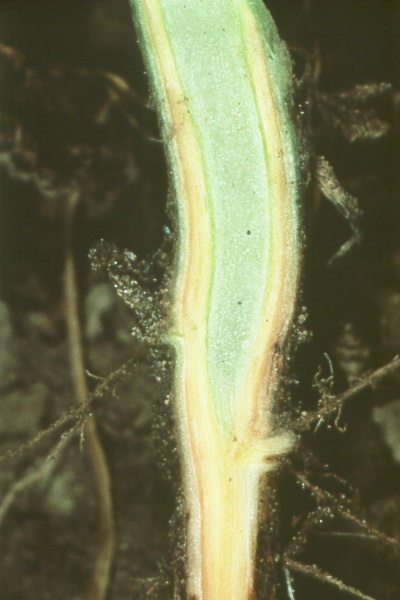
Disease: Verticillium wilt
Pathogen: Verticillium dahliae
Host crops: Numerous vegetables including many brassica vegetables (but not broccoli), cucumber, eggplant, pepper, potato, pumpkin, radish, spinach, tomato, watermelon, etc.
On-Line Resources:
- Pacific Northwest Plant Disease Management Handbook: Potato (Solanum tuberosum) – Verticillium Wilt {Potato Early Dying}.
- Potato: Verticillium wilt (Potato early dying), Washington State University Hortsense.
- See Diseases, pests, and other problems common to many vegetables: Verticillium wilt.
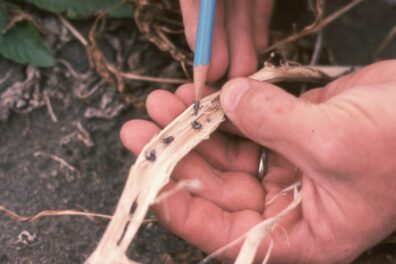
White mold
Disease: White mold
Pathogen: Sclerotinia sclerotiorum
Host crops: Bean, various brassica vegetables, carrot, eggplant, lettuce, potato, tomato, etc.
On-Line Resources:
- Pacific Northwest Plant Disease Management Handbook: Potato (Solanum tuberosum) – White Mold {Sclerotinia Stem Rot}.
- White Mold of Potato: Epidemiology and Management, Plant Management Network International.
- See Diseases, pests, and other problems common to many vegetables: White mold.
Zebra chip
Disease: Zebra chip
Pathogen: Candidatus Liberibacter Solanacearum
Vector: Potato psyllid, Bactericera cockerelli
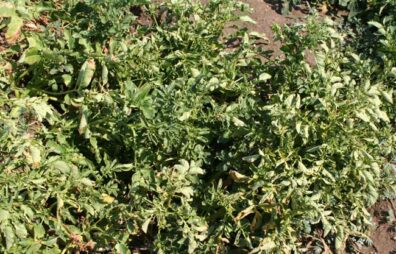
Photo Source: Silvia Rondon, Oregon State University
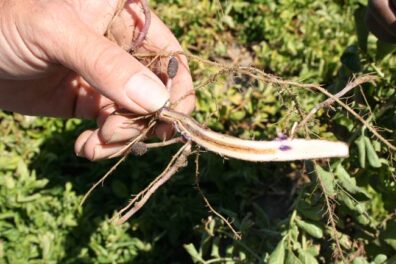
Photo Source: Silvia Rondon, Oregon State University
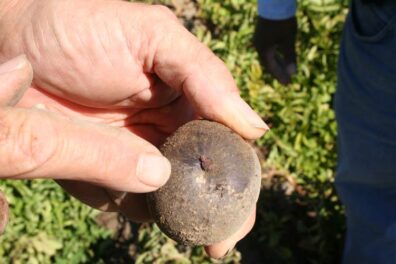
Photo Source: Silvia Rondon, Oregon State University
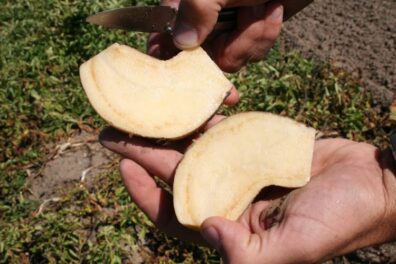
Photo Source: Silvia Rondon, Oregon State University
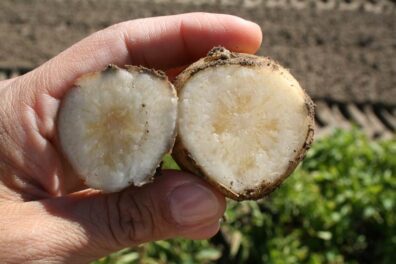
Photo Source: Silvia Rondon, Oregon State University
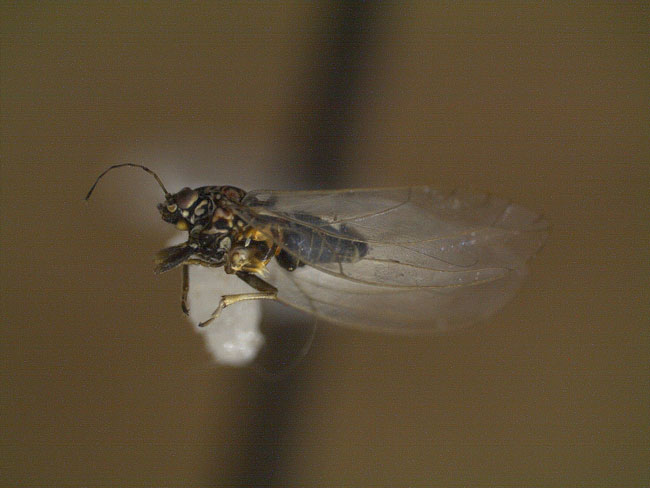
Photo Source: OSU-HAREC Rondon’s lab (A. Murphy)
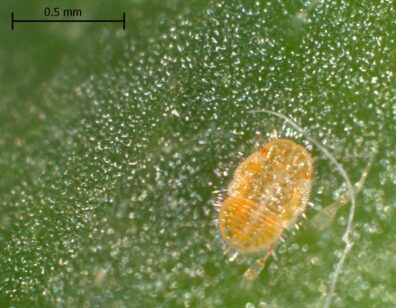
Photo Source: OSU-HAREC Rondon’s lab (A. Murphy)
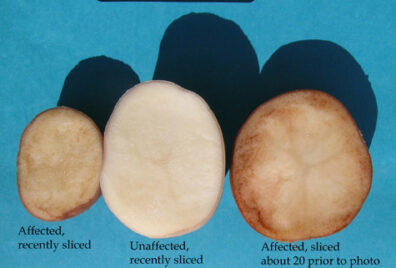
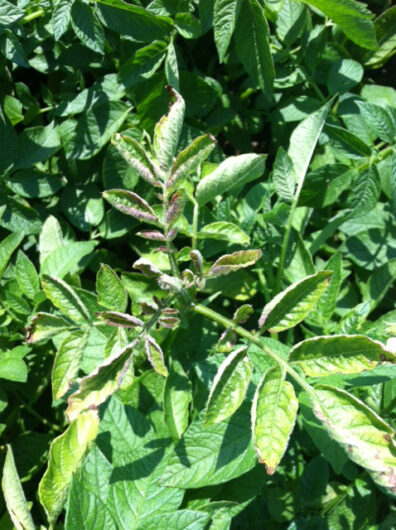
Photo Source: Carrie H. Wohleb, WSU
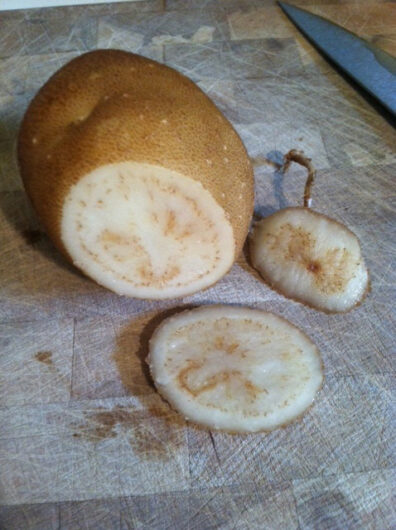
Photo Source: Carrie H. Wohleb, WSU
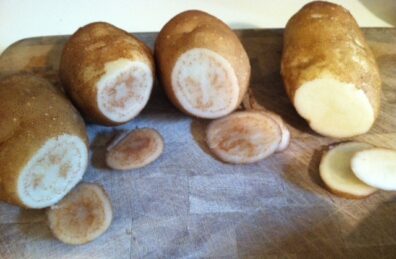
Photo Source: Carrie H. Wohleb, WSU
On-Line Resources:
- Information on the Potato psyllid (pdf).
- Potato Psyllid Vector of Zebra Chip Disease in the Pacific Northwest: Biology, Ecology, and Management, PNW 633.
- History in the Making: Potato Zebra Chip Disease Associated with a New Psyllid-borne Bacterium – A Tale of Striped Potatoes.
- The Zebra Chip Project, Texas Agrilife Research and Extension Center at Amarillo.
- Phil Hamm’s message to the industry.
Nematodes
Root knot
Disease: Root knot
Pathogen: Meloidogyne species
Host crops: Numerous plant species, including many vegetables such as carrot, coriander, onion, potato, etc.
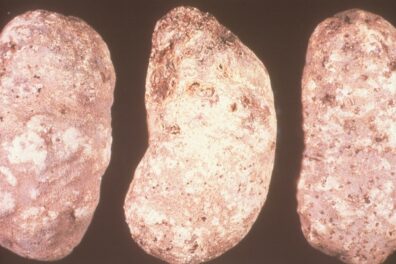
Photo Source: G.Q. Pelter
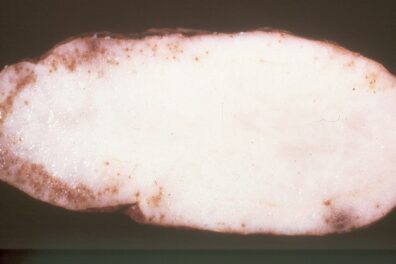
Photo Source: G.Q. Pelter
On-Line Resources:
- Pacific Northwest Plant Disease Management Handbook: Potato (Solanum tuberosum) – Nematode, Root-knot.
- See Diseases, pests, and other problems common to many vegetables: Root knot.
Insect/Mite Pests
- 2019 Integrated Pest Management Guidelines for Insects and Mites in Idaho, Oregon and Washington Potatoes (PDF), authored by Alan Schreiber (Agriculture Development Group, Inc.), Andrew Jensen (Northwest Potato Research Consortium), Silvia Rondon (Oregon State University), Erik Wenninger (University of Idaho), Stuart Reitz (Oregon State University), Tim Waters (Washington State University). Updated June 2019.
Green peach aphid and potato aphid
Common Name: Green peach aphid and potato aphid
Latin binomial: Myzus persicae and Macrosiphum euphorbiae, respectively
Host crops: In addition to potato, tomato, eggplant and pepper, the green peach aphid can feed on many other vegetables including broccoli, cabbage, spinach, Swiss chard, squash, pumpkin, beet as well as many weed species including Brassicaceae (cruciferous) weeds. The potato aphid can feed on cucumber, potato, melon, tomato, pumpkins, squash, and corn seed.

Photo Source: Michael Bush, WSU Extension, Yakima, WA
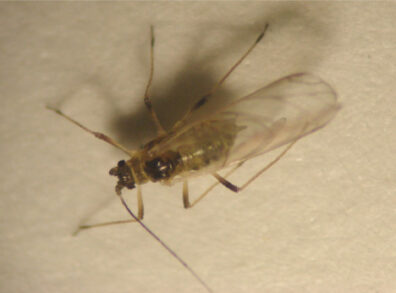
Photo Source: Michael Bush, WSU Extension, Yakima, WA
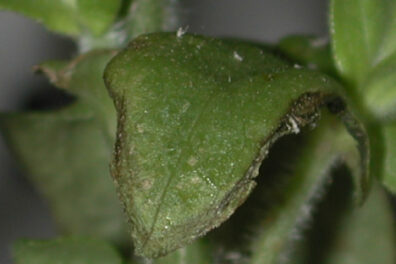
Photo Source: Michael Bush, WSU Extension, Yakima, WA
On-Line Resources:
- Pacific Northwest Insect Management Handbook: Vegetable crop pests-Aphid.
- Pacific Northwest Insect Management Handbook: Potato, Irish – Aphid.
- Common Insect & Mite: Aphids, Washington State University Hortsense.
- See Diseases, pests, and other problems common to many vegetables: Aphids.
- For aphids on other crops see: pumpkin, and squash.
Beet leafhopper
Common Name: Beet leafhopper
Latin binomial: Circulifer tenellus
Host crops: Wide host range, including many vegetables. The Beet leafhopper is able to transmit a phytoplasma, the beet leafhopper transmitted virescence agent (BLTVA), to plants such as potato, carrot, and radish. It can also transmit the curly top virus to plants such as bean, tomato, pepper, pumpkin, and squash.
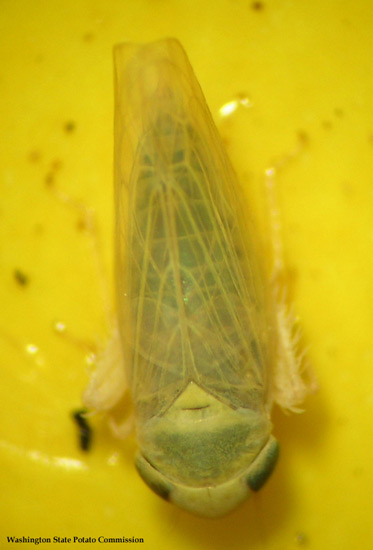
Photo Source: Andy Jensen, Washington Potato Commission
On-Line Resources:
- Pacific Northwest Insect Management Handbook: Potato, Irish – Leafhopper.
- Potato: Beet Leafhopper, UC IPM Online, University of California.
Blister beetle
Common Name: Blister beetle
Latin binomial: Epicauta spp. including E. maculata
Host Crops: Blister beetles are typically considered beneficial insects as the larvae feed on grasshopper eggs, but they are occasional pests on crops such as alfalfa, beets, beans, clover, potatoes, other vegetable and field crops, and native plants.
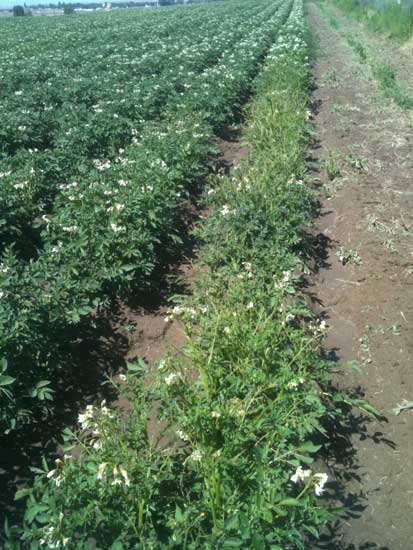
Photo Source: Sally Hubbs
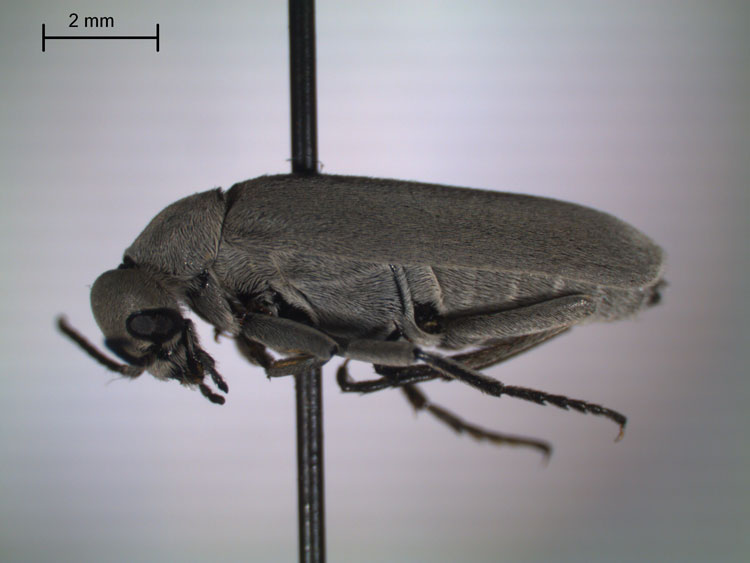
Photo Source: OSU-HAREC Rondon’s lab (A. Murphy)
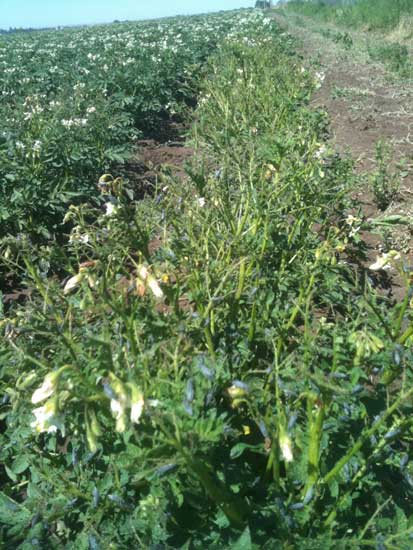
Photo Source: Sally Hubbs
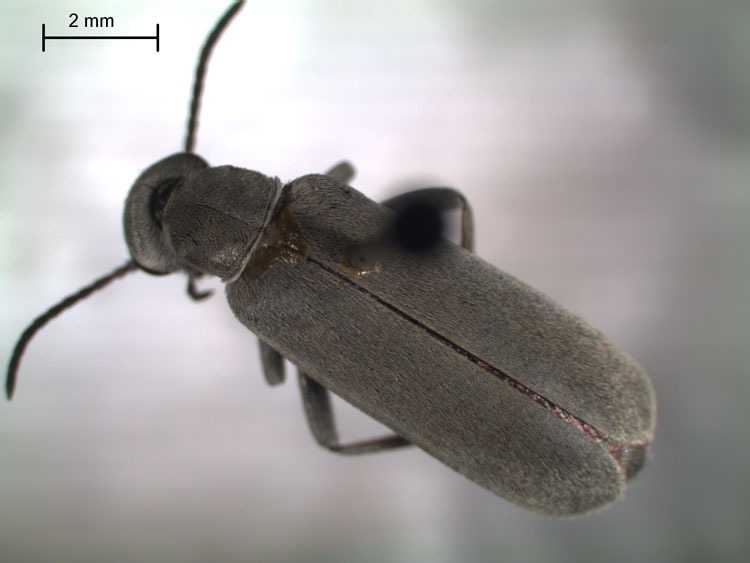
Photo Source: OSU-HAREC Rondon’s lab (A. Murphy)
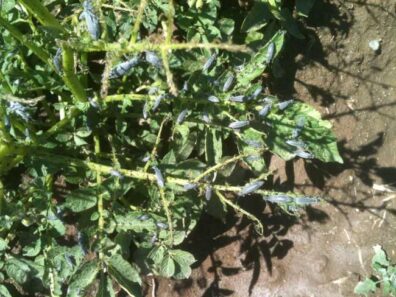
Photo Source: Sally Hubbs
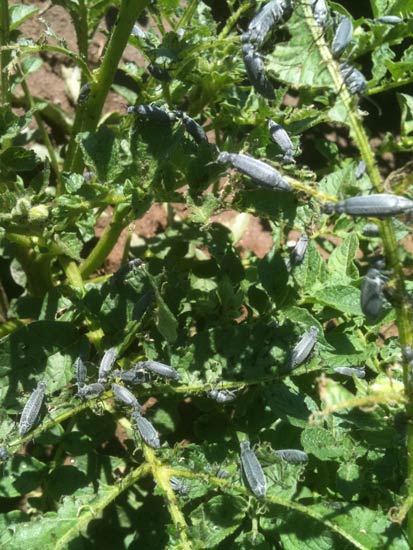
Photo Source: Sally Hubbs
On-Line Resources:
- Blister Beetles: Coleptera: Meloidae Epicauta maculata, E. fabricii, E. puncticollis, Lytta nutalli (pdf). Modified from G. Bishop, et al. 1982. Management of Potato Insects in the Western States, Integrated Plant Protection Center of Oregon State University.
- Blister Beetles (pdf), Identification & Management of Emerging Vegetable Problems in the Pacific Northwest. Pacific Northwest Vegetable Extension Group.
- See Diseases, pests, and other problems common to many vegetables: Blister beetle.
Colorado potato beetle
Common Name: Colorado potato beetle
Latin binomial: Leptinotarsa decemlineata (Say).
Host Crops: potato and tomato. Will feed on eggplant, tobacco and weeds in the Solanum genus.
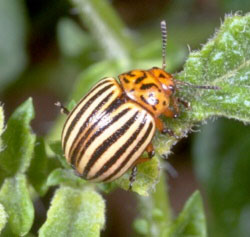
Photo Source: Lerry Lacey, USDA-ARS, Wapato, WA
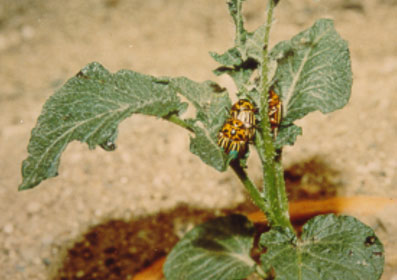
Photo Source: Michael Bush, WSU Extension, Yakima, WA
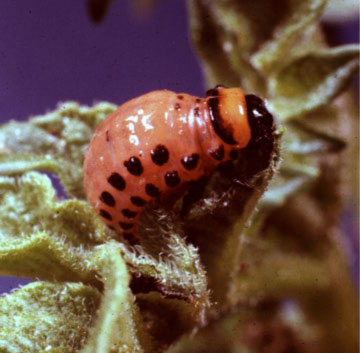
Photo Source: Lerry Lacey, USDA-ARS, Wapato, WA
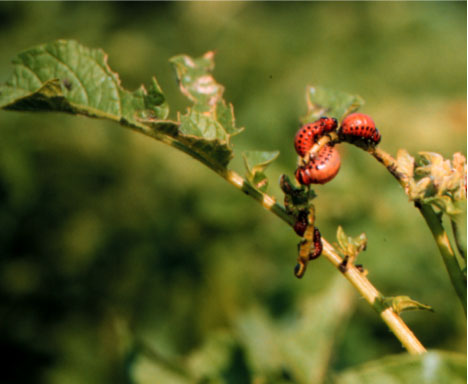
Photo Source: Michael Bush, WSU Extension, Yakima, WA
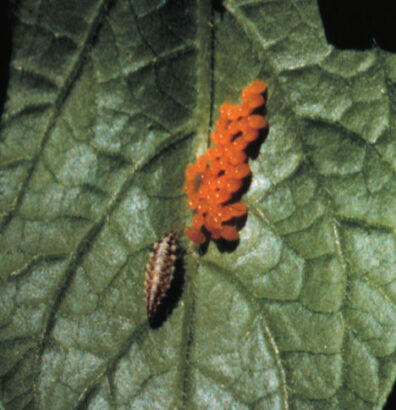
Photo Source: Michael Bush, WSU Extension, Yakima, WA
On-Line Resources:
- Pacific Northwest Insect Management Handbook. Chapter: Irish Potatoes, Section: Colorado potato beetle to Cutworm and Armyworm.
Flea beetle
Common Name: Flea beetle
Latin binomial: Pictured is the western potato flea beetle, Epitrix subcrinita, but the tuber flea beetle, Epitrix tuberis, may also damage foliage.
Host crops: Eggplant, pepper, potato, and tomato.
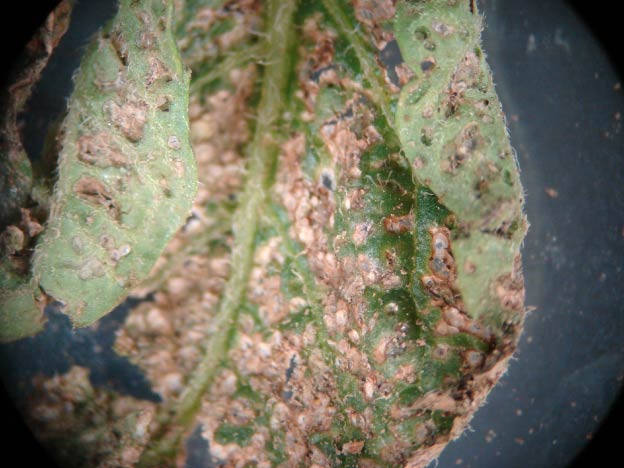
Photo Source: Michael Bush, WSU Extension, Yakima, WA
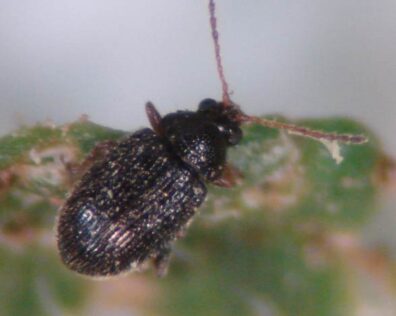
Photo Source: Michael Bush, WSU Extension, Yakima, WA
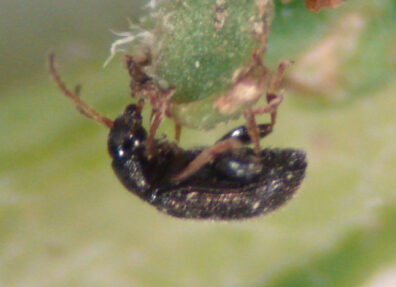
Photo Source: Michael Bush, WSU Extension, Yakima, WA
On-Line Resources:
- Organic Management of Flea Beetles (pdf), by Joyce Parker (Washington State University Department of Entomology), Carol Miles (Washington State University Department of Horticulture), Todd Murray ( Washington State University Extension Skamania County), William Snyder (Washington State University Department of Entomology). Pacific Northwest Extension Publication PNW640.
- Potato Flea Beetles: Biology and Control (pdf), Washington State University Extension Bulletin 1198E.
- Potato Flea Beetles. Coleoptera: Chrysomelidae Western Potato Flea Beetle Epitrix subcrinita, Tuber Flea Beetle Epitrix tuberis (pdf).
- Pacific Northwest Insect Management Handbook. Chapter: Irish Potatoes, Section: Flea Beetle to Grasshopper.
- Vegetables: Potato: Potato flea beetles. Washington State University Hortsense.
- See Diseases, pests, and other problems common to many vegetables: Flea beetle.
Lygus bug
Common name: Lygus bug
Latin binomial: Lygus spp.
Host crops: Numerous different species of vegetables and other crops, e.g., alfalfa, beet, cabbage, carrot, potato, spinach, Swiss chard,etc. Lygus bugs can cause different types of damage to various growth stages of different crops. They cause blackheart on celery, blasting on flower tissues, collapse of asparagus spears, decreased yields in carrot, beet, spinach, and other seed crops, etc.
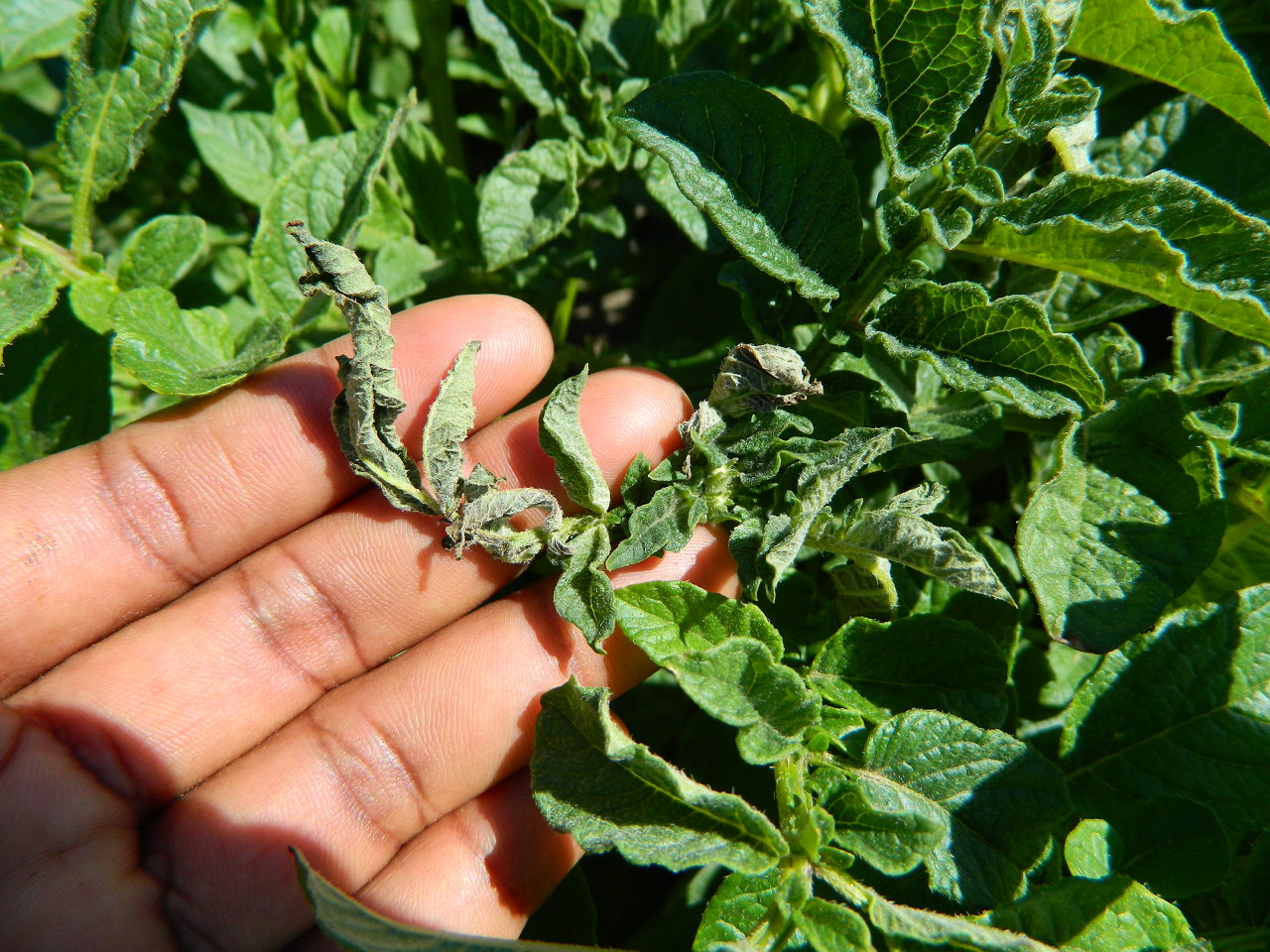
Photo Source: Oregon State University HAREC Irrigated Agricultural Entomology Program (Silvia Rondon)
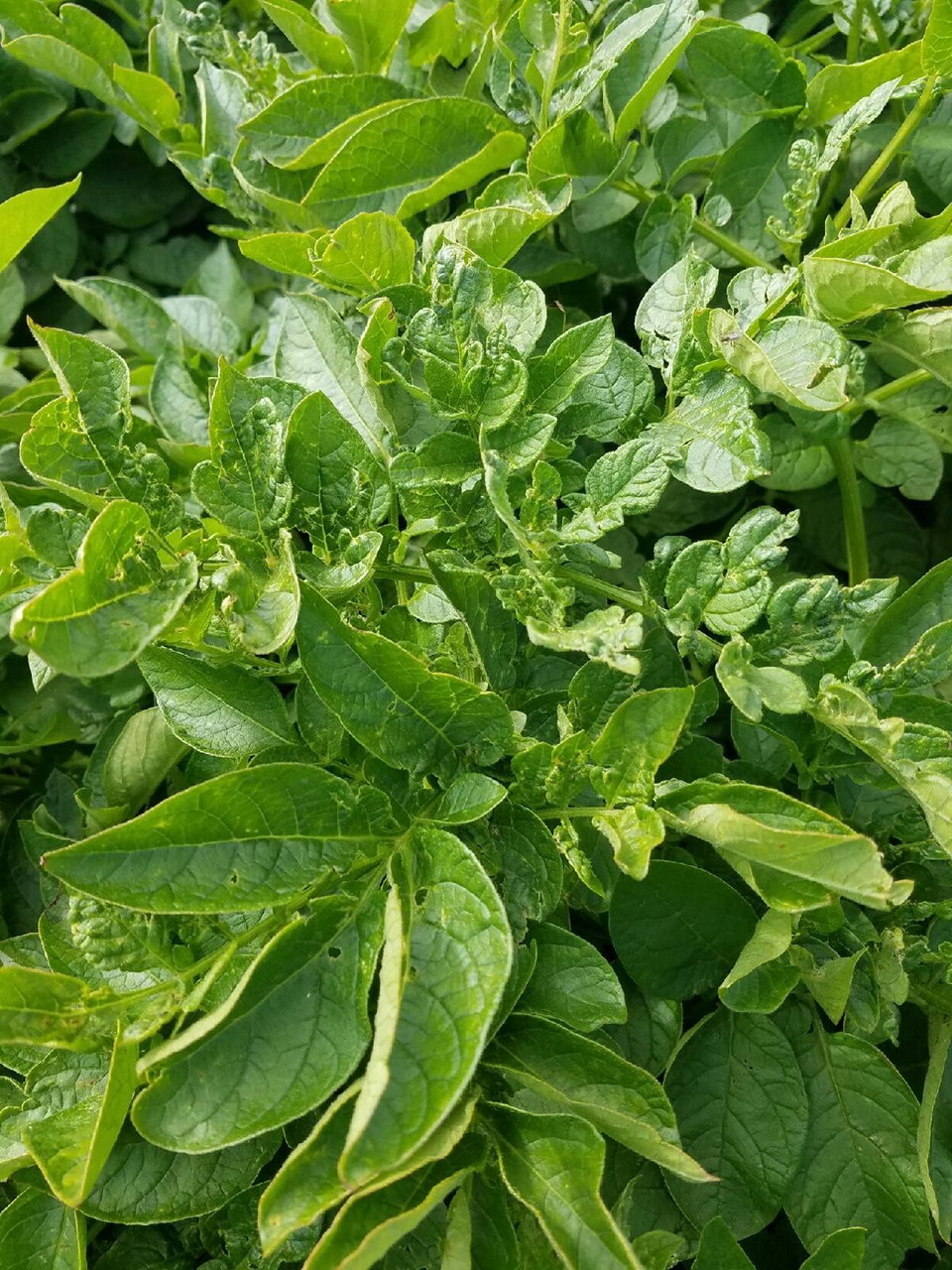
Photo Source: Oregon State University HAREC Irrigated Agricultural Entomology Program (Silvia Rondon)
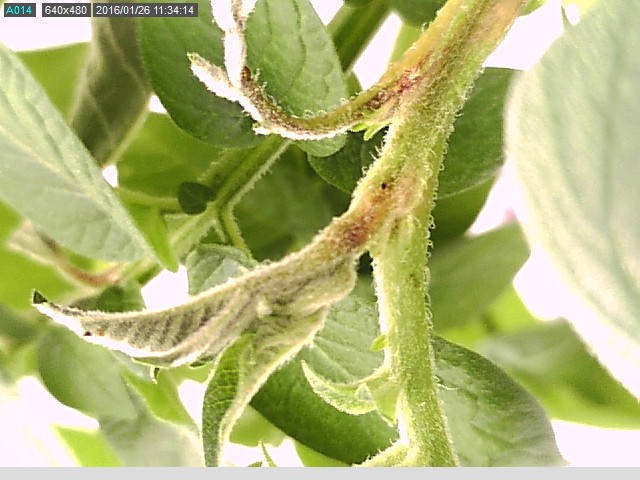
Photo Source: Oregon State University HAREC Irrigated Agricultural Entomology Program (Silvia Rondon)
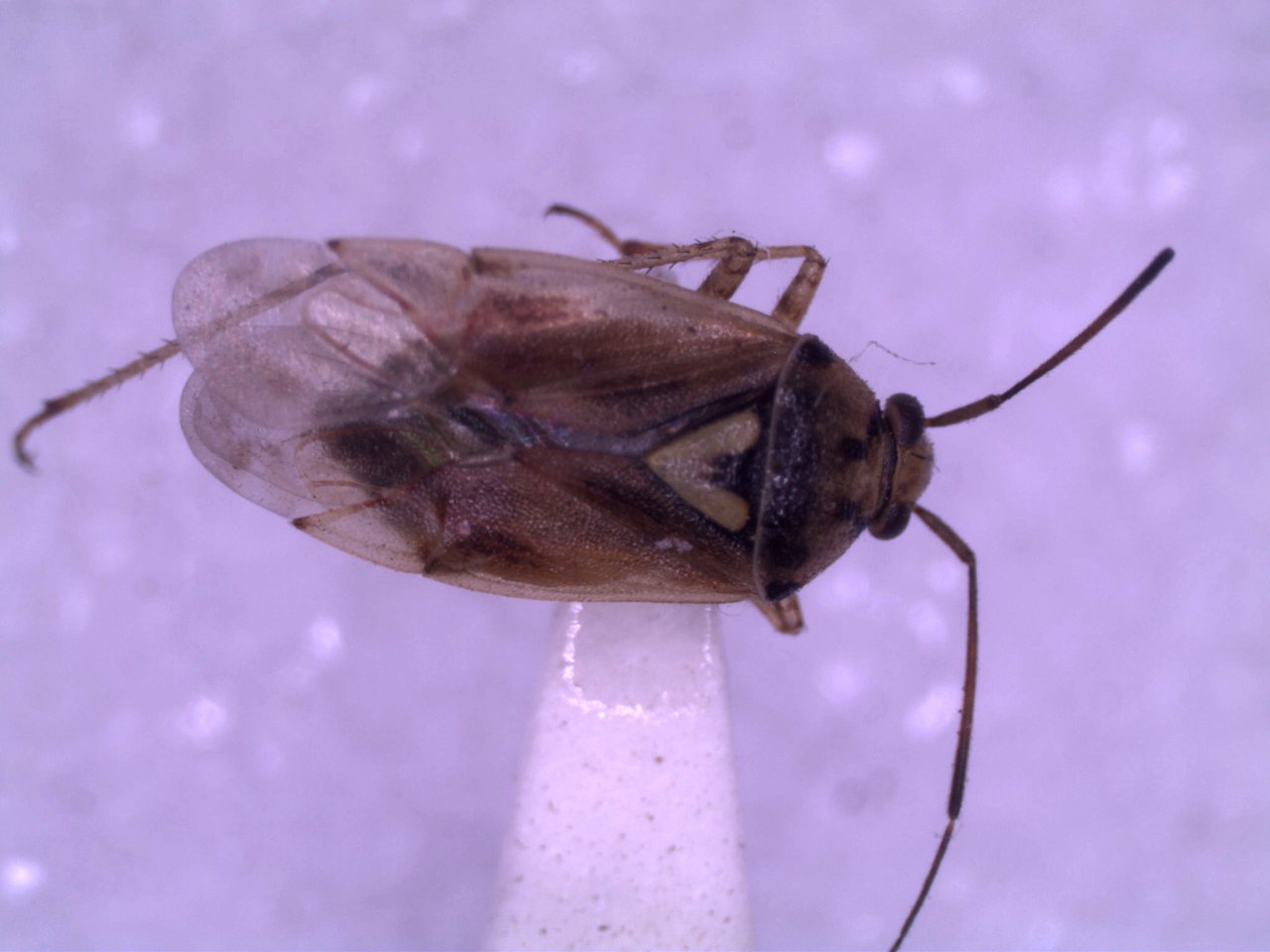
Photo Source: Oregon State University HAREC Irrigated Agricultural Entomology Program (Silvia Rondon)
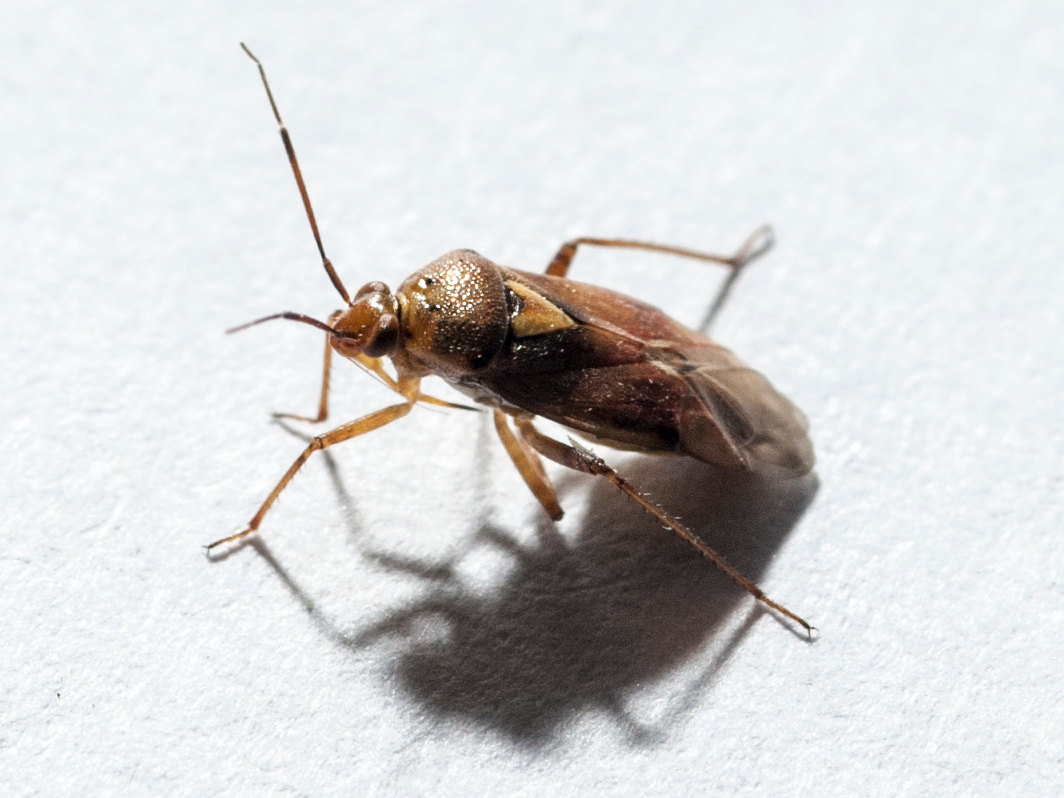
Photo Source: Oregon State University EESC
On-Line Resources:
- Pacific Northwest Insect Management Handbook: Carrot seed – Lygus bug.
- Lygus bugs on potatoes in the Pacific Northwest. Josephine Antwi, Silvia I. Rondon, and Rodney Cooper, Oregon State University Extension Service Bulletin EM9173, 2017.
- Lygus Control in Potato, 2016 (pdf). Silvia I. Rondon and Daniel I. Thompson, Arthropod Management Tests, 2017, 1–2, Oxford University Press, 2017.
Potato psyllid; psyllid yellows
Common Name: Potato psyllid; psyllid yellows
Latin binomial: Bactericera cockerelli; Psyllid yellows is said to be caused by a toxin in the saliva of psyllid nymphs as they feed on potato plants. The condition is still poorly understood and some have argued it might be caused by a pathogen (e.g., a phytoplasma or bacterium) in the saliva that has not yet been characterized. Studies have shown recovery of potato plants after removal of psyllids, which supports the toxin theory.
Photo Source: OSU-HAREC Rondon’s lab (A. Murphy)
Photo Source: OSU-HAREC Rondon’s lab (A. Murphy)
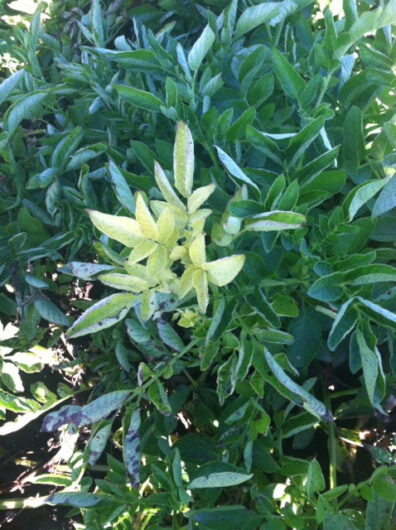
Photo Source: Carrie Wohleb, WSU Extension Educator
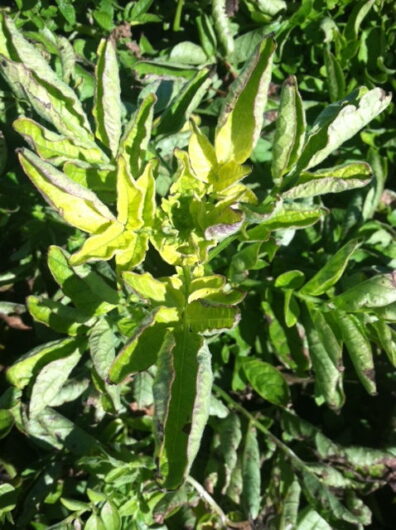
Photo Source: Carrie Wohleb, WSU Extension Educator
On-Line Resources:
- Information on the Potato psyllid (pdf).
- History in the Making: Potato Zebra Chip Disease Associated with a New Psyllid-borne Bacterium – A Tale of Striped Potatoes.
- The Zebra Chip Project, Texas Agrilife Research and Extensioin Center at Amarillo.
- Phil Hamm’s message to the industry.
- Potato Psyllids, Zebra Chip, Psyllid Yellows, WSU Potato Pest Alert, August 26, 2016.
Spider mites
Common Name: Spider mites
Latin binomial: Tetranychus spp. including twospotted spider mite (Tetranychus urticae), strawberry spider mite (Tetranychus turkestani), and Pacific spider mite (Tetranychus pacificus)
Host crops: Wide host range, including many vegetables such as bean, carrot seed crops, potato, etc.
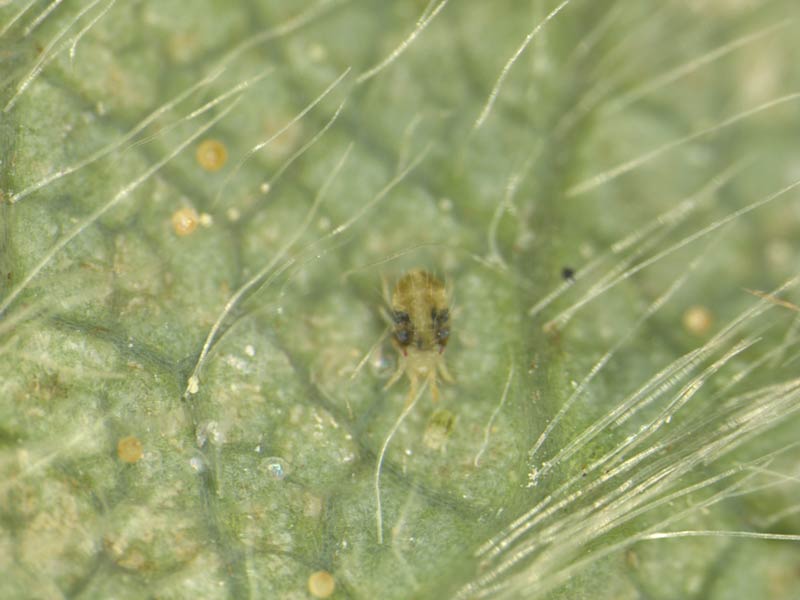
Photo Source: Silvia Rondon, Oregon State University
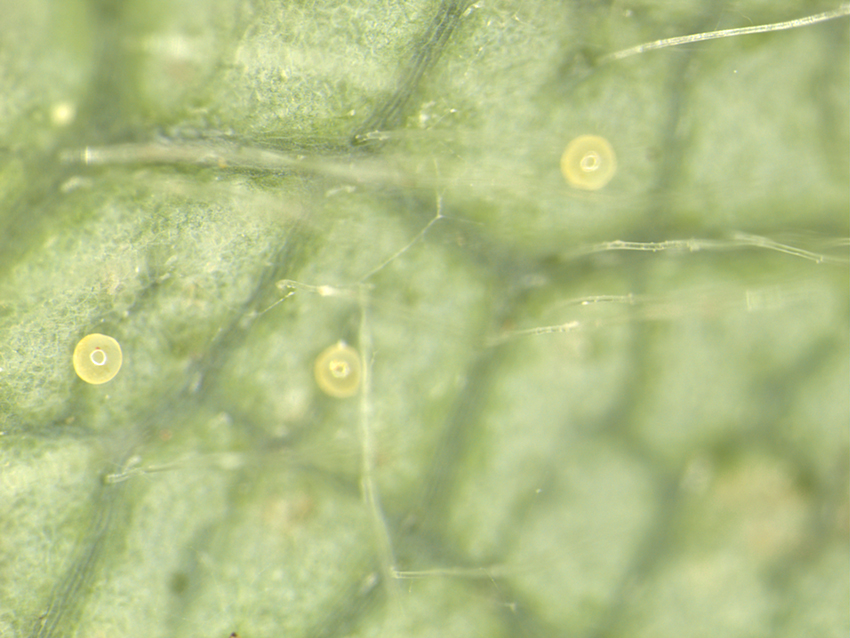
Photo Source: Silvia Rondon, Oregon State University
On-Line Resources:
- Some Common Plant-Feeding Mites and Plant-Inhabiting Mite Predators in the Northwestern United States. PNW Insect Management Handbook.
- Lima Bean – Spider Mites. PNW Insect Management Handbook.
- Carrot seed – Twospotted spider mite. PNW Insect Management Handbook, Chapter: Vegetable Seed, Section: Carrot Seed.
- Managing spider mites in gardens and landscapes. University of California Online Statewide Integrated Pest Management Program.
- See See Diseases, pests, and other problems common to many vegetables: Spider mites.
Tomato hornworm
Common name (of damaging stage): Tomato hornworm
Latin binomial: Manduca quinquemaculata
Host crops: Pepper, eggplant, potato, and tomato.
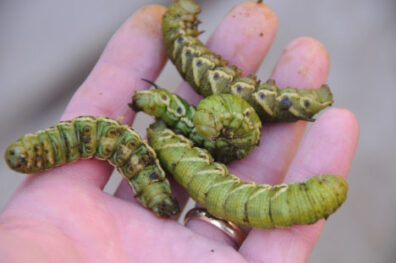
Photo Source: Michael Bush, WSU Extension, Yakima, WA
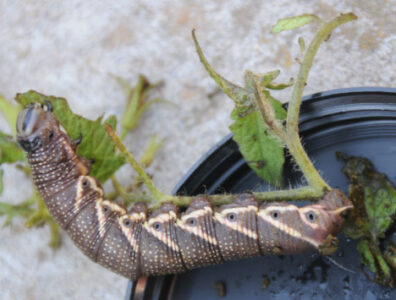
Photo Source: Michael Bush, WSU Extension, Yakima, WA
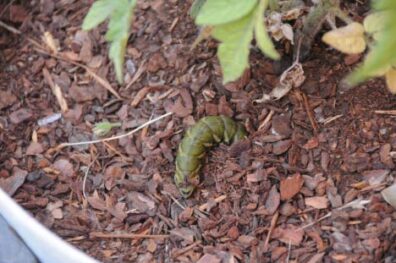
Photo Source: Michael Bush, WSU Extension, Yakima, WA
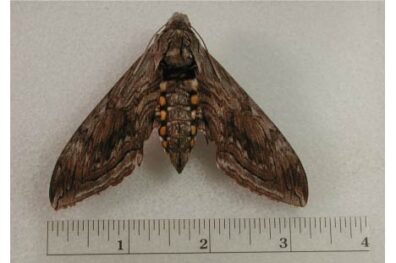
Photo Source: Michael Bush, WSU Extension, Yakima, WA
On-Line Resources:
- Pacific Northwest Insect Management Handbook. Washington State Chapter: Vegetables, Section: Tomato Part2: Fleabeetle to Wireworm.
- Vegetables: Tomato: Tomato hornworm. Washington State University Hortsense.
- UC Pest Management Guidelines: Tomato Hornworms. UC IPM Online, University of California.
Tuberworm
Common Name: Tuberworm
Latin binomial: Phthorimaea operculella
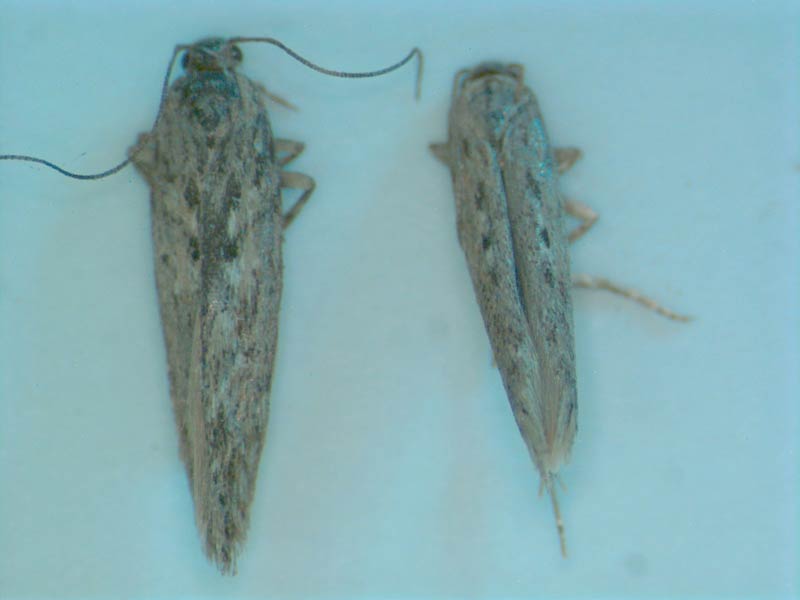
Photo Source: Silvia Rondon
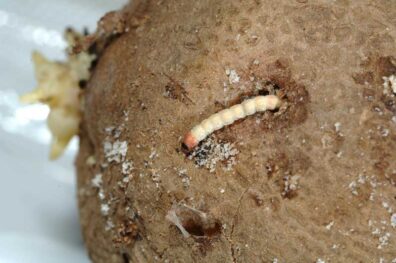
Photo Source: Lynn Ketchum
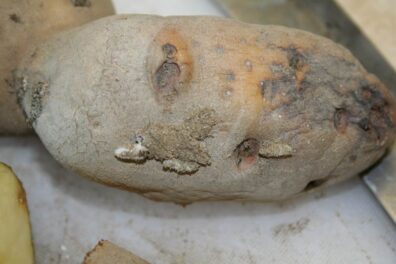
Photo Source: Silvia Rondon
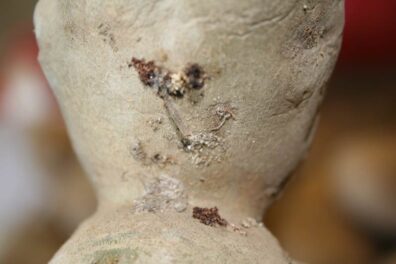
Photo Source: Silvia Rondon
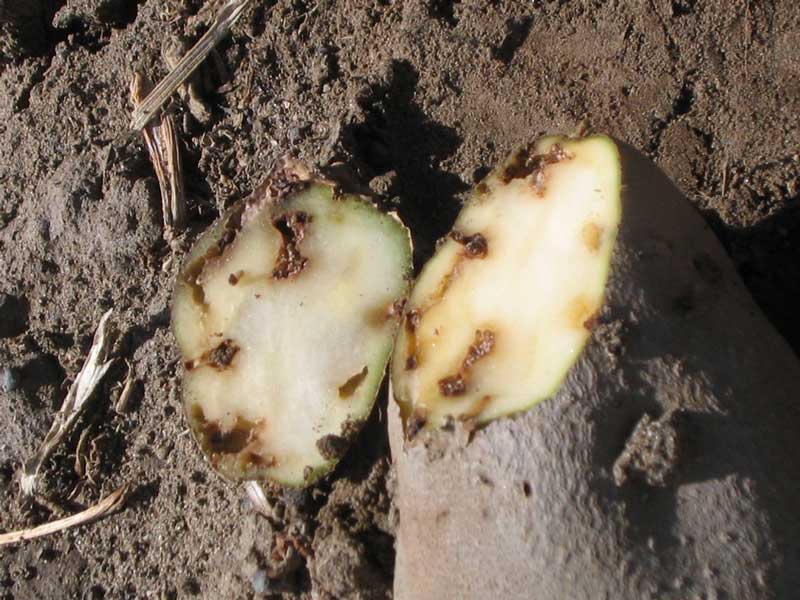
Photo Source: Silvia Rondon
On-Line Resources:
- Biology and Management of the Potato Tuberworm in the Pacific Northwest. PNW 594.
- New Emerging Pests in the Pacific Northwest. The Potato Association of America.
- Pacific Northwest Insect Management Handbook. Chapter: Irish Potatoes, Section: Tuberworm to Wireworm.
Western flower thrips
Common Name: Western flower thrips
Latin binomial: Frankliniella occidentalis.
Host Crops: Basil , Broccoli, Cabbage, Cauliflower, Cucumber, Onion, Pumpkin, Squash, Tomato and
Watermelon.

Photo Source: Silvia Rondon
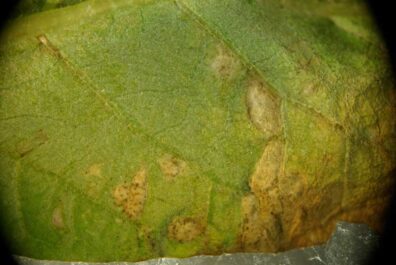
Photo Source: Silvia Rondon
On-Line Resources:
- Pacific Northwest Insect Management Handbook. Chapter: Irish Potatoes, Section: Lygus bug to Thrips.
- See Diseases, pests, and other problems common to many vegetables: Western flower thrips.
Wireworm
Common Name(of damaging stage): Wireworm
Latin binomial: Pictured are Limonius spp. (including L. canus and L. californicus). Other wireworm species including Agriotes spp. and Ctenicera spp. can be pestiferous.
Host Crops: Potato, onion, carrot, beet, spinach seed crops and radish. Other crops, like corn, beans and peas can be impacted by high densities of wireworms feeding on seedlings resulting in poor crop stands.
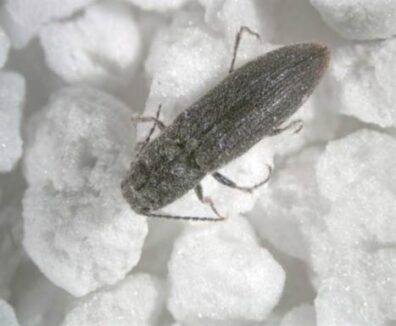
Photo Source: David Horton, USDA-ARS, Wapato
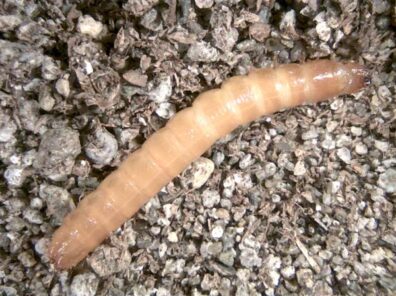
Photo Source: David Horton, USDA-ARS, Wapato
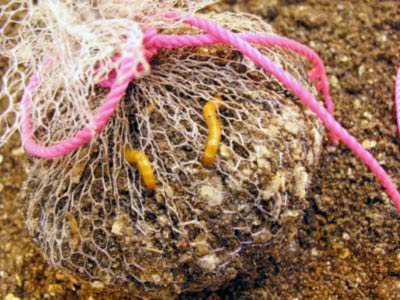
Photo Source: David Horton, USDA-ARS, Wapato
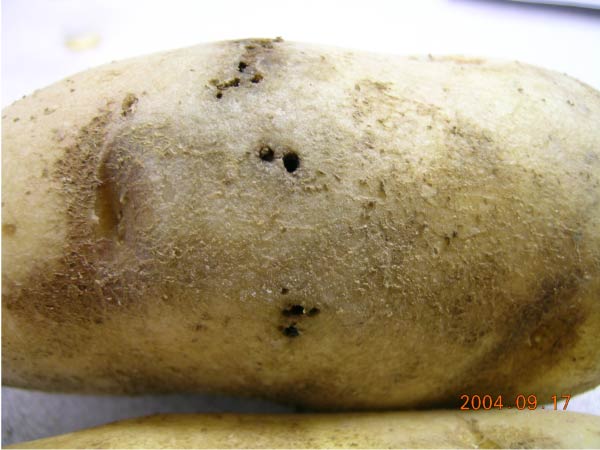
Photo Source: Andy Jensen, WA Potato Commission
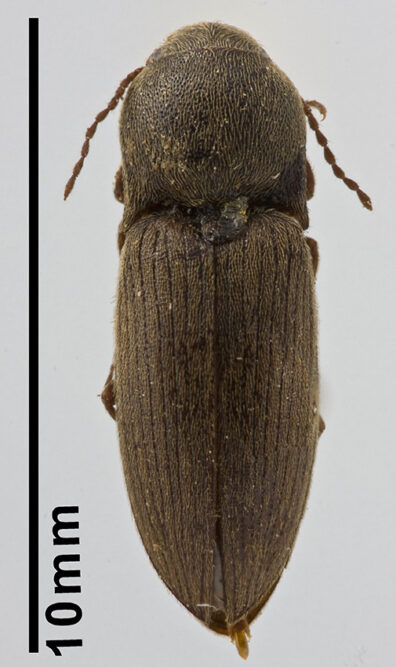
Photo Source: Oregon State University –Oregon State Arthropod Collection.
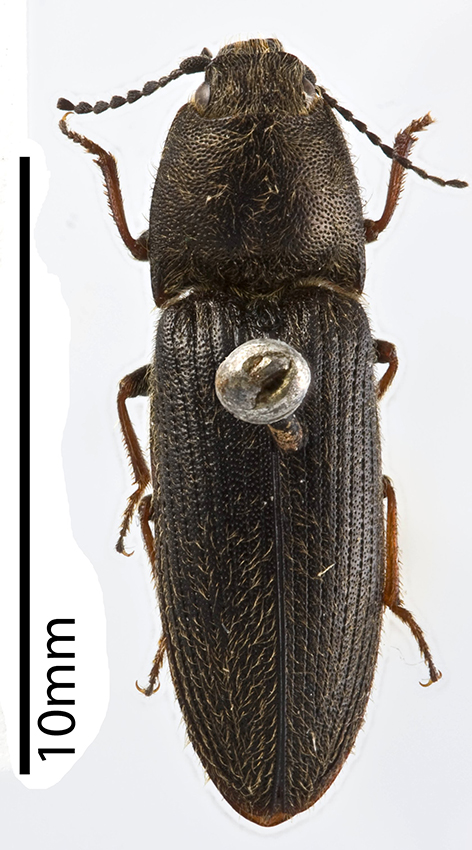
Photo Source: Oregon State University – Oregon State Arthropod Collection.
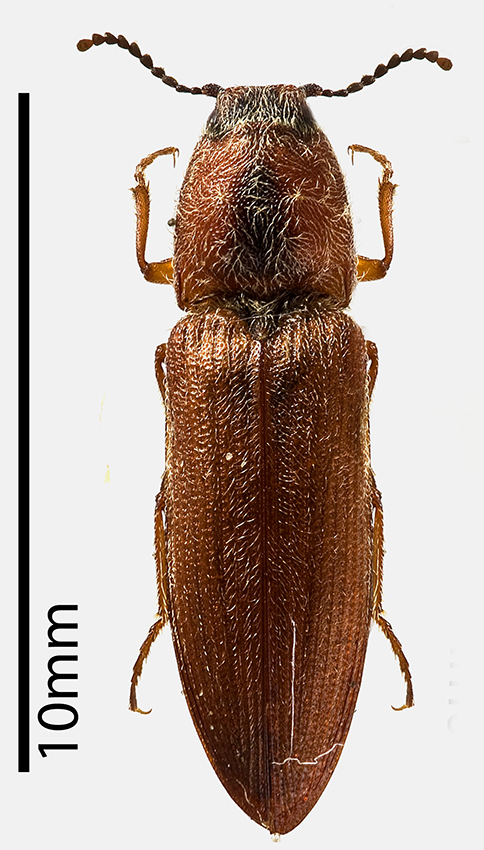
Photo Source: Oregon State University – Oregon State Arthropod Collection.
On-Line Resources:
- WIREWORMS Coleoptera: Elateridae, Pacific Coast Wireworm Limonius canus, Sugarbeet Wireworm L. californicus, Great Basin Wireworm Ctenicera pruinina (pdf). Integrated Plant Protection Center of Oregon State University.
- Wireworm Biology and Nonchemical Management in Potatoes in the Pacific Northwest. Extension Bulletin PNW 607.
- Pacific Northwest Insect Management Handbook. Chapter: Irish Potatoes, Section: Tuberworm to Wireworm.
- Wireworm Field Guide (pdf) – A guide to the identification and control of wireworms, Syngenta Crop Protection Canada, Inc.
- Wireworm Biology and Nonchemical Management in Potatoes in the Pacific Northwest, N. Andrews, M. Ambrosino, G. Fisher, and S.I. Rondon, Pacific Northwest Extension Publication no. PNW607
- See Diseases, pests, and other problems common to many vegetables: Wireworm.
Abiotic Problems Common to Potato
2,4-D herbicide drift injury
Common name: 2,4-D herbicide drift injury
Cause: Drift of the broadleaf herbicide 2,4-D into potato crops.
Host Crops: Most broadleaf plants are susceptible to injury by 2,4-D.
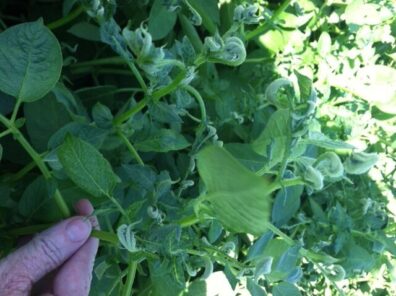
Photo Source: Carrie H. Wohleb, Washington State University
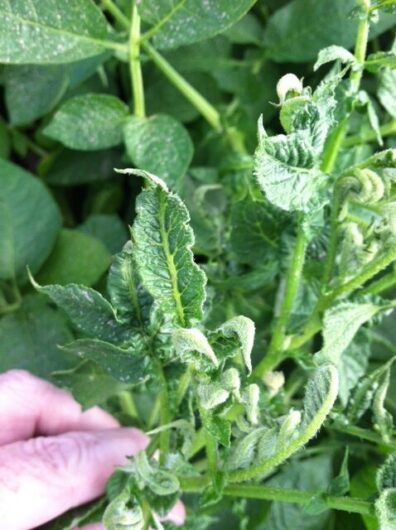
Photo Source: Carrie H. Wohleb, Washington State University
Online Resources:
Herbicide carryover in potato seed
Problem: Herbicide carryover in potato seed
Crops affected: Most, if not all, crops can be affected by herbicides used to control weeds.
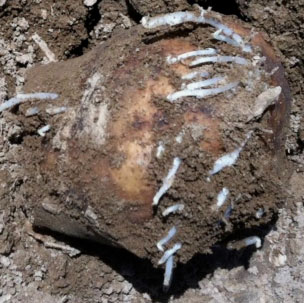
Photo Source: Carrie Wohleb, WSU
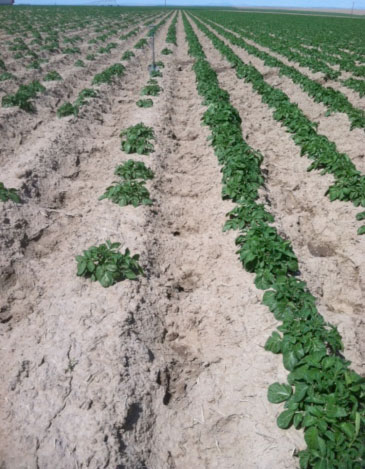
Photo Source: Carrie Wohleb, WSU
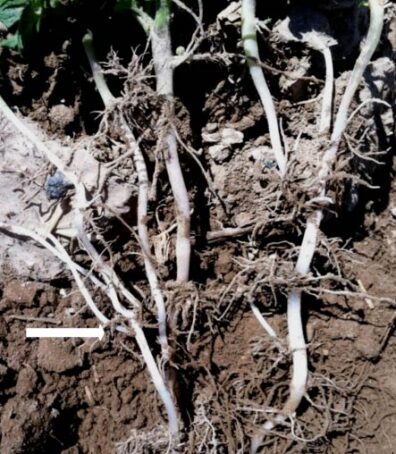
Photo Source: Carrie Wohleb, WSU
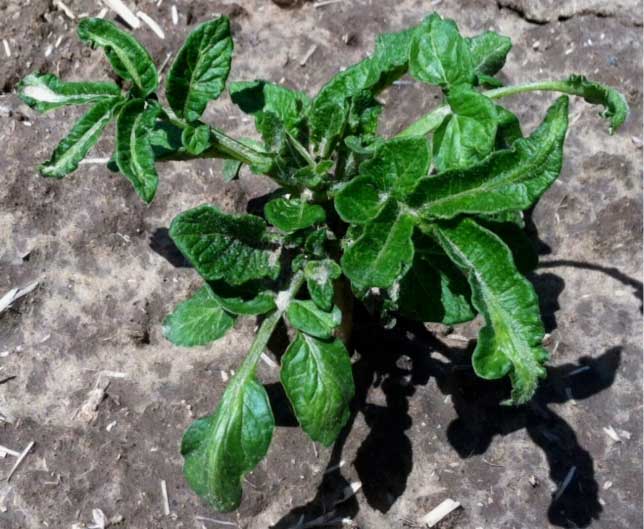
Photo Source: Carrie Wohleb, WSU
On-Line Resources:
- Herbicide Carryover in Potato Seed (pdf). Identification & Management of Emerging Vegetable Problems in the Pacific Northwest, Pacific Northwest Vegetable Extension Group.
Air pollution or ozone injury
Common name: Air pollution or ozone injury
Cause: During very hot conditions, combined with the presence of excessive air particulate matter, e.g., from wildfires, symptoms of air pollution and/or ozone injury have been observed in center-pivot irrigated potato crops east of the Cascade Mountains in the Pacific Northwest USA.
Host Crops: Potato and other vegetables, e.g., bean and corn.
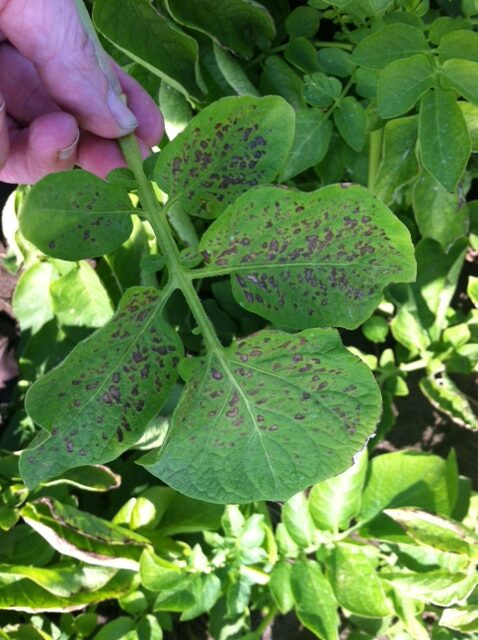
Photo Source: Carrie H. Wohleb, Washington State University Extension
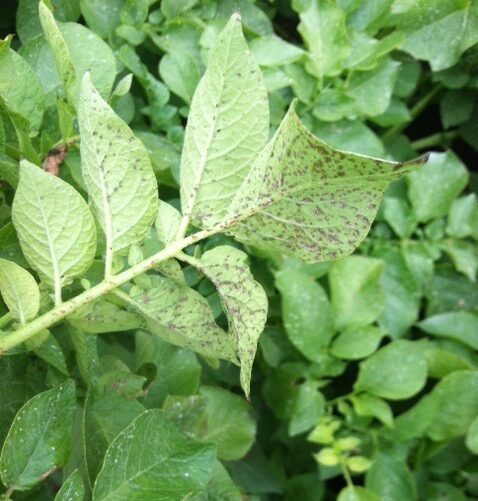
Photo Source: Carrie H. Wohleb, Washington State University Extension
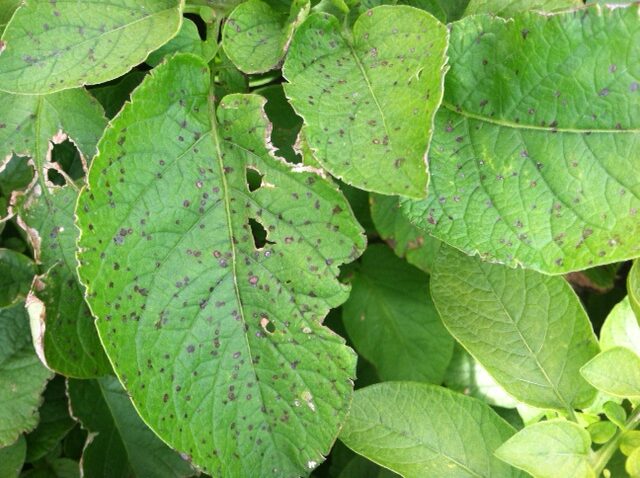
Photo Source: Carrie H. Wohleb, Washington State University Extension
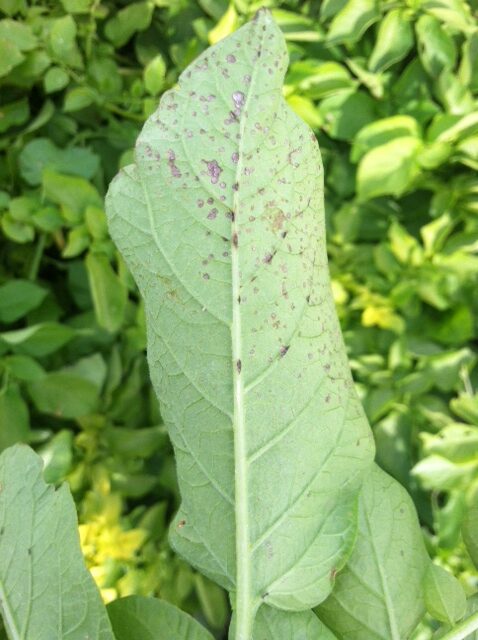
Photo Source: Carrie H. Wohleb, Washington State University Extension
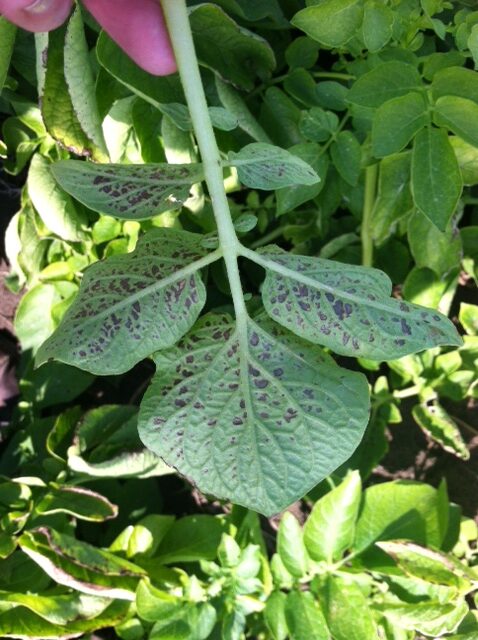
Photo Source: Carrie H. Wohleb, Washington State University Extension
Herbicide injury
Common name: Herbicide injury
Cause: Accidental exposure of potato to the herbicides Goal (oxyfluorfen) and Buctril (bromoxynil) applied by chemigation to an adjacent onion crop.
Host Crops: Most broadleaf plants are susceptible to injury by the herbicides Goal and Buctril.
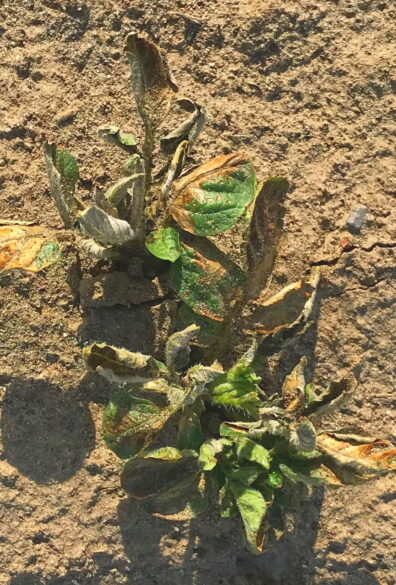
Photo Source: Tim Waters, Washington State University
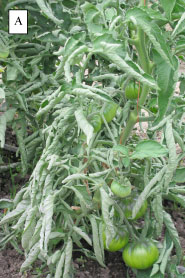
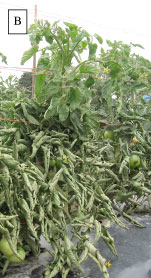
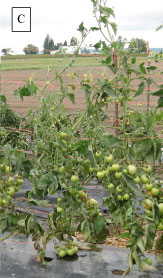
Physiological leaf roll
Problem: Physiological leaf roll
Cause: Various environmental conditions and management practices
Crops affected: Tomato and Potato.
On-Line Resources:
- Physiological Leaf Roll of Tomato/Potato (pdf), Identification & Management of Emerging Vegetable Problems in the Pacific Northwest. Pacific Northwest Vegetable Extension Group.
- Physiological Leaf Roll of Tomato (pdf), A Fact Sheet prepared by The Pacific Northwest Vegetable Extension Group.
Toxic seed piece syndrome
Problem: Toxic seed piece syndrome
Crop affected: Potato
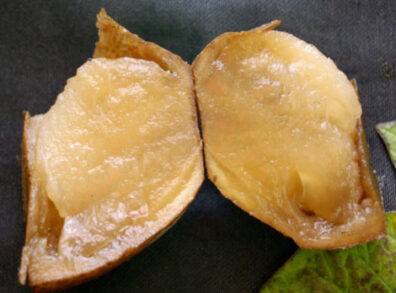
Photo Source: Phil Hamm, OSU
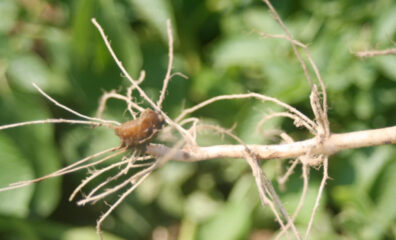
Photo Source: Carrie Wohleb, WSU
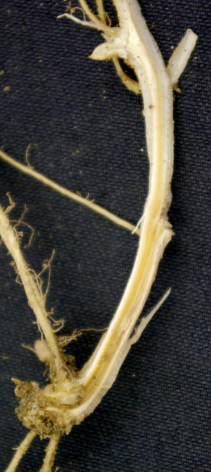
Photo Source: Phil Hamm, OSU
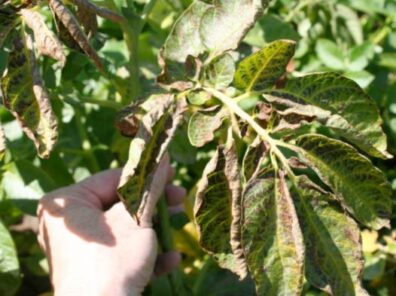
Photo Source: Carrie Wohleb, WSU
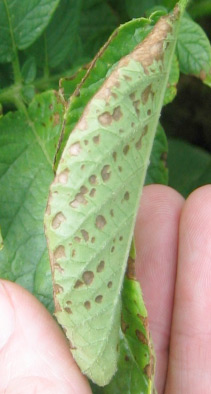
Photo Source: Carrie Wohleb, WSU
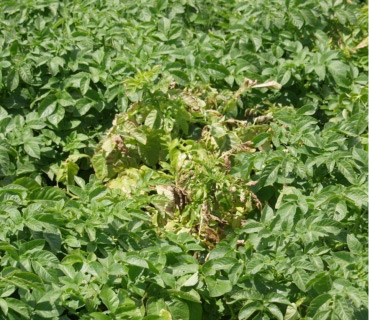
Photo Source: Phil Hamm, OSU
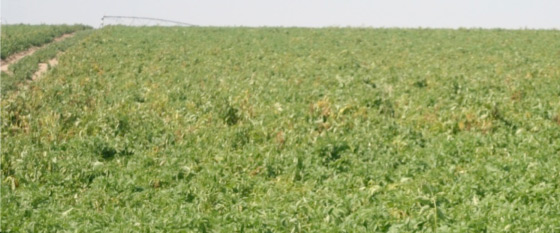
Photo Source: Carrie Wohleb, WSU
On-Line Resources:
- Toxic Seed Piece Syndrome (TSPS) (pdf). Identification & Management of Emerging Vegetable Problems in the Pacific Northwest, Pacific Northwest Vegetable Extension Group.
If you need the content provided on this site in an alternate format or for further information on the Vegetable Seed Pathology program,
please contact: Lindsey du Toit at dutoit@wsu.edu or at 360-848-6140.
Our pages provide links to external sites for the convenience of users. WSU Extension does not manage these external sites, nor does Extension review, control, or take responsibility for the content of these sites. These external sites do not implicitly or explicitly represent official positions and policies of WSU Extension.