General Onion/Allium Disease and Pest Management
Diseases
Insect/Mite Pests
Weeds
Abiotic Problems
(Click on photo to enlarge)
General Onion/Allium Disease and Pest Management
- Onion Disease Guide (pdf) – A Practical Guide for Seedsmen, Growers and Agricultural Advisors. Published by Seminis Vegetable Seeds, Inc.’s Plant Health Department.
- Pest Management Strategic Plan for Dry Bulb Storage Onions in the United States (pdf).
- SCRI Project Updates Talks and Publications, Allium Net.
- Onion ipmPIPE Brochure (pdf).
Onion ipmPIPE Diagnostic Pocket Series
Onion Disease Risk Assessment
- Thrips & Iris yellow spot virus (IYSV) Forecast (pdf)
- Bacterial Disease Forecasts (pdf)
- Fungal Disease Forecasts (pdf)
Diseases
Bacterial soft rot
Disease: Bacterial soft rot
Pathogen: Bacterial species
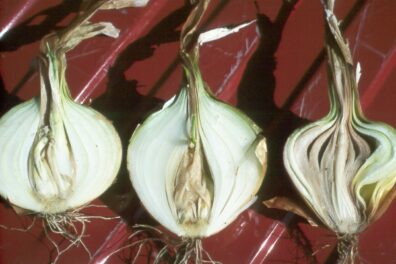
Photo Source: G.Q. Pelter
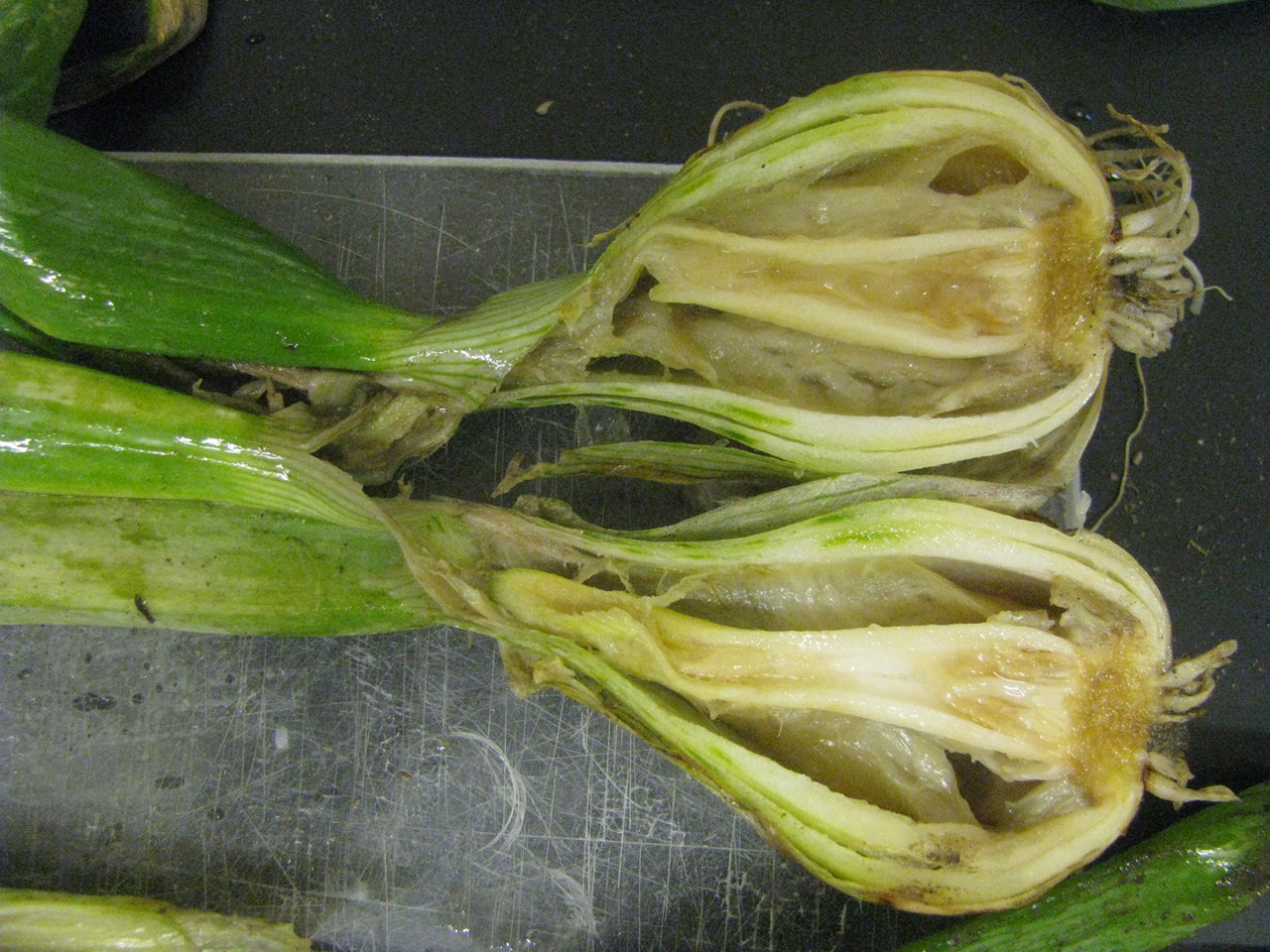
Photo Source: Lindsey du Toit, Washington State University
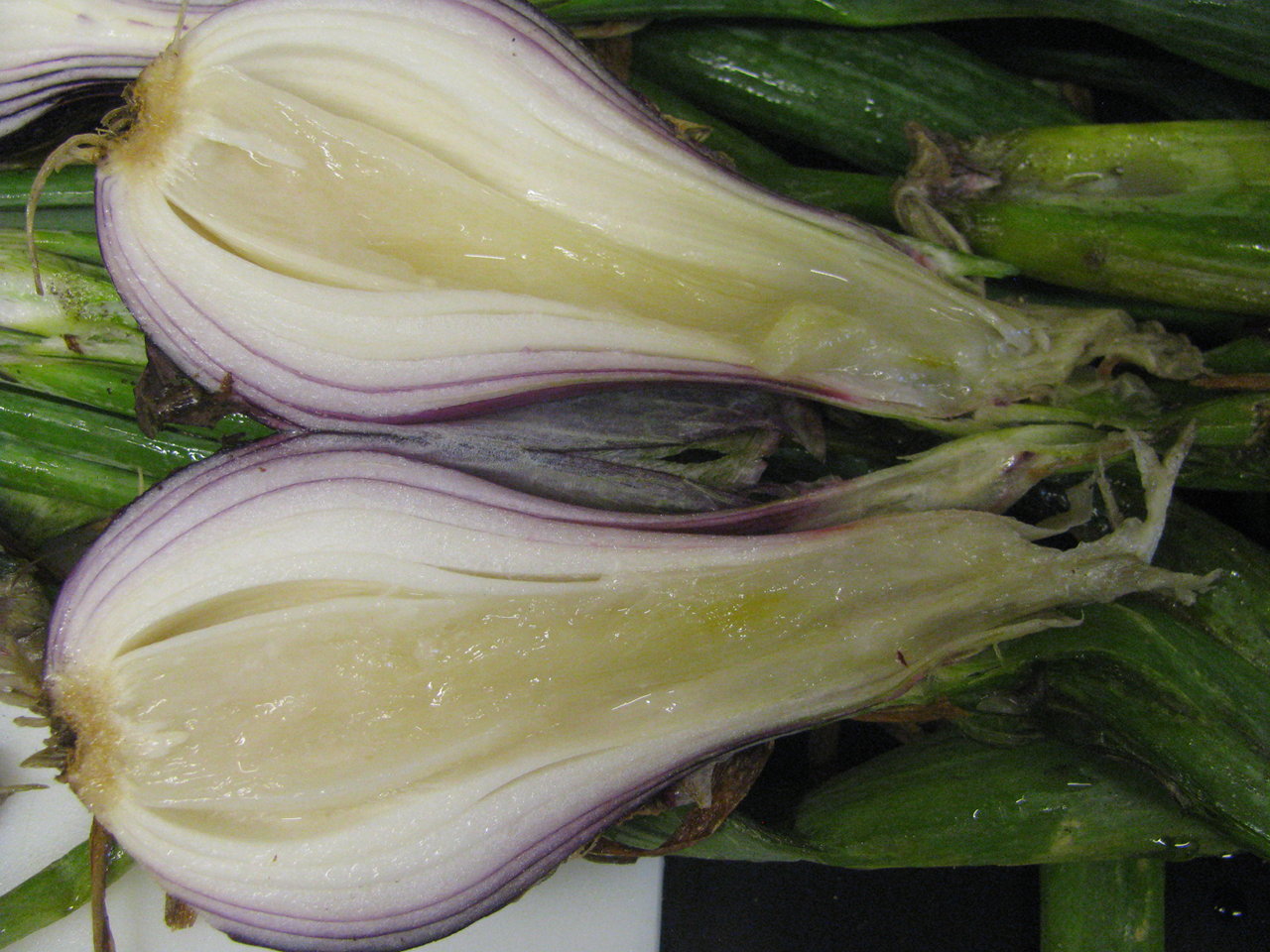
Photo Source: Lindsey du Toit, Washington State University
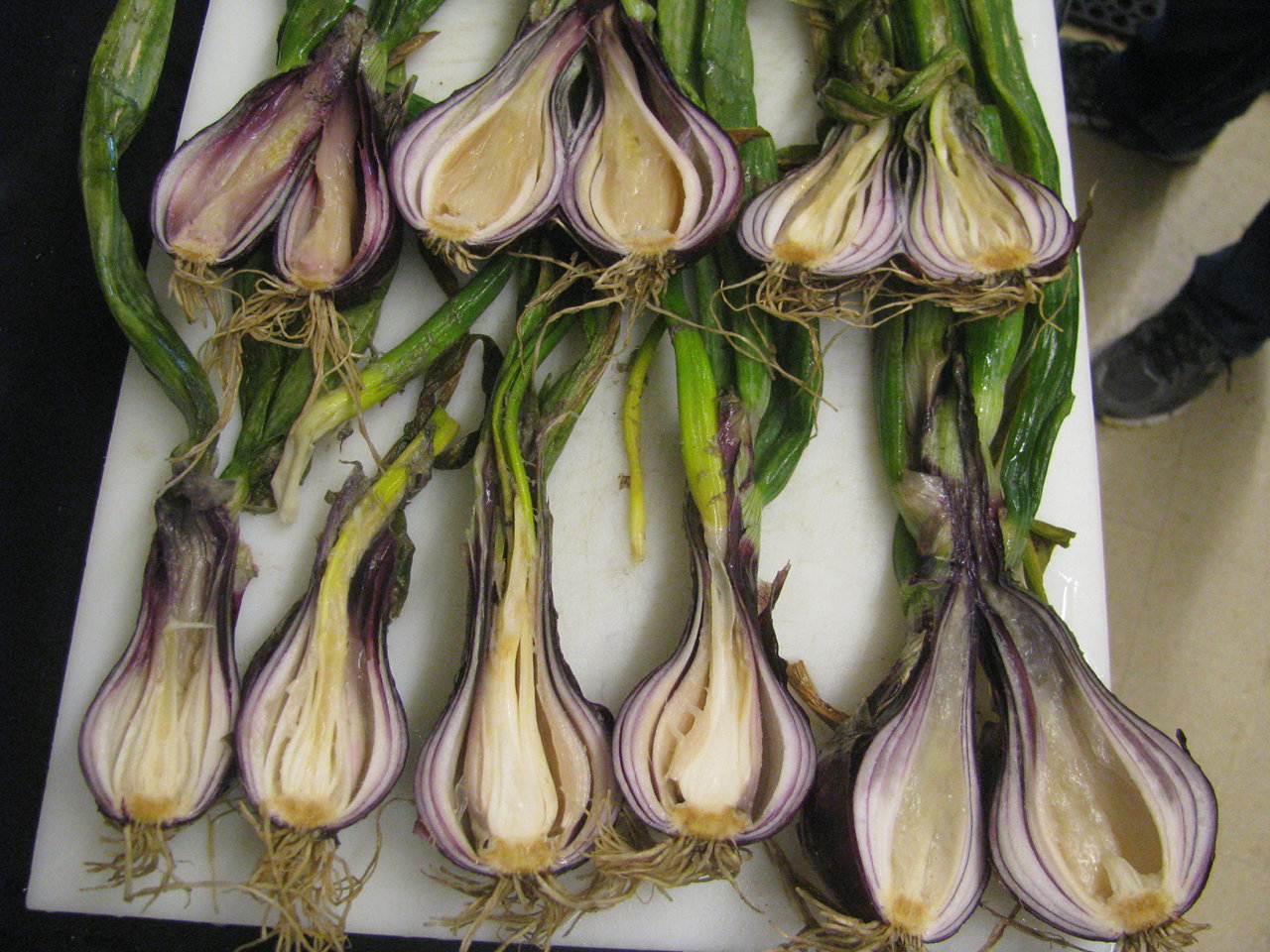
Photo Source: Lindsey du Toit, Washington State University
On-Line Resources:
- Bacterial Diseases (pdf), Onion ipmPIPE Diagnostic Pocket Series.
Basal rot
Disease: Basal rot
Pathogen: Botytis allii and Fusarium roseum

Photo Source: G.Q. Pelter
On-Line Resources:
- Onions, Garlic: Basal rot, Washington State University Hortsense.
- Storage Fungal Diseases (pdf), Onion ipmPIPE Diagnostic Pocket Series.
Black mold
Disease: Black mold
Pathogen: Aspergillus niger
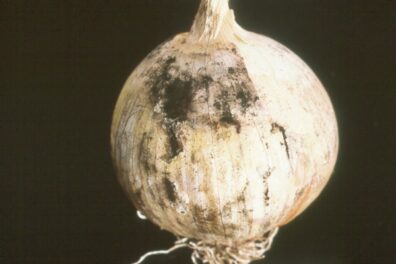
Photo Source: G.Q. Pelte
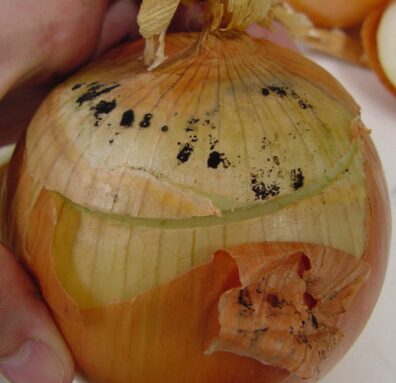
Photo Source: Lindsey du Toit, Washington State University
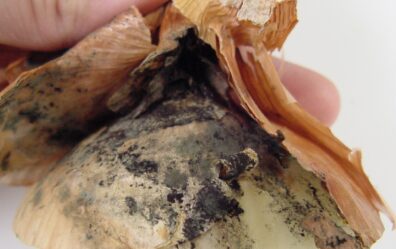
Photo Source: Lindsey du Toit, Washington State University
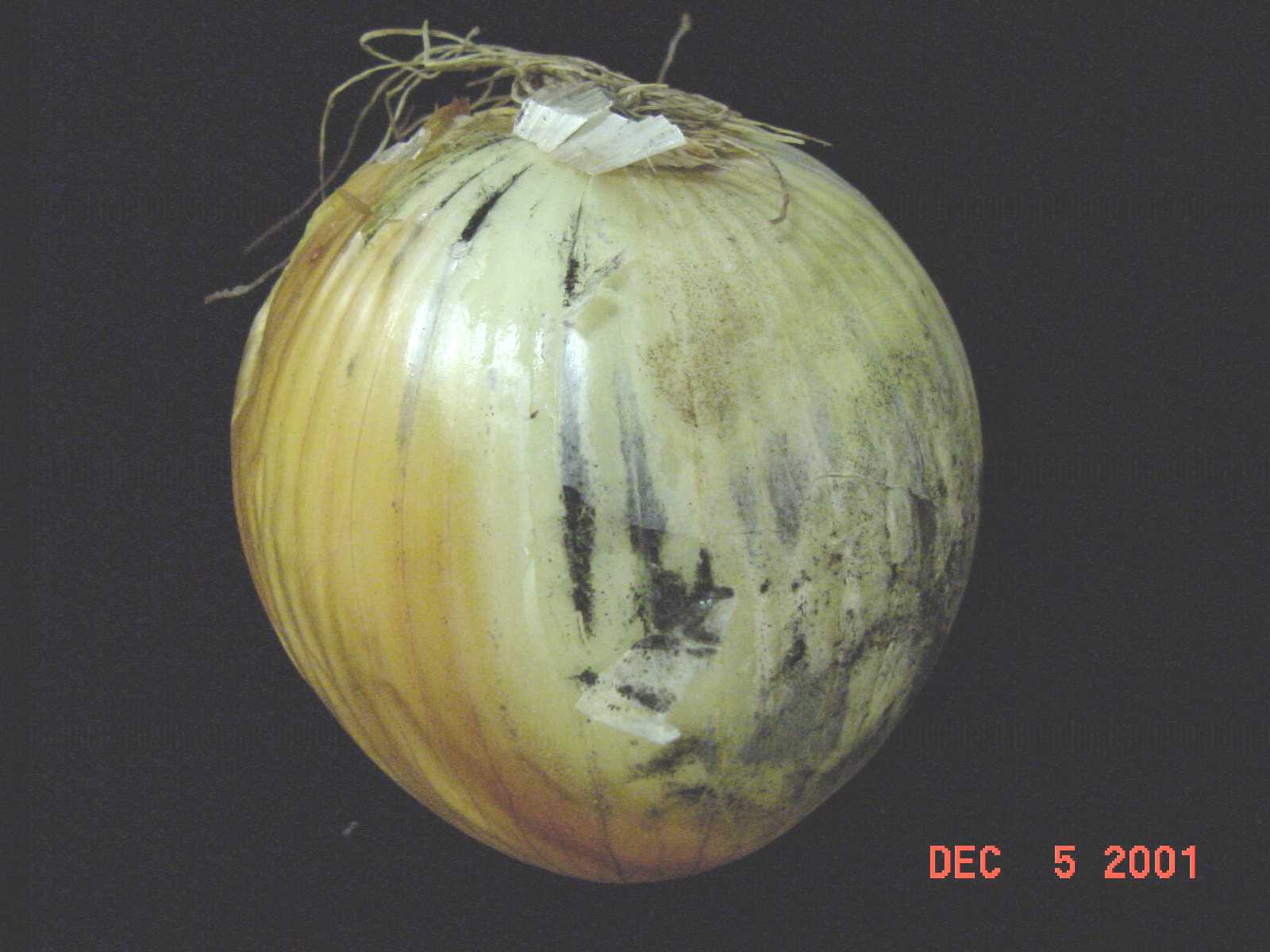
Photo Source: Lindsey du Toit, Washington State University
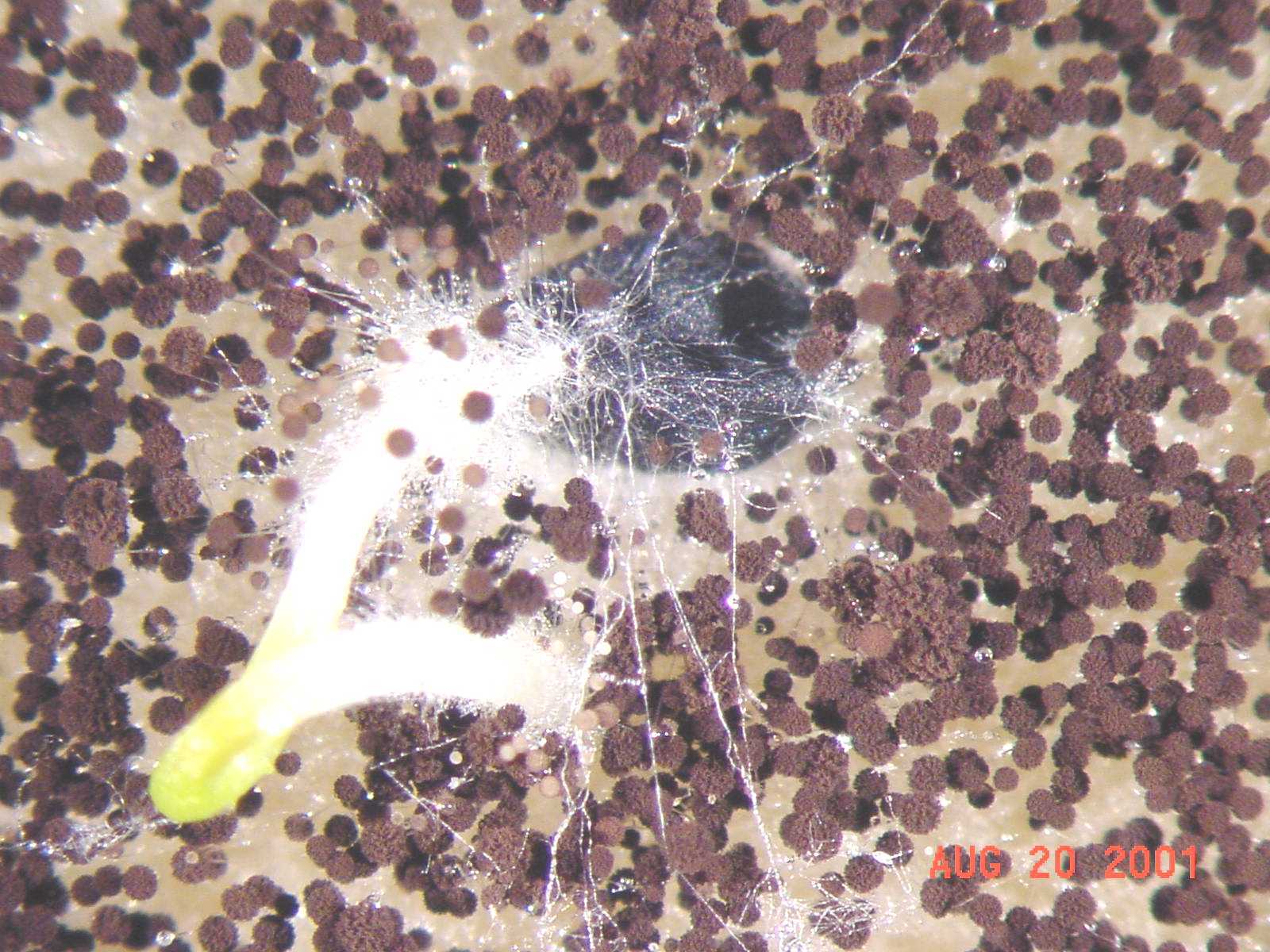
Photo Source: Lindsey du Toit, Washington State University
On-Line Resources:
- Pacific Northwest Plant Disease Management Handbook: Onion (Allium cepa) – Black Mold.
- Storage Fungal Diseases (pdf), Onion ipmPIPE Diagnostic Pocket Series.
Diseases of stored garlic
Disease: Diseases of stored garlic
See: Diseases of Storage Garlic (Oregon State University).
Downy mildew
Disease: Downy mildew
Pathogen: Peronospora destructor
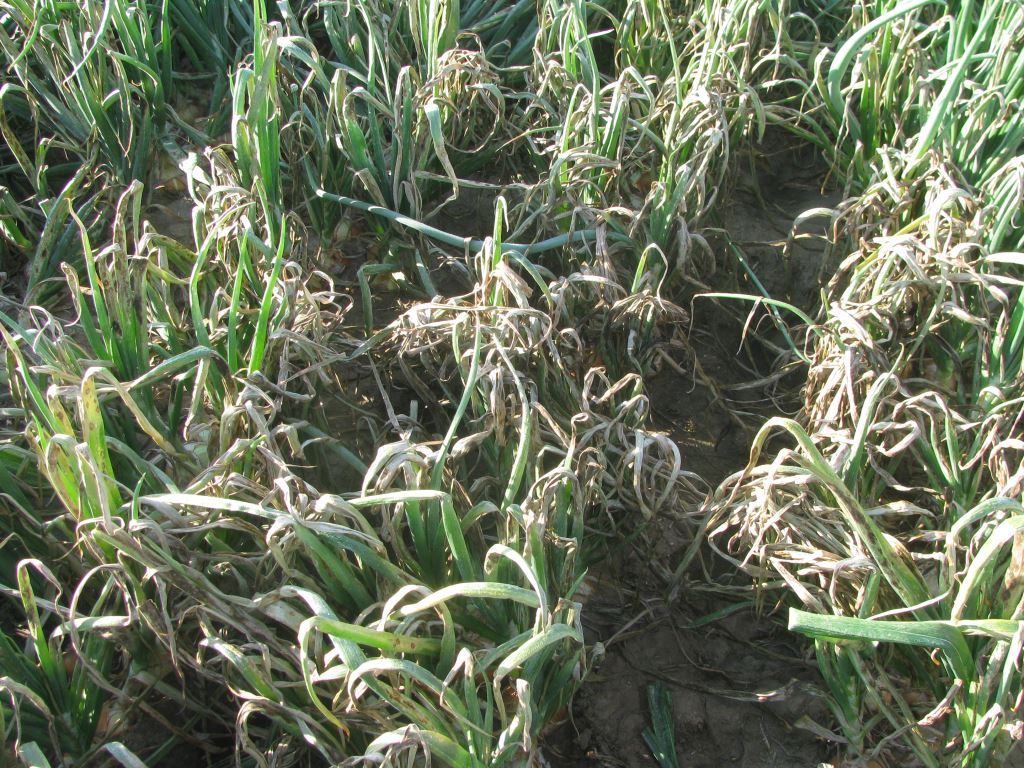
Photo Source: Lindsey du Toit, Washington State University
Photo Source: Lindsey du Toit, Washington State University
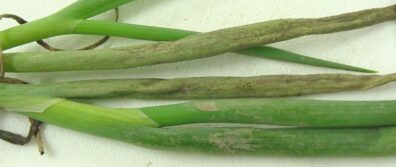
Photo Source: Lindsey du Toit, Washington State University
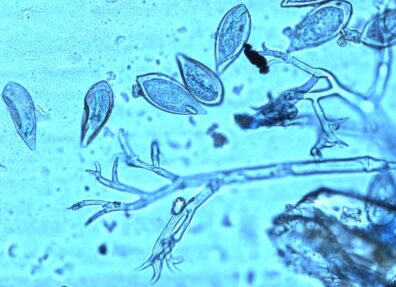
Photo source: Lindsey du Toit, Washington State University
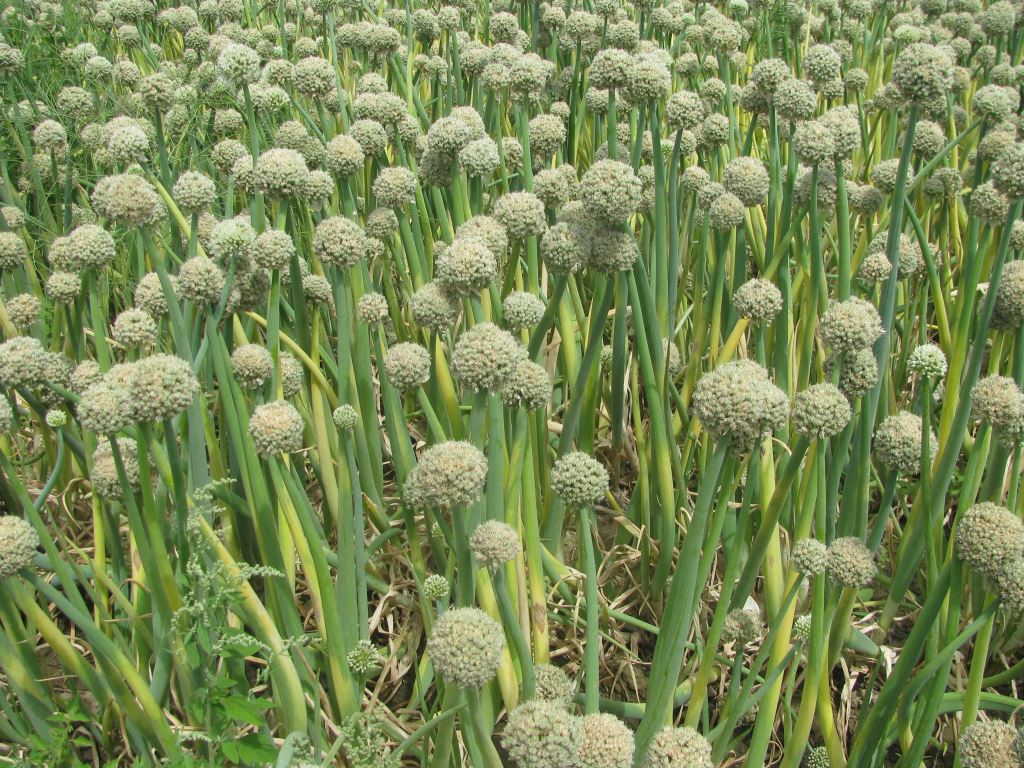
Photo source: Lindsey du Toit, Washington State University
On-Line Resources:
- Pacific Northwest Plant Disease Management Handbook: Onion (Allium cepa) – Downy Mildew.
- Foliar Fungal Diseases (pdf), Onion impPIPE Diagnostic Pocket Series.
- Onions, Garlic: Downy mildew, Washington State University Hortsense.
Fusarium basal rot
Disease: Fusarium basal rot
Pathogen: Fusarium species
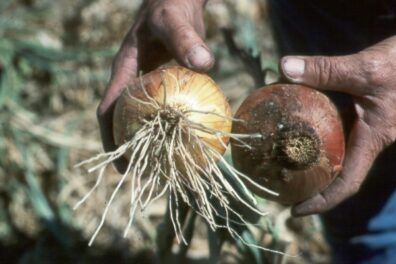
Photo Source: G.Q. Pelter
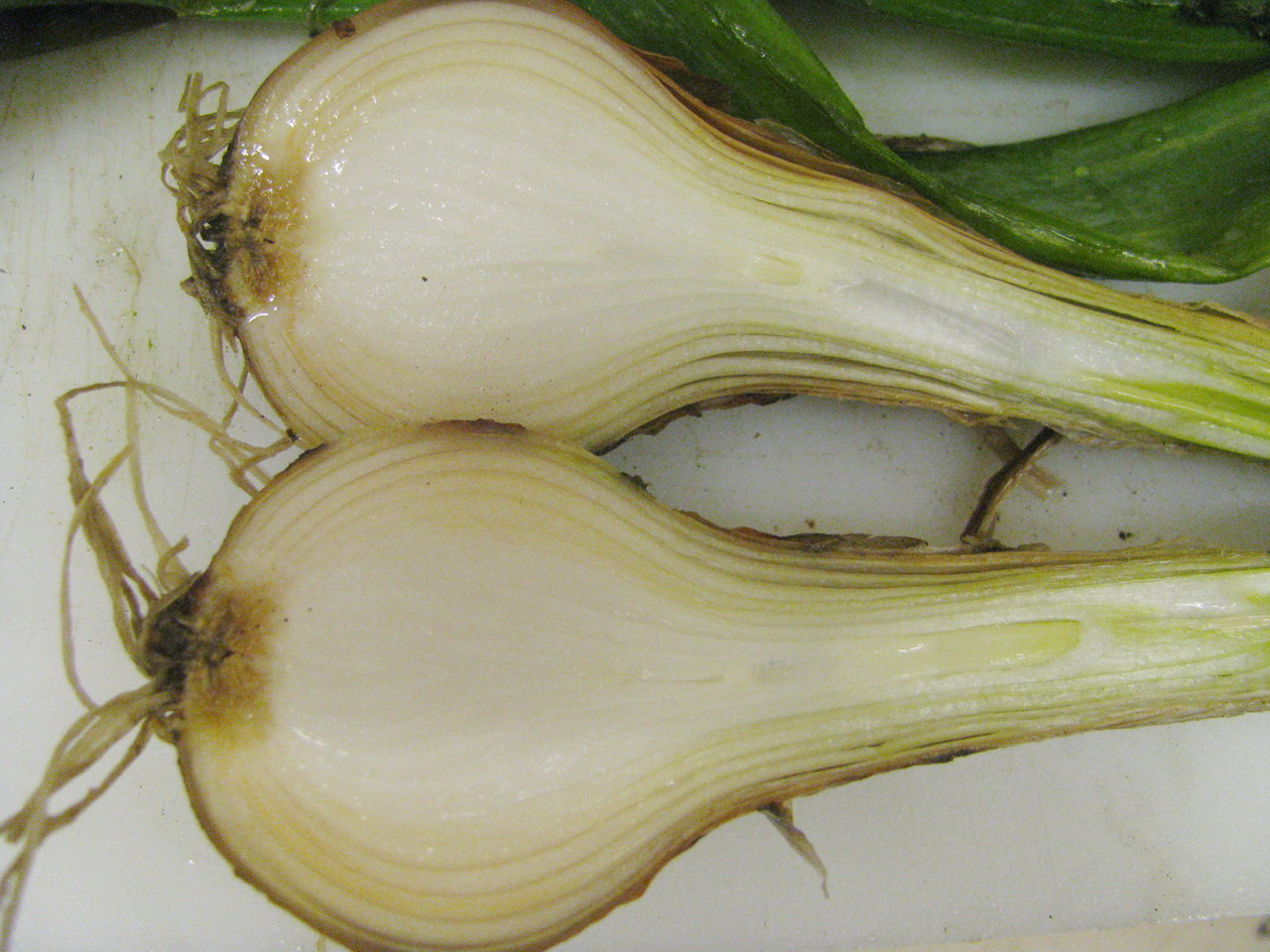
Photo Source: Lindsey du Toit, Washington State University
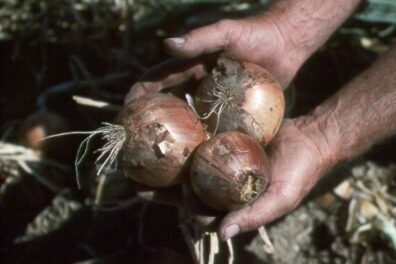
Photo Source: G.Q. Pelter
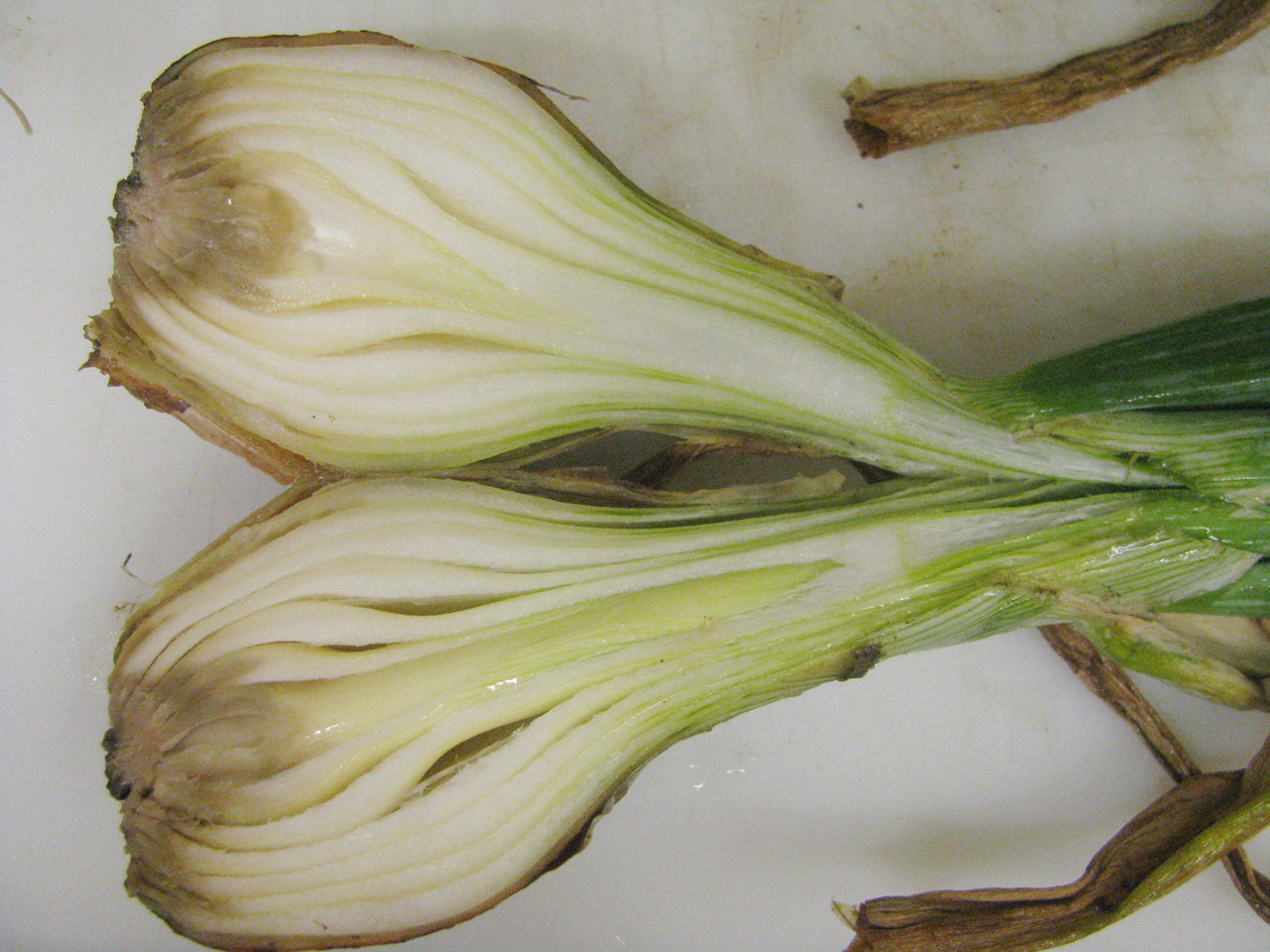
Photo Source: Lindsey du Toit, Washington State University
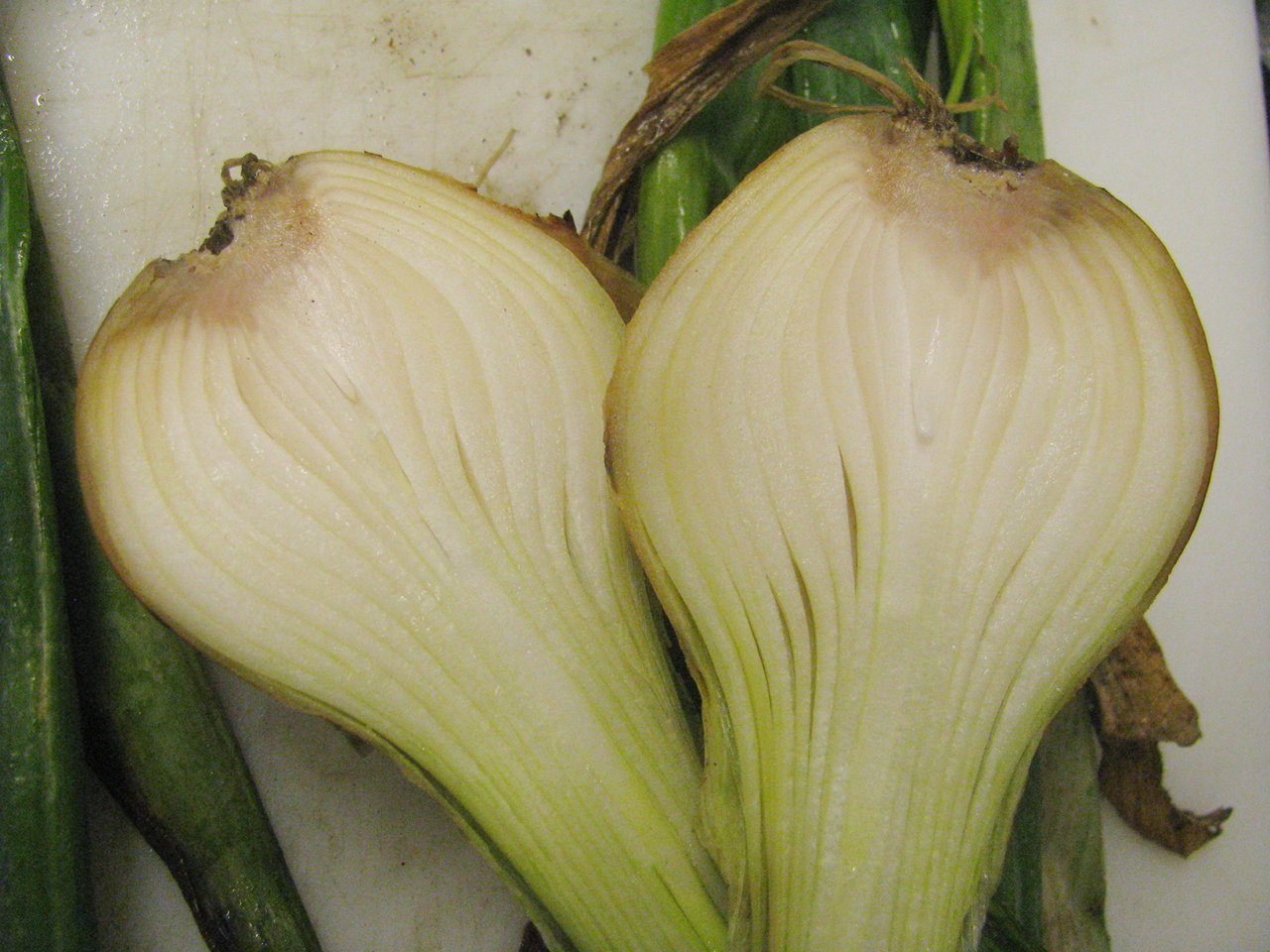
Photo Source: Lindsey du Toit, Washington State University
On-Line Resources:
- Pacific Northwest Plant Disease Management Handbook: Onion (Allium cepa) – Fusarium Basal Rot.
- Storage Fungal Diseases (pdf), Onion impPIPE Diagnostic Pocket Series.
Iris yellow spot
Disease: Iris yellow spot (IYS)
Latin binomial: Iris yellow spot virus (IYSV)
Host Crops: Primarily Allium spp., particularly bulb onion (A. cepa), but a range of common weed species in onion crops has been identified as potential symptomatic and asymptomatic hosts.
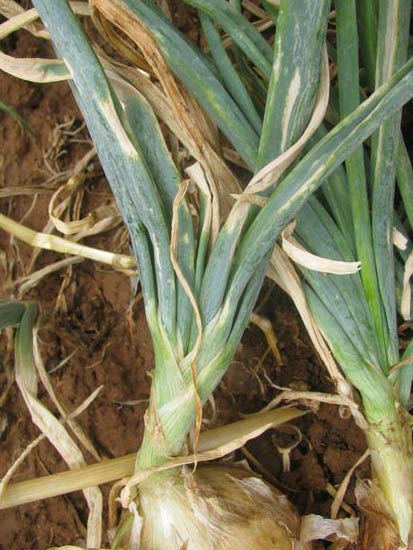
Photo Source: Lindsey du Toit, Washington State University
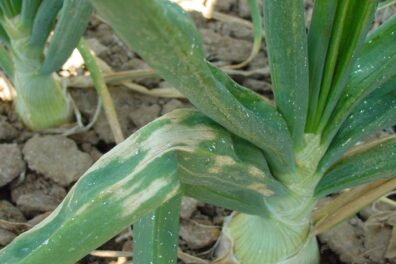
Photo Source: Lindsey du Toit, Washington State University
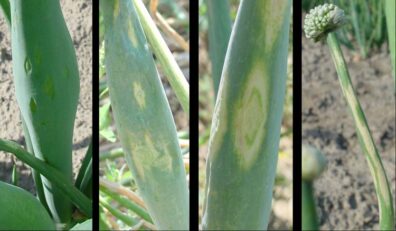
Photo Source: Lindsey du Toit, Washington State University
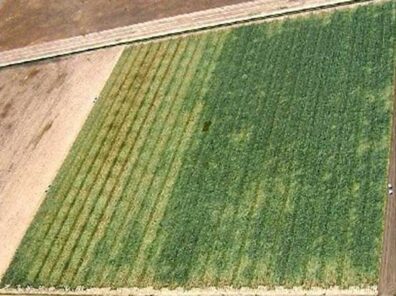
Photo Source: Fred Crowe, Oregon State University Professor Emeritus
On-Line Resources:
- Iris yellow spot virus: An Emerging Threat to Onion Bulb and Seed Production (pdf).
- Susceptibility of storage onion cultivars to iris yellow spot in the Columbia Basin of Washington, 2004 (pdf), L.J du Toit, Washington State University and G.Q. Pelter, Washington State University.
- Pacific Northwest Plant Disease Management Handbook: Onion (Allium cepa) – Iris Yellow Spot.
Neck rot
Disease: Neck rot
Pathogen: Botrytis allii and Botrytis aclada are the two primary species that cause neck rot of onion, although as many as six species of Botrytis can infect various Allium spp.
Host Crops: Onion (Allium cepa) and other Allium spp.
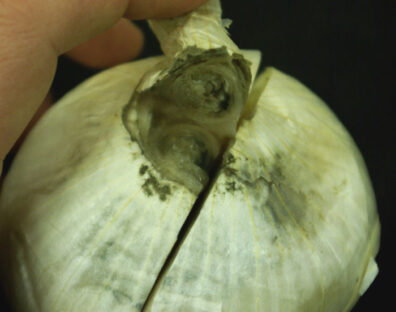
Photo Source: Jordan Eggers, Oregon State University
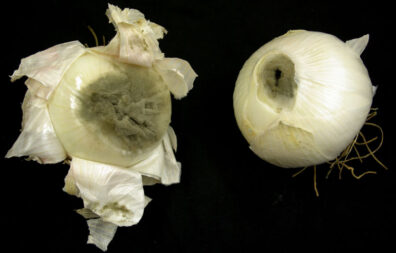
Photo Source: Jordan Eggers, Oregon State University
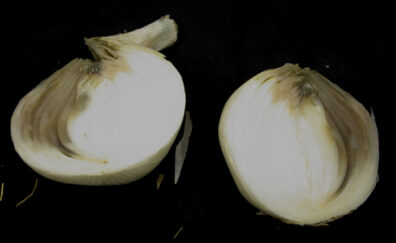
Photo Source: Jordan Eggers, Oregon State University
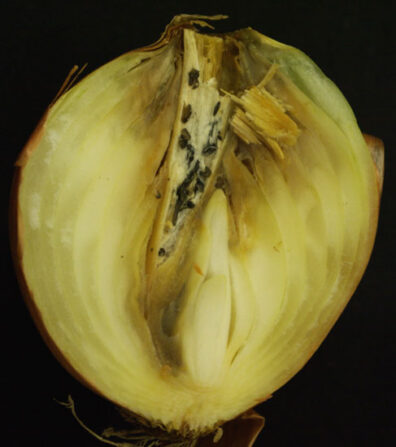
Photo Source: Jordan Eggers, Oregon State University
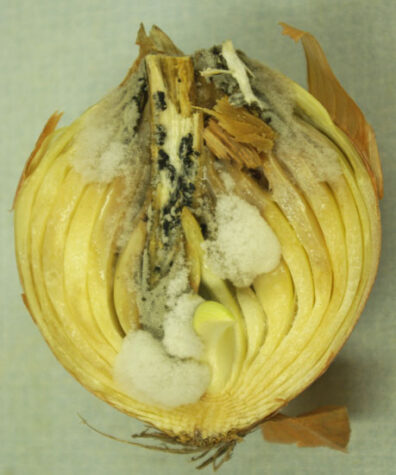
Photo Source: Jordan Eggers, Oregon State University
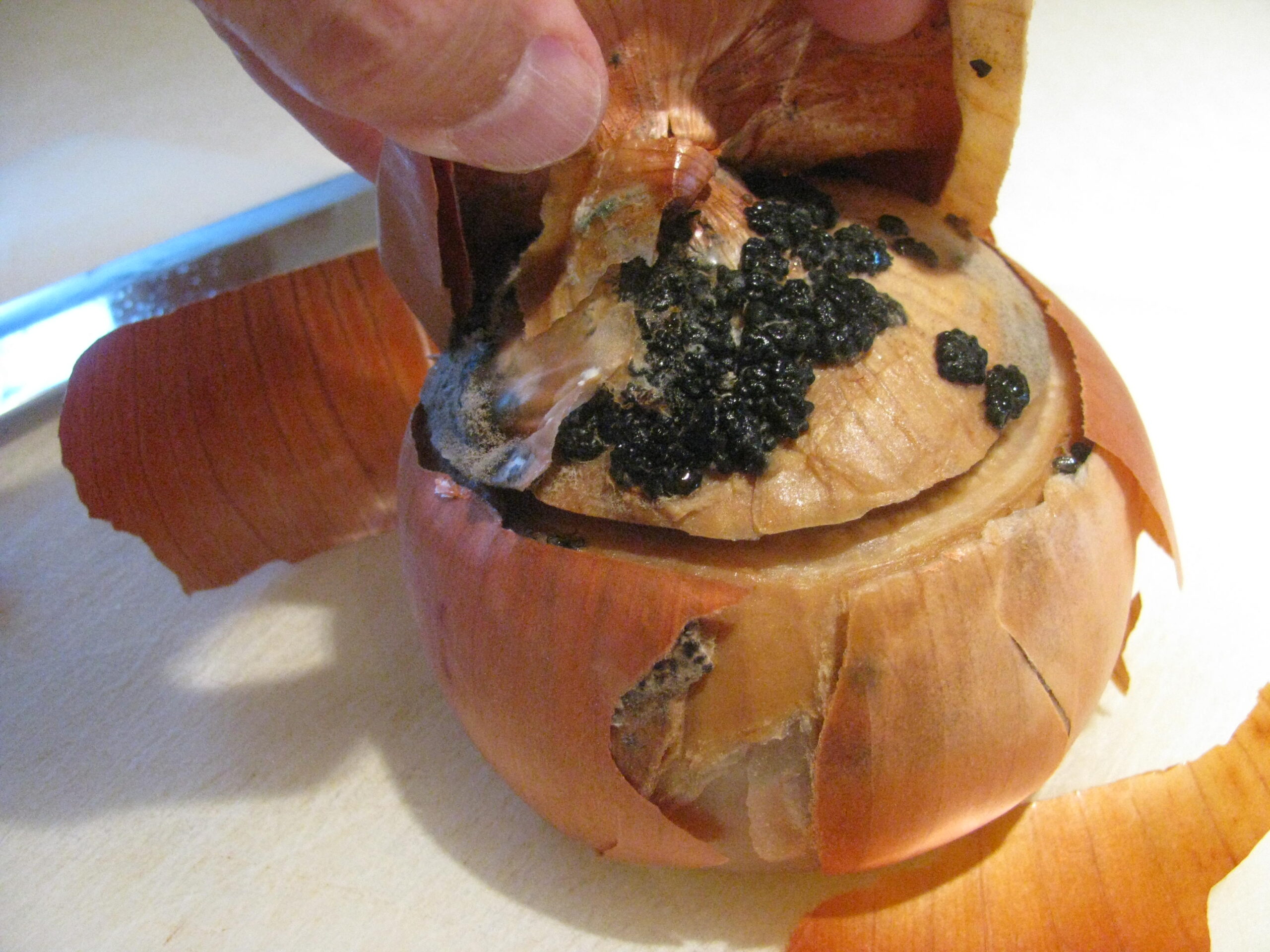
Photo Source: Lindsey du Toit, Washington State University
On-Line Resources:
- Pacific Northwest Plant Disease Management Handbook: Onion (Allium cepa) – Neck Rot.
- Important New York Vegetable Diseases: Onion Neck Rot, Vegetable MD Online, Cornell University.
- Botrytis Neck Rot of Onion, Utah State University Extension.
- Onion neck rot, The Royal Horticultural Society.
- Detection and Identification of Botrytis Species Associated with Neck Rot, Scape Blight, and Umbel Blight of Onion (pdf), Plant Management Network.
- A Real-Time, Quantitative PCR Seed Assay for Botrytis spp. that Cause Neck Rot of Onion (pdf), Plant Disease, The American Phytopathological Society.
Pink root
Disease: Pink root
Pathogen: Phoma terrestris (Pyrenochaeta terrestris)
Host Crops: Primarily onion, but some strains of the fungus are pathogenic on barley, cantaloupe, carrot, cauliflower, cucumber, eggplant, pea, corn, millet, muskmelon, oat, pepper, ryegrass, sorghum, soybean, spinach, squash, sweet corn, tomato, and wheat.
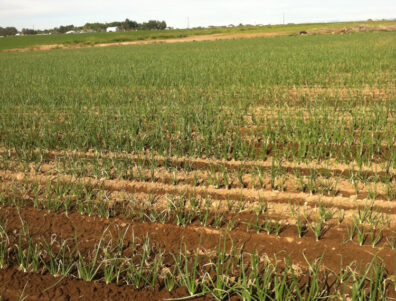
Photo Source: Carrie Wohleb, Washington State University
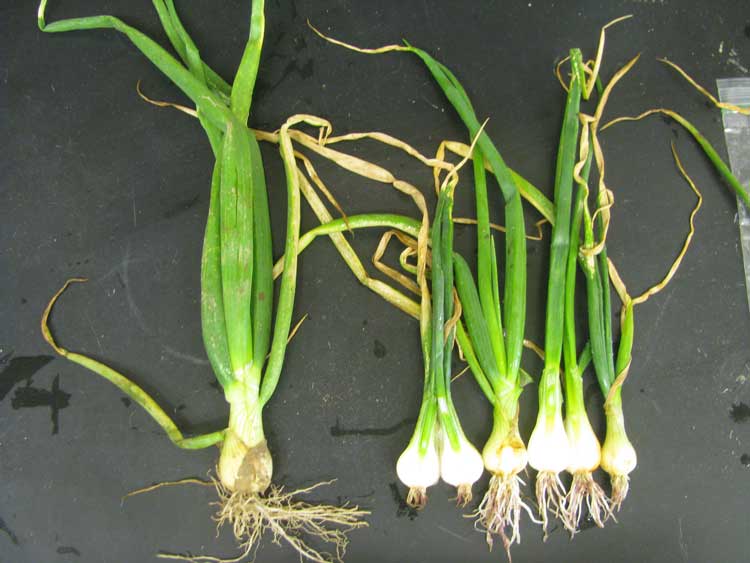
Photo Source: Lindsey du Toit, Washington State University
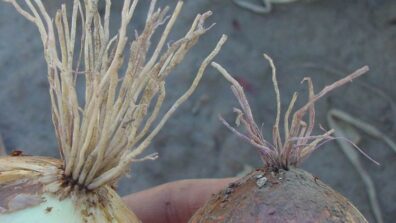
Photo Source: Lindsey du Toit, Washington State University
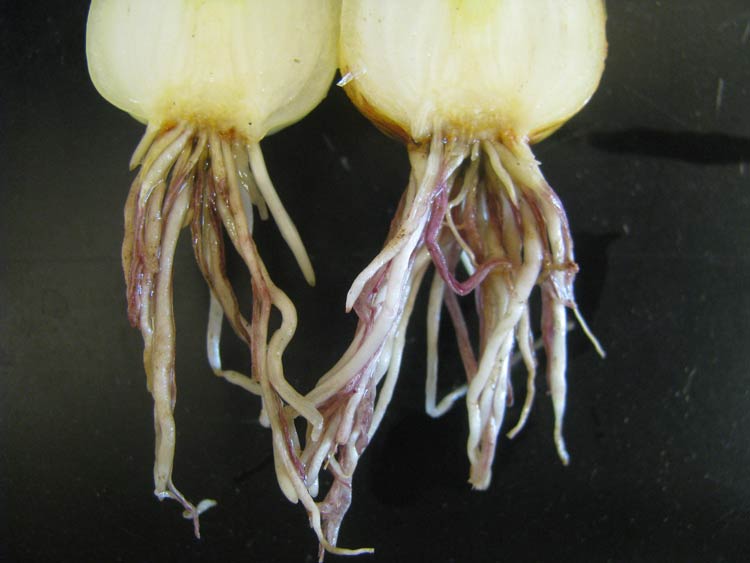
Photo Source: Lindsey du Toit, Washington State University
On-Line Resources:
- Pacific Northwest Plant Disease Management Handbook: Onion (Allium cepa) – Pint Root.
- Soil-Borne Diseases of Onion, Colorado State University Extension.
- UC Pest Management Guidelines: Onion and Garlic Pink Root, UC IPM Online, University of California.
Powdery mildew
Disease: Powdery mildew
Pathogens: Leveillula taurica (synonyms Oidiopsis sicula, O. taurica)
Host crops: This fungus is reported to infect 100’s of plant species, although many strains are host-specific. The disease is favored by high relative humidity during warm weather. The disease typically causes little damage to most onion cultivars in the Pacific Northwest, but symptoms occasionally can be more severe, e.g., in 2004 and 2019 in the inland Pacific Northwest. The disease appears to be most common and severe on cultivars with very glossy leaves, which is associated with thin cuticular waxes.
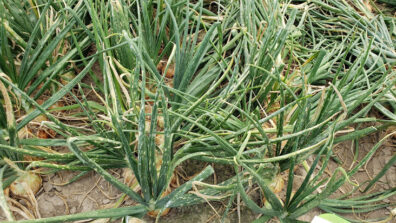
Photo Source: Stuart Reitz, Oregon State University
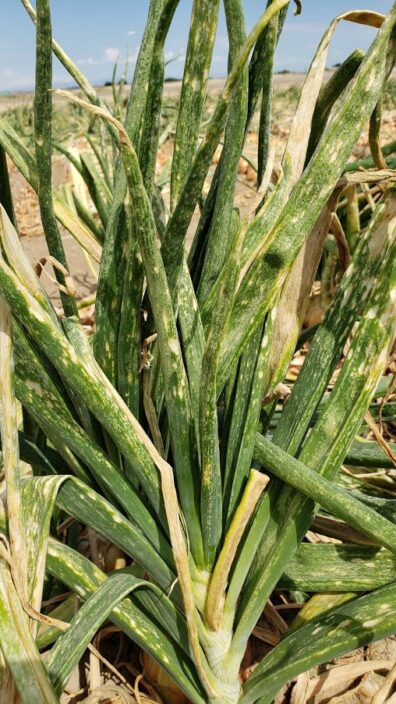
Photo Source: Stuart Reitz, Oregon State University
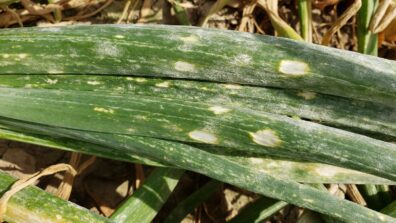
Photo Source: Stuart Reitz, Oregon State University
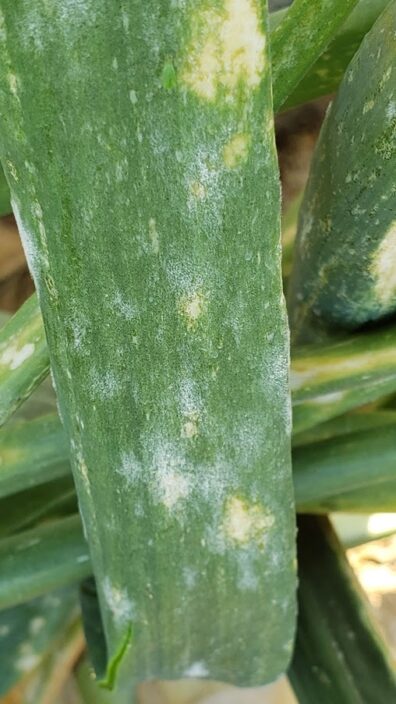
Photo Source: Stuart Reitz, Oregon State University
Online Resources:
- 2019 WSU Extension Onion Cultivar Demonstration & Field Day (PDF) , (page 6, shows onion cultivars rated for severity of powdery mildew by Carrie Wohleb, WSU Region Extension Specialist, in the 2019 WSU Onion Cultivar Trial), WSU Extension & the Pacific Northwest Vegetable Association.
- Onion (Allium cepa)-Powdery Mildew, by D. H. Gent and C. M. Ocamb, PNW Plant Disease Management Handbook.
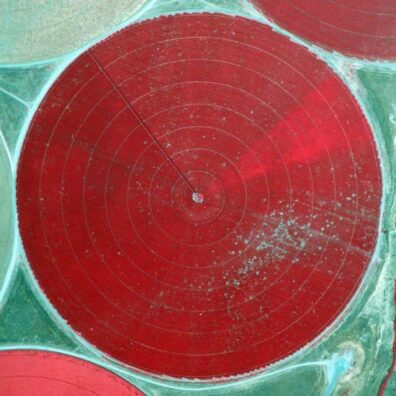
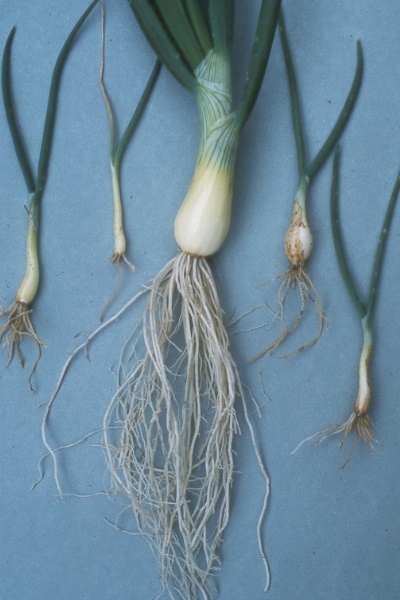
Rhizoctonia stunting
Disease: Rhizoctonia stunting (also known as ‘Mallee’ in Australia after the Mallee region of South Australia, where the disease was first documented in that country)
Causal agent (Latin binomial): Rhizoctonia spp., particularly Rhizoctonia solani (various anastomosis groups, including AG 8). The fungi colonize the roots of winter cover crops planted preceding onion bulb crops. The cover crop is killed with a herbicide application in spring, around the time that onion seed is planted, to provide a physical barrier to protect emerging onion seedlings from wind- and sandblasting on the sandy soils typical of many fields in the Columbia Basin of central Washington and northcentral Oregon. Herbicide is applied to the cover crop to prevent the cover crop from competing with the onion crop. However, this enables Rhizoctonia spp. to colonize the dying roots and crown tissue of the cover crop, building up inoculum that can then colonize onion seedlings.
Host Crops: Onion, pea, cereals, other crops.
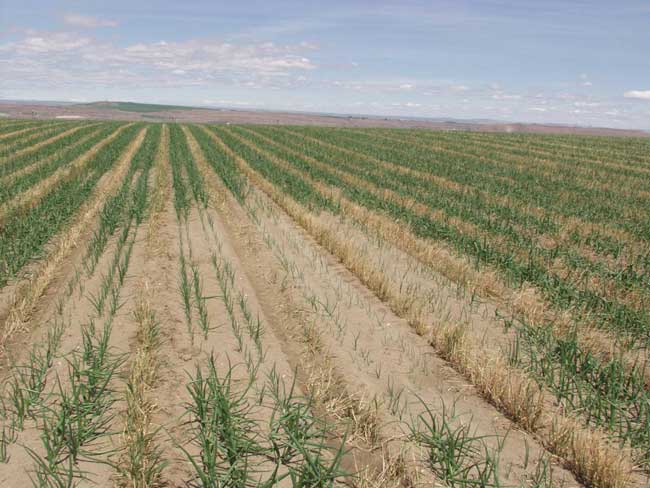
Photo Source: Tim Paulitz, USDA ARS, Pullman, WA.
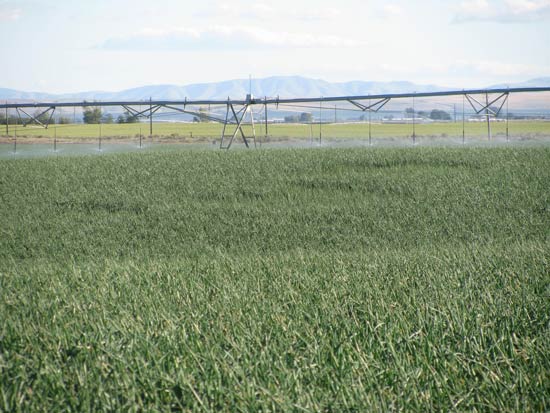
Photo Source: Lindsey du Toit, Washington State University
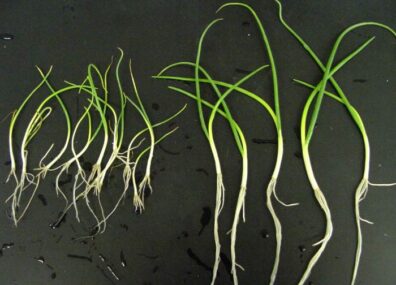
Photo Source: Lindsey du Toit, Washington State University
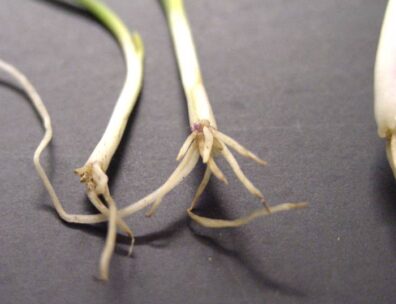
Photo Source: Lindsey du Toit, Washington State University
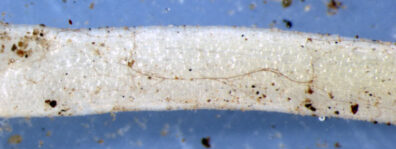
Photo Source: Lindsey du Toit, Washington State University
On-Line Resources:
- Strip-Tillage for Onions and Sweet Corn – Lorin Grigg, Farmer-to-Farmer Case Study Series: Increasing resilience among farmers in the Pacific Northwest, by Georgine Yorgey, Center for Sustaining Agriculture and Natural Resources, Washington State University and Andrew McGuire, Irrigated Cropping Systems Agronomist, Washington State University Extension (PNW702).
View on-line or download free PDF:
- Stunting of Onion in the Columbia Basin of Oregon and Washington Caused by Rhizoctonia spp (pdf). Plant Disease 97:1626–1635.
- Effect of timing of glyphosate application to a winter wheat cover crop on stunting of spring-sown onions caused by Rhizoctonia spp. in the Columbia Basin of Washington, 2012 (pdf), Plant Disease Management Reports 7:V046, 2013.
- Efficacy of fungicides to manage onion stunting caused by Rhizoctonia spp. in the Columbia Basin of Oergon and Washington, 2011–2012 (pdf), Plant Disease Management Reports 7:V047, 2013.
- Yield responses of three onion cultivars to stunting caused by Rhizoctonia spp. in the Columbia Basin of Oregon and Washington, 2012 (pdf). Plant Disease Management Reports 7:V048, 2013.
- Rhizoctonia Seedling Blight of Onion and Pea Crops in the Columbia Basin (pdf), WSU 2011 Onion Field Day report, Soap Lake, WA, 26 Aug. 2011.
- Rhizoctonia Seedling Blight of Onion Crops in the Columbia Basin (pdf), WSU 2012 Onion Field Day report, Connell, WA, 30 Aug. 2012.
- Onion Stunting Caused by Rhizoctonia: Management and Economic Importance in the Columbia Basin of Oregon and Washington (pdf), Proceedings article from 2012 National Allium Research Conference, Las Cruces, NM, 12–14 Dec. 2012.
Root rot
Disease: Root rot
Pathogen: Trichodorus and Pythium
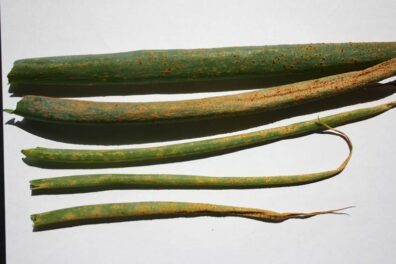
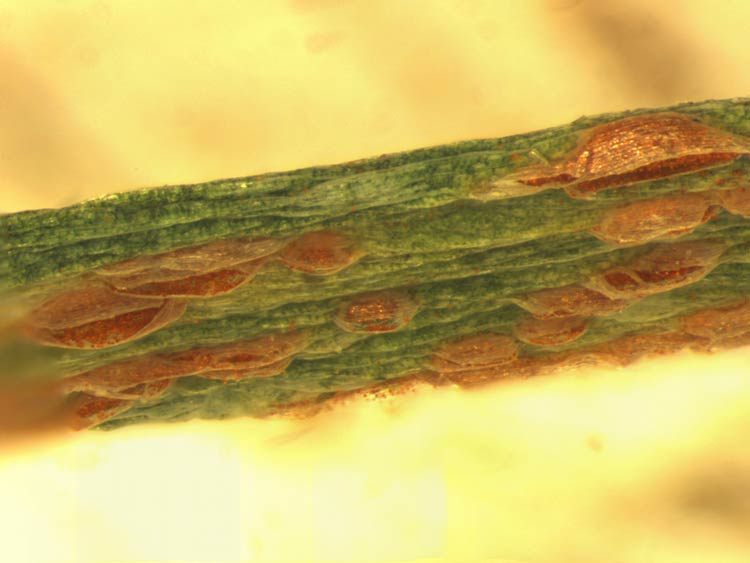
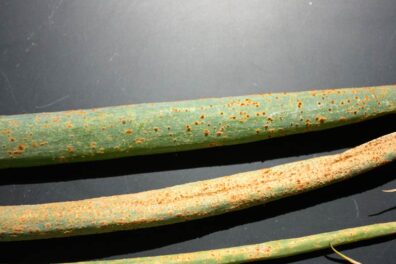
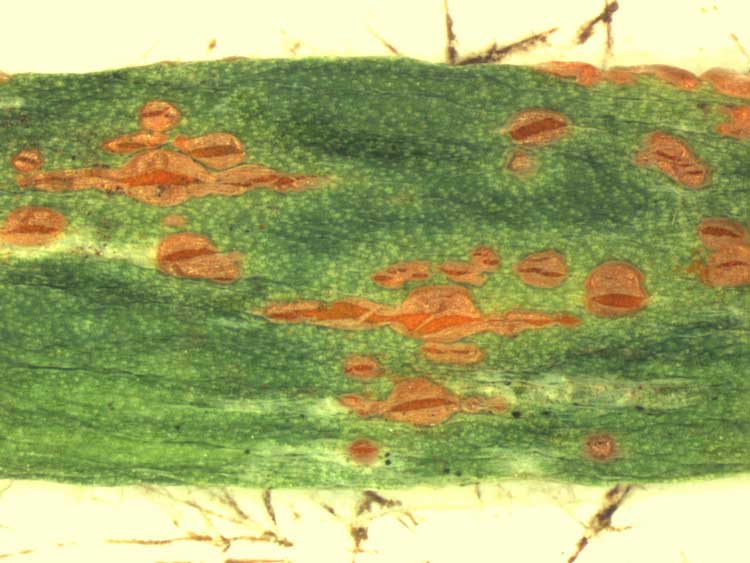
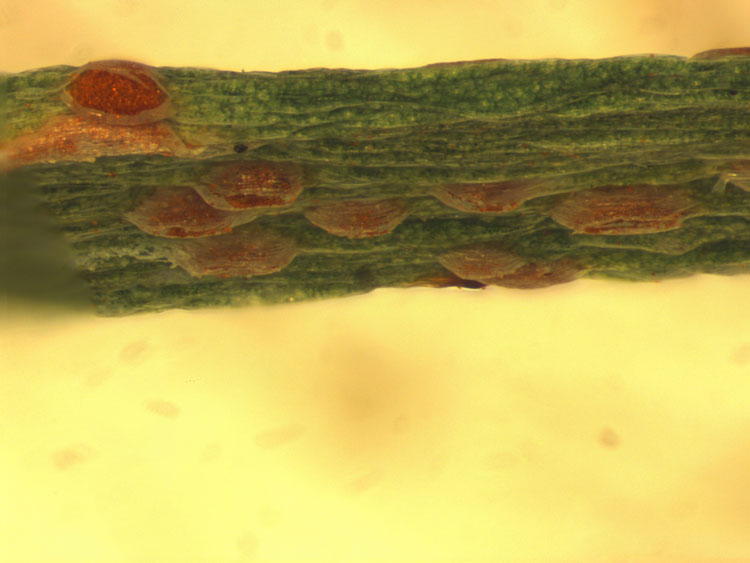
Rust
Disease: Rust
Pathogen: Puccinia allii (= Puccinia porri)
Host Crops: Onion and garlic
On-Line Resources:
- Pacific Northwest Plant Disease Management Handbook: Onion (Allium cepa) – Rust.
- Diseases of onion and garlic ( Allium sepa and Allium sativa ) in Arizona: Garlic Rust, University of Arizona.
- UC Pest Management Guidelines: Onion and Garlic Rust, UC IPM Online, University of California.
- Prediction of Disease Infection of Welsh Onions by Rust Fungus Based on Temperature and Wetness Duration, IEEEXplore.
Onion smut
Disease: Onion smut
Pathogen: Urocystis colchici (= Urocystis cepulae)
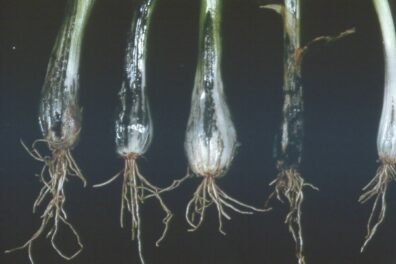
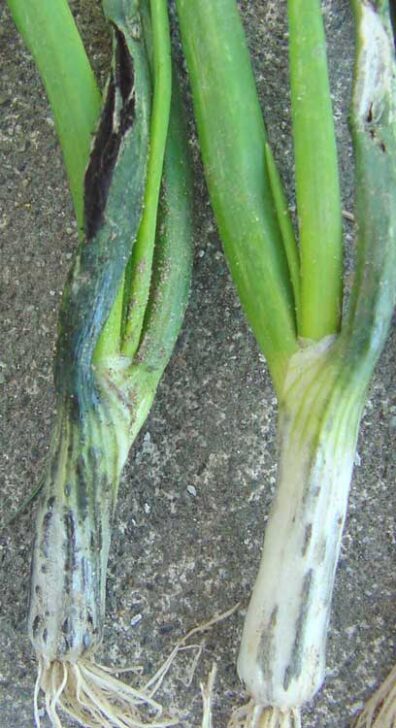
Photo Source: Lindsey du Toit
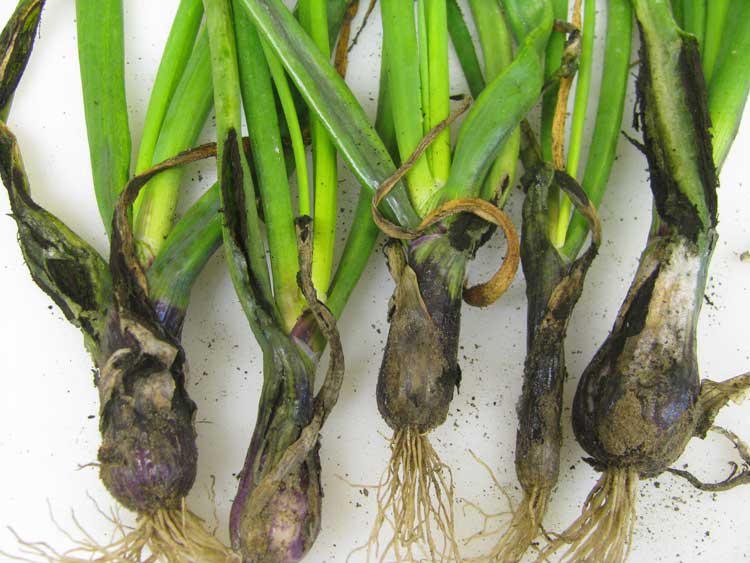
Photo Source: Lindsey du Toit
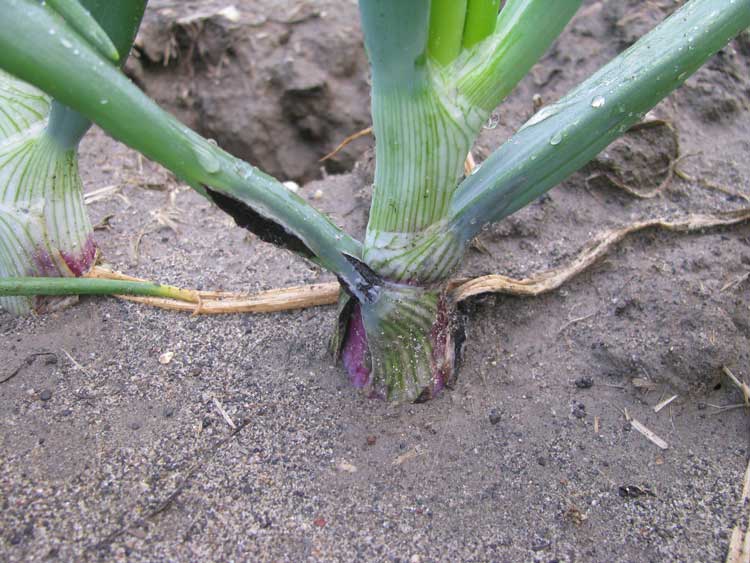
Photo Source: Lindsey du Toit
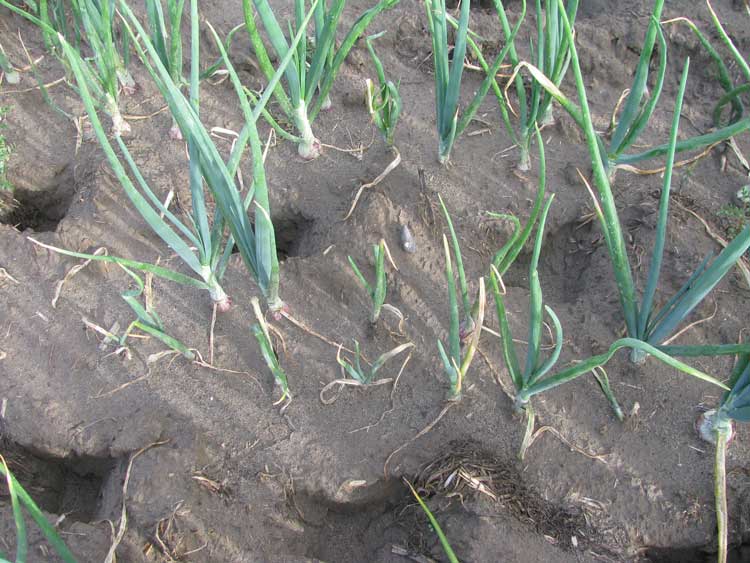
Photo Source: Lindsey du Toit
On-Line Resources:
- Onion Smut (pdf), Identification & Management of Emerging Vegetable Problems in the Pacific Northwest. Pacific Northwest Vegetable Extension Group.
- Pacific Northwest Plant Disease Management Handbook: Onion (Allium cepa) – Smut.
- Efficacy Testing of Onion Seed Treatments in the Greenhouse and Field (pdf). Acta Hort. 631 in 2004 by McDonald et al.
- Onion disorder: Smut (pdf). University of Wisconsin extension bulletin.
White rot
Disease: White rot
Pathogen: Sclerotinia cepivorum
Host plants: Garlic, onion, and other Allium spp.
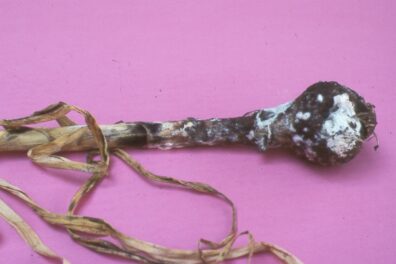
Photo Source: G.Q. Pelter
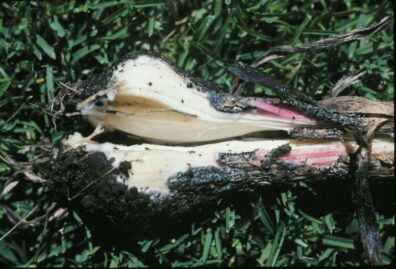
Photo Source: Lindsey du Toit, Washington State University
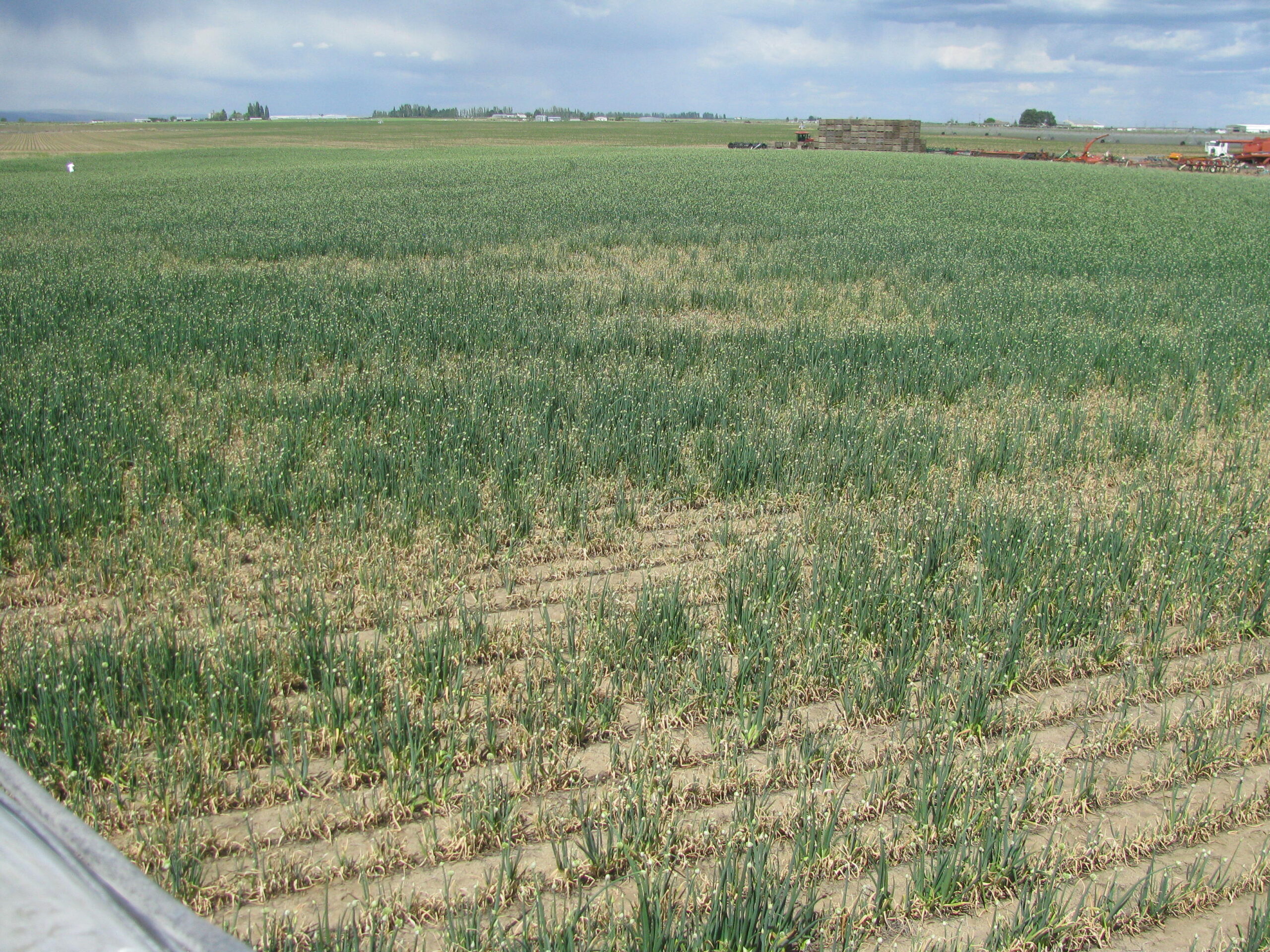
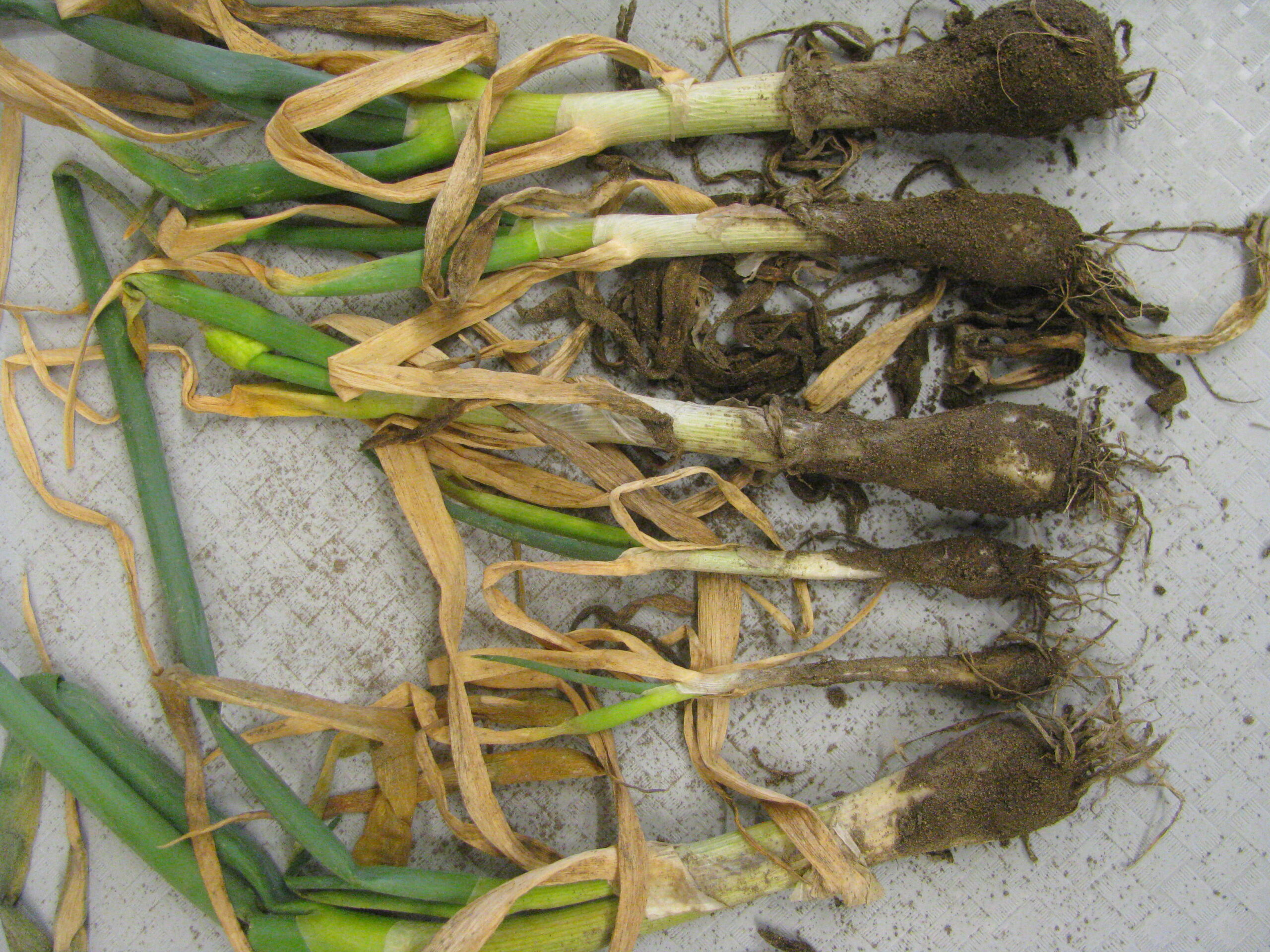
Photo Source: Lindsey du Toit, Washington State University
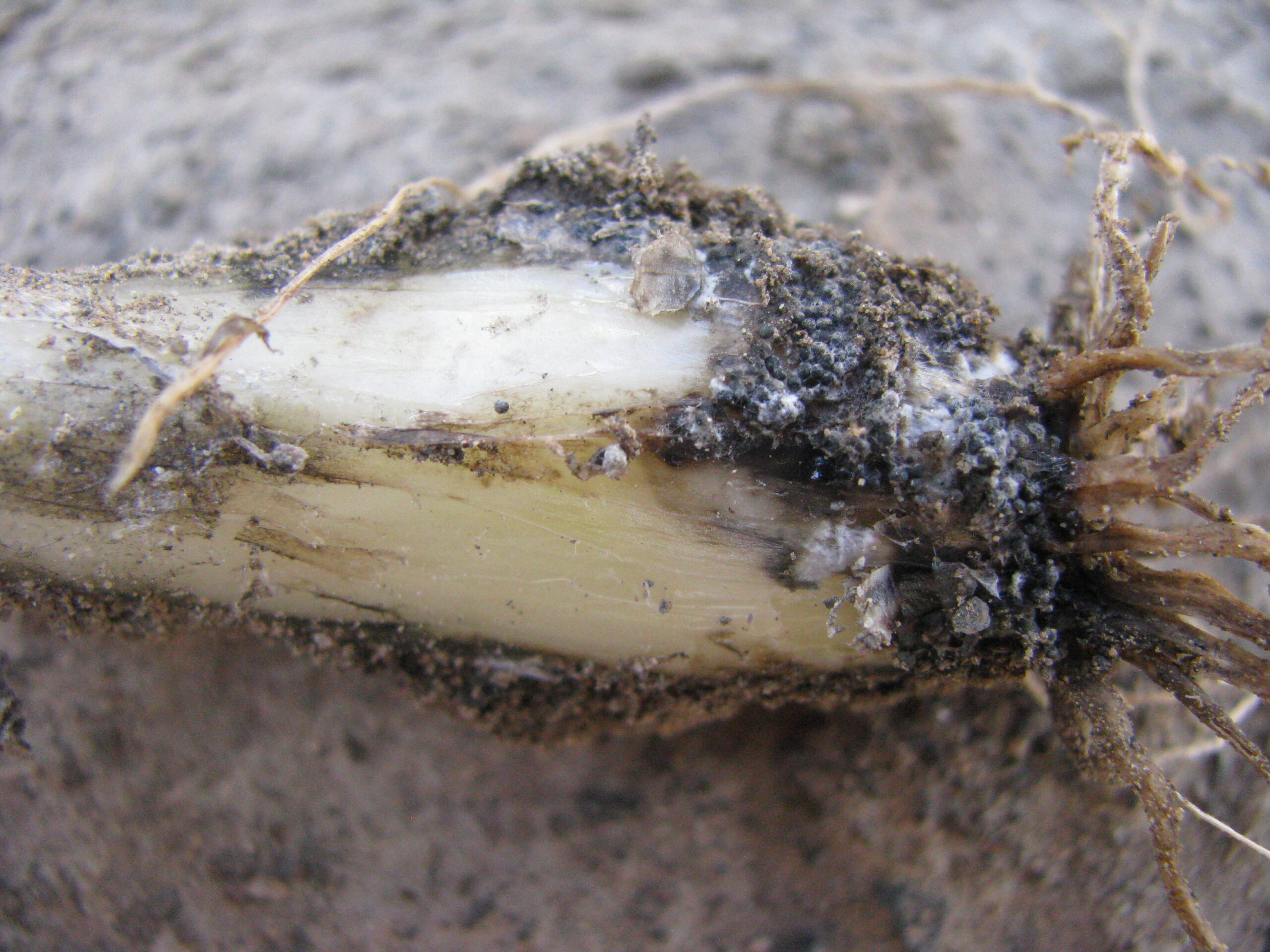
Photo Source: Lindsey du Toit, Washington State University
On-Line Resources:
- Video: Epidemiology and IPM of White Rot in Allium Crops, presented by Dr. Jeremiah Dung, Associate Professor in the Department of Botany and Plant Pathology at the Oregon State University Central Oregon Research and Extension Center, Madras, OR., August 21, 2020.
- Pacific Northwest Plant Disease Management Handbook: Onion (Allium cepa) – White Rot
- Onions, Garlic: White rot, Washington State University Hortsense.
- Soil-Borne Diseases (pdf), Onion ipmPIPE Diagnostic Pocket Series.
Insect/Mite Pests
Bulb mites/eriophyid mites
Common name: Bulb mites/eriophyid mites
Latin binomial: Aceria tulipae, an eriophyid mite, appears most commonly associated with damage to garlic in storage. Various bulb and eriophyid mites can feed on garlic cloves and bulbs of other Allium spp.
Host crops: Various Allium spp. as well as other plants or decaying organic matter. Severe infestations can cause desiccation of bulbs, and mites can vector garlic-rotting fungi.
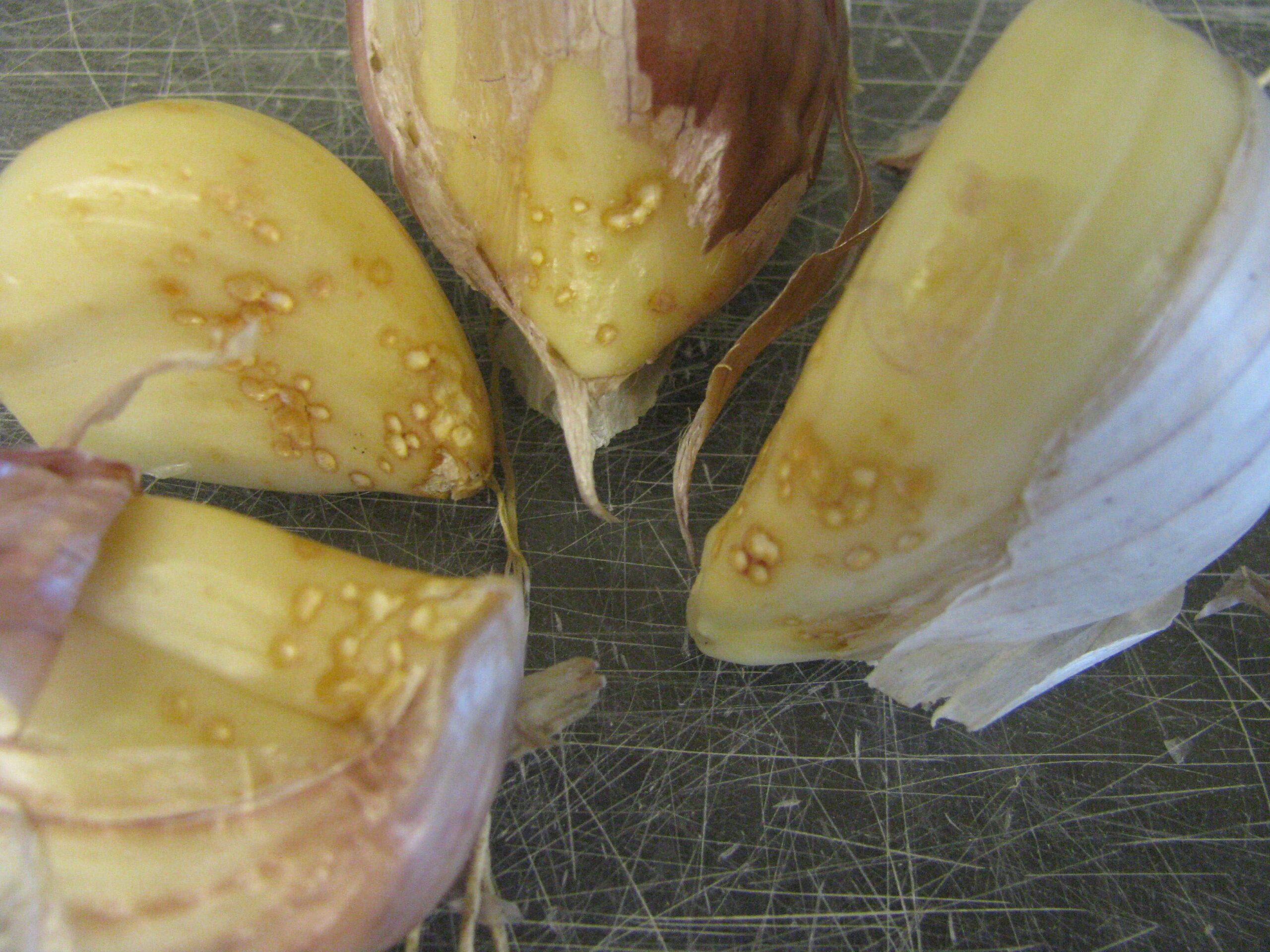
Photo Source: Lindsey du Toit, Washington State University
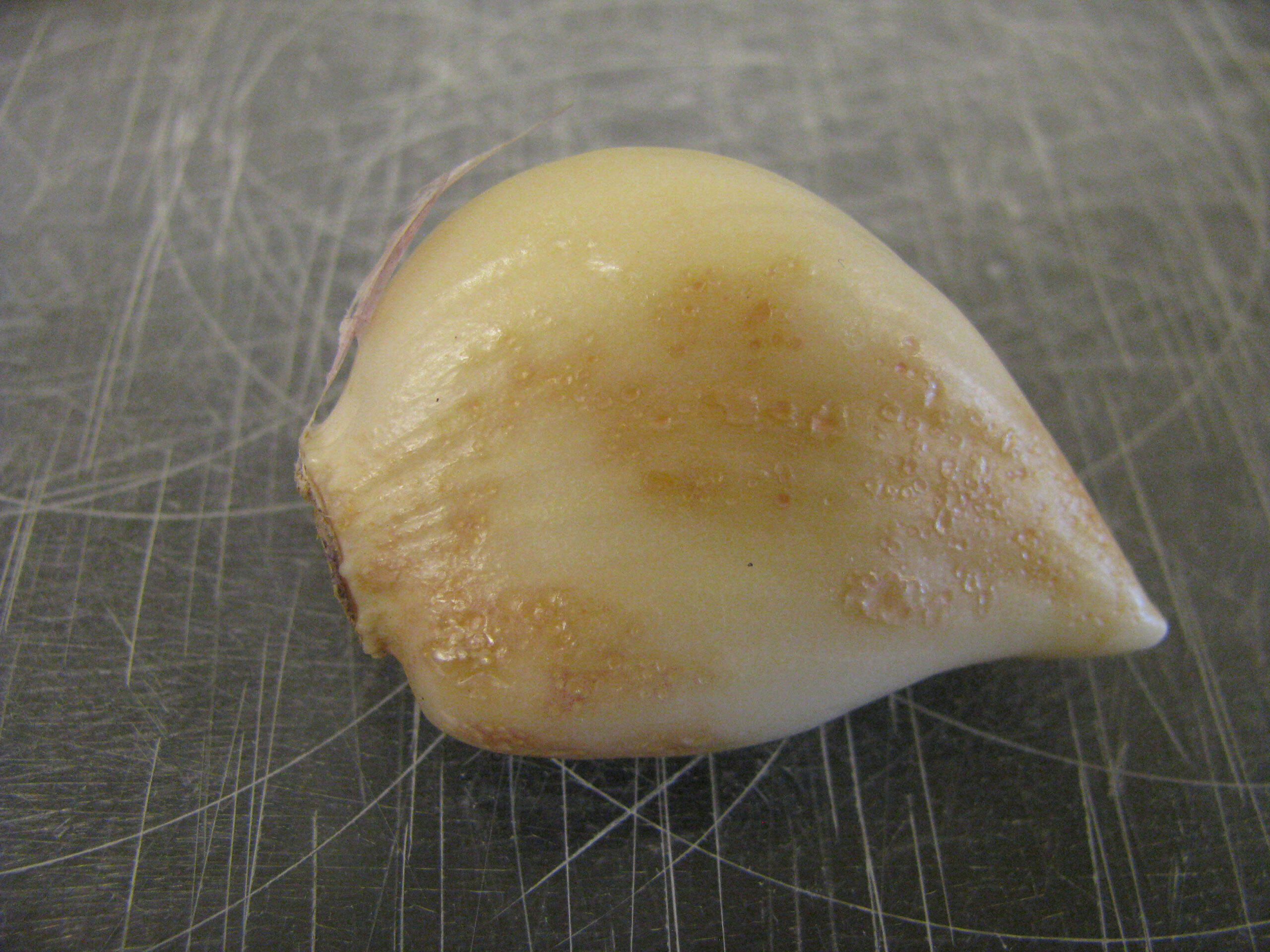
Photo Source: Lindsey du Toit, Washington State University
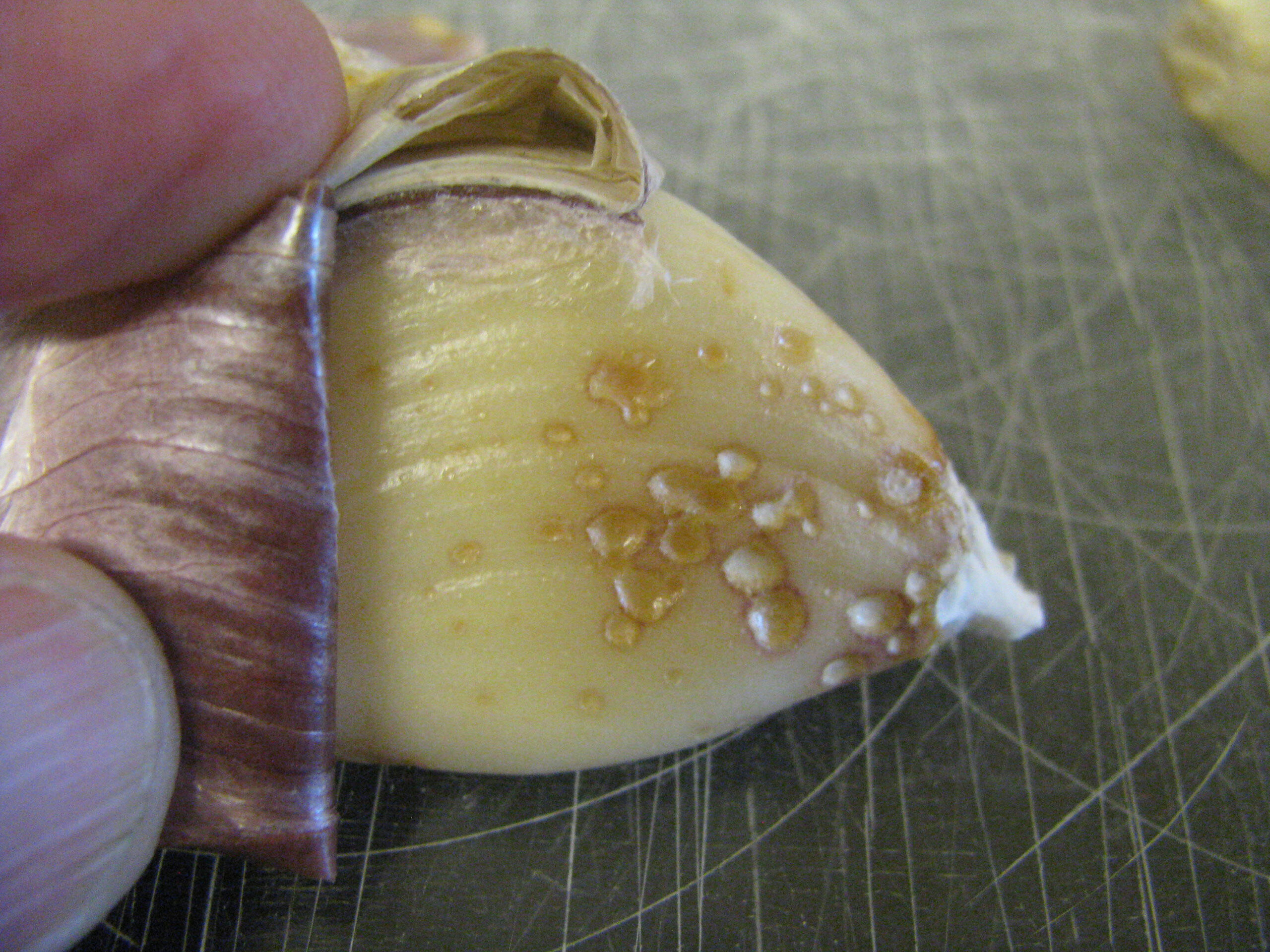
Photo Source: Lindsey du Toit, Washington State University
Online Resources:
- Oregon State University Plant Clinic
- Moth balls (the kind used to keep moths out of stored woolen sweaters) can help control mites in seed garlic, but should not be used for garlic that will be consumed.
Seedcorn maggot
Disease: Seedcorn maggot
Pathogen: Delia platura
Host Crops: Many vegetable crops including snap, kidney, and lima beans, onion, corn, turnip, pea, cabbage, and cucurbits. They cause the most damage in spring to newly emerging seedlings.
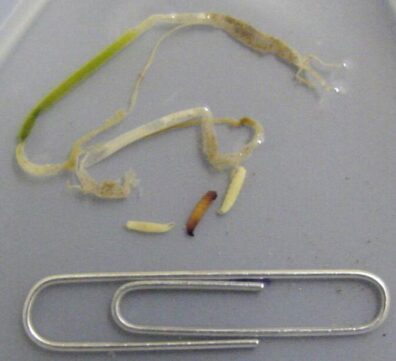
Photo Source: Lindsey du Toit, Washington State University
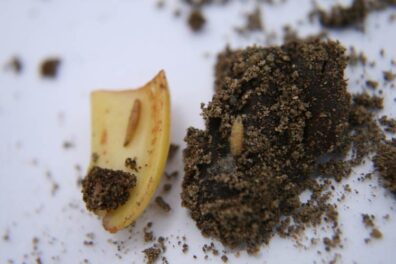
Photo Source: Tim Waters, WSU Extension Educator for Benton and Franklin Counties
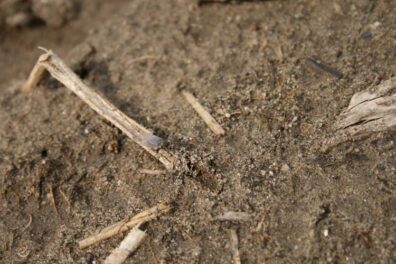
Photo Source: Tim Waters, WSU Extension Educator for Benton and Franklin Counties
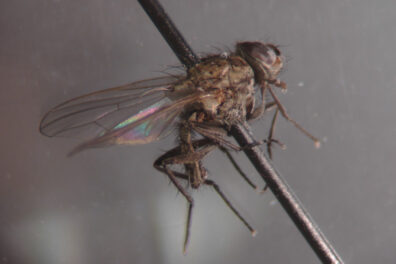
Photo Source: Tim Waters, WSU Extension Educator for Benton and Franklin Counties
On-Line Resources:
- Pacific Northwest Insect Management Handbook: Vegetable crop pests – Seedcorn maggot.
- Seed Corn Maggot. VegEdge, University of Minnesota.
- Seed Corn Maggot. UMass Amherst.
- See Diseases, pests, and other problems common to many vegetables: Seedcorn maggot.
Two-spotted spider mite
Common name: Two-spotted spider mite
Latin binomial: Tetranychus urticae (= T. bimaculatus = T. telarius).
Host crops: Numerous species of low-growing plants as well as a wide range of shrub and tree species. Normally not a significant pest of onion crops in the Pacific Northwest.

Photo Source: Carrie Wohleb, Washington State University Extension Educator
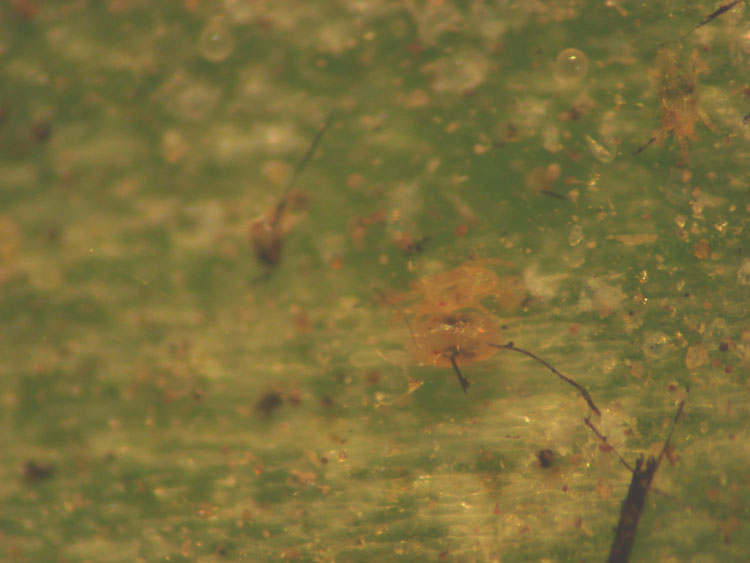
Photo Source: Carrie Wohleb, Washington State University Extension Educator
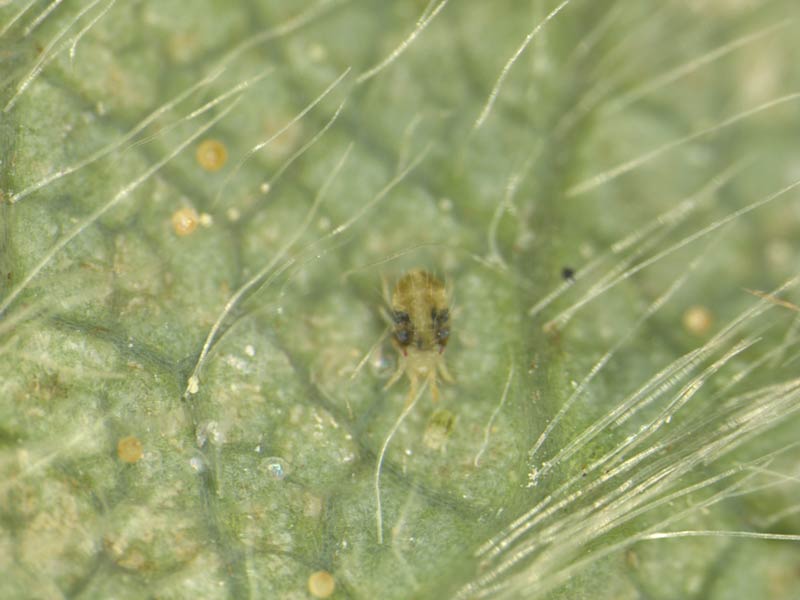
Photo Source: Silvia Rondon, Oregon State University
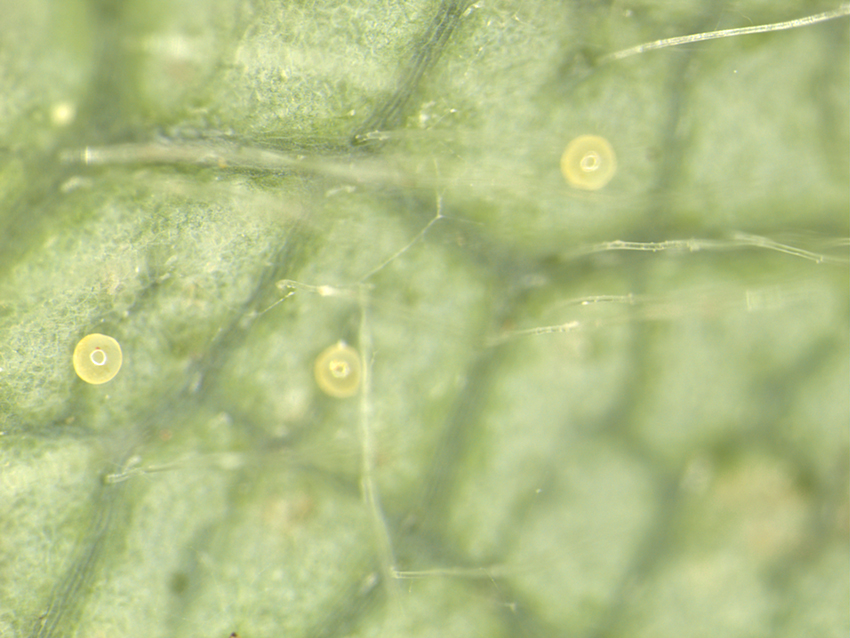
Photo Source: Silvia Rondon, Oregon State University
On-Line Resources:
- Pacific Northwest Insect Management Handbook. Chapter: Vegetables, Section: Common Pests of Vegetable Crops: Spider mite.
- Pacific Northwest Insect Management Handbook. Chapter: Supplement 1: Mite ID, Section: Common Mite Pests and Predators – pt. 1.
Thrips
Common name: Thrips, including western flower thrips, onion thrips, and other species.
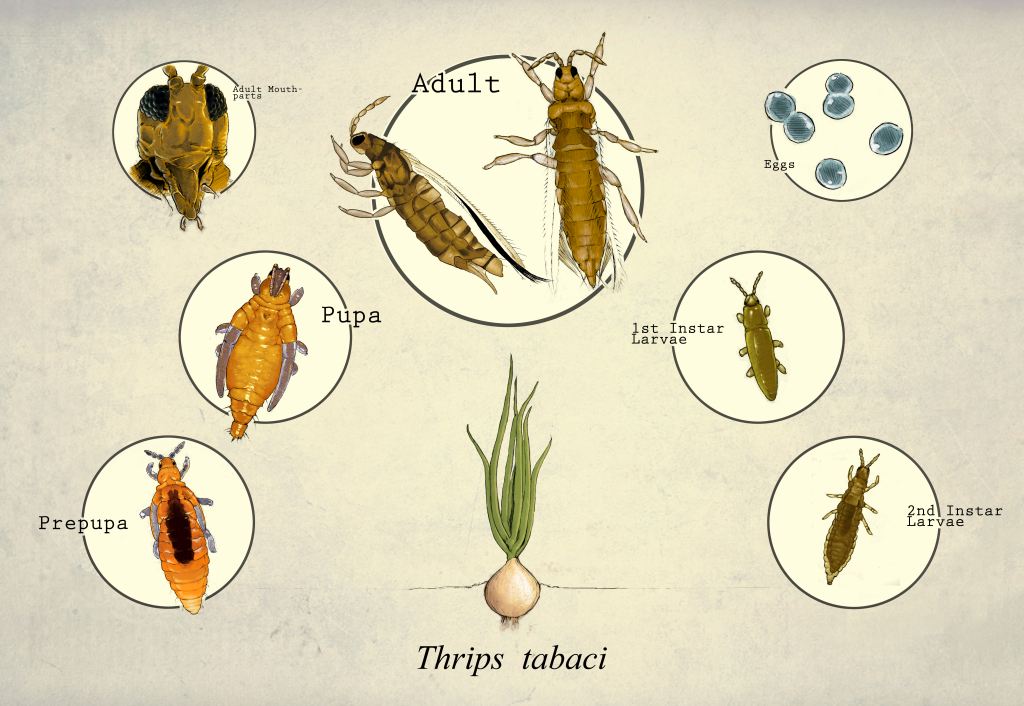
Latin binomial: Various thrips including Frankliniella occidentalis (western flower thrips) and Thrips tabaci (onion thrips). The latter is also a vector if Iris yellow spot virus (IYSV).
Host crops: Numerous plant species including many vegetables such as Basil, Broccoli, Cabbage,
Cauliflower, Cucumber, Onion, Potato, Pumpkin, Squash, Tomato and Watermelon.
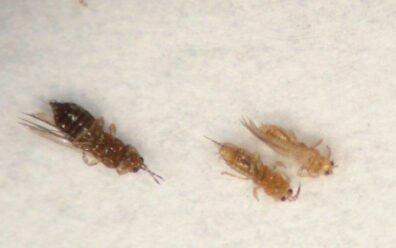
Photo Source: Michael Bush, WSU Extension, Yakima, WA
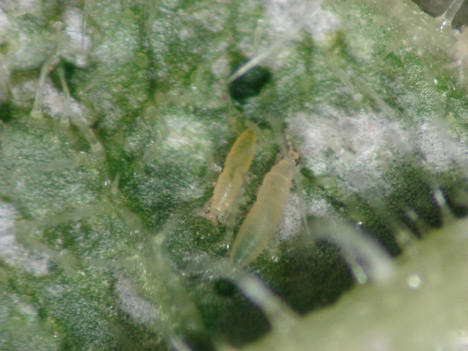
Photo Source: Michael Bush, WSU Extension, Yakima, WA
On-Line Resources:
- Pacific Northwest Insect Management Handbook. Chapter: Vegetables, Section: Onion pt. 2.
- Onion Thrips, Washington State University Extension Fact Sheet, FS126E.
- Vegetables: Onions, Garlic: Onion thrips, Washington State University Hortsense.
- Western Flower Thrips Thysanoptera: Thripidae Frankiniella occidentalis (pdf),
- Onion and Garlic Thrips, UC IPM Online, University of California.
- Life Cycle of Onion Thrips (Thrips tabaci),Diagram by: Dylan Vermul.
- See Diseases, pests, and other problems common to many vegetables: Western flower thrips.
Wireworm
Common name (of damaging stage): Wireworm (adults are called click beetles or snapping beetles)
Latin binomial: Ctenicera spp. and Limonius spp. Several kinds of wireworms are in the Pacific Northwest. Wireworms causing the most damage in irrigated areas are the Pacific Coast wireworm (Limonius canus), the sugar beet wireworm (L. californicus), the western field wireworm (L. infuscatus), and the Columbia Basin wireworm (L. subauratus). The Pacific Coast and sugar beet wireworms are the most common. Where annual rainfall is <15 inches, the Great Basin wireworm (Ctenicera pruinina) may be a problem, especially when irrigated crops are grown on sagebrush or dry wheat land. This species usually disappears after a few years of irrigation, but may be replaced by Limonius spp. which are favored by moist conditions. West of the Cascades, other wireworm species are pests, including Agriotes spp.
Host crops: All crops are susceptible to wireworm, but this pest is most destructive on beans, carrot, corn, grain, onion, potatoes, spinach seed crops, and other annual crops in the PNW.
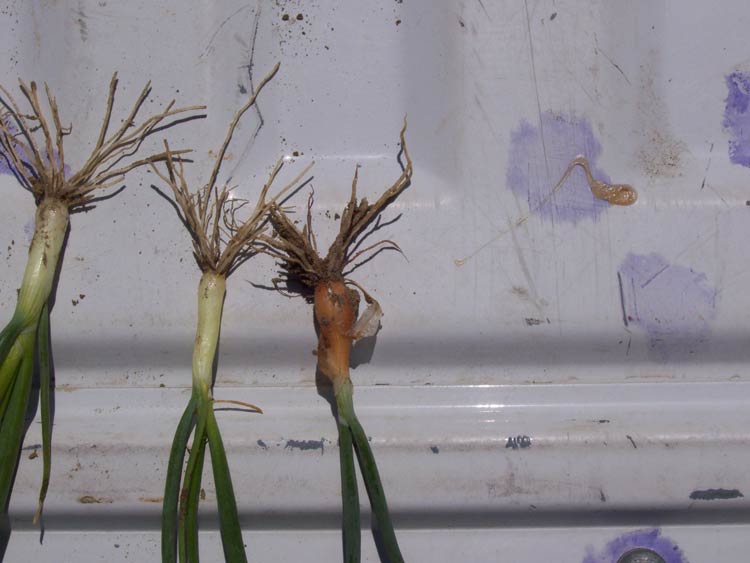
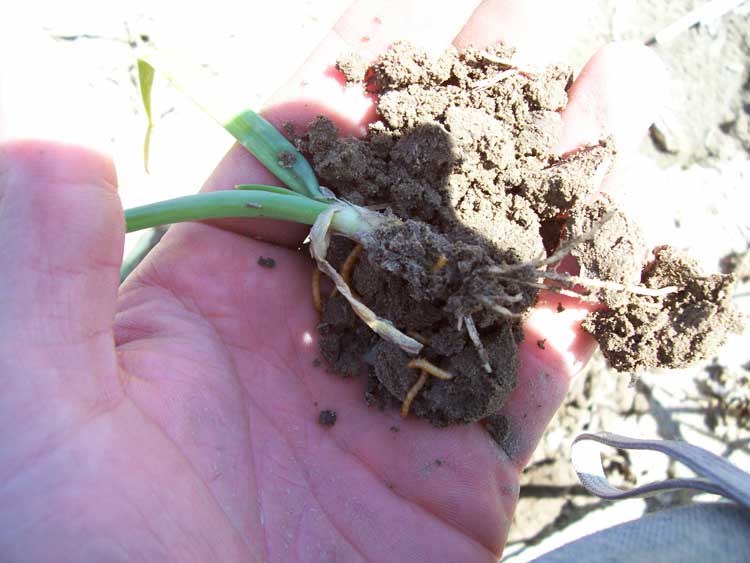
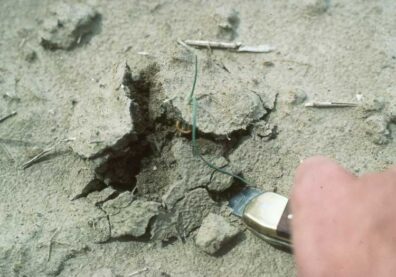
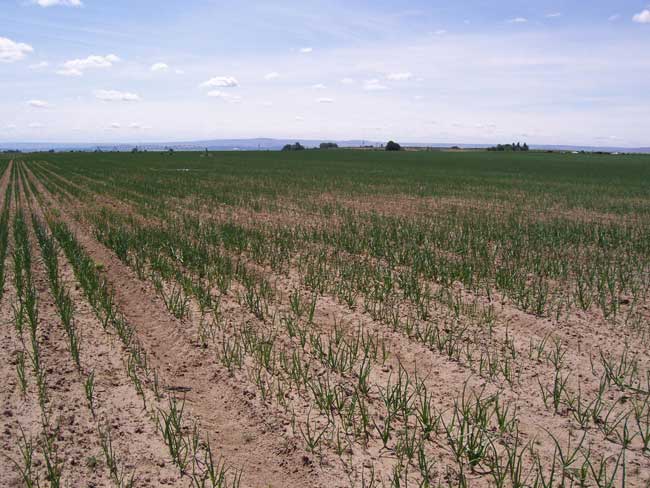
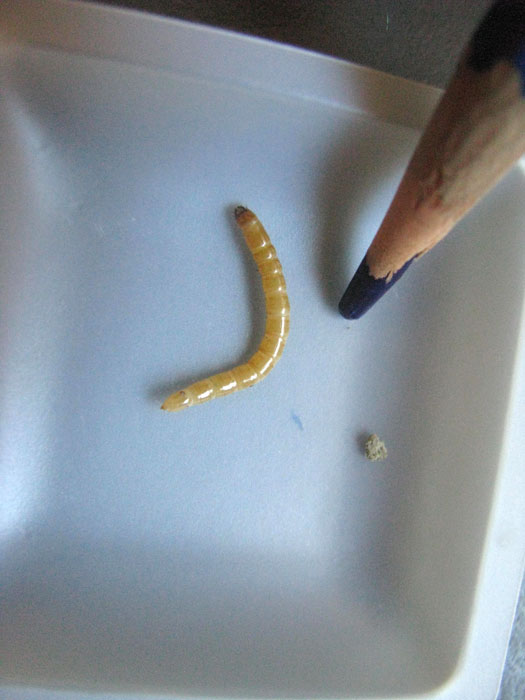
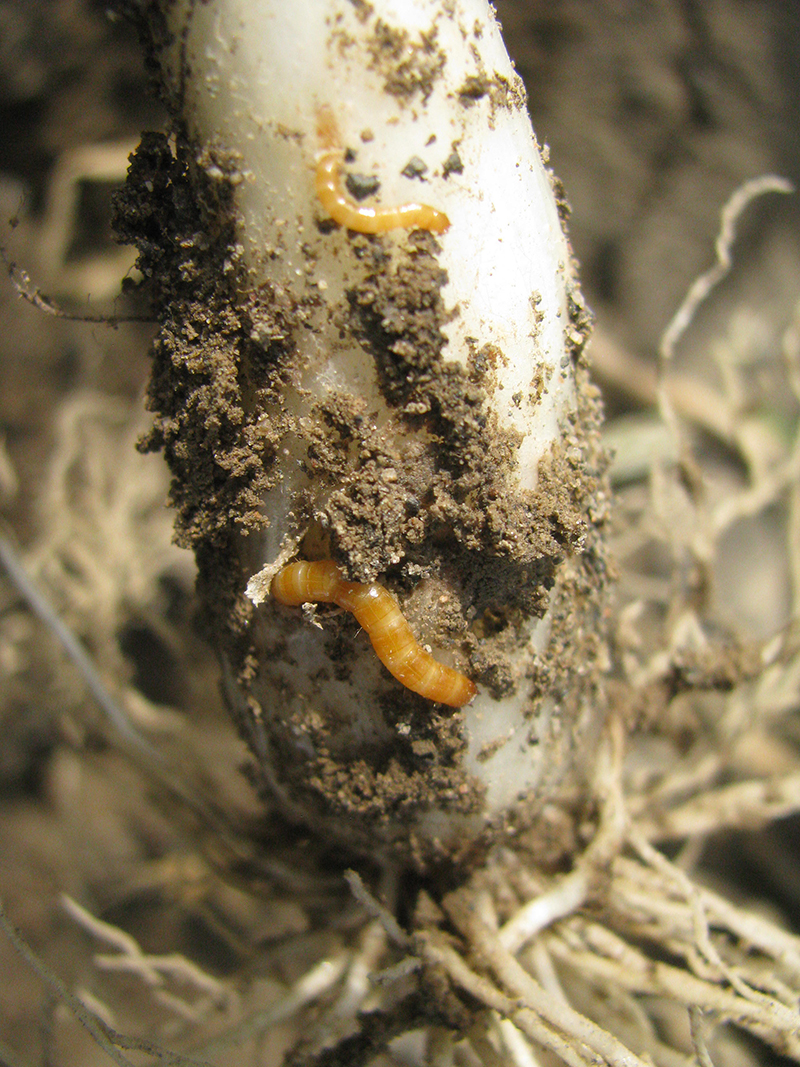
Photo Source: Lindsey du Toit, Washington State University
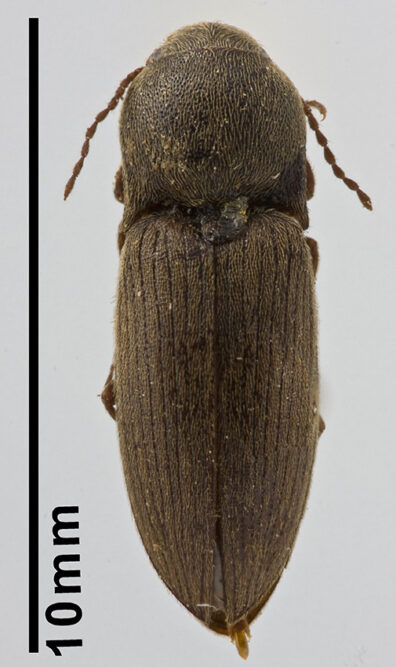
Photo Source: Oregon State University –Oregon State Arthropod Collection.
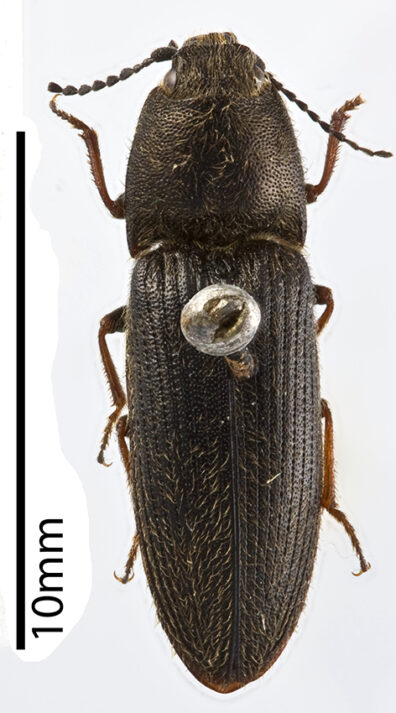
Photo Source: Oregon State University – Oregon State Arthropod Collection.
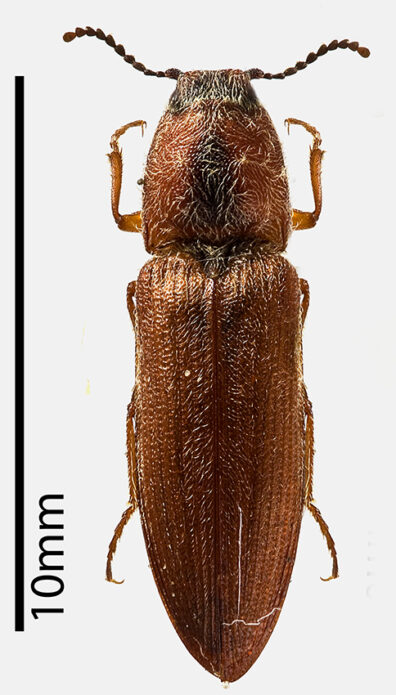
Photo Source: Oregon State University – Oregon State Arthropod Collection.
On-Line Resources:
- Pacific NorthwestInsect Management Handbook: Vegetable crop pests – Wireworm.
- Managing Wireworms in Vegetable Crops. Ontario Ministry of Agriculture and Food.
- Wireworms. VegEdge, University of Minnesota.
- Wireworm Field Guide (pdf) – A guide to the identification and control of wireworms, Syngenta Crop Protection Canada, Inc.
- Wireworm Biology and Nonchemical Management in Potatoes in the Pacific Northwest, N. Andrews, M. Ambrosino, G. Fisher, and S.I. Rondon, Pacific Northwest Extension Publication no. PNW607.
- See Diseases, pests, and other problems common to many vegetables: Wireworm.
Weeds
Dodder
Common Name: Dodder
Latin binomial:Cuscuta spp.
Plants affected: Dodder is a parasitic plant that feeds on many other plant species. Dodder cannot photosynthesize, but produces haustoria that penetrate the host plant to absorb water and nutrients. Small, white to cream flowers are produced.
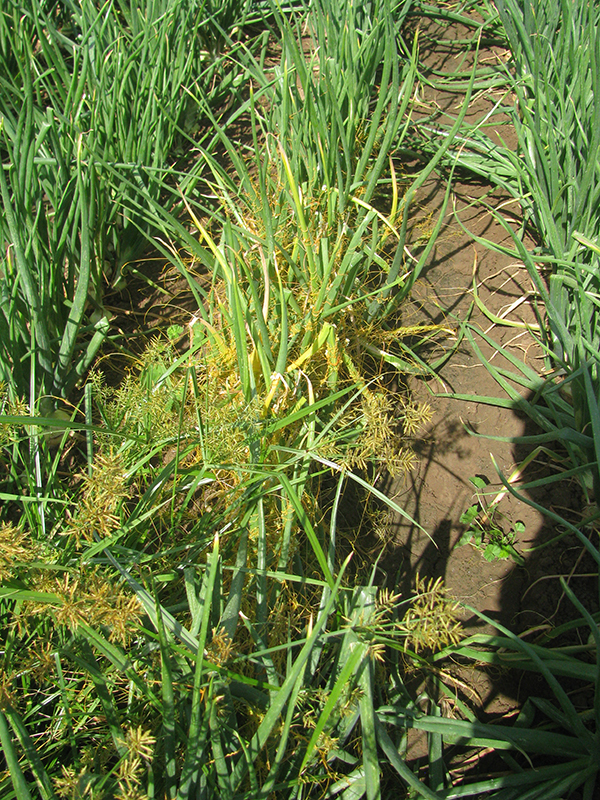
Photo Source: Lindsey du Toit, Washington State University
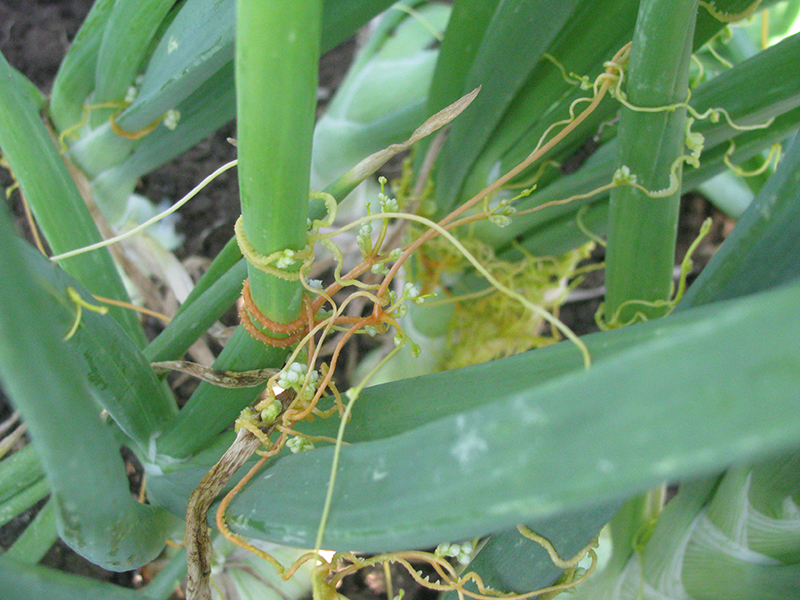
Photo Source: Lindsey du Toit, Washington State University
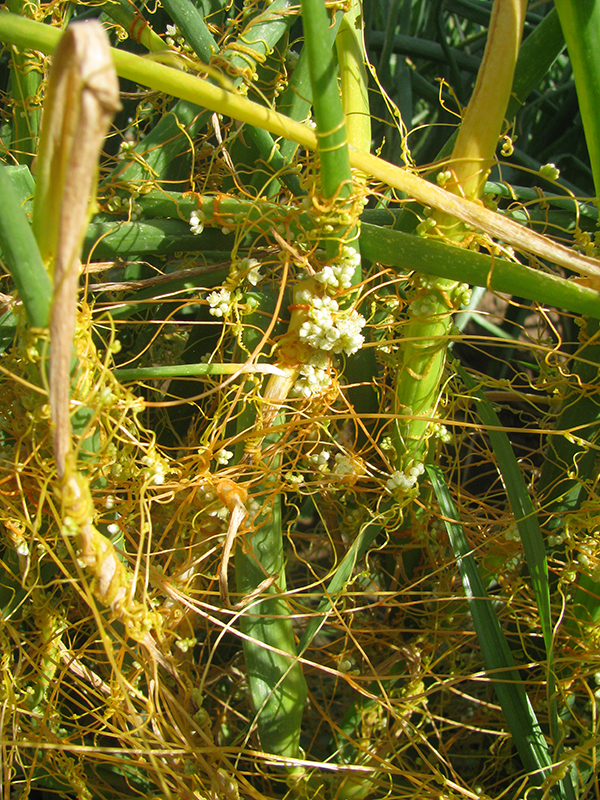
Photo Source: Lindsey du Toit, Washington State University
Online Resources:.
Yellow nutsedge
Common name: Yellow nutsedge
Latin binomial: Cyperus esculentus (Cyperaceae)
Plants affected: Any annual crop; the most seriously affected crops include onion and other plants with a light canopy and narrow range of herbicides available for use.
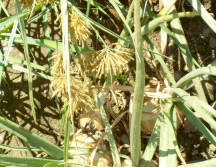
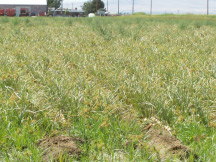
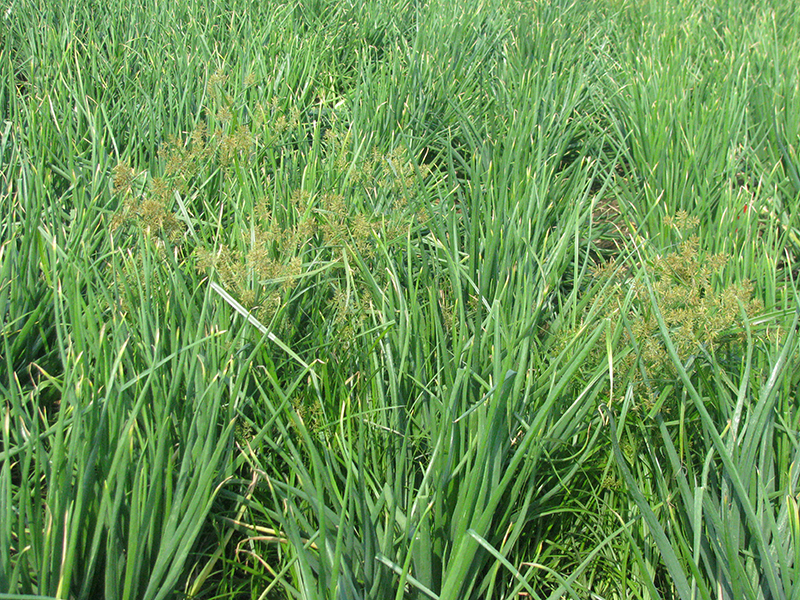
Photo source: Lindsey du Toit, Washington State University
On-Line Resources:
- Yellow Nutsedge (pdf). Identification & Management of Emerging Vegetable Problems in the Pacific Northwest, Pacific Northwest Vegetable Extension Group.
- Diseases, pests, and other problems common to many vegetables: Yellow Nutsedge.
Abiotic Problems
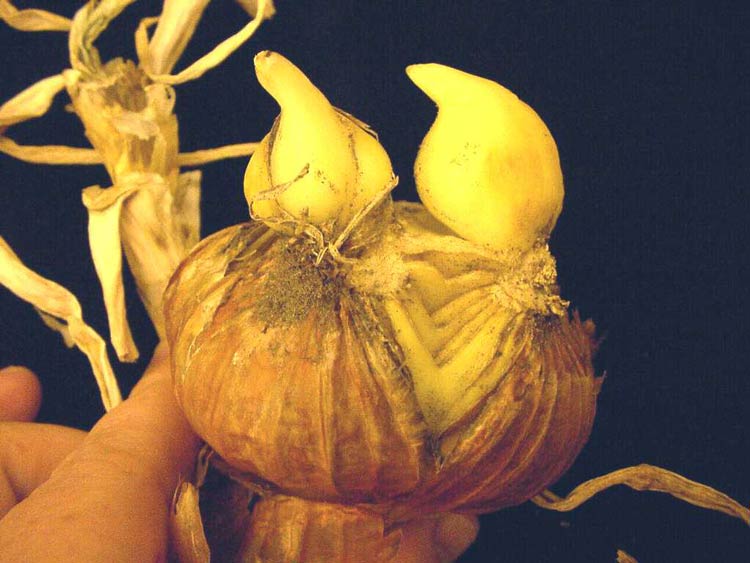
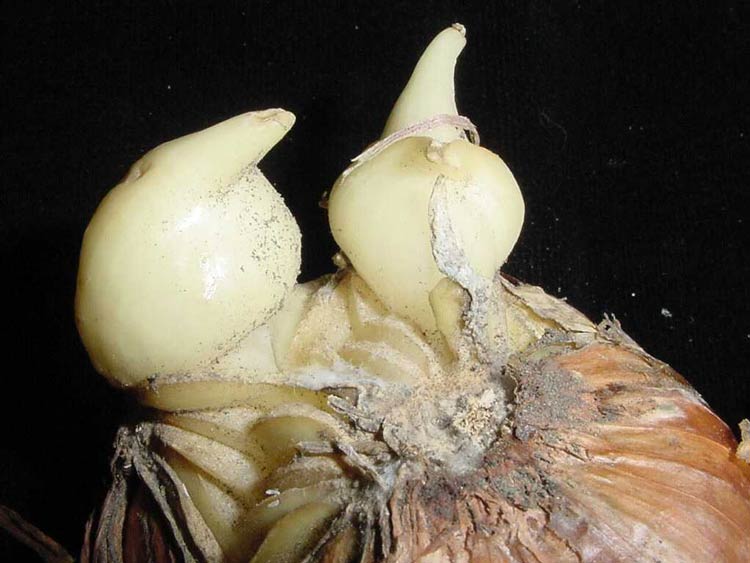
Basal plate splitting, basal plate blow-out
Problem: Basal plate splitting, basal plate blow-out
Causal agent: Uneven irrigation of onion fields increases the incidence of this disorder. If the soil is repeatedly over-irrigated, dried, and over-irrigated again, onion bulbs are likely to develop split basal plates. The wounding provides an opportunity for secondary microorganisms and bulb mites to colonize the bulbs.
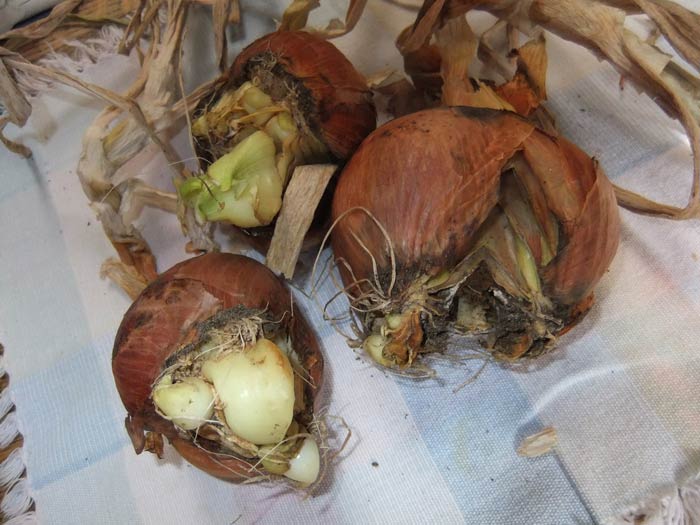
Onion internal dry scale
Abiotic Problem: Onion internal dry scale
Cause: The exact cause of onion internal dry scale remains to be verified, but the problem is most prevalent and severe in onion bulb crops harvested after summers with extreme periods of heat stress, e.g., in 2014 and 2015 in the Columbia Basin of Washington/Oregon and the Treasure Valley of Oregon. Several dry, internal, fleshy scales in the developing bulb collapse in the upper part of the bulb, either partially or completely. The dry scales can readily be colonized by bacteria, fungi, or yeasts which may lead to development of bulb rots.
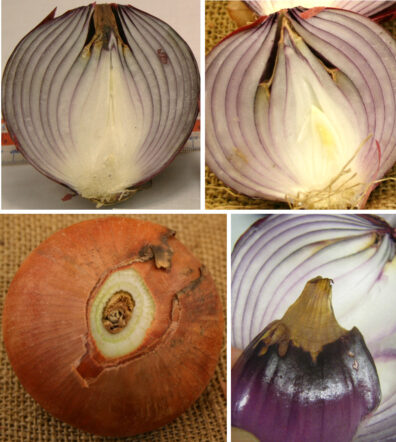
Photo Source: Lindsey du Toit, Washington State University, and onion growers in the Columbia Basin
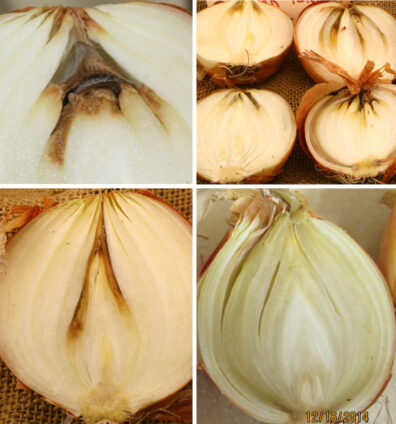
Photo Source: Lindsey du Toit, Washington State University
Online Resources:
- Internal Dry Scale and Associated Bulb Rots of Onion. A common problem was observed in the 2014–2015 season and the 2015–2016 onion-growing season on red, white, and yellow cultivars—internal dry scale. Careful monitoring of crop moisture demand to increase our understanding of onion physiology, particularly close to harvest, will help in the development of effective management practices to reduce the impact of internal dry scale on this important region of onion production.
Herbicide Injury
Problem: Herbicide injury
Causal agent: Onion and other Allium spp. can be injured by herbicides, e.g., as a result of drift of herbicides from nearby crops, from residual carryover effects when onions are planted into soil treated with herbicides from a previous crop, or from direct contact injury.
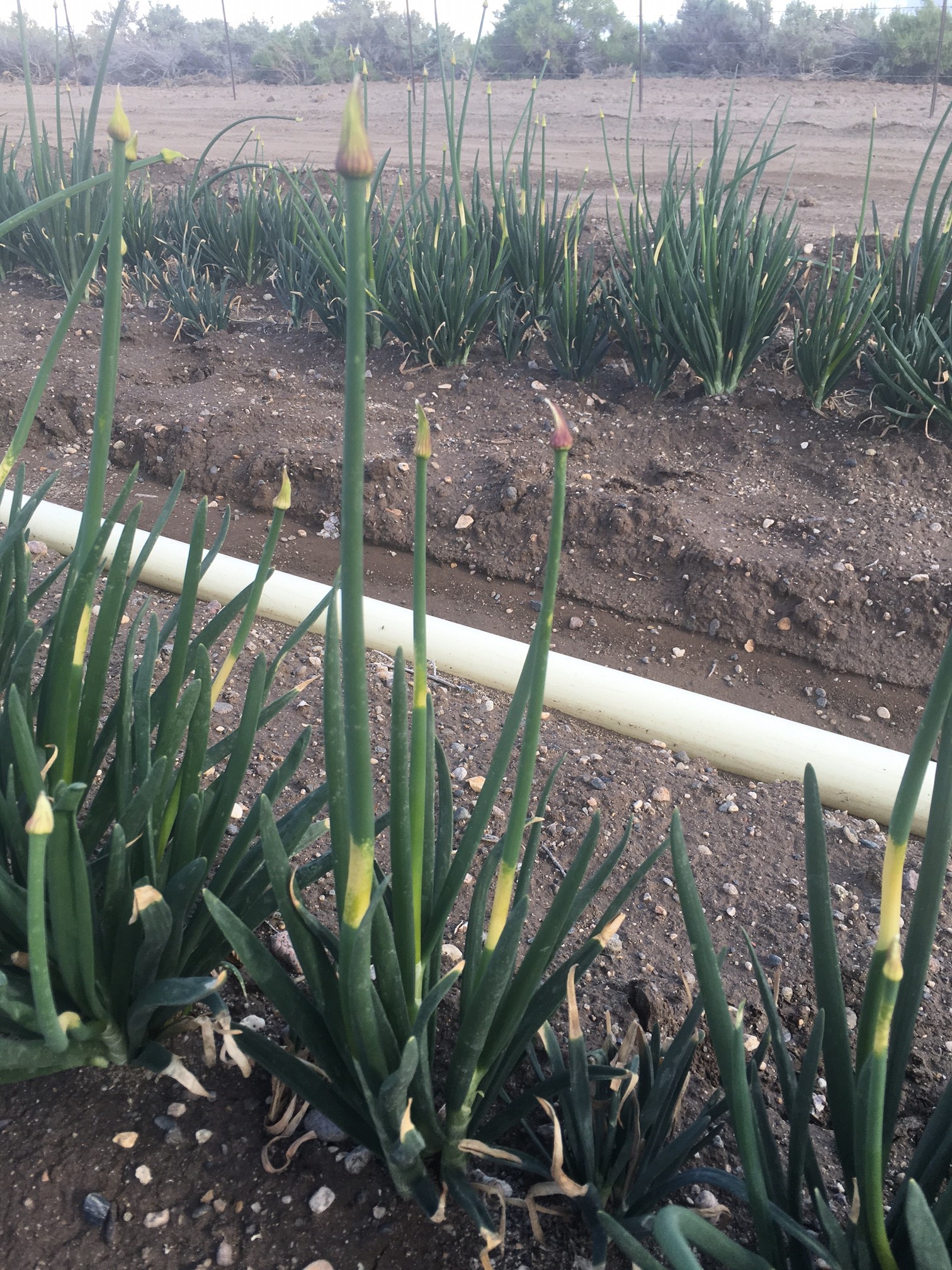
Photo Source: Onion seed crop grower
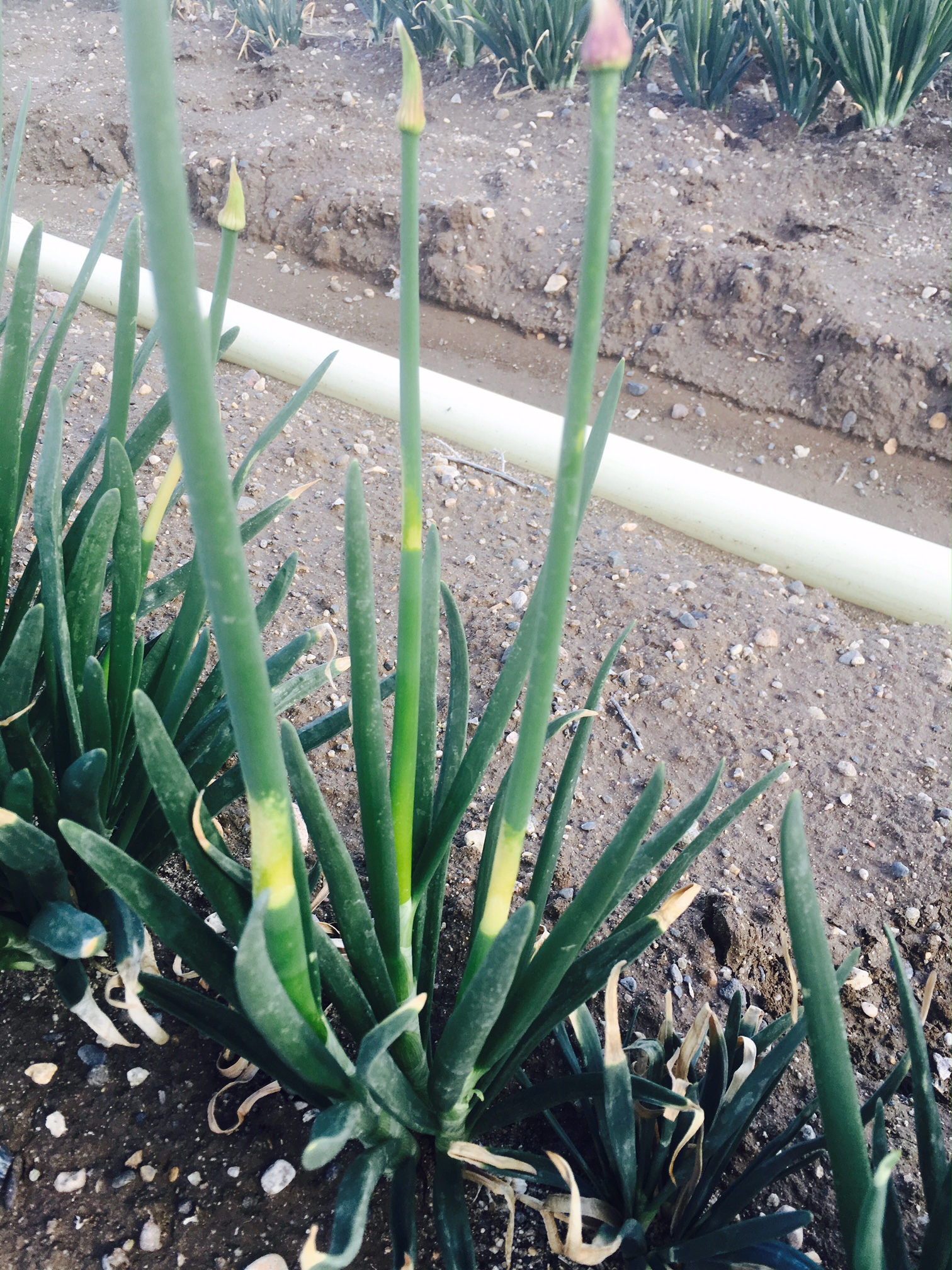
Photo Source: Onion seed crop grower
Online Resources:
- Herbicide Symptoms, University of California, Division of Agriculture and Natural Resources.
- Herbicide Modes and Action and Symptoms on Plants (pdf), Richard Smith, Farm Advisor, University of California Cooperative Extension.
If you need the content provided on this site in an alternate format or for further information on the Vegetable Seed Pathology program,
please contact: Lindsey du Toit at dutoit@wsu.edu or at 360-848-6140.
Our pages provide links to external sites for the convenience of users. WSU Extension does not manage these external sites, nor does Extension review, control, or take responsibility for the content of these sites. These external sites do not implicitly or explicitly represent official positions and policies of WSU Extension.