Diseases
Insect/Mite Pests
Abiotic Problems
(Click on photo to enlarge)
Diseases
Curly top
Disease: Curly top
Pathogen: Various strains of Beet curly top virus (BCTV), which are vectored by the beet leafhopper (Circulifer tenellus)
Host crops: Numerous plant species including many vegetables such as bean, beet, carrot, eggplant,
coriander, pepper, potato, tomato, various cucurbits such as squash, cucumber, pumpkin, watermelon, etc.
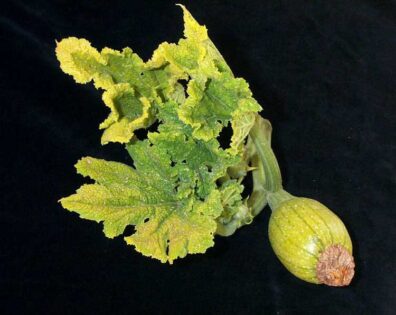
Photo Source: Ken Eastwell, Washington State University virologist
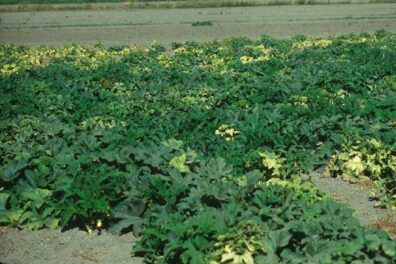
Photo Source: Phil Ham, OSU plant pathologist
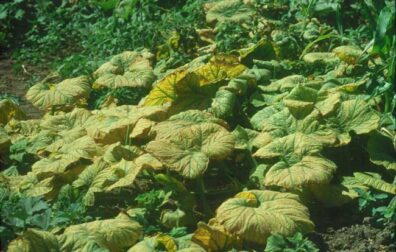
Photo Source: Phil Ham, OSU plant pathologist
Online Resources:
Damping-off/Seedling blight
Disease: Damping-off/Seedling blight
Pathogen: Pythium
Host crops: Most vegetables are susceptible to damping-off/seedling blight.
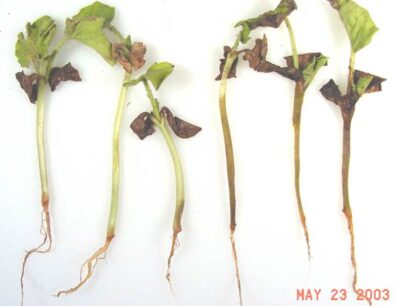
Online Resources:
- Pacific Northwest Plant Disease Management Handbook: Watermelon (Citrullus lanatus) – Damping-off
- See Diseases, pests, and other problems common to many vegetables: Damping-off/seedling blight.
Verticillium wilt
Disease: Verticillium wilt
Pathogen: Verticillium species
Host crops: Numerous vegetables including many brassica vegetables (but not broccoli), cucumber,
eggplant, pepper, potato, pumpkin, radish, spinach, tomato, watermelon, etc.

Photo Source: Sacha Johnson
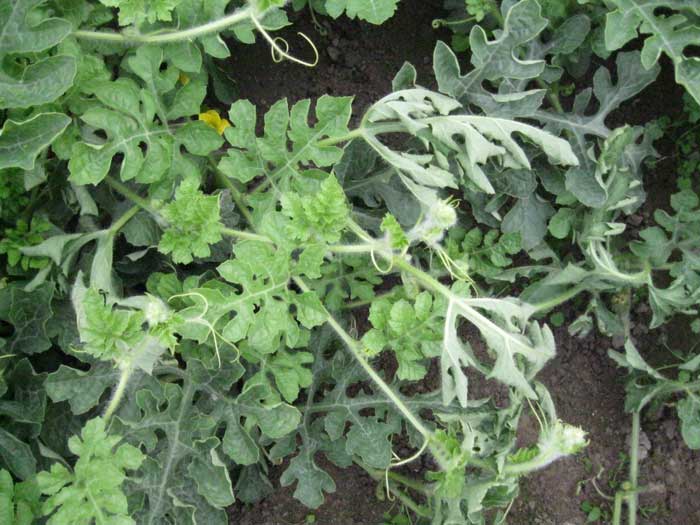
Photo Source: Sacha Johnson

Photo Source: Sacha Johnson
Online Resources:
- Pacific Northwest Plant Disease Management Handbook: Watermelon (Citrullus sp.) – Verticillium Wilt.
- See Diseases, pests, and other problems common to many vegetables: Verticillium Wilt.
Insect/Mite Pests
Western flower thrips
Common name: Western flower thrips
Latin binomial: Frankliniella occidentalis.
Host crops: Basil, Cabbage, Cauliflower, Cucumber, Onion, Potato, Pumpkin, Squash, Tomato.
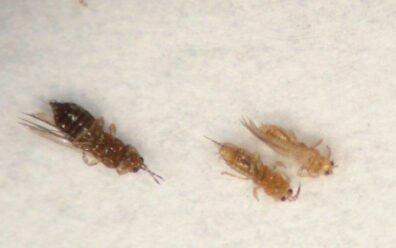
Photo Source: Michael Bush, WSU Extension, Yakima, WA
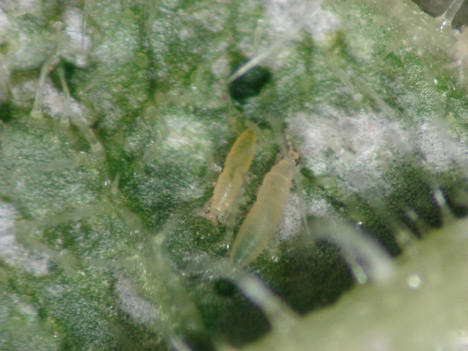
Photo Source: Michael Bush, WSU Extension, Yakima, WA
Online Resources:
- Western Flower Thrips Thysanoptera: Thripidae Frankiniella occidentalis (pdf).
- Cucurbits: Thrips, UC IPM Online, University of California.
- See Diseases, pests, and other problems common to many vegetables: Western flower thrips.
Abiotic Problems Common to Cucurbits
Edema
Problem: Edema
A physiological problem: prominent when air is cooler than the soil, soil moisture is high, and relative humidity is high. The low plant transpiration rates combined with an increase in water absorption by roots from the soil leads to increased cell turgor pressure, resulting in eruption of epidermal cells as the inner cells enlarge. Protrusion of the inner cells causes epidermal cells to die and discolor, resulting in a ’warty’ appearance that can be misidentified as a disease. In addition to foliar symptoms on some hosts, many cucurbit crops develop wart-like protruberances on the fruit.

Photo Source: Lindsey du Toit, Washington State University.
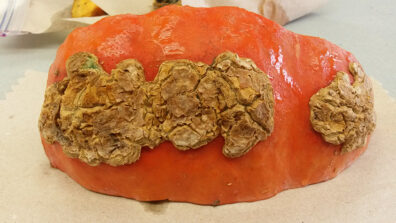
Photo Source: Phil Hamm, Oregon State University.
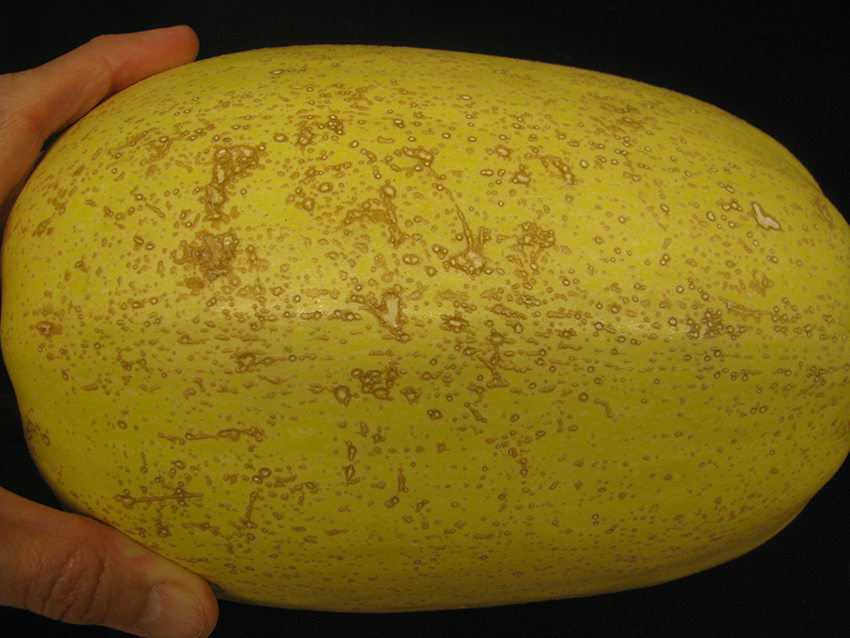
Photo Source: Lindsey du Toit, Washington State University
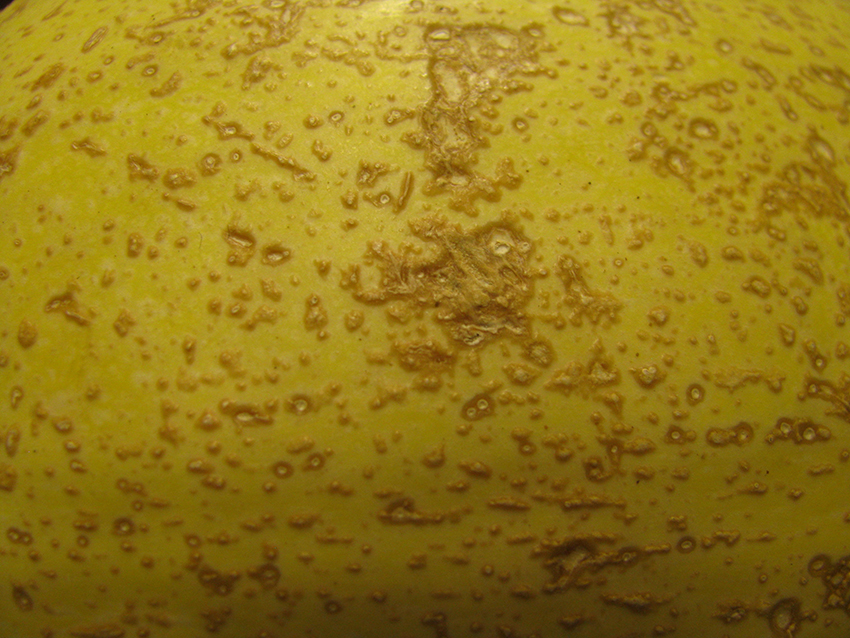
Photo Source: Lindsey du Toit, Washington State University
On-Line Resources:
- OEDEMA – Ontario CropIPM, diseases-and-disorders.
- Edema – Plant Disease and Insect Clinic, North Carolina State University.
If you need the content provided on this site in an alternate format or for further information on the Vegetable Seed Pathology program,
please contact: Lindsey du Toit at dutoit@wsu.edu or at 360-848-6140.
Our pages provide links to external sites for the convenience of users. WSU Extension does not manage these external sites, nor does Extension review, control, or take responsibility for the content of these sites. These external sites do not implicitly or explicitly represent official positions and policies of WSU Extension.