Diseases
Insect/Mite Pests
Abiotic Problems
(Click on photo to enlarge)
Diseases
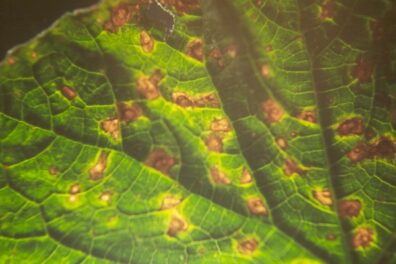
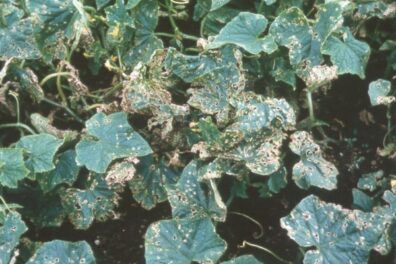
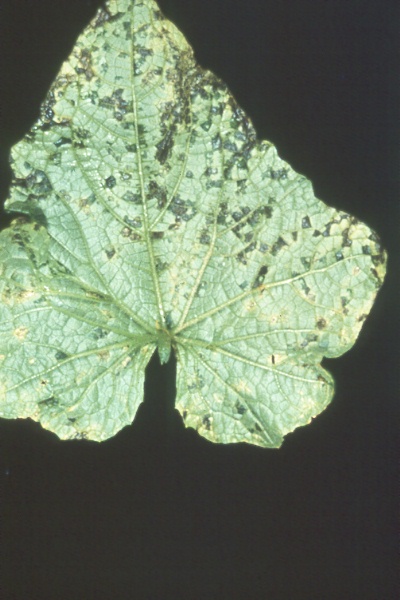
Angular leaf spot
Disease: Angular leaf spot
Pathogen: Pseudomonas syringae pv. lachrymans
On-Line Resources:
- Pacific Northwest Plant Disease Management Handbook: Cucumber (Cucumis sativus) – Angular Leaf Spot.
- Cucumber, Pumpkin, Squash: Angular leaf spot, Washington State University Hortsense.
Black root rot
Disease: Black root rot
Pathogens: Diaporthe sclerotioides (synonym Phomopsis sclerotioides)
Host crops: All cucumber cultivars are susceptible. Pumpkin and squash are much more tolerant than cucumber. The squash rootstock Cucurbita ficifolia is fairly tolerant. Black root rot of cucumber was first reported in North American in greenhouse cucumber production in British Columbia in 1972. The disease is a problem in greenhouse cucumber production in Europe and in cucumber fields in Japan. Cucumber root rot was found in cucumber crops in fields in northwestern Washington in 2012 and 2017. Cucumber plants start to wilt late in the season, usually after fruit have formed. Wilting develops rapidly over the whole plant, usually without yellowing (chlorosis) of the leaves. Symptoms on roots include salmon-colored to gray or brown lesions, often with black lines (pseudostromata) that demarcate infected areas of roots. Distinct, rectangular, black pseudosclerotia form in individual cells of the cortex. The crown and tap root of infected plants become dry and corky. D. sclerotioides occasionally forms black pycnidia in infected roots and crowns, within which only alpha conidia form (no beta conidia). In contrast, pycnidia produced by the cucumber Phomopsis fruit rot pathogen, Diaporthe cucurbitae, form both alpha and beta conidia. D. cucurbitae does not form pseudosclerotia or the characteristic black lines (pseudostromata) associated with cucumber black root rot. Cucumber black root rot is favored by acid soils (pH < 6.5), water deficit, heat stress, and development of fruit that increase transpirational demand on the root system.
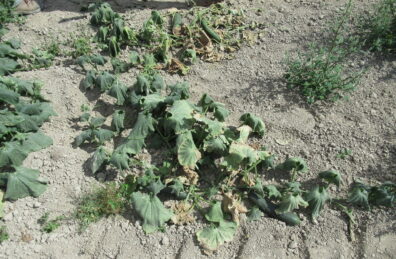
Photo Source: Haruka Fukada, Washington State University
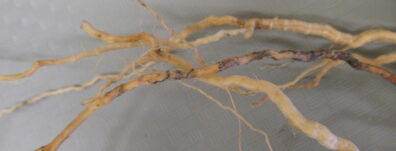
Photo Source: Haruka Fukada, Washington State University
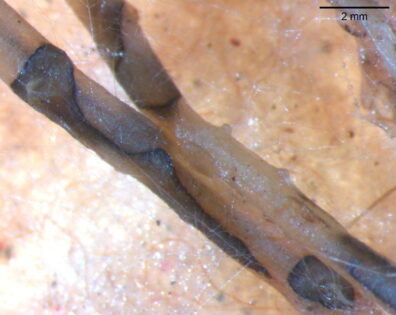
Photo Source: Haruka Fukada, Washington State University
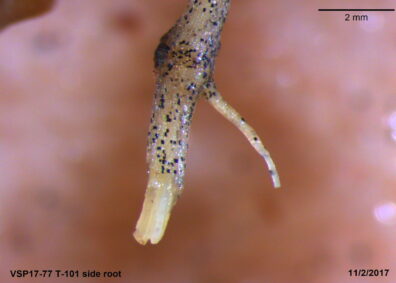
Photo Source: Haruka Fukada, Washington State University
Online Resources:
- Black Root of Cucurbits, Disease Guide, Seminis Vegetable Seeds, Inc.
- Cucumber (Cucumis sativa)-Black Root Rot, PNWHandbooks.
Cultural control:
- Do not plant cucurbits for consecutive years in the same field.
- Use limestone to increase the soil pH above 6.5.
- Avoid moisture stress.
- Avoid moving soil from infested fields on equipment, shoes, vehicle tires, etc.
- Remove diseased plants after harvest.
- Rootstocks of the squash Cucurbita ficifolia are not as susceptible to cucumber black root rot as Cucumis sativa.
Chemical control:
Soil fumigation can reduce the population of propagules (pseudosclerotia and pseudostramata) of D. sclerotioides in the soil but will not eliminate the pathogen. Similarly, soil steam sterilization can control black root rot, although the fungus can reinvade steamed soil rapidly.
Curly top
Disease: Curly top
Pathogen: Various strains of Beet curly top virus (BCTV), which are vectored by the beet leafhopper (Circulifer tenellus)
Host crops: Numerous plant species including many vegetables such as bean, beet, carrot, eggplant, coriander, pepper, potato, tomato, various cucurbits such as squash, pumpkin, watermelon, watermelon, etc.
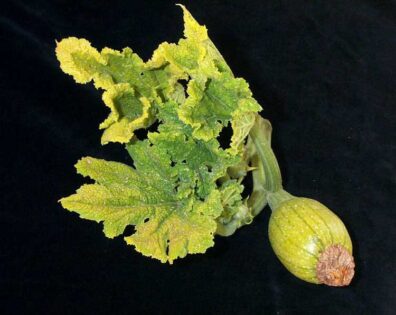
Photo Source: Ken Eastwell, Washington State University virologist
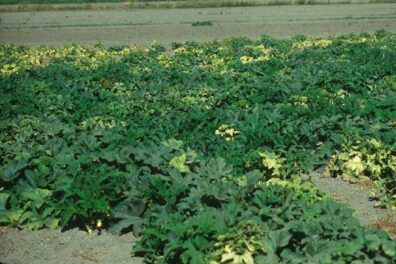
Photo Source: Phil Ham, OSU plant pathologist
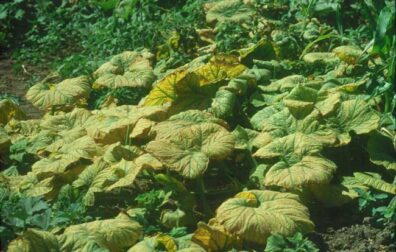
Photo Source: Phil Ham, OSU plant pathologist
On-Line Resources:
Downy mildew
Disease: Downy Mildew
Pathogen: Pseudoperonospora cubensis

Photo Source: Lindsey du Toit, Washington State University
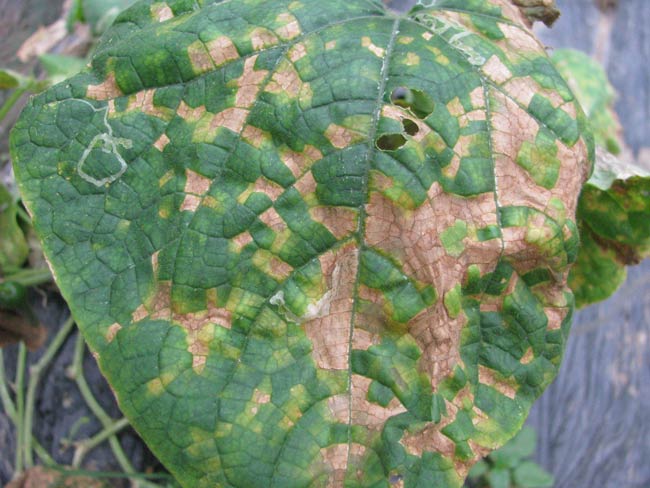
Photo Source: Lindsey du Toit, Washington State University
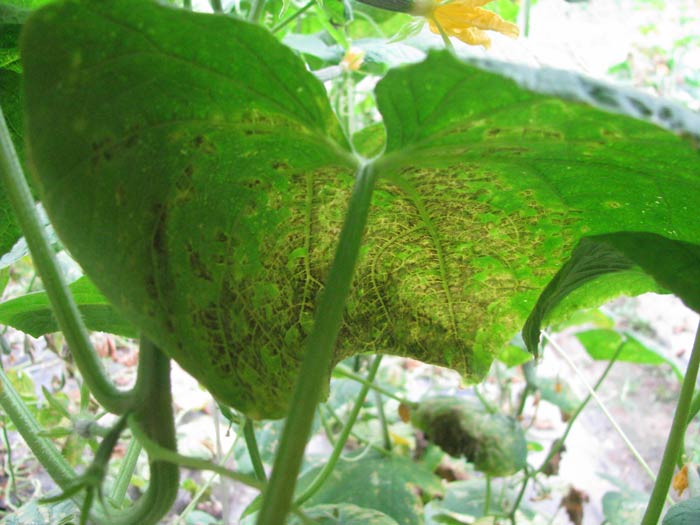
Photo Source: Lindsey du Toit, Washington State University
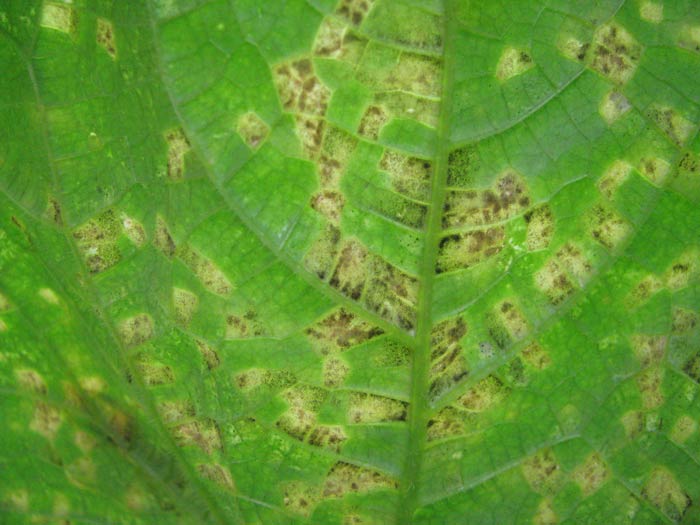
Photo Source: Lindsey du Toit, Washington State University
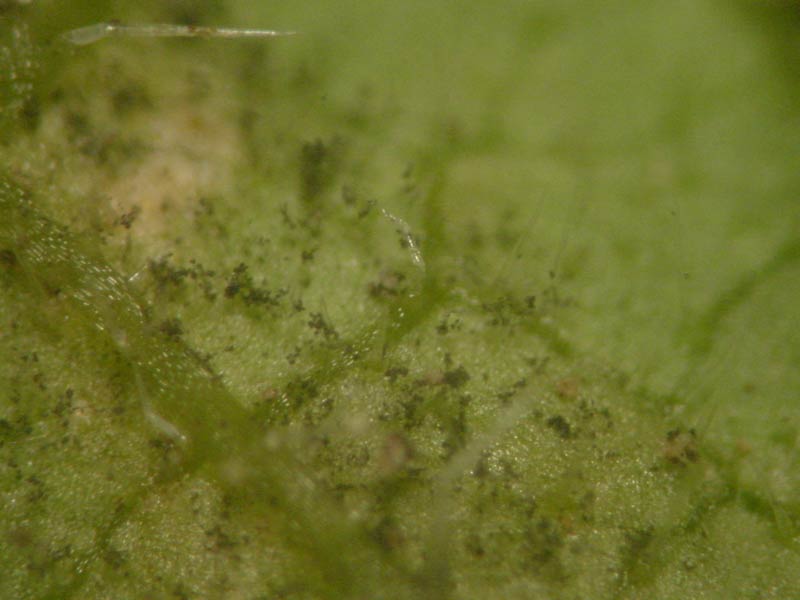
Photo Source: Jenny Glass
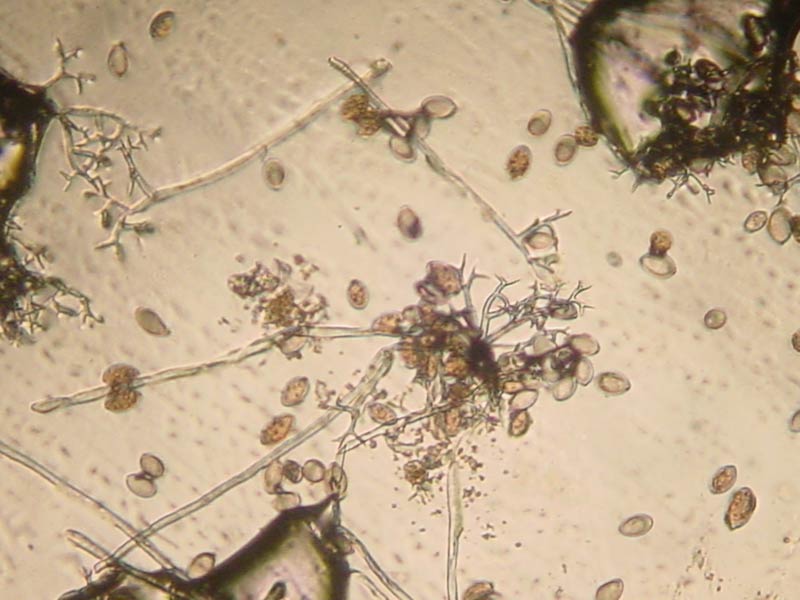
Photo Source: Jenny Glass
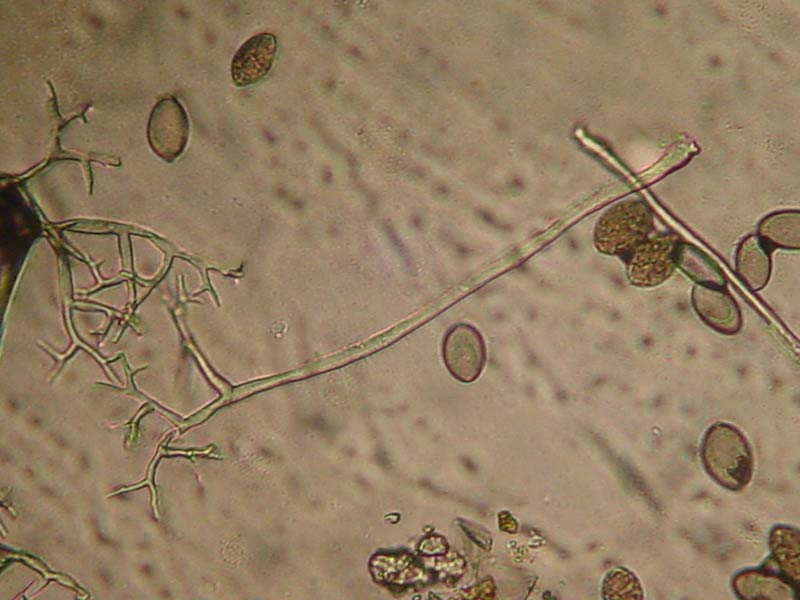
Photo Source: Jenny Glass
On-Line Resources:
- Pacific Northwest Plant Disease Management Handbook: Cucumber (Cucumis sativus) – Downy Mildew.
- Cucurbit Downy Mildew News, Michigan State University.
- Downy Mildew Control in Cucurbits, National Sustainable Agriculture Information Service.
- Downy mildew symptoms on cucurbit plants (pdf). Michigan State University.
Scab
Disease: Scab
Pathogen: Cladosporium cucumerinum
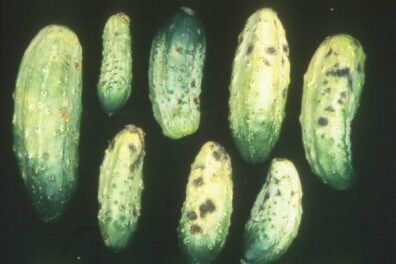
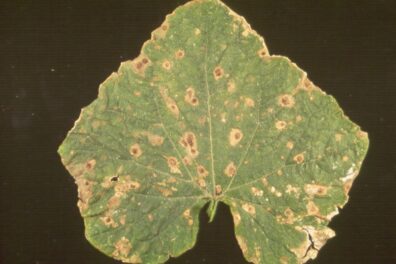
On-Line Resources:
Insect/Mite Pests
Western flower thrips
Common name (of damaging stage): Western flower thrips
Latin binomial: Frankliniella occidentalis.
Host crops: Basil, Broccoli, Cabbage, Cauliflower, Onion, Potato, Pumpkin, Squash, Tomato and
Watermelon.
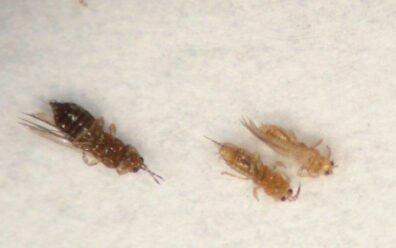
Photo Source: Michael Bush, WSU Extension, Yakima, WA
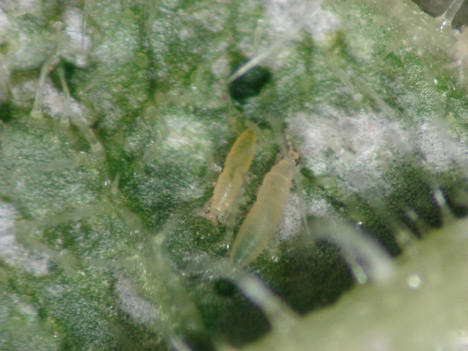
Photo Source: Michael Bush, WSU Extension, Yakima, WA
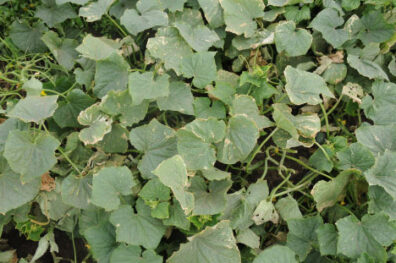
Photo Source: Michael Bush, WSU Extension, Yakima, WA
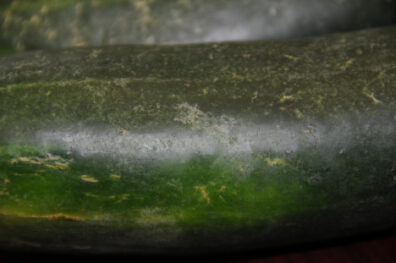
Photo Source: Michael Bush, WSU Extension, Yakima, WA
On-Line Resources:
- Western Flower Thrips Thysanoptera: Thripidae Frankiniella occidentalis (pdf).
- Pacific Northwest Insect Management Handbook. Chapter: Vegetables, Section: Cucumber (garden symphylan to wireworm).
- Pacific Northwest Insect Management Handbook. Chapter: Irish Potatoes, Section: Lygus bug to Thrips.
- Pacific Northwest Insect Management Handbook. Chapter: Vegetables, Section: Broccoli, Cabbage Other Crucifers.
- Vegetables: Bean: Thrips. Washington State University Hortsense.
- Vegetables: Broccoli, Cole crops: Thrips. Washington State University Hortsense.
- See Diseases, pests, and other problems common to many vegetables: Western flower thrips.
Abiotic Problems Common to Cucurbits
Edema
Problem: Edema
A physiological problem: prominent when air is cooler than the soil, soil moisture is high, and relative humidity is high. The low plant transpiration rates combined with an increase in water absorption by roots from the soil leads to increased cell turgor pressure, resulting in eruption of epidermal cells as the inner cells enlarge. Protrusion of the inner cells causes epidermal cells to die and discolor, resulting in a ’warty’ appearance that can be misidentified as a disease. In addition to foliar symptoms on some hosts, many cucurbit crops develop wart-like protruberances on the fruit.

Photo Source: Lindsey du Toit, Washington State University.
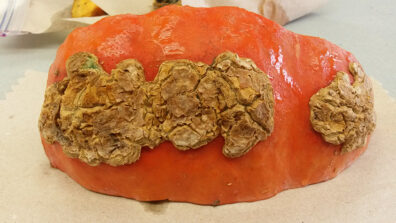
Photo Source: Phil Hamm, Oregon State University.
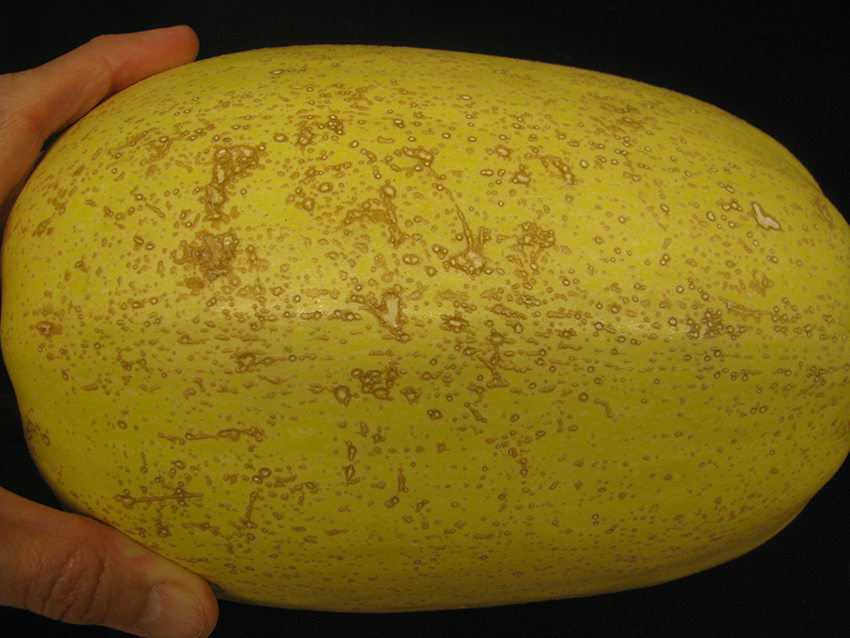
Photo Source: Lindsey du Toit, Washington State University
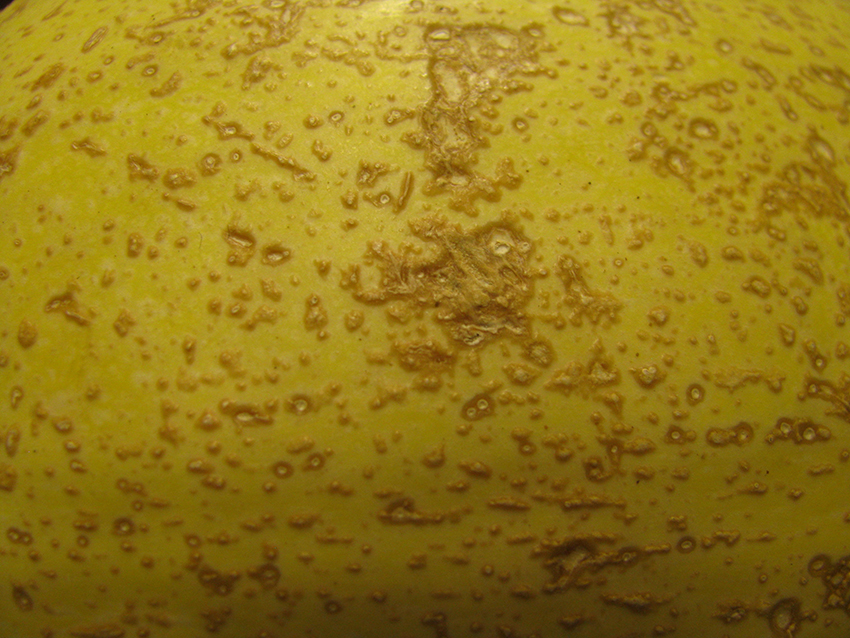
Photo Source: Lindsey du Toit, Washington State University
On-Line Resources:
- OEDEMA – Ontario CropIPM, diseases-and-disorders.
- Edema – Plant Disease and Insect Clinic, North Carolina State University.
If you need the content provided on this site in an alternate format or for further information on the Vegetable Seed Pathology program,
please contact: Lindsey du Toit at dutoit@wsu.edu or at 360-848-6140.
Our pages provide links to external sites for the convenience of users. WSU Extension does not manage these external sites, nor does Extension review, control, or take responsibility for the content of these sites. These external sites do not implicitly or explicitly represent official positions and policies of WSU Extension.