Problems on Specific Cucurbit Crops
Diseases
Insect/Mite Pests
Abiotic Problems
(Click on photo to enlarge)
General Disease Management in Cucurbits
- Cucurbit Disease Field Guide (pdf) – A Disease Reference Guide for Cucumber, Melon, Squash and Watermelon. Published by Monsanto Company and Seminis Vegetable Seeds, Inc..
- Winter Squash Storage Rots and Their Management – This article by Oregon State University, College of Agricultural Sciences, Department of Horticulture includes photos of the rot symptoms, descriptions of the diseases, and information on how to control storage rots.
General Insect/Mite Management in Cucurbits
- Biology and Management of Aphids in Organic Cucurbit Production Systems. This article by Mary Barbercheck, Penn State University, provides an overview of the biology and life cycles, damage from, and management of the most common aphid pests in organic cucurbit crops.
General Weed Management in Cucurbits
- Weed Management Strategies for Organic Cucurbit Crops in the Southern United States. Mark Schonbeck, Virginia Association for Biological Farming describes how to manage some of the most troublesome weeds of cucurbit crops in the South.
Diseases
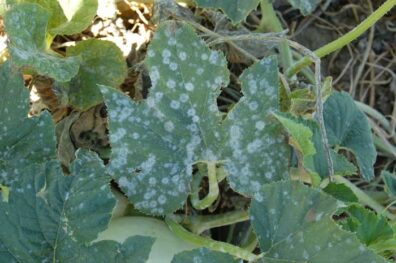
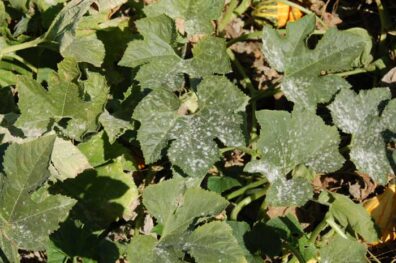
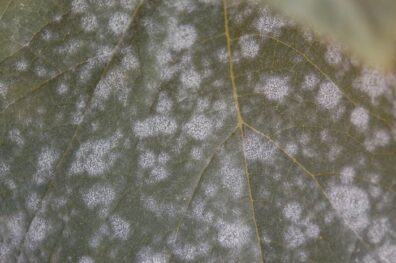
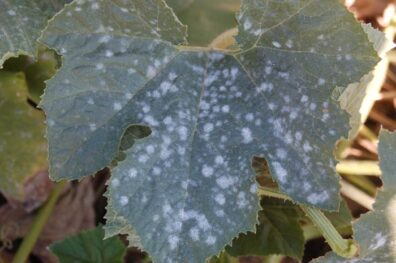
Powdery mildew
Common name: Powdery mildew
Latin binomial: Golovinomyces cichoracearum (formerly Erysiphe cichoracearum) and Podosphaera fuliginea (formerly Sphaerotheca fuliginea)
Host crops: All cucurbit vegetables (e.g. cucumber, cantaloupe, melon, pumpkin, and squash). There are different races of the pathogens.
On-Line Resources:
- How to Manage Pests: Pests in Gardens and Landscapes: Powdery Mildew on Vegetables. UC IPM Online, University of California.
- Pacific Northwest Plant Disease Management Handbook: Squash (Cucurbita sp.) – Powdery Mildew.
- Pacific Northwest Plant Disease Management Handbook: Cantaloupe (Cucumis sp.) – Powdery Mildew.
- Pacific Northwest Plant Disease Management Handbook: Cucumber (Cucumis sativus) – Powdery Mildew.
Various viruses of cucurbits
Common disease name: Various viruses of cucurbits
Pathogen names: A complex of viruses is able to infect cucurbits. The most important viruses tend to be Cucumber mosaic virus (CMV), Squash mosaic virus (SqMV), Watermelon mosaic virus I (WMV-1), Watermelon mosaic virus 2 (WMV-2), and Zucchini yellow mosaic virus (ZYMV). With the exception of SqMV, which is seedborne in melon and transmitted by beetles, the other major viruses are transmitted by several aphid species in a non-persistent manner.
Minor cucurbit viruses include Tobacco ringspot virus (TRSV), which is mainly transmitted by nematodes (Xiphinema americanun), Tomato ringspot virus (TmRSV), which is nematode transmitted and can overwinter on many weed species without expressing symptoms, and Clover yellow vein virus (CYVV) which is aphid- transmitted.
Host crops: Most cucurbit crops. However, the different cucurbit viruses can differ in host range, including within the Cucurbitaceae. Some of these viruses also infect plants in other families, which is important to know for disease management practices.
On-Line Resources:
- Cantaloupe (Cucumis sp.)-Viruses, Pacific Northwest Plant Disease Management Handbook.
- Cucumber (Cucumis sativus)-Virus Diseases, Pacific Northwest Plant Disease Management Handbook.
- Mosaic Diseases of Cucurbits (pdf), Report on Plant Disease No. 926, Department Of Crop Sciences, University Of Illinois At Urbana-Champaign.
- Squash (Cucurbita spp.)-Curly Top, Pacific Northwest Plant Disease Management Handbook.
- Squash (Cucurbita spp.)-Virus Diseases, Pacific Northwest Plant Disease Management Handbook.
- Virus Diseases of Cucurbits, Cornell University Vegetable MD Online fact sheet.
White mold
Common name: White mold
Latin binomial: Sclerotinia sclerotiorum
Host crops: Cucurbit vegetables (e.g. cucumber, pumpkin, and squash), pepper, snap bean, carrot, cabbage, cauliflower, lentil, field pea, potato, radish, and many weed species.
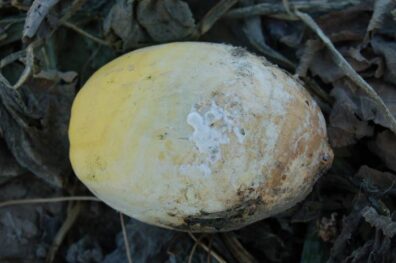
Photo Source: Lyndon Porter, USDA-ARS
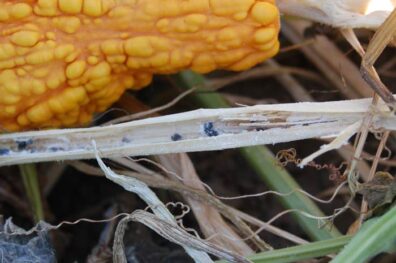
Photo Source: Lyndon Porter, USDA-ARS
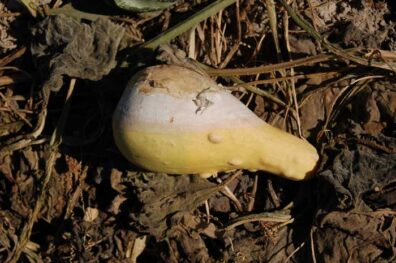
Photo Source: Lyndon Porter, USDA-ARS
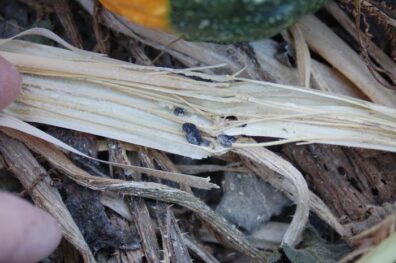
Photo Source: Lyndon Porter, USDA-ARS
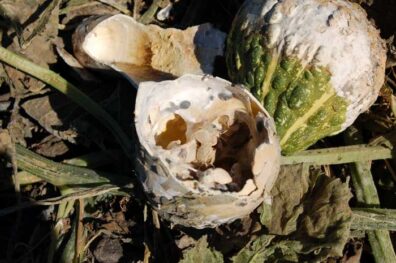
Photo Source: Lyndon Porter, USDA-ARS
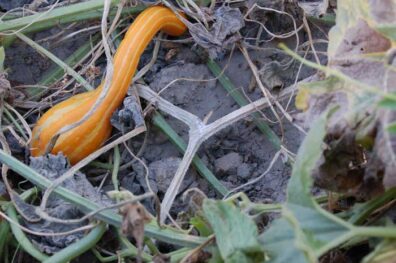
Photo Source: Lyndon Porter, USDA-ARS
On-Line Resources:
- Pacific Northwest Plant Disease Management Handbook: Cucumber (Cucumis sativus) – Sclerotinia Stem Rot {White Mold}.
- Fruit Rots of Squash and Pumpkins: Sclerotinia White Mold, Vegetable MD Online, Cornell University.
- White Mold of Vegetables, Pest Management Fact Sheet #5084, The University of Maine.
Insect/Mite Pests
Melon aphid
Common name: Melon aphid (cotton aphid)
Latin binomial: Aphis gossypii
Host crops: Cucurbit vegetables (e.g. cucumber, pumpkin, squash and watermelon), eggplant, pepper, and many weed species.
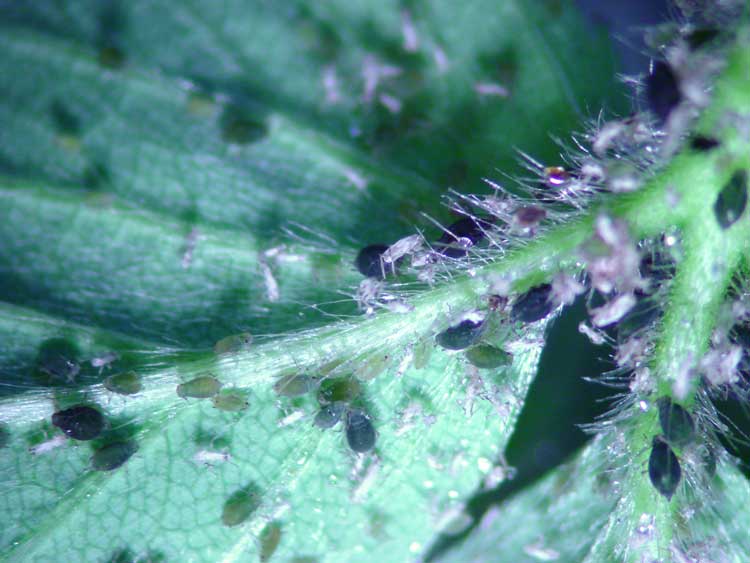
Photo Source: Michael Bush, Washington State University Extension, Yakima, WA
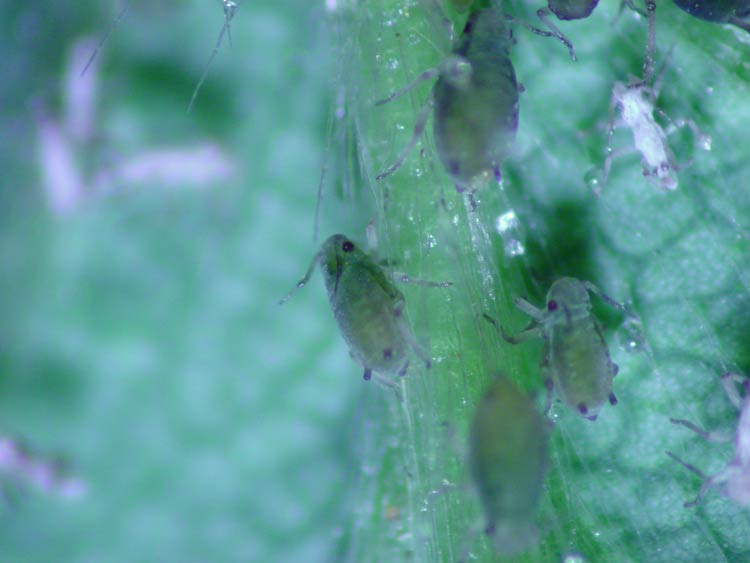
Photo Source: Michael Bush, Washington State University Extension, Yakima, WA
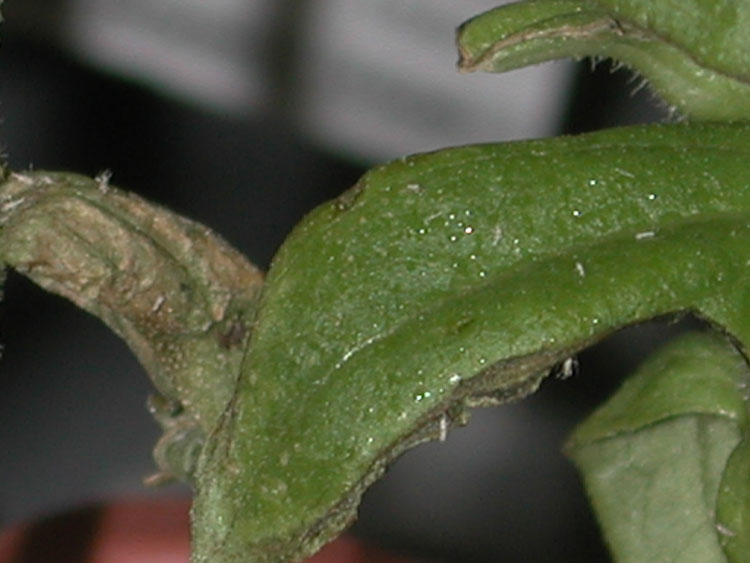
Photo Source: Michael Bush, Washington State University Extension, Yakima, WA
On-Line Resources:
- Biology and Management of Aphids in Organic Cucurbit Production Systems. eXtension.
- Pacific Northwest Insect Management Handbook. Chapter: Vegetables, Section: Pumpkin and Squash pt. 1.
- Common Insects & Mites: Aphids. Washington State University Hortsense.
Abiotic Problems Common to Cucurbits
Blossom end rot
Problem: Blossom end rot
Cause: Calcium deficiency resulting from various environmental conditions and management practices, e.g., inadequate Ca in the soil, inconsistent water as a result of alternating wet and dry periods that decrease Ca uptake by plants, and even excellent growing conditions such as a period of very bright sunshine and warm temperatures mid-season.
Crops affected: Tomato, pepper, eggplant, and various cucurbits.
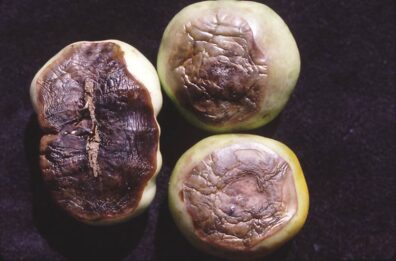
Photo Source: Krishna Mohan, University of Idaho
On-Line Resources:
- Blossom end rot: Understanding a perennial problem. Michigan State University Extension.
- See Diseases, pests, and other problems common to many vegetables: Blossom end rot of vegetables.
Edema
Problem: Edema
A physiological problem: prominent when air is cooler than the soil, soil moisture is high, and relative humidity is high. The low plant transpiration rates combined with an increase in water absorption by roots from the soil leads to increased cell turgor pressure, resulting in eruption of epidermal cells as the inner cells enlarge. Protrusion of the inner cells causes epidermal cells to die and discolor, resulting in a ’warty’ appearance that can be misidentified as a disease. In addition to foliar symptoms on some hosts, many cucurbit crops develop wart-like protruberances on the fruit.

Photo Source: Lindsey du Toit, Washington State University.
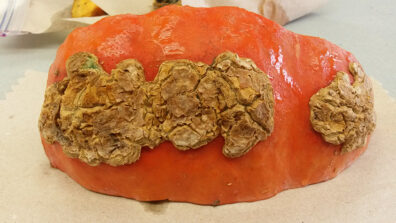
Photo Source: Phil Hamm, Oregon State University.
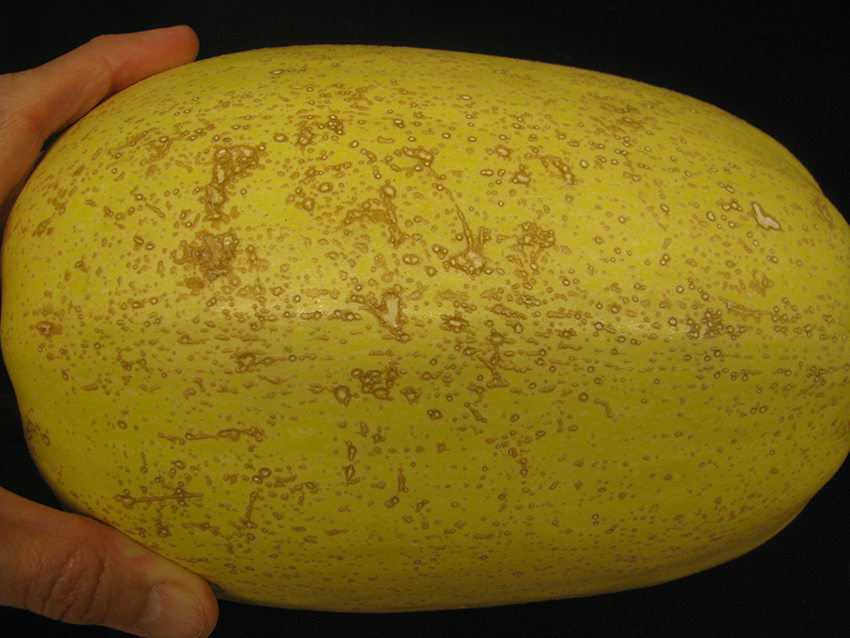
Photo Source: Lindsey du Toit, Washington State University
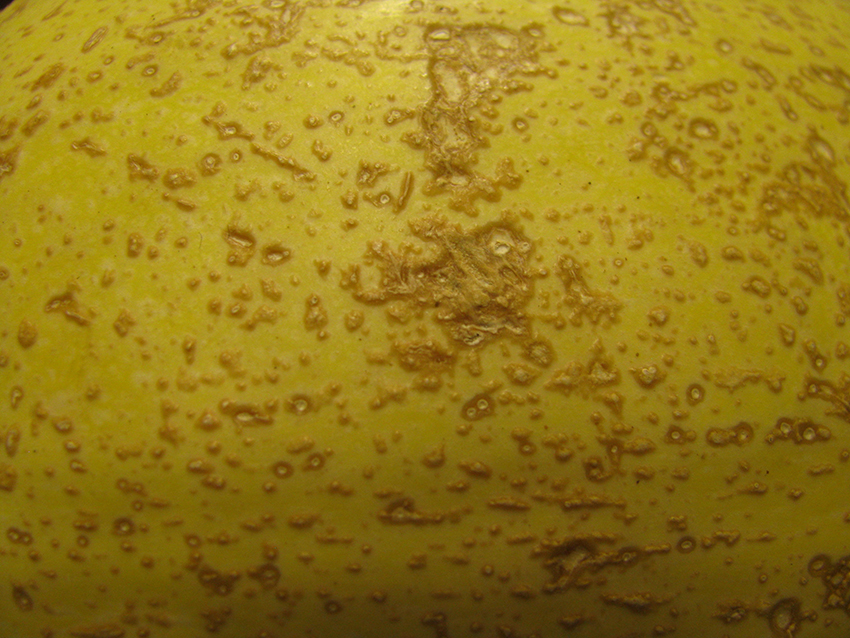
Photo Source: Lindsey du Toit, Washington State University
On-Line Resources:
- Pumpkin and Squash Production Factsheet: Oedema, Ontario Ministry of Agriculture, Food and Rural Affairs.
- Edema – General Principles Information Note 3 (VDIN-003), North Carolina State University Plant Pathology Extension.
- What are these bumps on my vegetables? Edema or oedema: It doesn’t matter how you spell it, it still doesn’t look good. What is it, what causes it and how can I prevent it? Michigan State University Extension.
If you need the content provided on this site in an alternate format or for further information on the Vegetable Seed Pathology program,
please contact: Lindsey du Toit at dutoit@wsu.edu or at 360-848-6140.
Our pages provide links to external sites for the convenience of users. WSU Extension does not manage these external sites, nor does Extension review, control, or take responsibility for the content of these sites. These external sites do not implicitly or explicitly represent official positions and policies of WSU Extension.