Diseases
Nematodes
(Click on photo to enlarge)
Diseases
Bacterial leaf spot
Disease: Bacterial leaf spot
Pathogen: The bacterium Pseudomonas syringae pv. coriandricola. A few other bacterial foliar pathogens of coriander/cilantro have been documented in the Pacific Northwest but are less common, i.e., Xanthomonas campestris pv. coriandri and Xanthomonas hortorum pv. carotae. The parsley bacterial leaf spot pathogen is Pseudomonas syringae pv. apii.
Host crops: Cilantro/coriander. Based on field research, the cilantro and parsley bacterial leaf spot problems are caused by two pathogens: Pseudomonas syringae pv. apii and P. syringae pv. coriandricola. Pseudomonas syringae pv. apii is also the causal agent of bacterial leaf spot diseases of celery and fennel. However, these cilantro and parsley pathogens can infect other crops in the Apiaceae, so plan crop rotation with the possibility of cross infection among cilantro, parsley, celery, and fennel.
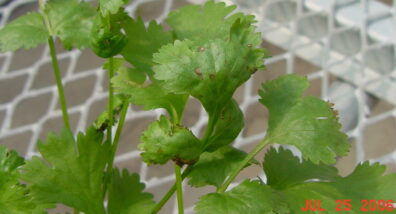
Photo Source: Lindsey du Toit, Washington State University
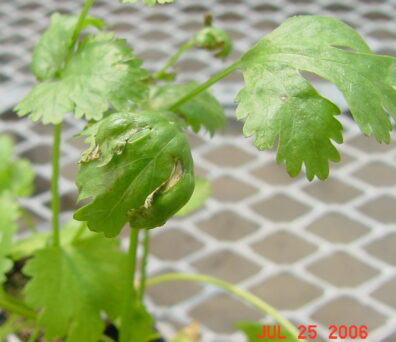
Photo Source: Lindsey du Toit, Washington State University
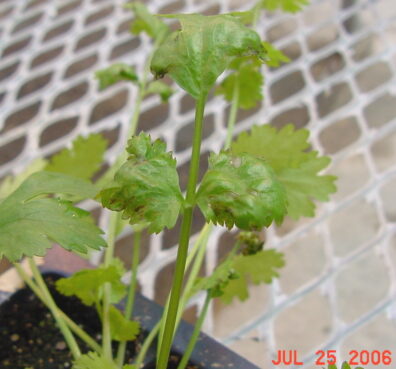
Photo Source: Lindsey du Toit, Washington State University
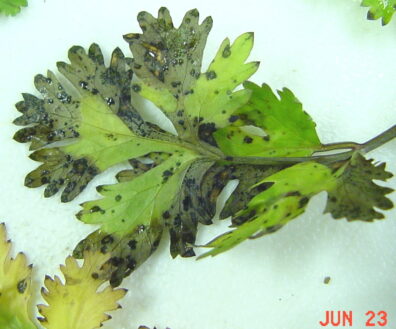
Photo Source: Lindsey du Toit, Washington State University
Online Resources:
- Coriander and Cilantro (Coriandrum sativum)-Bacterial Leaf Spot, PNW Plant Disease Management Handbook.
- Bacterial Leaf Spot, Cilantro and Parsley Pest Management Guidelines, UC Iintegrated Pest Management Program.
Curly top
Disease: Curly top
Pathogen: Various strains of Beet curly top virus (BCTV), which are vectored by the beet leafhopper (Circulifer tenellus).
Host crops: Numerous plant species including many vegetables such as bean, beet, carrot, eggplant,
coriander, pepper, potato, tomato, various cucurbits such as squash, cucumber, pumpkin, watermelon, etc.
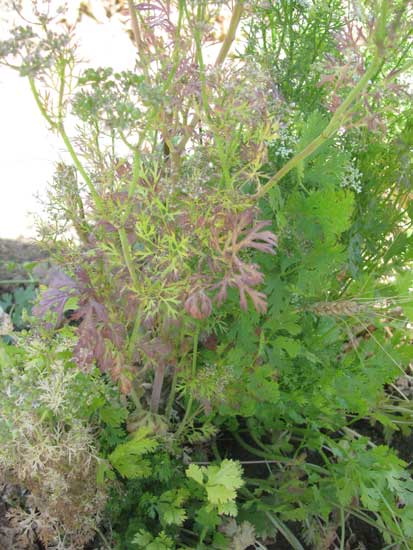
Photo Source: Lindsey du Toit, Washington State University Plant Pathologist
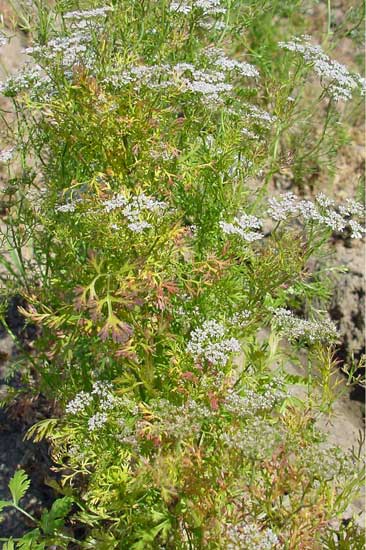
Photo Source: Lindsey du Toit, Washington State University Plant Pathologist
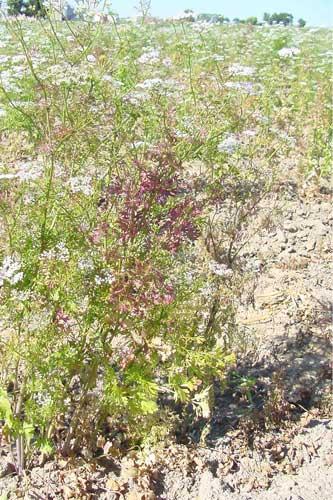
Photo Source: Lindsey du Toit, Washington State University Plant Pathologist
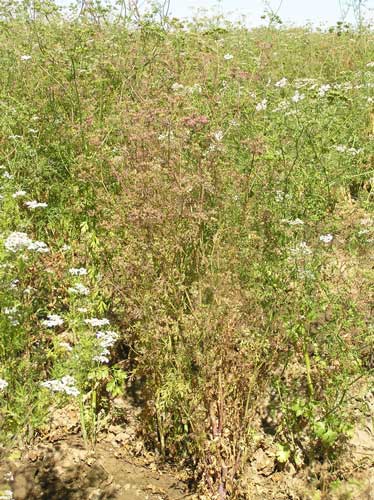
Photo Source: Lindsey du Toit, Washington State University Plant Pathologist
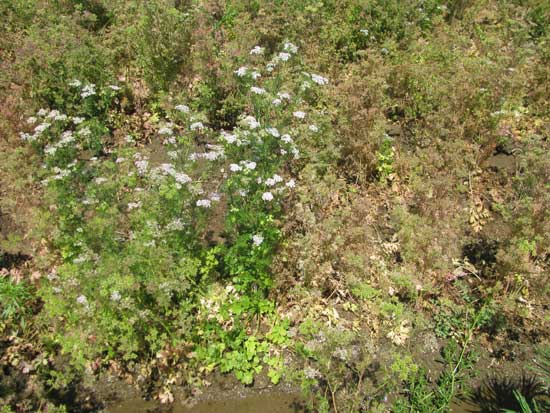
Photo Source: Lindsey du Toit, Washington State University Plant Pathologist
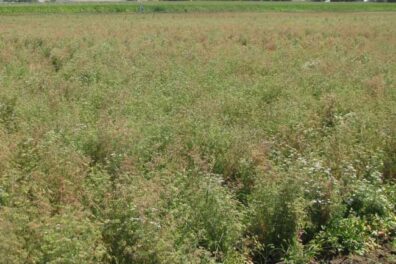
Photo Source: Lindsey du Toit, Washington State University Plant Pathologist
Online Resources:
Nematodes
Root knot
Disease: Root knot
Nematode: Meloidogyne species
Host crops: Numerous plant species, including many vegetables such as carrot, coriander, onion,
potato, etc.
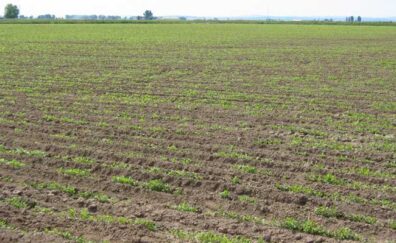
Photo Source: Lindsey du Toit, Washington State University
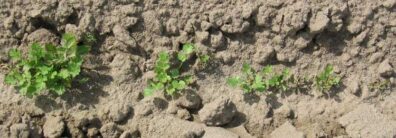
Photo Source: Lindsey du Toit, Washington State University
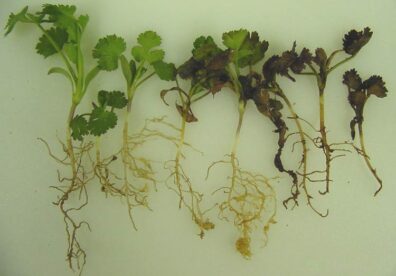
Photo Source: Lindsey du Toit, Washington State University
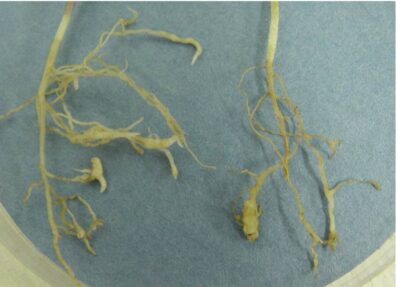
Photo Source: Lindsey du Toit, Washington State University
Online Resources:
- Pacific Northwest Plant Disease Management Handbook: Carrot (Daucus carota) – Nematode, Root-knot.
- Pacific Northwest Plant Disease Management Handbook: Nematodes.
- Cilantro Production in California. Vegetable Production Series, UC Vegetable Research & Information Center.
- See Diseases, pests, and other problems common to many vegetables: Root knot.
If you need the content provided on this site in an alternate format or for further information on the Vegetable Seed Pathology program,
please contact: Lindsey du Toit at dutoit@wsu.edu or at 360-848-6140.
Our pages provide links to external sites for the convenience of users. WSU Extension does not manage these external sites, nor does Extension review, control, or take responsibility for the content of these sites. These external sites do not implicitly or explicitly represent official positions and policies of WSU Extension.