(Click on photo to enlarge)
Diseases
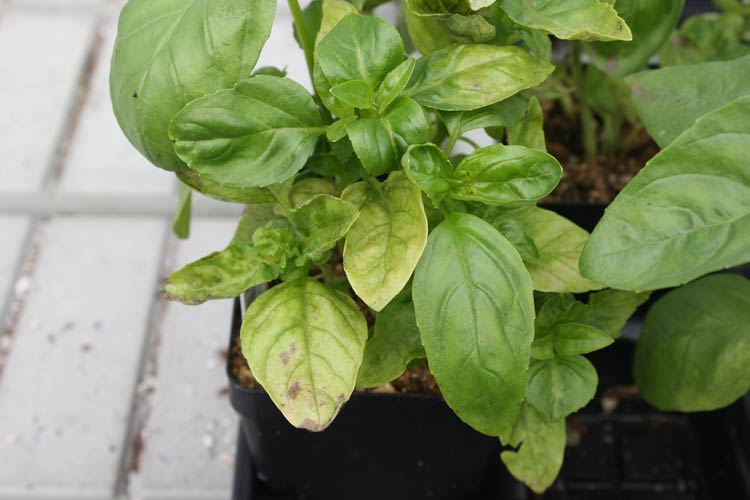
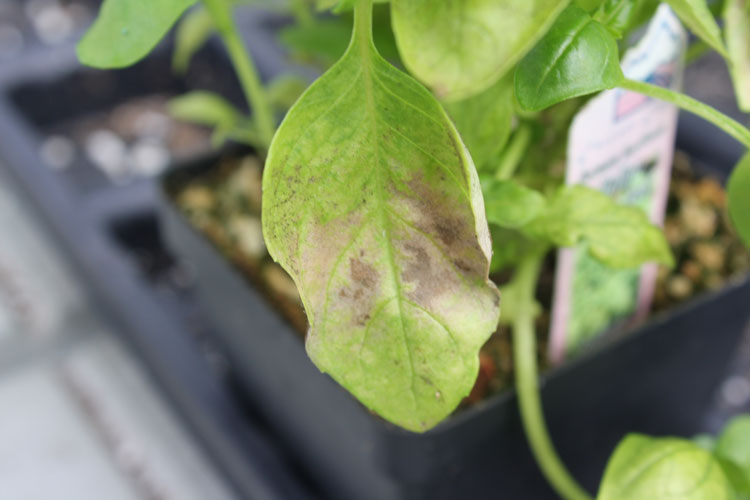
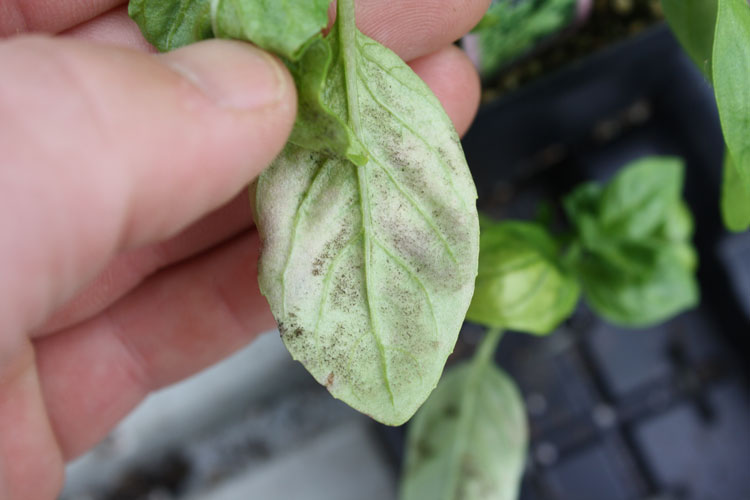
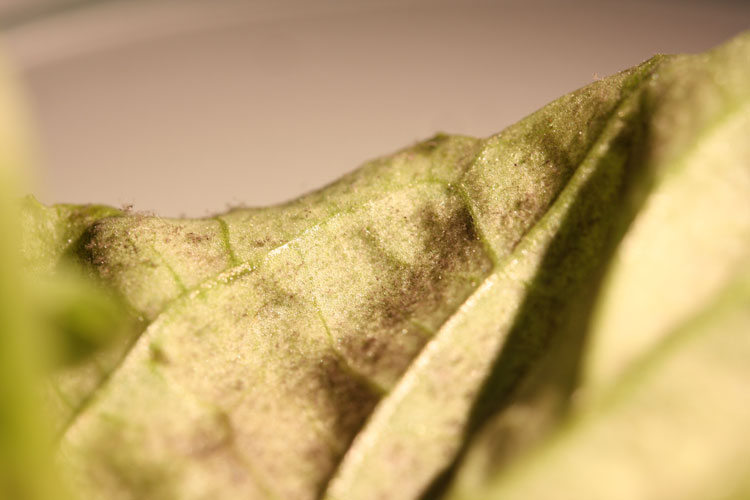
Downy mildew
Disease: Downy mildew
Pathogen: The oomycete, Peronospora belbahrii
Online Resources:
- Pacific Northwest Plant Disease Management Handbook: Basil, Sweet (Ocimum basilicum) – Downy Mildew.
- Expect and Prepare for Downy Mildew in Basil, Vegetable MD Online, Cornell University.
Insect/Mite Pests
Thrips
Disease: Thrips, including western flower thrips, onion thrips, and other species.
Latin binomial: Various thrips including Frankliniella occidentalis (western flower thrips) and Thrips tabaci (onion thrips).
Host Crops: Numerous plant species including many vegetables such as basil, broccoli, cabbage, cauliflower, cucumber, onion, potato, pumpkin, spinach, squash, tomato and watermelon.
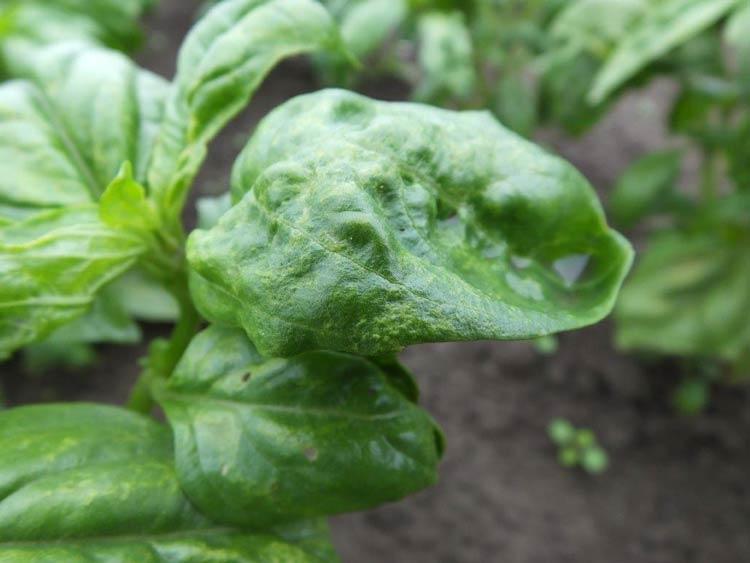
Photo Source: Jules Riske
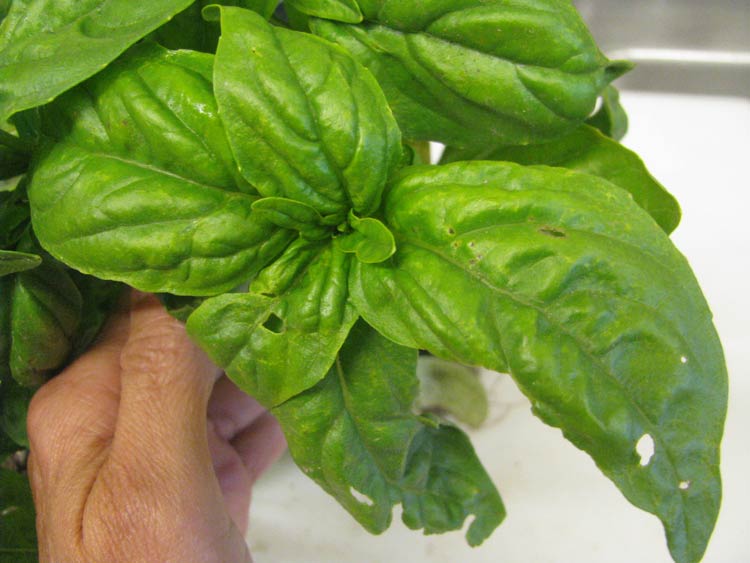
Photo Source: Lindsey du Toit, Washington State University
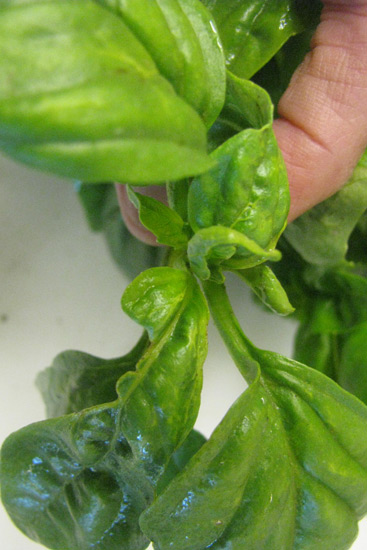
Photo Source: Lindsey du Toit, Washington State University
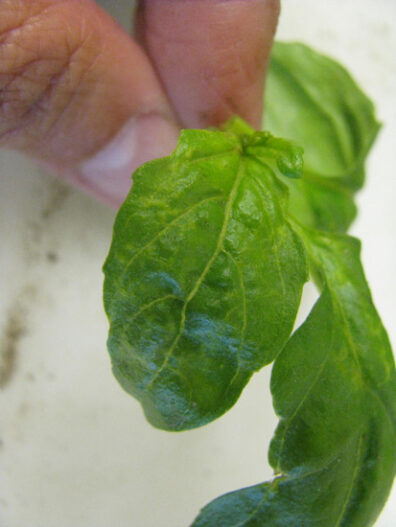
Photo Source: Lindsey du Toit, Washington State University
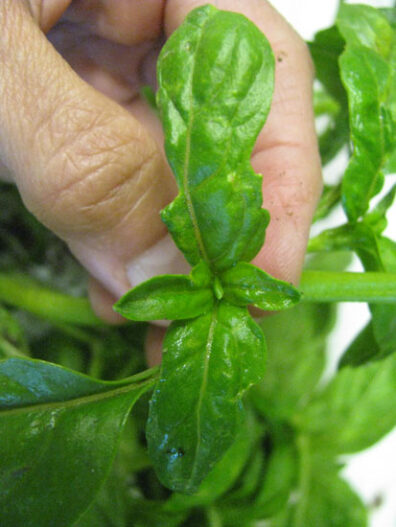
Photo Source: Lindsey du Toit, Washington State University
Online Resources:
- Pests – Western flower thrips, Frankliniella occcidentails and Onion thrips, Thrips tabaci. Protected Herbs: Best Practice Guide for Integrated Pest and Disease Control.
- Pacific Northwest Insect Management Handbook: Vegetable crop pests – Thrips.
- See Diseases, pests, and other problems common to many vegetables: Western flower thrips.
If you need the content provided on this site in an alternate format or for further information on the Vegetable Seed Pathology program,
please contact: Lindsey du Toit at dutoit@wsu.edu or at 360-848-6140.
Our pages provide links to external sites for the convenience of users. WSU Extension does not manage these external sites, nor does Extension review, control, or take responsibility for the content of these sites. These external sites do not implicitly or explicitly represent official positions and policies of WSU Extension.