
Research Team

Dr. Debra Ann Inglis
Professor and Extension Plant Pathologist
dainglis@wsu.edu
Dr. Inglis’ research interests in vegetable pathology focus on the biology and management of fungal and oomycete diseases of fresh and processing vegetables, particularly red and yellow potatoes and other high-value specialty vegetables. Currently, she has field, greenhouse and laboratory research projects on (i) diseases of specialty potato tubers, (ii) late blight on potato and tomato, (iii) vegetable diseases under biodegradable crop covers and in high tunnel systems, (iv) flooding as a crop rotation alternative to preserve shorebird habitat and manage soilborne potato pathogens in western Washington. Dr. Inglis has worked as a plant pathologist at WSU Mount Vernon NWREC since 1989. For a more complete bio, see https://plantpath.wsu.edu/people/faculty/inglis/inglis.htm.
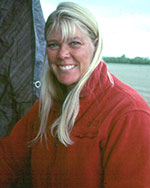
Babette Gundersen
Ag Research Tech III
gunde@wsu.edu
Babette Gundersen, a native of the Skagit Valley, received her M.S. degree in Experimental Psychology from Central Washington University in 1991. She joined the WSU Mount Vernon NWREC vegetable pathology program in 1993 to assist with field, greenhouse and laboratory research projects focusing on the biology and management of fungal and oomycete diseases of fresh market and processing vegetables. She is an active participant in all of the program’s research and extension efforts, and in graduate student training. Babette was a recipient of the prestigious WSU Employee Excellence Award presented by the University President, Dr. Lane Rawlins, in 2002. She is an expert on experimental field plot design, set-up and maintenance as well as a variety of greenhouse and laboratory techniques in plant pathology including statistical analysis of experimental data.
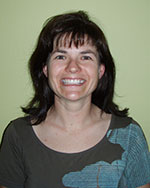
Marianne Powell
Professional Worker
marianne.powell@wsu.edu
Marianne Powell completed her M.S. degree in the Vegetable Pathology Program in December 2012. The title of her thesis was “Assessment of Tomato and Lettuce Diseases in Organically Managed High Tunnel Cropping Systems in Western Washington and Isolation of Soil Microbes Potentially Capable of Biodegrading Agricultural Mulches.” Marianne graduated with a B.S. in Plant Biology from the University of Washington (UW) in June 2010. She worked with Dr. Soo-Hyung Kim and graduate student Drew Zwart in the Plant Ecophysiology lab where she conducted a survey of Phytophthora spp. on woody plants within two Seattle urban parks to determine if restoration practices influence Phytophthora populations. Marianne also worked with Dr. Gundla Bosch in the UW Chemical Engineering Lab on a project using shotgun proteomics and MS/MS to identify tumor-inducing proteins of Agrobacterium tumefaciens grown in pH 5 and 7. Her research interests focus on plant-pathogen interactions, molecular identification methods of microbes, and biotic and environmental factors that influence plant disease occurrence.
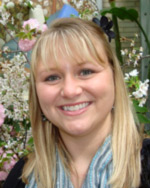
Amy Salamone
Graduate Student
Amy Salamone joined the Vegetable Pathology Program in January 2013 after receiving an M.S. degree in Coastal Sciences from the University of Southern Mississippi in 2012. Amy’s thesis title was “Fungal Biofilm Colonization and Succession on Artificial Reefs in the North-Central Gulf of Mexico.” Her research project was the first characterization of natural mixed-species fungal biofilm communities and study of their succession in the marine environment. Amy has expertise in the morphological and molecular characterization of fungi found in marine biofilms, an exciting and underexplored habitat. Amy is an enthusiastic mycologist with interests in fungal ecology, fungal-bacterial interactions, fungal roles in nutrient cycling, and fungal genomic mapping techniques to identify genes associated with ecological roles and evolutionary history. Her career interests, professional skills and background are an excellent match for the “Farming for Wildlife Project” now partially funded by The Nature Conservancy of Washington. This program seeks to find ways to enhance migratory shorebird habitat in western Washington, and at the same time support local farms, by using field flooding as a crop rotation practice for managing soilborne plant pathogens.
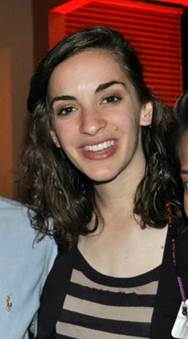
Abby Beissinger
Graduate Student
Abby Beissinger received her B.A. degree in Anthropology, with distinction from the University of Wisconsin-Madison in 2011. During her time as an undergraduate, Abby spent a semester at the Center for Sustainable Development in Costa Rica where she was involved in a field study on coffee farms investigating carbon storage potential of leaf litter. After returning to the UW from Costa Rica, she joined the EDGE project, an international-development student organization, and she eventually taught environmental and agricultural development on Lingira Island in Uganda. Following graduation, she taught urban farming to middle and high school students in Massachusetts where she was an AmeriCorps member. Abby began her work as an M.S. student at WSU in Fall 2014 under the direction of Dr. Debra Inglis at WSU-Mount Vernon. She will be pursuing her interests in how plant pathogens affect food systems and people, via a project involving Potato virus Y (PVY) and its effects on western Washington potatoes and growers.
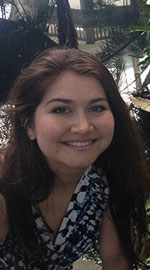
Alexandra Valeria Swidergal
Graduate Student
Alexandra earned her BS degree in Biological Sciences from Cornell University in 2010 with a minor in plant science. Since graduating, she has worked at Cascadia College as a biology laboratory technician, where her love and enthusiasm for plant science has only grown (pardon the pun). Previous to Cascadia, she was an REU research intern at the University of California Riverside Center for Plant Cell Biology in Dr. Raikhel’s lab. Now a happy Seattle resident she started an MS Ag degree in Plant Health Management in the fall of 2014 working with Dr. Inglis at the WSU Research and Extension Center in Mount Vernon. Alexandra's research focus will be on the soil pathogen Verticillium, particularly soil density experiments. She currently is a volunteer at the Seattle Aquarium and also works at William Church Winery in Woodinville.
WSU-Mount Vernon NWREC Vegetable Pathology Program
c/o Dr. Debra Ann Inglis
Plant Pathologist
16650 State Route 536
Mount Vernon, WA 98273
dainglis@wsu.edu